Food vendor insurance cost in 2026: $25–$185/mo. Compare liability vs BOP prices, COI requirements, and when commercial truck insurance applies. Get quotes.

Food vendor insurance cost in 2026 is often $25–$185 per month for many pop-ups and recurring vendors, while food trucks and staffed operations frequently run $200+/mo once commercial auto and workers’ comp are added. Most venues care less about the price and more about whether your policy can issue a compliant COI with the right limits, dates, and “Additional Insured” wording.
If a market application is blocking you with “Upload COI,” start with the baseline coverage most venues request: general liability insurance for vendors.
Table of Contents
Reading time: 7 minutes
- Key takeaways (save this before you shop)
- How much does food vendor insurance cost per month in 2026?
- What coverage types drive food vendor insurance cost?
- Event organizer & venue requirements (COI, additional insured, limits)
- Short-term/event insurance vs annual policies (which is cheaper?)
- 9 proven ways to lower food vendor insurance costs (without getting denied at the venue gate)
- Frequently Asked Questions
- Conclusion: What to budget (and how to get approved faster)
Key takeaways (save this before you shop)
Food vendor insurance cost commonly lands in the $25–$185/month range for many non-vehicle vendors in 2026, but food trucks and vendors with employees often exceed $200/month once auto and workers’ comp apply.
- Budget $25–$185/month for many pop-ups and recurring vendors; food trucks and staffed operations often run higher once auto/workers’ comp enters the picture.
- The cheapest policy can be unusable if it can’t issue a COI with Additional Insured wording your venue requires.
- Short-term/event insurance can pencil out for 1–3 events/year; frequent vendors usually save with annual coverage.
- To lower premiums, adjust what underwriters price: limits, deductibles, payroll, vehicle use, equipment values, and claim prevention.
How much does food vendor insurance cost per month in 2026?
In 2026, many food vendors pay about $25–$185 per month for core general liability (often including product liability) plus common add-ons, while vehicle-based vendors frequently pay $200+/month after commercial auto is included.
Your actual premium is usually driven by (1) liability exposure (what you sell and how you serve it), (2) how “mobile” you are (deliveries, towing, food truck operations), and (3) whether you need property/equipment coverage for gear that travels.
Typical monthly and annual ranges (quick view)
| Vendor situation | What you’re usually buying | Typical budget (monthly) | Rough annual equivalent* |
|---|---|---|---|
| 1–3 events/year pop-up booth | General liability / product liability | $25–$60/mo | $300–$720/yr |
| Seasonal / weekend vendor | GL + higher limits and/or equipment | $60–$185/mo | $720–$2,220/yr |
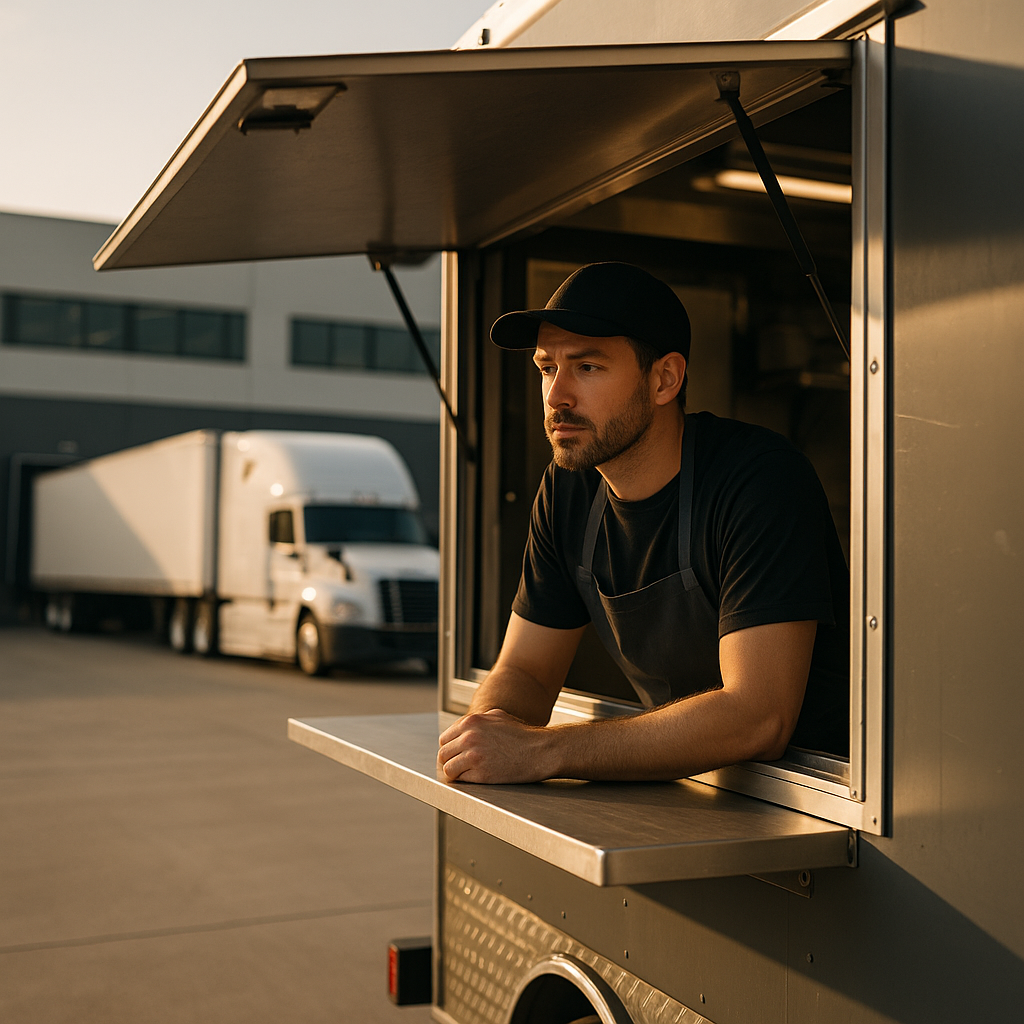
| Food truck / deliveries / staff | GL + commercial auto + possibly workers’ comp | Often $200+/mo | Often $2,400+/yr |
*Annual equivalents are simple planning math; real premiums can be lower if you pay annually or bundle.
Cost snapshot by policy type (median vs typical)
Median monthly benchmarks from market data can help you sanity-check quotes, especially when you’re comparing policies with the same limits and dates.
| Policy type | What it covers (plain English) | Market benchmark |
|---|---|---|
| General liability (GL) | Slip-and-fall, property damage, some advertising injury | Median ~$33/mo |
| BOP (GL + property) | GL bundled with property (sometimes business interruption) | Median ~$61/mo |
| Workers’ comp | Employee injuries (burns, cuts, slips, lifting) | Median ~$91/mo |
| Commercial auto | Accidents in business vehicles (food trucks, vans) | Median ~$156/mo |
| Cyber | Card data/online ordering risk | Median ~$134/mo |
Source for median monthly benchmarks: Insureon cost data (policy medians) — https://www.insureon.com/food-business-insurance/food-vendors/cost. Low-end “starts around” pricing is commonly cited by industry summaries like Insuranceopedia — https://www.insuranceopedia.com/business-insurance/food-vendor-insurance-cost.
If you’re shopping carriers, compare apples-to-apples (same limits, same effective dates, same additional insured wording): compare business insurance quotes the right way.
What coverage types drive food vendor insurance cost?
Food vendor insurance cost increases when your operation adds priced exposures like employees (workers’ comp), vehicles (commercial auto), and movable equipment (inland marine), because each line carries its own claims history and rating factors.
For a plain-language overview of what small businesses commonly insure, the U.S. Small Business Administration summarizes typical coverages (GL, property, workers’ comp, etc.): https://www.sba.gov/business-guide/manage-your-business/buy-insurance.
General liability (and product liability): the baseline most venues want
General liability (GL) covers third-party injury and property damage claims, and for many food vendors it also includes product liability for food-related allegations (often included or added by endorsement).
- Common venue limits: Many organizers ask for $1M per occurrence / $2M aggregate (not universal, but very common in vendor agreements).
- Real-world claims: A customer slip near your booth, a burn allegation tied to service, or property damage during setup/teardown.
- Who needs it: Booth vendors, pop-ups, caterers, and food trucks.
Business Owners Policy (BOP): when bundling changes the price (often for the better)
A Business Owners Policy (BOP) typically bundles general liability + property coverage (and sometimes business interruption), and it’s often cheaper than buying those lines separately when you have meaningful equipment or inventory exposure.
If you’re seeing both GL and property on a proposal, it’s worth understanding a business owners policy (BOP) before writing it off as “too expensive,” because bundling is often the lowest-cost way to meet venue rules and protect your gear.
Commercial truck insurance, trucking insurance, hotshot insurance, and semi truck insurance (when your “vendor” is a vehicle)
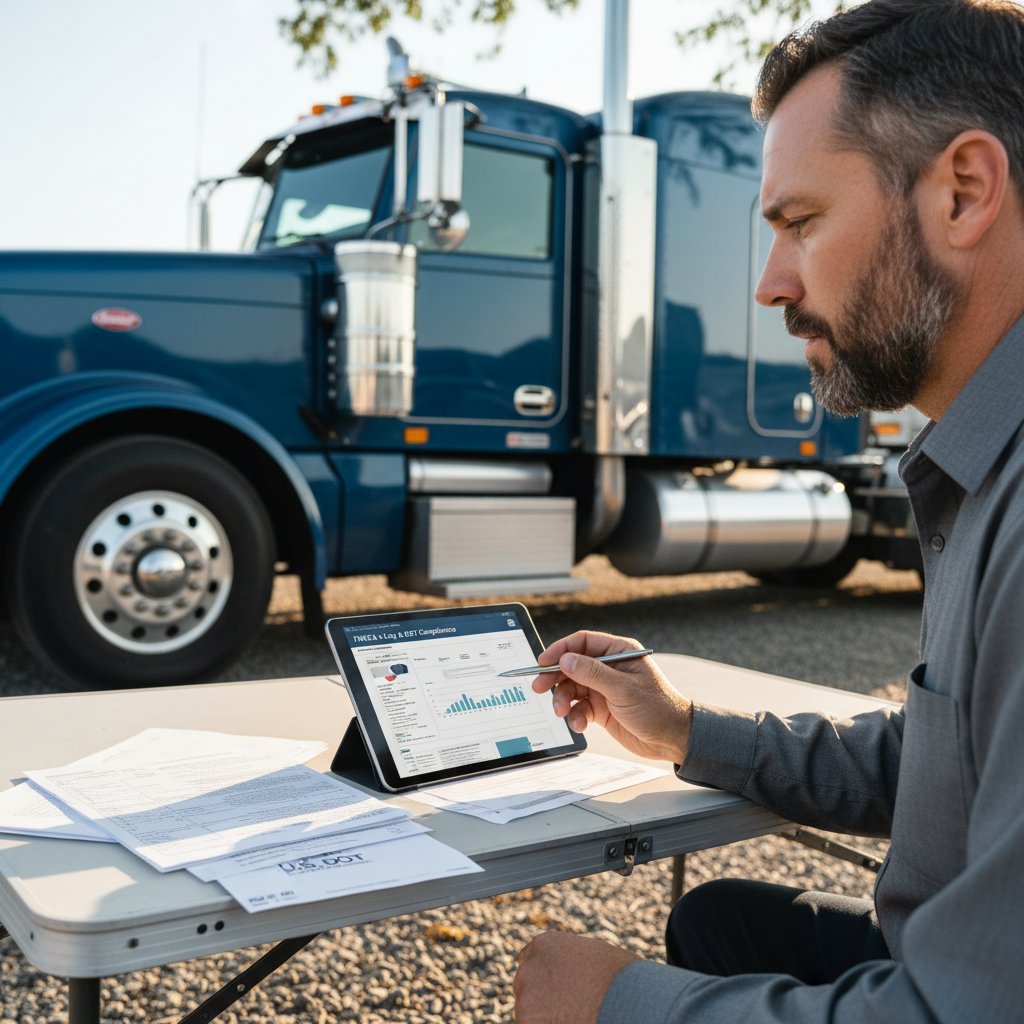
Commercial truck insurance is a form of trucking insurance priced around the vehicle class, business use, and driving exposure, and it can apply to food vendors when the operation is vehicle-based (food trucks, towing smokers, delivery-heavy setups).
- Commercial auto: The broad category for business vehicles (food trucks, vans, delivery vehicles).
- Commercial truck insurance: Often used when the vehicle is truck-class/heavier use or the vehicle is central to operations.
- Hotshot insurance: Can apply to pickup + trailer style setups (like towing a smoker or catering trailer) depending on weight, use, and registration.
- Semi truck insurance: Relevant for tractor-trailer-style rigs (less common in food vending, but it shows up in large-scale catering logistics).
If you’re “just a vendor” but your rig looks like transportation to an underwriter, you may be priced closer to trucking; the goal is to structure it correctly so a claim isn’t denied for business use.
Event organizer & venue requirements (COI, additional insured, limits)
Event organizers commonly require a Certificate of Insurance (COI) showing active general liability with specific limits and Additional Insured wording, and many agreements also require the policy dates to cover setup through teardown (not only the event hours).
What venues commonly ask for
- A COI showing active coverage
- Event dates that cover setup + event hours + teardown
- Additional Insured language naming the venue/organizer
- Minimum GL limits (often $1M/$2M, but it varies)
- Sometimes workers’ comp proof if you have staff (or if the contract requires it)
If you want fewer back-and-forth emails and faster approvals, build your process around a checklist from a certificate of insurance (COI) guide.

COI mistakes that delay approvals (and can cost you the spot)
- Wrong legal business name (it must match the policy declarations)
- Incorrect venue/organizer legal name (not a social handle)
- Date mismatch (policy effective dates don’t cover the event window)
- Missing Additional Insured endorsement
- Limits on the COI don’t match the contract
- Wrong coverage type (venue wants GL; you send something else)
Cash-flow reality: Losing a weekend market often means lost sales plus wasted prep, spoiled inventory, and labor you can’t recover.
Short-term/event insurance vs annual policies (which is cheaper?)
Short-term food vendor insurance can be cheaper for 1–3 events per year, while annual coverage usually costs less overall once you vend monthly or weekly because you’re not repurchasing event dates and COIs repeatedly.
When short-term insurance wins
- You do 1–3 events per year
- You want coverage tied to specific event dates
- You don’t want an annual premium hitting your account
When annual insurance wins
- You vend monthly or weekly
- You need continuous coverage for multiple venues
- You want consistent COIs without re-buying coverage
Rule of thumb break-even calculation
Use this simple test: (short-term cost per event) × (events per year) vs annual premium, then confirm you’re comparing the same limits, the same dates, product liability included, and Additional Insured availability.
9 proven ways to lower food vendor insurance costs (without getting denied at the venue gate)
Lowering food vendor insurance cost usually comes from adjusting underwriter-priced levers like limits, deductibles, payroll, vehicle exposure, and documented safety controls, not from buying the cheapest policy and hoping the COI is accepted.
- Buy the right limits (not random limits). Match the contract so your COI gets approved.
- Choose annual if you’re frequent. Paying per event can be the most expensive path.
- Bundle smartly. If you have equipment/inventory exposure, a BOP can beat stacking policies.
- Raise deductibles where it makes sense. Especially for equipment/property if you can absorb smaller losses.
- Document food safety controls. Temp logs, sanitizer routines, grease handling, burn prevention.
- Train staff and track incidents. A clean renewal story helps you negotiate.
- Reduce vehicle exposure. Fewer drivers, safer parking, smaller delivery radius can reduce auto costs.
- Pay annually if discounts apply. It can cut installment fees and sometimes premium.
- Shop at renewal (and after changes). If revenue, payroll, or operations changed, re-market.
For a deeper checklist, see: how to lower business insurance costs.
Borrow a page from affordable trucking insurance
Affordable trucking insurance pricing is often best for operators who prove control (maintenance logs, driver screening, clean claims), and the same idea applies to vendors: if you can document training, maintenance, and safety routines, you’re presenting a lower-risk operation.
Frequently Asked Questions
These answers reflect common 2026 vendor requirements (COIs, additional insured, $1M/$2M limits) and typical pricing ranges ($25–$185/month for many non-vehicle vendors) so you can quote them out of context.
In 2026, many food vendors pay $25–$185 per month for general liability (often including product liability) plus common add-ons, while food trucks and vendors with employees often exceed $200/month once commercial auto and workers’ comp are added. Your total depends on venue-required limits (many contracts request $1M per occurrence / $2M aggregate), how often you vend, and whether you insure equipment and inventory. The practical test is whether your policy can issue a COI with correct dates and Additional Insured wording for the organizer.
Food vendor insurance cost is driven by your operation type (booth, catering, food truck), annual sales, payroll, number of events, prior claims, required liability limits, deductibles, equipment value, and vehicle use (deliveries or towing). Vehicles are a major swing factor because a vendor can be priced closer to trucking insurance when the vehicle is truck-class or central to operations. Underwriters also price control: written safety procedures, staff training, incident tracking, and clean renewals typically help.
Food vendors can lower insurance costs by matching limits to venue contracts (avoid paying for unnecessary limits), choosing annual coverage if vending more than a few times per year, bundling GL + property in a BOP when equipment/inventory is meaningful, and increasing deductibles only if cash reserves can cover smaller losses. Vehicle exposure often drives the biggest increases, so limiting delivery radius, tightening driver selection, and maintaining vehicles can materially reduce premium. Document food safety and training, then re-shop at renewal with updated revenue and payroll.
Most food vendors need general liability/product liability first, because that’s what venues typically require to approve a booth and issue a COI. Add a BOP when you have meaningful equipment, inventory, or a location/commissary exposure, and add workers’ comp if you have employees (and sometimes when contracts require it). Add commercial auto if you operate a food truck, deliver, or tow trailers, because personal auto commonly excludes business use. Cyber coverage can matter if you do online ordering or store customer data.
Many event organizers require food vendor insurance, and the usual proof is a Certificate of Insurance (COI) that shows active general liability with specified limits and Additional Insured wording naming the venue/organizer. Requirements vary by event, but it’s common to see limits like $1M per occurrence / $2M aggregate and policy dates that cover setup through teardown. A low premium doesn’t help if the COI wording, dates, or limits don’t match the contract, because you can be denied a spot even with “insurance.”
Many vendors can get a COI the same day if the policy is active and they provide the venue’s correct legal name/address plus the full event window (including setup and teardown). Delays usually come from mismatched business names, incorrect organizer details, missing Additional Insured requests, or policy effective dates that don’t cover the event. The fastest workflow is keeping a reusable COI request template (legal name, mailing address, dates, limits requested) so you’re not scrambling the night before.
In most cases, yes—food trucks are business vehicles, and personal auto policies commonly exclude commercial use, which can lead to claim denial after an accident. Commercial auto is designed for business driving liability and physical damage tied to your operations, and it’s also where “commercial truck insurance” labeling can appear if the vehicle is truck-class or heavy-use. If you’re unsure what applies, start with commercial auto insurance basics so your coverage matches how you actually operate.
Conclusion: What to budget (and how to get approved faster)
Most non-vehicle food vendors should budget $25–$185/month in 2026 for liability and common add-ons, while food trucks and staffed operations often land higher once commercial auto and workers’ comp apply.
The most expensive mistake usually isn’t “paying too much”—it’s buying a cheap policy that can’t produce a COI that matches the contract (dates, limits, and Additional Insured wording), which can cost you the event slot.
Key Takeaways:
- Quote apples-to-apples: same limits, same dates, same COI wording.
- Expect vehicle pricing: a food truck or towing setup may be rated like commercial truck insurance or trucking insurance.
- Protect what travels: gear and tools often need inland marine-style coverage beyond GL.
Next best steps: Protect traveling gear with equipment / inland marine coverage, and if you’re mobile, start with food truck insurance to see how auto + liability stack.