
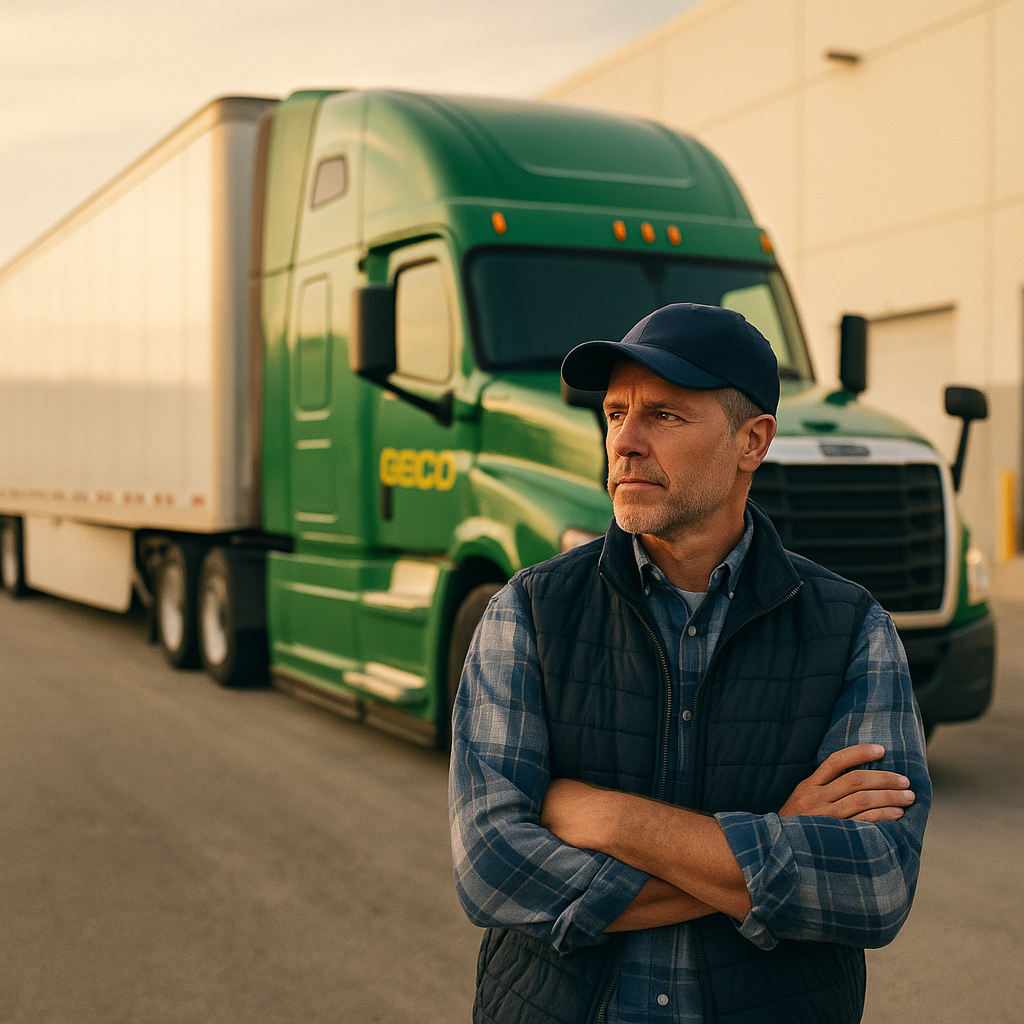

GEICO local route trucking insurance: 5 key coverages, 2026 cost drivers, FMCSA filings, and a quote checklist—get prepared to shop today.
If you’re searching for GEICO local route trucking insurance, you’re usually trying to confirm two things: (1) what coverages a short-haul operation actually needs, and (2) what details (radius, filings, cargo, limits) can delay your start date or wreck a claim.
Featured-snippet answer: GEICO markets commercial truck insurance for local-route operations, and local carriers typically ask about primary liability, physical damage (comp/collision), motor truck cargo, non-trucking liability/bobtail (when applicable), and add-ons like trailer interchange or general liability. Exact availability, limits, and filings depend on your state, vehicle, cargo, and whether you run interstate under FMCSA authority.
If you want a quick refresher on the building blocks of commercial trucking coverage, read commercial truck insurance basics before you start comparing quotes.
Note: This guide is informational and doesn’t imply an official relationship with GEICO; coverage availability and terms vary by state and underwriting.
Table of Contents
Reading time: 9 minutes
- What counts as “local route” trucking (and why insurers rate it differently)
- GEICO local route trucking insurance: the coverages to ask for (with local-route gotchas)
- 2026 cost drivers for local-route trucking insurance (with realistic examples)
- Filings + quoting: how to avoid delays and bad assumptions
- Frequently Asked Questions
- Conclusion: Compare coverage and filings before you compare price
Key takeaways (local-route reality check)
- Local route doesn’t automatically mean cheaper: stop frequency, backing, and urban traffic can increase claim frequency even with a tight radius.
- Contracts often matter more than legal minimums: broker/shipper requirements can set your required limits and endorsements.
- Filings can control your start date: interstate authority may require FMCSA filings, while intrastate-only operations may require state filings.
- Quote apples-to-apples: keep the same radius, garaging ZIP, deductibles, and limits across carriers.

What counts as “local route” trucking (and why insurers rate it differently)
“Local route” trucking is commonly rated using radius buckets (for example, 0–50 miles and 51–200 miles from your garaging location), and insurers price it based on frequency-heavy exposures like stops per day and backing.
Local work can include:
- P&D (pickup & delivery) for general freight
- Final-mile / last-mile delivery
- Food service and beverage routes
- Construction materials and jobsite runs
- Port drayage (often “local,” but not low-risk)
- Day-cab operations that return home most nights
What “local” means in plain English
Local usually equals short distance + high repetition. You run the same lanes, hit the same docks, and do more tight turns and backing than most over-the-road operations.
Why local can still be high-risk
A tighter radius can reduce exposure to high-speed interstate crashes, but local operations often increase:
- Stop count per day: more chances for small losses (bumper taps, mirrors, curb strikes).
- Backing and dock risk: property damage at facilities adds up fast.
- Urban congestion: sideswipes and low-speed collisions happen more often in dense metro areas.
If you want a deeper breakdown of underwriting variables that move premiums, review what affects the cost of truck insurance.
GEICO local route trucking insurance: the coverages to ask for (with local-route gotchas)
Local-route trucking insurance is typically built from selected coverages—primary auto liability, physical damage, and cargo are common foundations—because “full coverage” is not a defined policy term.
GEICO advertises commercial truck coverage for local, regional, and long-haul operations, but whether a carrier can write your account depends on state availability and underwriting (vehicle, cargo, losses, experience, garaging, and more). The best way to avoid quote confusion is to show up knowing the coverages and the “gotchas” that trigger contract issues.
Image placeholder (hero): Local route box truck driver reviewing commercial trucking insurance coverage
Alt text: Local route box truck driver reviewing commercial trucking insurance coverage
Coverage checklist (local-route focused)
Image placeholder (coverage table): Table of GEICO local route trucking insurance coverage options
Alt text: Table of GEICO local route trucking insurance coverage options
| Coverage | What it protects | Who typically needs it | Local-route “gotcha” to ask about |
|---|---|---|---|
| Primary auto liability | Injuries/property damage you cause | Everybody running under a commercial policy | Brokers/shippers often require limits above the legal minimum |
| Physical damage (comp/collision) | Your truck (and sometimes scheduled equipment) | Financed/leased trucks; anyone protecting the asset | Deductible selection can create cash-flow problems after a claim |
| Motor truck cargo | The freight you’re hauling | Anyone hauling broker/shipper loads; high-value local routes | Exclusions (unattended vehicle, theft rules, reefer breakdown, etc.) |
| Non-trucking liability / bobtail | Liability when not under dispatch (context-dependent) | Often leased-on owner-operators | It doesn’t replace primary liability; dispatch status controls coverage |
| Trailer interchange | Non-owned trailers in your care | Port work, drop-and-hook, some contractor setups | You may need it even on “local” runs if you handle customer trailers |
| General liability | Non-auto business claims (slip/fall, some premises exposures) | Contractors, terminals/yard exposure | Auto liability won’t cover everything that happens off-truck |
Primary liability (minimums vs real-world requirements)
Primary liability is the core of commercial trucking coverage because it protects you when you cause bodily injury or property damage to others in a crash.
- Federal minimums: interstate for-hire minimums depend on commodity and vehicle type (FMCSA financial responsibility overview: FMCSA Financial Responsibility Requirements).
- Contract minimums: your broker/shipper, facility, or lease may require higher limits than the law.
Practical move: ask your top broker or shipper for their insurance requirements sheet before you quote—one page can control limits, endorsements, and the “must-have” filing requirements.
Motor truck cargo (local delivery pitfalls)
Local routes still get cargo claims, and frequent stops and dense metro theft risk can make them more common than people expect.
Cargo is also where operators get burned on exclusions and documentation rules; if you want a deeper explainer, read motor truck cargo insurance explained.
Cargo questions to ask on a local-route submission:
- Is theft covered if the truck is unattended, and what are the security requirements?
- Are there special rules for high-theft commodities (electronics, alcohol, tobacco)?
- Reefer: does the policy exclude temperature variation unless you add an endorsement?
- What documentation is required for a claim (police report timing, bill of lading, temperature logs, etc.)?
Physical damage (comp/collision) and the “nickel-and-dime” reality
Local routes create plenty of small collisions—dock incidents, mirror clips, tight turn damage—and your deductible decides whether those claims are manageable or financially brutal.
- Too-low deductible: you may file more small claims and hurt your loss history.
- Too-high deductible: one claim can become a cash-flow crisis (especially with downtime).
Non-trucking liability / bobtail (don’t confuse it with “deadhead”)
Non-trucking liability/bobtail coverage is usually designed for times you’re not under dispatch, which is why it’s often tied to leased-on owner-operators.
Local operations reposition a lot, but “deadhead” between stops can still be under dispatch; that mismatch is a common reason for denied claims. If you want the clean definition and examples, read non-trucking liability (bobtail) explained.
Trailer interchange + general liability
If you pull non-owned trailers (common in drayage, drop lots, or contractor setups), trailer interchange may be required even if your radius is tight. General liability is often required for contracts and facility access where the customer wants protection for non-auto exposures.
2026 cost drivers for local-route trucking insurance (with realistic examples)
Local-route trucking insurance pricing is primarily driven by garaging ZIP, radius, stop frequency, cargo class, driver history, and loss frequency, and insurance remains a major component of trucking operating costs in industry benchmarking.
Insurance shows up year after year as a big line item in trucking costs; ATRI tracks industry cost benchmarks annually (see ATRI’s 2024 update: An Analysis of the Operational Costs of Trucking).
How insurers “see” your local operation
Underwriting is basically a risk profile built from your day-to-day operation details, including:
- Garaging ZIP: metro vs rural can be a major swing
- Radius: 0–50 vs 51–200 miles, and the states you enter
- Stops per day: 10 stops/day is not rated like 1 stop/day
- Delivery type: dock vs residential, liftgate, inside delivery
- Cargo class: general freight vs high-theft or higher-value commodities
- Driver MVR + experience: frequency and severity predictors
- Loss history: frequency matters even when severity is low
- Truck value/GVWR/equipment: newer trucks and specialized equipment affect physical damage
- New venture/new authority: often priced higher early on
If you want premium-reduction ideas that don’t involve cutting required limits, start with how to save money on trucking insurance.
Why “quote shock” happens
Most “my premium doubled” situations come from mismatched inputs between quote, bind, and audit.
- Radius stated too tight (then corrected later)
- Cargo described too broadly (“general freight” when it isn’t)
- Undisclosed drivers or MVR surprises
- Wrong garaging location (yard vs home vs terminal)
- Limits/deductibles changed between quotes (apples vs oranges)
Example scenarios (illustrative, not a price promise)
| Scenario | Operation | Likely price pressure points |
|---|---|---|
| A | 26’ box truck, 0–50 miles, dock-to-dock, general freight, clean MVR | Lower stop complexity; stable operation can help pricing |
| B | 16’ box truck, dense metro, 15–25 stops/day, residential + liftgate | Higher frequency exposure; more minor claims potential |
| C | Day cab, 51–200 miles, higher-value freight, newer authority | New venture + cargo value + broader radius can increase premium likelihood |
Bottom line: the “local” label matters less than the specific details that create claims.
Filings + quoting: how to avoid delays and bad assumptions
Interstate for-hire carriers operating under FMCSA authority typically need required insurance filings submitted to FMCSA (often electronically by the insurer), and a paid policy can still be “inactive” until filings are accepted and processed.
Image placeholder (filings flowchart): Flowchart showing FMCSA filings vs intrastate state filing steps
Alt text: Flowchart showing FMCSA filings vs intrastate state filing steps
If you have interstate authority (FMCSA filings)
If you operate interstate under FMCSA authority, your insurer/agent typically submits required filings when applicable (FMCSA overview: FMCSA Insurance Filing Requirements).
Key point: filings are not the same thing as buying a policy. You can pay for coverage and still be “not active” until filings are accepted/processed.
Also, don’t mix up:
- Insurance filings (submitted by the insurer/agent)
- BOC-3 (a separate process agent filing)
For a step-by-step breakdown, bookmark FMCSA authority & insurance filings guide.
If you’re truly intrastate-only (state rules)
Some local operations are intrastate only, but state requirements can differ by state DOT/PUC and may involve separate forms, limits, or filings.
Practical question to ask your agent: “Based on my operating area and commodity, do I need a state filing for this operation?”
Agent vs direct: the fastest way to get a clean quote
For local-route trucking, “direct vs agent” is less about preference and more about operational complexity.
An agent is usually worth it when you have:
- Filings (FMCSA or state)
- Cargo endorsements and contract requirements
- Multiple vehicles/drivers
- New authority/new venture
- Anything that’s likely to trigger non-standard underwriting
A simple direct/online flow can work when you have:
- One vehicle
- Straightforward radius
- Simple commodities
- Clean loss history
- No unusual contract requirements
Quote checklist (have this ready)
- DOT/MC (if applicable)
- Garaging address (actual location)
- Radius and operating states
- VIN, year/make/model, stated value
- Driver details (DOB, CDL, experience)
- Loss runs / prior claims
- Cargo/commodities + maximum load value
- Required limits from brokers/shippers
- Preferred deductibles
Frequently Asked Questions
FAQ answers below summarize common local-route coverage and filing questions, but final eligibility, limits, and forms vary by state rules, carrier underwriting, and whether you operate under FMCSA authority.
GEICO markets commercial truck insurance options that may include primary auto liability, physical damage (comprehensive/collision), motor truck cargo, non-trucking liability/bobtail (when applicable), and add-ons like trailer interchange or general liability. Availability, appetite, and maximum limits vary by state and underwriting factors such as vehicle type, garaging ZIP, cargo class, driver MVR, and prior loss history. For local routes, stop frequency and delivery type (dock vs residential) can matter as much as radius. Always request an “apples-to-apples” quote with the same limits and deductibles so you’re comparing coverage—not just price.
GEICO advertises coverage for local, regional, and long-haul trucking operations, but acceptance for a local route typically depends on your garaging ZIP, rated radius, stop frequency, cargo class, driver experience and MVR, and loss history. Local doesn’t automatically equal low-risk because repeated backing, dock traffic, and urban congestion can increase claim frequency. Quote using your real operation details (true garaging address, true radius, true commodity) because inaccuracies can lead to premium changes at audit time and can create avoidable claim disputes later.
Commercial trucking coverage is usually assembled by selecting coverages, not purchased as a single “one-size-fits-all” package. A typical local operator starts with primary auto liability, then adds physical damage if the truck is financed/leased or you need asset protection, and adds motor truck cargo if you haul broker/shipper freight. Depending on contracts, you may also need trailer interchange and/or general liability for facility access. The clean way to shop is to get your broker/shipper insurance requirements first, then quote to those limits and endorsements.
Cargo and non-trucking liability/bobtail are commonly requested coverages in trucking, but you must confirm availability and exact terms for your state and operation before you rely on them. Cargo coverage is highly dependent on commodity and exclusions (for example, unattended theft rules, high-theft commodities, and reefer temperature endorsements). Non-trucking liability is typically intended for periods when you’re not under dispatch and does not replace primary liability while you’re working. If you’re unsure where “off dispatch” begins and ends, read non-trucking liability (bobtail) explained.
If you operate interstate under FMCSA authority, required insurance filings are typically submitted by the insurer/agent to FMCSA (FMCSA overview: https://www.fmcsa.dot.gov/registration/insurance-filing-requirements). Federal financial responsibility minimums for interstate for-hire carriers vary by operation and commodity (FMCSA overview: https://www.fmcsa.dot.gov/registration/financial-responsibility-requirements-motor-carriers). If you’re intrastate-only, your state may require separate filings and/or different forms. Also remember that BOC-3 is a separate process-agent filing and is not the same thing as insurance filings.
Conclusion: Compare coverage and filings before you compare price
Local-route trucking insurance decisions should be based on correct radius, garaging, cargo, and contract-driven limits—and for interstate carriers, correct FMCSA filings—because those details determine whether you can start and whether a claim gets paid.
If you’re running local routes, don’t shop on price alone. Shop on coverage + filings + claim reality, then compare quotes that match the same limits, deductibles, and operating radius.
Key Takeaways:
- Match coverage to contracts: broker/shipper requirements can be stricter than legal minimums.
- Local risk is often frequency-driven: stops per day, backing, and urban ZIP codes can raise premiums.
- Filings affect your start date: a paid policy isn’t the same as accepted filings for interstate authority.
Related reading: If you run straight trucks or last-mile operations, see box truck insurance guide. If you’re benchmarking pricing by location, see commercial truck insurance costs by state.
When you’re ready, request 3–5 quotes with the same inputs (limits, deductibles, radius, garaging ZIP), then choose the option that protects your contracts and your cash flow.





