
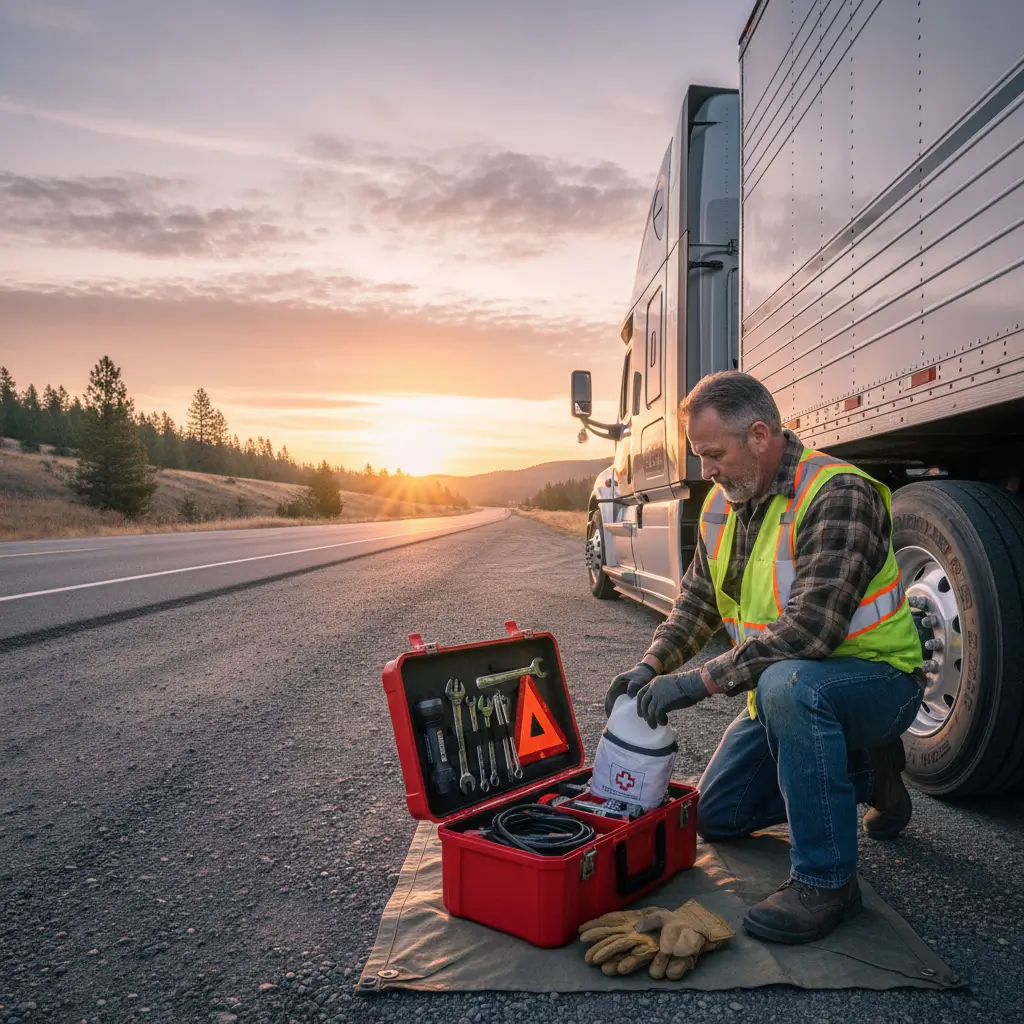

Learn high-risk truck insurance costs, coverage options, underwriting factors, filing needs, and ways to improve eligibility.
High risk commercial truck insurance can crush cash flow. Learn what triggers high-risk ratings, real cost ranges, and how to lower premiums fast—get a quote.
High risk commercial truck insurance usually means fewer carriers will quote you, premiums jump, and underwriting gets stricter—but you can still get insured and bring costs down with the right proof and policy setup.
As an owner-operator, “high risk” isn’t personal—it’s underwriting math. One claim, a rough inspection streak, a lapse, or the wrong cargo class can spike your price and threaten your authority. If you need a baseline on coverage types and filings, start with commercial truck insurance.
High-risk commercial truck insurance usually means the carrier sees a higher chance of claims due to factors like a new authority, poor loss history, CSA/inspection issues, certain cargo (hazmat/auto), urban lanes, or prior cancellations. You can still get coverage, but expect higher premiums and stricter requirements like dashcams, telematics, and safety plans.
Key Takeaways: Essential High-Risk Truck Insurance Reality Checks
- “High risk” is underwriting math, not a life sentence. New authority, violations, claims, cargo type, and cancellations are the usual triggers.
- Your fastest path to lower premiums is proof. Telematics, dashcams, maintenance logs, and a written safety plan help more than promises.
- Don’t buy coverage blind. The right limits, filings, and endorsements protect your authority and keep you booking loads (and avoid claim denials).
- Assigned risk is a last resort. It can keep you legal, but it’s rarely the best long-term financial move.
Table of Contents
Reading time: 9 minutes
- What “High Risk” Means in Commercial Truck Insurance
- 7 Reasons You’re Rated as High Risk (and What Underwriters Look At)
- What Coverage High-Risk Trucking Operations Usually Need
- How Much High Risk Commercial Truck Insurance Costs in 2026
- Assigned Risk Trucking Insurance: When It’s Used (and the Trade-Offs)
- SR-22 for Trucking: When It Matters (and When It Doesn’t)
- How to Lower Your High-Risk Premium (Without Dropping Needed Coverage)
- The Logrock Difference: Insurance Built for Owner-Operators
- Frequently Asked Questions
- Conclusion & Get a Quote

What “High Risk” Means in Commercial Truck Insurance (Plain English)
In commercial truck insurance, “high risk” means an insurer expects a higher probability of claims, higher claim severity, or higher compliance friction (filings, audits, cancellations) over a typical 6–12 month policy term.
It’s not a judgment on you as a driver—it’s how insurers protect their loss ratio and avoid policies that tend to produce expensive losses.
In practical terms, being rated high risk usually shows up as:
- Fewer carriers willing to quote you
- Higher down payments and monthly premiums
- More requirements (dashcams, telematics, driver monitoring, stricter maintenance expectations)
- Tighter claim scrutiny and stricter cancellation rules
If you’re trying to keep your authority clean, the policy structure matters as much as the price. For the basics, see commercial truck insurance requirements.
7 Reasons You’re Getting Rated as High Risk (and What Underwriters Actually Check)
Underwriters typically rate a carrier “high risk” when factors like new authority (0–24 months), at-fault losses in the last 3–5 years, CSA/inspection trends, high-risk cargo, metro lanes, or prior cancellations raise expected loss costs.
1. New Venture / New Authority (0–24 months)
- What it is: You’re new as a motor carrier (even if you’ve driven for years).
- Why it matters: New authorities are priced for uncertainty until they show clean operations.
- Who should care: Anyone with a fresh MC/DOT, especially first-time owner-operators leaving a company seat.
- Pro tip: Package your experience clearly (MVR, CDL history, prior employer verification). Don’t assume the underwriter “knows you’re solid.”
New authorities are priced for uncertainty until they show clean operations. See our guide to trucking insurance for new authority for what to expect and how to prepare.
If you’re setting up your first authority, this video walks through what to expect on auto liability and how carriers view new ventures:
2. Unsafe Driving / HOS / Vehicle Maintenance Violations (CSA + Inspection Trends)
- What it is: Repeated inspections with violations create a pattern—even if each one feels “minor.”
- Why it matters: Underwriters look at trends: roadside inspections, out-of-service (OOS) events, CSA BASIC categories, and recency.
- Who should care: Carriers running heavy through scales, urban corridors, or anywhere with frequent inspections.
- Pro tip: A documented maintenance program reduces breakdowns and underwriting heat—track PM date, mileage, and work performed.
For a deeper look at the underwriting connection, see how your DOT record affects trucking insurance.
To see exactly how inspection violations translate into higher premiums, watch this breakdown:
3. Loss History (At-Fault Accidents, Frequent Claims, or Large Payouts)
- What it is: Claims on auto liability, physical damage, cargo, or general liability.
- Why it matters: Past losses are one of the strongest predictors insurers use for future pricing, especially repeat patterns (rear-ends, lane-change claims, rollovers).
- Who should care: Everyone—especially hotshot operators on tight windows and carriers in congested metros.
- Pro tip: If a claim was not-at-fault, document it with the police report and claim closure letter.
4. Prior Cancellation / Lapse in Coverage (Non-Pay or Underwriting Cancellation)
- What it is: Any gap, late payments, or cancellation—especially non-pay—gets flagged.
- Why it matters: Insurers see non-pay as a risk-management problem and a collections problem.
- Who should care: Anyone dealing with slow-paying customers, factoring changes, or expensive repair weeks.
- Pro tip: Structure billing around cash flow (higher down + lower monthly, or align draft dates with broker pay cycles).
5. The Freight You Haul (Hazmat, Auto Haulers, Refrigerated, High-Theft Loads)
- What it is: Certain cargo types drive higher severity and theft exposure.
- Why it matters: Cargo class changes both premiums and requirements (limits, endorsements, exclusions).
- Who should care: Hazmat, auto, reefer, electronics, alcohol, pharmaceuticals, and other high-theft loads.
- Pro tip: Reefer operators should review temperature-control exclusions and reefer breakdown options—cargo denials are profit killers.
6. Equipment + Operations (Hotshot, Power-Only, Long Deadhead, Multi-State)
- What it is: Hotshot and some power-only setups can be priced for higher frequency/severity assumptions; long deadhead miles add exposure without revenue.
- Why it matters: More exposure per revenue mile increases the rate.
- Who should care: Hotshot operators, power-only, and anyone running inconsistent lanes.
- Pro tip: Underwriters like consistency—stable lanes, controlled radius, and regular customers help.
For a full breakdown of coverages and costs, see hot shot trucking insurance.
7. Location and Parking Reality (Theft/Accident Frequency by Region)
- What it is: Garaging ZIP code and common lanes affect theft and accident frequency assumptions.
- Why it matters: A truck parked in higher-theft areas or running dense metro routes is statistically a bigger risk.
- Who should care: Carriers near ports, high-density metros, and known theft hot spots.
- Pro tip: Document secure parking (yard address, gated lot, cameras). It can influence pricing and claims outcomes.
What Coverage High-Risk Trucking Operations Usually Need (So You Don’t Get Burned on a Claim)
Most high-risk owner-operators need at least $750,000 in auto liability to meet FMCSA minimums for many for-hire operations, and many brokers still require $1,000,000, plus cargo and physical damage based on contracts and equipment value.
High-risk doesn’t mean “buy everything.” It means buy what protects your authority, your truck, and your revenue—without paying for coverage that won’t respond when you need it.
1. Primary Auto Liability (The Load-Booking Minimum)
- What it is: Covers bodily injury and property damage you cause while operating.
- Why it matters: The FMCSA financial responsibility requirements set the federal baseline for many interstate operations, while brokers and shippers often still want $1M.
- Who needs it: Anyone running under their own authority (core semi truck insurance).
- Pro tip: Don’t pick limits based on “what’s legal.” Pick based on broker requirements and real lawsuit exposure.
2. Motor Truck Cargo (Because “Not My Fault” Doesn’t Pay the Claim)
- What it is: Covers cargo damage you’re responsible for.
- Why it matters: Broker-carrier agreements often push cargo responsibility onto the carrier.
- Who needs it: Anyone hauling under dispatch—not just fleets.
- Pro tip: Match limits to your real freight values; if you haul $100k loads with $50k cargo, you’re self-insuring the gap.
If you want a clean breakdown of limits, exclusions, and common endorsements, see cargo insurance for trucking.
3. Physical Damage (Comp/Collision) (Protects Your Truck-as-a-Business-Asset)
- What it is: Covers your tractor (and sometimes trailer) for collision, theft, vandalism, and weather.
- Why it matters: Lenders usually require it, and replacing a unit can wipe out a small operation.
- Who needs it: Any owner-operator who can’t replace the truck out-of-pocket tomorrow.
- Pro tip: Choose deductibles you can actually pay on a bad week.
For cost ranges and how physical damage pairs with off-dispatch coverage, see bobtail and physical damage insurance.
4. Non-Trucking Liability vs. Bobtail (Know the Difference)
These are commonly confused, and the wrong one can leave you uncovered depending on how the policy defines “dispatch” and “in the business of.”
| Coverage | When it typically applies | Common misconception |
|---|---|---|
| Non-Trucking Liability (NTL) | Personal use when you’re not under dispatch | “Covers me any time I’m not hauling” (not always true) |
| Bobtail Liability | Driving without a trailer (may be on or off dispatch depending on policy wording) | “Bobtail = off-duty” (not necessarily) |
Pro tip: Ask your agent how the policy defines “in the business of” and “dispatch.” That wording decides whether a claim is paid.
5. General Liability + Trailer Interchange (Situational, But Often Required)
- General Liability: Slip-and-fall at a dock, or property damage not tied to auto liability.
- Trailer Interchange: Covers damage to a non-owned trailer in your possession under a trailer interchange agreement.
- Who needs it: Power-only, drop-and-hook, or anyone signing interchange agreements.
How Much High Risk Commercial Truck Insurance Costs in 2026 (Realistic Ranges)
For a single power unit quoted as high risk in 2026, typical monthly premiums commonly start around $1,200–$2,500 for new authority general freight and can reach $4,000+ (or $8,000+ for hazmat/severe classes) depending on losses, violations, lanes, and limits.
Pricing varies by state, radius, cargo, experience, and your loss/violation history—but you still need usable ranges to budget.
| Operation profile (1 truck) | Typical monthly premium range | Notes |
|---|---|---|
| New authority, general freight, decent MVR | $1,200–$2,500/mo | Higher down payment is common |
| Prior claims or multiple violations | $2,000–$4,000+/mo | Fewer carrier options |
| Hotshot (depending on weights/ops) | $800–$2,200/mo | Varies widely by setup |
| Hazmat / severe exposure classes | $3,000–$8,000+/mo | Limits/filings drive cost fast |
What moves your price the most (fast)
- Any at-fault accident within 3–5 years
- Recent cancellations/lapses
- High-theft cargo and dense metro routes
- Out-of-service events and repeated inspection problems
- New venture status (first 1–2 years)
Reality check: If your premium is crushing your rate-per-mile, the fix is often operational—lane discipline, freight selection, and risk controls—not just “shopping harder.”
Assigned Risk Trucking Insurance: When It’s Used (and the Trade-Offs)
Assigned risk (also called a residual market plan in many states) is a last-resort way to obtain legally required liability coverage when standard and non-standard carriers decline to write your risk.
It can keep your authority active so you can work and rebuild your record, but it’s commonly more expensive and less flexible than the normal market.
When assigned risk is most common
- Multiple recent accidents
- Serious violations (where eligible)
- Chronic non-pay cancellations
- Very new ventures with additional red flags
Business move: Treat assigned risk as a bridge. Build 6–12 months of clean exposure, then re-market aggressively at renewal.
SR-22 for Trucking: When It Matters (and When It Doesn’t)
An SR-22 is a state DMV proof-of-financial-responsibility filing tied to a driver’s license requirement, and it is not the same as FMCSA insurance filings like an MCS-90 or BMC-91/91X.
People talk about SR-22 online like it’s a “trucking filing,” but it’s typically a state-level driver issue after serious violations, not a federal motor carrier authority requirement.
- What it is: A form your insurer files with the state to prove you carry required liability.
- What it’s not: Not the same as FMCSA filings (MCS-90, BMC-91/91X).
- Who might need it: Drivers with certain license-related requirements in their state, even if operating commercially.
Important: Requirements are state-specific. If someone says “you need SR-22 for your authority,” ask if they mean a DMV requirement (driver) or FMCSA compliance (carrier/authority).
The Logrock Difference: Insurance Built for Owner-Operators (Not Just Policies)
For owner-operators, a missed certificate of insurance (COI) or filing can stop a load the same day, so Logrock focuses on carrier fit, clean paperwork, and coverage that matches how you actually run.
What that means in practice:
- We shop trucking insurance options that fit your operation (cargo, lanes, radius, equipment)—not generic templates.
- We help keep your paperwork clean (COIs and filings), so a missed certificate doesn’t cost you a load.
- We’ll tell you the truth if your operation is priced like a blowtorch—and what to change to earn better rates.
If you’re comparing semi truck insurance or hotshot insurance, the goal isn’t just “get approved.” It’s “get approved on terms your business can survive.”
Frequently Asked Questions
The FAQs below address the most common “People Also Ask” questions, including typical 2026 cost ranges (often $1,200–$4,000+ per month for one truck) and the underwriting triggers that cause high-risk ratings.
A trucking operation is labeled “high risk” when insurers see a higher expected chance or severity of claims based on measurable factors like new authority (often the first 0–24 months), recent at-fault losses (commonly within 3–5 years), CSA/inspection and out-of-service trends, prior cancellations/lapses, high-risk cargo (hazmat/auto/high-theft freight), or dense metro lanes.
If you’re not sure what triggered the rating, ask for the underwriting reason in writing and address the specific driver (example: cancellation history versus CSA trend) with documentation, not verbal assurances.
High risk commercial truck insurance for one owner-operator commonly runs about $1,200 to $4,000+ per month, with hazmat and severe exposure classes often reaching $8,000+ per month depending on limits, state, lanes, and loss/violation history.
If you’re outside these ranges, it’s usually tied to a major red flag (recent at-fault accident, non-pay cancellation, repeated OOS/inspection issues) or an exposure mismatch (high-theft cargo, high limits required by contracts, or heavy metro operations).
Yes, new trucking companies can get insured even when rated high risk, but new ventures (often 0–24 months) typically face fewer carrier options, higher down payments, and stricter requirements like dashcams, telematics, experience verification, garaging details, and a written safety plan.
If you’re a new authority, consistency is your friend: predictable lanes, general freight, and clean documentation often underwrite better than “we’ll haul anything,” especially if you’re trying to avoid being pushed into assigned risk options.
High-risk trucking operations typically need primary auto liability (often $750,000 minimum for many for-hire operations, with many brokers requiring $1,000,000), plus cargo, physical damage, and sometimes general liability or trailer interchange depending on contracts and how you operate (power-only, drop-and-hook, etc.).
A common expensive mistake is assuming you’re protected off-duty when you’re not, so review exact policy wording—especially dispatch definitions—before you rely on it; see bobtail and non-trucking liability coverage for the differences that decide claim outcomes.
High-risk truckers lower premiums by improving measurable underwriting signals over 6–12 months: add dashcams and telematics, tighten radius and lanes, document preventive maintenance, avoid high-theft freight, reduce deadhead exposure, and prevent cancellations (especially non-pay).
Underwriters price what they can verify, so bring proof: maintenance logs, safety plan, garaging/secure parking details, and a clear explanation of any prior claim with supporting documents. Shop aggressively at renewal when your improved profile can actually be re-rated.
Yes. Underwriters commonly review FMCSA safety data and inspection patterns, including Unsafe Driving, HOS Compliance, and Vehicle Maintenance trends. A pattern of roadside violations can narrow carrier options and increase rates. Improvements may show up at renewal: a clean 6–12 month inspection record after a rough period can materially strengthen your underwriting profile.
An MCS-90 is a federal endorsement attached to primary auto liability coverage to support FMCSA financial responsibility requirements for interstate for-hire operations. It is not a separate policy. Motor carriers operating under their own authority typically need the appropriate filing arrangement through their insurer; confirm the requirements that apply to your operation before binding coverage.
Yes, but a non-pay cancellation usually narrows carrier options and can increase the down payment and premium. The fastest path back to better terms is a period of on-time payments and clean operations. Align billing with broker pay dates, build an insurance reserve, and explain any corrected cash-flow process clearly during underwriting.
A non-standard or surplus-lines carrier is a private insurer that voluntarily writes higher-risk accounts at higher rates. An assigned risk plan is a state residual-market option of last resort for risks standard and non-standard carriers decline. Non-standard markets are usually more flexible and competitive; assigned risk is best treated as a bridge while you rebuild a cleaner record.
Hauling hazmat does not automatically mean you have a poor loss profile, but it does move you into specialized underwriting with fewer willing carriers, higher limits for certain commodities, and additional compliance obligations. If hazmat is only a small part of your loads, explain that clearly so the policy reflects your actual operation rather than assuming full-time hazmat exposure.
Conclusion & Get a Quote (Build a Policy Your Business Can Actually Carry)
High risk commercial truck insurance is expensive because the insurer sees unmanaged exposure—your job is to turn your operation into something that’s easy to underwrite and hard to deny.
Key Takeaways:
- “High risk” is driven by underwriting factors you can often improve in 6–12 months.
- Buy coverage to protect your authority and revenue first—then optimize cost (not the other way around).
- Dashcams, telematics, documented maintenance, and lane discipline are premium-lowering tools, not “nice extras.”
If your premiums are squeezing your margins or you’re struggling to find carriers willing to quote you, LogRock can help you understand what is driving the rate and what to change to earn better options. Talk to our team, get honest answers about your operation, and request a quote built around how you actually run.
Related Reading: Commercial Truck Insurance for Owner Operators, Cargo Insurance Explained for Truckers, and Bobtail vs. Non-Trucking Liability: What’s the Difference?.
High risk commercial truck insurance usually means fewer carriers will quote you, premiums jump, and underwriting gets stricter—but you can still get insured and bring costs down with the right proof and policy setup.
As an owner-operator, “high risk” isn’t personal—it’s underwriting math. One claim, a rough inspection streak, a lapse, or the wrong cargo class can spike your price and threaten your authority. If you need a baseline on coverage types and filings, start with commercial truck insurance.
Featured snippet (40–60 words): High-risk commercial truck insurance usually means the carrier sees a higher chance of claims due to factors like a new authority, poor loss history, CSA/inspection issues, certain cargo (hazmat/auto), urban lanes, or prior cancellations. You can still get coverage, but expect higher premiums and stricter requirements like dashcams, telematics, and safety plans.
Key Takeaways: Essential High-Risk Truck Insurance Reality Checks
- “High risk” is underwriting math, not a life sentence. New authority, violations, claims, cargo type, and cancellations are the usual triggers.
- Your fastest path to lower premiums is proof. Telematics, dashcams, maintenance logs, and a written safety plan help more than promises.
- Don’t buy coverage blind. The right limits, filings, and endorsements protect your authority and keep you booking loads (and avoid claim denials).
- Assigned risk is a last resort. It can keep you legal, but it’s rarely the best long-term financial move.
Table of Contents
Reading time: 9 minutes
- What “High Risk” Means in Commercial Truck Insurance
- 7 Reasons You’re Rated as High Risk (and What Underwriters Look At)
- What Coverage High-Risk Trucking Operations Usually Need
- How Much High Risk Commercial Truck Insurance Costs in 2026
- Assigned Risk Trucking Insurance: When It’s Used (and the Trade-Offs)
- SR-22 for Trucking: When It Matters (and When It Doesn’t)
- How to Lower Your High-Risk Premium (Without Dropping Needed Coverage)
- The Logrock Difference: Insurance Built for Owner-Operators
- Frequently Asked Questions
- Conclusion & Get a Quote
What “High Risk” Means in Commercial Truck Insurance (Plain English)
In commercial truck insurance, “high risk” means an insurer expects a higher probability of claims, higher claim severity, or higher compliance friction (filings, audits, cancellations) over a typical 6–12 month policy term.
It’s not a judgment on you as a driver—it’s how insurers protect their loss ratio and avoid policies that tend to produce expensive losses.
In practical terms, being rated high risk usually shows up as:
- Fewer carriers willing to quote you
- Higher down payments and monthly premiums
- More requirements (dashcams, telematics, driver monitoring, stricter maintenance expectations)
- Tighter claim scrutiny and stricter cancellation rules
If you’re trying to keep your authority clean, the policy structure matters as much as the price. For the basics, see commercial truck insurance.
7 Reasons You’re Getting Rated as High Risk (and What Underwriters Actually Check)
Underwriters typically rate a carrier “high risk” when factors like new authority (0–24 months), at-fault losses in the last 3–5 years, CSA/inspection trends, high-risk cargo, metro lanes, or prior cancellations raise expected loss costs.
1. New Venture / New Authority (0–24 months)
- What it is: You’re new as a motor carrier (even if you’ve driven for years).
- Why it matters: New authorities are priced for uncertainty until they show clean operations.
- Who should care: Anyone with a fresh MC/DOT, especially first-time owner-operators leaving a company seat.
- Pro tip: Package your experience clearly (MVR, CDL history, prior employer verification). Don’t assume the underwriter “knows you’re solid.”
2. Unsafe Driving / HOS / Vehicle Maintenance Violations (CSA + Inspection Trends)
- What it is: Repeated inspections with violations create a pattern—even if each one feels “minor.”
- Why it matters: Underwriters look at trends: roadside inspections, out-of-service (OOS) events, BASIC categories, and recency.
- Who should care: Carriers running heavy through scales, urban corridors, or anywhere with frequent inspections.
- Pro tip: A documented maintenance program reduces breakdowns and underwriting heat—track PM date, mileage, and work performed.
3. Loss History (At-Fault Accidents, Frequent Claims, or Large Payouts)
- What it is: Claims on auto liability, physical damage, cargo, or general liability.
- Why it matters: Past losses are one of the strongest predictors insurers use for future pricing, especially repeat patterns (rear-ends, lane-change claims, rollovers).
- Who should care: Everyone—especially hotshot operators on tight windows and carriers in congested metros.
- Pro tip: If a claim was not-at-fault, document it with the police report and claim closure letter.
4. Prior Cancellation / Lapse in Coverage (Non-Pay or Underwriting Cancellation)
- What it is: Any gap, late payments, or cancellation—especially non-pay—gets flagged.
- Why it matters: Insurers see non-pay as a risk-management problem and a collections problem.
- Who should care: Anyone dealing with slow-paying customers, factoring changes, or expensive repair weeks.
- Pro tip: Structure billing around cash flow (higher down + lower monthly, or align draft dates with broker pay cycles).
5. The Freight You Haul (Hazmat, Auto Haulers, Refrigerated, High-Theft Loads)
- What it is: Certain cargo types drive higher severity and theft exposure.
- Why it matters: Cargo class changes both premiums and requirements (limits, endorsements, exclusions).
- Who should care: Hazmat, auto, reefer, electronics, alcohol, pharmaceuticals, and other high-theft loads.
- Pro tip: Reefer operators should review temperature-control exclusions and reefer breakdown options—cargo denials are profit killers.
6. Equipment + Operations (Hotshot, Power-Only, Long Deadhead, Multi-State)
- What it is: Hotshot and some power-only setups can be priced for higher frequency/severity assumptions; long deadhead miles add exposure without revenue.
- Why it matters: More exposure per revenue mile increases the rate.
- Who should care: Hotshot operators, power-only, and anyone running inconsistent lanes.
- Pro tip: Underwriters like consistency—stable lanes, controlled radius, and regular customers help.
7. Location and Parking Reality (Theft/Accident Frequency by Region)
- What it is: Garaging ZIP code and common lanes affect theft and accident frequency assumptions.
- Why it matters: A truck parked in higher-theft areas or running dense metro routes is statistically a bigger risk.
- Who should care: Carriers near ports, high-density metros, and known theft hot spots.
- Pro tip: Document secure parking (yard address, gated lot, cameras). It can influence pricing and claims outcomes.
What Coverage High-Risk Trucking Operations Usually Need (So You Don’t Get Burned on a Claim)
Most high-risk owner-operators need at least $750,000 in auto liability to meet FMCSA minimums for many for-hire operations, and many brokers still require $1,000,000, plus cargo and physical damage based on contracts and equipment value.
High-risk doesn’t mean “buy everything.” It means buy what protects your authority, your truck, and your revenue—without paying for coverage that won’t respond when you need it.
1. Primary Auto Liability (The Load-Booking Minimum)
- What it is: Covers bodily injury and property damage you cause while operating.
- Why it matters: Required for interstate authority and demanded by brokers/shippers; many still want $1M.
- Who needs it: Anyone running under their own authority (core semi truck insurance).
- Pro tip: Don’t pick limits based on “what’s legal.” Pick based on broker requirements and real lawsuit exposure.
2. Motor Truck Cargo (Because “Not My Fault” Doesn’t Pay the Claim)
- What it is: Covers cargo damage you’re responsible for.
- Why it matters: Broker-carrier agreements often push cargo responsibility onto the carrier.
- Who needs it: Anyone hauling under dispatch—not just fleets.
- Pro tip: Match limits to your real freight values; if you haul $100k loads with $50k cargo, you’re self-insuring the gap.
If you want a clean breakdown of limits, exclusions, and common endorsements, see cargo insurance for trucking.
3. Physical Damage (Comp/Collision) (Protects Your Truck-as-a-Business-Asset)
- What it is: Covers your tractor (and sometimes trailer) for collision, theft, vandalism, and weather.
- Why it matters: Lenders usually require it, and replacing a unit can wipe out a small operation.
- Who needs it: Any owner-operator who can’t replace the truck out-of-pocket tomorrow.
- Pro tip: Choose deductibles you can actually pay on a bad week.
4. Non-Trucking Liability vs. Bobtail (Know the Difference)
These are commonly confused, and the wrong one can leave you uncovered depending on how the policy defines “dispatch” and “in the business of.”
| Coverage | When it typically applies | Common misconception |
|---|---|---|
| Non-Trucking Liability (NTL) | Personal use when you’re not under dispatch | “Covers me any time I’m not hauling” (not always true) |
| Bobtail Liability | Driving without a trailer (may be on or off dispatch depending on policy wording) | “Bobtail = off-duty” (not necessarily) |
Pro tip: Ask your agent how the policy defines “in the business of” and “dispatch.” That wording decides whether a claim is paid.
5. General Liability + Trailer Interchange (Situational, But Often Required)
- General Liability: Slip-and-fall at a dock, or property damage not tied to auto liability.
- Trailer Interchange: Covers damage to a non-owned trailer in your possession under a trailer interchange agreement.
- Who needs it: Power-only, drop-and-hook, or anyone signing interchange agreements.
How Much High Risk Commercial Truck Insurance Costs in 2026 (Realistic Ranges)
For a single power unit quoted as high risk in 2026, typical monthly premiums commonly start around $1,200–$2,500 for new authority general freight and can reach $4,000+ (or $8,000+ for hazmat/severe classes) depending on losses, violations, lanes, and limits.
Pricing varies by state, radius, cargo, experience, and your loss/violation history—but you still need usable ranges to budget.
| Operation profile (1 truck) | Typical monthly premium range | Notes |
|---|---|---|
| New authority, general freight, decent MVR | $1,200–$2,500/mo | Higher down payment is common |
| Prior claims or multiple violations | $2,000–$4,000+/mo | Fewer carrier options |
| Hotshot (depending on weights/ops) | $800–$2,200/mo | Varies widely by setup |
| Hazmat / severe exposure classes | $3,000–$8,000+/mo | Limits/filings drive cost fast |
What moves your price the most (fast)
- Any at-fault accident within 3–5 years
- Recent cancellations/lapses
- High-theft cargo and dense metro routes
- Out-of-service events and repeated inspection problems
- New venture status (first 1–2 years)
Reality check: If your premium is crushing your rate-per-mile, the fix is often operational—lane discipline, freight selection, and risk controls—not just “shopping harder.”
Assigned Risk Trucking Insurance: When It’s Used (and the Trade-Offs)
Assigned risk (also called a residual market plan in many states) is a last-resort way to obtain legally required liability coverage when standard and non-standard carriers decline to write your risk.
It can keep your authority active so you can work and rebuild your record, but it’s commonly more expensive and less flexible than the normal market.
When assigned risk is most common
- Multiple recent accidents
- Serious violations (where eligible)
- Chronic non-pay cancellations
- Very new ventures with additional red flags
Business move: Treat assigned risk as a bridge. Build 6–12 months of clean exposure, then re-market aggressively at renewal.
SR-22 for Trucking: When It Matters (and When It Doesn’t)
An SR-22 is a state DMV proof-of-financial-responsibility filing tied to a driver’s license requirement, and it is not an FMCSA authority filing like an MCS-90 or a BMC-91/91X.
People talk about SR-22 online like it’s a “trucking filing,” but it’s typically a state-level driver issue after serious violations, not a federal motor carrier authority requirement.
- What it is: A form your insurer files with the state to prove you carry required liability.
- What it’s not: Not the same as FMCSA filings (MCS-90, BMC-91/91X).
- Who might need it: Drivers with certain license-related requirements in their state, even if operating commercially.
Important: Requirements are state-specific. If someone says “you need SR-22 for your authority,” ask if they mean a DMV requirement (driver) or FMCSA compliance (carrier/authority).
The Logrock Difference: Insurance Built for Owner-Operators (Not Just Policies)
For owner-operators, a missed certificate of insurance (COI) or filing can stop a load the same day, so Logrock focuses on carrier fit, clean paperwork, and coverage that matches how you actually run.
What that means in practice:
- We shop trucking insurance options that fit your operation (cargo, lanes, radius, equipment)—not generic templates.
- We help keep your paperwork clean (COIs and filings), so a missed certificate doesn’t cost you a load.
- We’ll tell you the truth if your operation is priced like a blowtorch—and what to change to earn better rates.
If you’re comparing semi truck insurance or hotshot insurance, the goal isn’t just “get approved.” It’s “get approved on terms your business can survive.”
Frequently Asked Questions
The FAQs below address the most common “People Also Ask” questions, including typical 2026 cost ranges (often $1,200–$4,000+ per month for one truck) and the underwriting triggers that cause high-risk ratings.
A trucking operation is labeled “high risk” when insurers see a higher expected chance or severity of claims based on measurable factors like new authority (often the first 0–24 months), recent at-fault losses (commonly within 3–5 years), CSA/inspection and out-of-service trends, prior cancellations/lapses, high-risk cargo (hazmat/auto/high-theft freight), or dense metro lanes.
If you’re not sure what triggered the rating, ask for the underwriting reason in writing and address the specific driver (example: cancellation history versus CSA trend) with documentation, not verbal assurances.
High risk commercial truck insurance for one owner-operator commonly runs about $1,200 to $4,000+ per month, with hazmat and severe exposure classes often reaching $8,000+ per month depending on limits, state, lanes, and loss/violation history.
If you’re outside these ranges, it’s usually tied to a major red flag (recent at-fault accident, non-pay cancellation, repeated OOS/inspection issues) or an exposure mismatch (high-theft cargo, high limits required by contracts, or heavy metro operations).
Yes, new trucking companies can get insured even when rated high risk, but new ventures (often 0–24 months) typically face fewer carrier options, higher down payments, and stricter requirements like dashcams, telematics, experience verification, garaging details, and a written safety plan.
If you’re a new authority, consistency is your friend: predictable lanes, general freight, and clean documentation often underwrite better than “we’ll haul anything,” especially if you’re trying to avoid being pushed into assigned risk options.
High-risk trucking operations typically need primary auto liability (often $750,000 minimum for many for-hire operations, with many brokers requiring $1,000,000), plus cargo, physical damage, and sometimes general liability or trailer interchange depending on contracts and how you operate (power-only, drop-and-hook, etc.).
A common expensive mistake is assuming you’re protected off-duty when you’re not, so review exact policy wording—especially dispatch definitions—before you rely on it; see bobtail and non-trucking liability coverage for the differences that decide claim outcomes.
High-risk truckers lower premiums by improving measurable underwriting signals over 6–12 months: add dashcams and telematics, tighten radius and lanes, document preventive maintenance, avoid high-theft freight, reduce deadhead exposure, and prevent cancellations (especially non-pay).
Underwriters price what they can verify, so bring proof: maintenance logs, safety plan, garaging/secure parking details, and a clear explanation of any prior claim with supporting documents. Shop aggressively at renewal when your improved profile can actually be re-rated.
Conclusion & Get a Quote (Build a Policy Your Business Can Actually Carry)
High risk commercial truck insurance is expensive because the insurer sees unmanaged exposure—your job is to turn your operation into something that’s easy to underwrite and hard to deny.
Key Takeaways:
- “High risk” is driven by underwriting factors you can often improve in 6–12 months.
- Buy coverage to protect your authority and revenue first—then optimize cost (not the other way around).
- Dashcams, telematics, documented maintenance, and lane discipline are premium-lowering tools, not “nice extras.”
If you want a straight answer on what’s driving your rate (and what to do next), request a quote and we’ll map out the fastest path to better options.
Related Reading: Commercial Truck Insurance: What Owner-Operators Actually Need, Cargo Insurance Explained for Truckers, and Bobtail vs. Non-Trucking Liability: What’s the Difference?.





