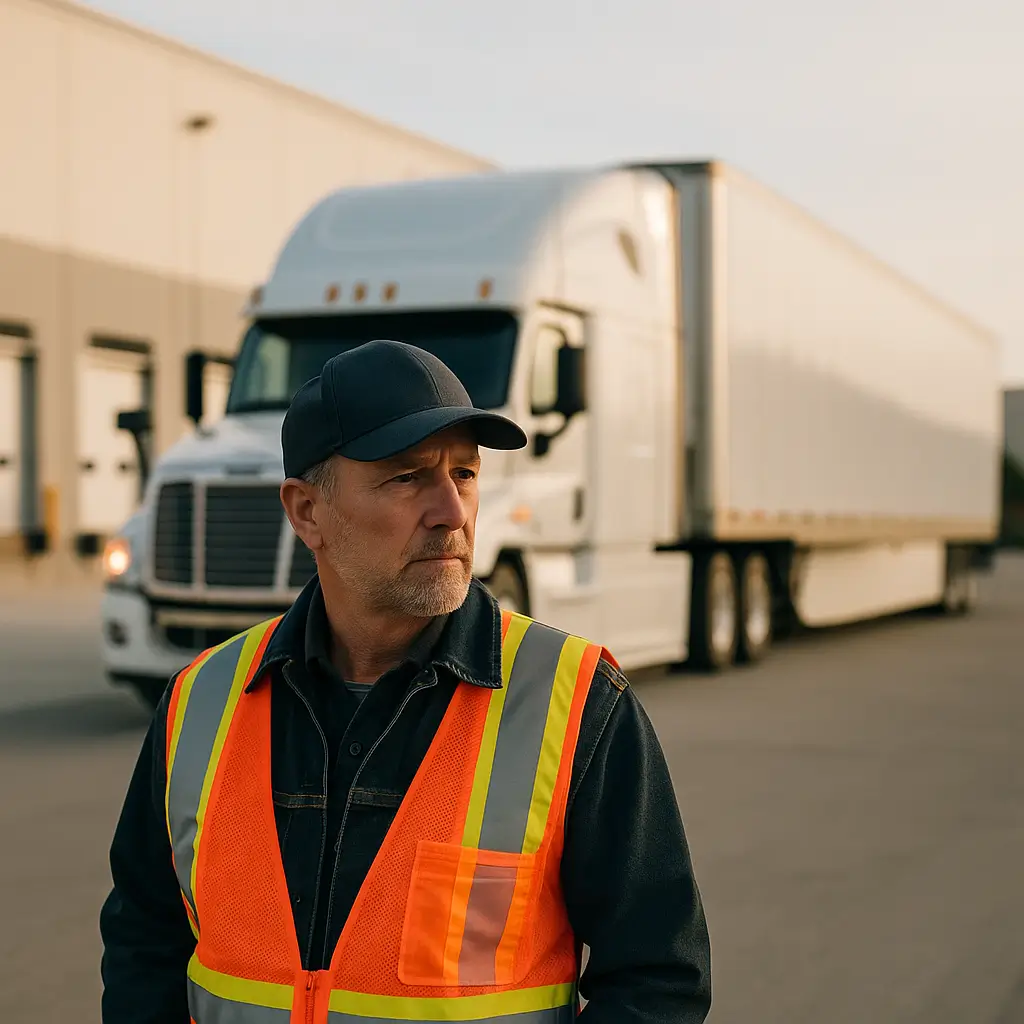
Compare high-risk commercial truck insurance companies, 2026 cost ranges, carrier vs. MGA options, approval tips, and quotes.

High risk commercial truck insurance companies are usually not a single “magic insurer,” but a mix of carriers and specialty programs accessed through MGAs/wholesalers that will write tough risks and file what you need. You’re typically labeled high-risk when you have recent accidents/claims, major violations, a lapse/cancellation, new authority, or higher-severity operations (long radius, theft-prone freight, high-value cargo). The fastest way to get approved is submitting a clean, complete package the first time.
If you want the quick baseline before you shop the “hard-to-place” markets, start with trucking insurance basics for owner-operators.
Table of Contents
Reading time: 8 minutes
What “High-Risk” Means for Commercial Truck Insurance (and the Red Flags That Trigger It)
In commercial truck insurance underwriting, “high-risk” means the insurer expects above-average loss frequency or loss severity based on your driving history, insurance history, and safety/compliance signals.
It can also mean “hard-to-place” even when you’re doing things right, because some combinations of cargo + lane + parking + radius are just tougher to price (high theft, high value, time-critical freight, or frequent stops).
Red flags that commonly trigger a high-risk label
Underwriters don’t just listen to a story—they check patterns that show up in records, inspections, and prior policy performance. If you’re getting pushed into specialty markets, it’s usually because of one (or more) of these:
- New venture / new authority: Limited or no loss history, limited verifiable commercial experience. If you’re a new venture looking for your first policy, see what to expect with new venture trucking insurance.
- Recent major violations: DUI, reckless, excessive speeding, operating out of class.
- At-fault accidents or poor loss runs: Frequency matters, but severity can matter more.
- Lapse/cancellation/non-pay: Indicates instability to many carriers.
- Long radius / multi-state: Higher miles often means higher exposure.
- High-theft lanes or unsecured parking: Especially painful for cargo-heavy operations.
What the public (and many underwriters) can see
FMCSA’s SAFER system is one reason safety history follows you across agents and markets. Underwriters also commonly check your SMS BASIC scores at FMCSA’s Safety Measurement System — review both before submitting an application. You can check your snapshot here: https://safer.fmcsa.dot.gov/
If you want to understand how compliance history shows up in pricing, read DOT record and trucking insurance underwriting signals.
Minimum Coverages You’ll Still Need (Even if You’re High-Risk)
FMCSA financial responsibility minimums for most interstate for-hire carriers are $750,000 for non-hazardous property and can be $1,000,000 to $5,000,000 for certain hazardous materials under 49 CFR Part 387.
Being “high-risk” doesn’t change the basics: to run loads and get paid, you still need the right coverages and the right filings (and your broker/shipper contracts may require higher limits than the federal minimum).
Use FMCSA as your source of truth for filings
FMCSA’s insurance filing overview is here (requirements vary by operation/cargo): https://www.fmcsa.dot.gov/registration/insurance-filing-requirements
The “most common” coverage stack owner-operators end up needing
| Coverage | What it protects | Who may require it |
|---|---|---|
| Auto liability + filings | Injury/property damage to others; supports federal/state filings when required | FMCSA + brokers/shippers |
| Motor truck cargo | The freight you’re hauling (subject to exclusions and sublimits) | Brokers/shippers |
| Physical damage | Your truck (comprehensive/collision) | Lender/lease agreement |
| General liability | Non-auto claims (slip/fall, premises/operations) | Shippers/warehouses |
| Trailer interchange | Non-owned trailers in your care, custody, and control | Interchange agreements |
Cargo is where high-risk accounts get expensive fast, especially with theft restrictions and unattended-vehicle language. Before you bind, review motor truck cargo insurance basics so you don’t buy a limit that looks fine on paper but fails on a claim. For a breakdown of what GL actually covers for motor carriers, see general liability for trucking businesses.
Reality check: If you’re doing hotshot, expedite, or mixed-use work, your application needs to match reality (radius, commodity, garaging). Mismatches often lead to audits, re-rates, and cancellations.
The 3 Real Paths to High-Risk Commercial Truck Insurance (and 11 Options to Try)
Most high-risk trucking placements in the U.S. happen through three paths: admitted standard carriers, non-admitted specialty/E&S markets accessed via MGAs/wholesalers, and assigned risk mechanisms used as a last-resort bridge.
Path 1: Standard carriers (best pricing, strict rules)
If your risk is “borderline” (older ticket, minor claim, limited radius), a standard carrier may still compete—especially if you have consistent operations and clean documentation.
Path 2: Specialty / E&S via MGAs and wholesalers (most common for high-risk)
This is where many new ventures, lapses, tougher lanes, and cargo-heavy operations land. An MGA/wholesale broker can access specialty programs that don’t market directly to the public. For a broader look at what’s available, see high-risk insurance carriers: 12 options + 2026 costs.
Path 3: Assigned risk (last resort bridge)
If you’re getting multiple declinations, assigned risk can keep you legal while you build 6–24 months of continuous coverage and then re-shop into the voluntary market.
Before you shop these 11 options, it helps to understand exactly which FMCSA violations are driving your placement into specialty markets:
New authority is one of the most common “high-risk” triggers, so tighten your timeline and paperwork with FMCSA authority application prep.
The 11 high risk commercial truck insurance companies (and channels) to ask for
Availability changes by state and underwriting appetite, so treat this as a short-list to discuss with your agent—not a guarantee of acceptance. Some names below are carriers, while others are channels (MGA/wholesale/assigned risk) that place you with a carrier.
- Progressive Commercial (carrier): Often competitive for many owner-operators; appetite depends on state, experience, loss history, and operation. If your main concern is getting placed as a new authority, compare options in best trucking insurance for new authority (2026).
- The Hartford (carrier): Strong on certain commercial auto programs; trucking appetite varies by operation/state.
- Nationwide (carrier): Sometimes a market option for tougher commercial auto risks; eligibility varies widely.
- Great West Casualty (carrier): Trucking-focused carrier; can be selective, but strong fit when your operation aligns.
- Sentry (carrier): Writes trucking in many regions; program structure varies by state.
- Allianz (cargo specialty / market option): Often relevant when cargo complexity drives placement (limits, exclusions, specialty freight).
- National Indemnity (carrier group / market option): Referenced for specialty placements; verify current appetite by state.
- Specialty MGA programs (channel): Where many new ventures and high-risk accounts get placed; ask which carrier is backing the paper.
- Wholesale/E&S brokers (channel): Useful when you’ve got multiple declinations and need access to non-admitted markets.
- State assigned risk plan (mechanism): Not “good,” but it can keep you rolling legally while you rebuild.
- Regional carriers & program administrators (carrier/program): Sometimes the best fit for specific lanes, garaging states, or niche operations.
What to ask before you bind (so you don’t get burned)
- Driver eligibility: Minimum CDL time and verifiable commercial experience?
- Lookback windows: How far back do they rate major violations and at-fault accidents?
- Cargo restrictions: Exclusions, theft sublimits, unattended-vehicle rules, high-theft parking requirements?
- Payment terms: Down payment, installment options, cancellation terms?
- Claims/loss control: Any coaching, safety resources, or vendor programs?
2026 Cost Benchmarks + Approval Checklist (What to Budget and How to Get “Yes” Faster)
ATRI’s Operational Costs of Trucking research consistently lists insurance premiums as a major component of trucking cost-per-mile pressure, which is why budgeting by tier is more realistic than chasing one “average” price.

2026 cost planning ranges (use tiers, not a single number)
These are planning ranges per power unit many owner-operators use to sanity-check cash flow; your actual price will vary by state, limits, filings, vehicle value, radius, cargo, and loss history.
| Risk tier | What it typically looks like | Planning range (annual premium per power unit) |
|---|---|---|
| Borderline | Minor issues, stable ops, clean recent period | $10,000–$18,000 (often financeable; more standard options) |
| Moderate high-risk | New venture, recent ticket/claim, tougher lanes or cargo | $18,000–$35,000 (larger down payments, tighter terms) |
| Severe / last resort | Multiple majors, ugly loss runs, repeated lapses/cancellations | $35,000–$60,000+ (specialty-only or assigned risk) |
If you want the clean list of rating variables that move you between tiers, review what affects the cost of truck insurance.
Approval checklist: what underwriters want in the first submission
Underwriters move faster when you submit like a business, because incomplete submissions are one of the biggest reasons quotes stall out in high-risk markets.
- Driver list: DOB, license number/state, hire date, years CDL, years verifiable commercial experience.
- Equipment schedule: VINs, year/make/model, stated value, any liens/lender requirements.
- Garaging & parking: Garaging address and where it parks overnight (secure yard vs street vs paid lot).
- Operations: True operating radius, top states/lanes, estimated annual mileage, dispatch model.
- Commodities: Specific list (vague “general freight” can trigger extra questions if you haul higher severity freight).
- Insurance history: Prior dec pages + 3–5 years of loss runs if available.
- Red-flag explanation: A short, written explanation for any lapse, cancellation, major violation, or large claim (what changed and what controls you added).
If you want to walk through each rating variable before your next submission, this breakdown covers the full list:
Fast ways to lower premiums (without playing games)
The quickest premium wins usually come from things underwriters can measure and verify at renewal.
- Stop coverage gaps: Continuous coverage is one of the fastest ways out of “high-risk.”
- Reduce theft exposure: Secure parking proof matters, especially for cargo-heavy operations.
- Document safety: Maintenance logs, driver coaching, and inspection readiness reduce “uncontrolled risk” signals.
- Match the policy to reality: Wrong radius/cargo/garaging leads to audits, re-rates, and cancellations.
For the full list of levers, see 11 ways to lower trucking insurance premiums (2026).
Frequently Asked Questions
These FAQs answer the most common questions about high risk commercial truck insurance companies, approval speed, and 2026 budgeting using FMCSA filing rules and standard underwriting documentation.
Most “high-risk truck insurance companies” you see advertised are channels (agents, brokers, MGAs, wholesalers) that place you with a carrier, not a carrier themselves. In practice you have three options: (1) admitted standard carriers if you’re borderline, (2) non-admitted specialty/E&S programs accessed through MGAs/wholesalers for new ventures, lapses, or tougher histories, and (3) assigned risk as a last resort to stay legal while you rebuild. Ask your agent, “Who is the paper (carrier)?” and “Is this admitted or non-admitted?” before you pay a down payment.
An admitted carrier is licensed by your state’s insurance department, meaning premiums are regulated and the state guaranty fund may cover claims if the insurer becomes insolvent. A non-admitted (E&S) carrier is not licensed in your state but is legally allowed to write coverage there for risks standard markets won’t take. Non-admitted carriers have more pricing flexibility, which is why high-risk and specialty trucking accounts often land there — but you give up state guaranty fund protection. Always ask your agent whether the paper (carrier backing the policy) is admitted or non-admitted before you pay a down payment.
You get approved faster by submitting a complete underwriting package on day one: driver list (DOB, license, experience), unit schedule (VINs and values), garaging/overnight parking, radius and lanes, commodities, prior dec pages, and 3–5 years of loss runs if available. High-risk markets also move quicker when you explain red flags up front (lapse, cancellation, major violation, or claim) with a short corrective-action note. If you’re new authority, align your filings timeline with FMCSA authority application prep so your insurance filings don’t delay activation.
Yes, but you’ll likely be pushed into specialty or E&S markets, and your options will narrow significantly in the first 3–5 years after the conviction. Some programs will write DUI-affected accounts with restrictions (higher deductibles, limited radius, tighter cancellation terms). What matters most: how recent the violation is, whether you have additional violations or claims, and whether you can show documented improvement (continuous coverage, safety records, clean period since the incident). A surplus lines broker or MGA with trucking appetite is your best path. Trying standard carriers first usually wastes time. For more context, review commercial truck insurance for high-risk drivers.
Cost benchmarks for high-risk trucking in 2026 are best estimated by tier: many borderline accounts budget $10,000–$18,000 per power unit annually, moderate high-risk accounts budget $18,000–$35,000, and severe/last-resort placements can run $35,000–$60,000+, depending on state, limits, radius, cargo, and loss history. Specialty markets also commonly require larger upfront payments (often 25%–40%) and tighter cancellation terms than standard carriers. For the variables that move the needle most (garaging state, radius, commodity, driver experience, vehicle value, filings), see what affects the cost of truck insurance.
Most underwriters look back 3–5 years on insurance history, and a lapse — even a short one — signals financial instability or operational gaps. A single short lapse (under 30 days) may only push you from standard to borderline pricing. Repeated lapses, non-pays, or cancellations can land you in specialty/E&S markets for 2–3 renewal cycles before standard carriers will look at you again. The fastest fix is to get placed now (even at a higher rate), maintain continuous coverage, and let time and clean claims history work in your favor. Never let a policy cancel for non-pay — if cash is tight, call your agent before the cancellation date and ask about reinstatement options.
Specialty and E&S markets commonly require 25%–40% down at binding, compared to 10%–20% for standard carriers. For a $25,000 annual premium, that means $6,250–$10,000 due upfront. Some programs offer premium finance options (where a third-party lender pays the carrier and you pay the lender in installments), but high-risk accounts typically face tighter cancellation terms — often a 10-day notice vs. the standard 30 days for non-pay. Build this into your cash flow planning before you bind. If you can’t fund the down payment, talk to your agent about premium finance before the quote expires.
You can lower high-risk trucking insurance premiums by improving the factors underwriters credit at renewal: continuous coverage (no lapses), fewer and smaller claims, secure overnight parking (especially for cargo), and documented safety routines like maintenance logs and driver coaching. You can also reduce premium by adjusting deductibles, but only if you have cash reserves to pay them after a loss. The biggest avoidable mistake is misrepresenting operations (radius/cargo/garaging), which can trigger audits, re-rates, or cancellation. For a 30–90 day punch list, use affordable trucking insurance: how to save on coverage.
For high-risk accounts specifically, working with an agent or MGA broker is almost always the better path. Very few specialty carriers write direct-to-public for non-standard trucking risks, and even the ones that do (like Progressive) have eligibility criteria that vary significantly by state. An agent who specializes in trucking can access multiple markets in a single submission, help you frame red flags, and match your operation to the programs most likely to approve you. The cost is the same — agents are compensated through carrier commissions, not upfront fees (beware any agent charging a large “placement fee” before presenting quotes). For more context, see how a dedicated truck insurance broker for owner-operators can help.
Conclusion: Get Placed Now—Then Work Your Way Back to Standard Rates
A high-risk trucking account can often move back toward standard markets in 6–24 months with continuous coverage, stable operations, and a clean claims trend. The play is simple: get placed with the right market path today, then fix what underwriters can measure before your next renewal.
Key Takeaways:
- High-risk is an underwriting bucket tied to expected losses, not a permanent label.
- You usually have three paths: standard carrier, specialty/E&S via MGA/wholesale, or assigned risk as a bridge.
- The fastest approvals come from a complete submission (drivers, VINs, cargo, lanes, loss runs) with red flags explained up front.
If you’re getting your first quotes as a new authority account, here’s what to expect:
Related reading (pick what matches your operation):
- Hotshot insurance for 1-ton/dually + trailer operations and mixed freight
- Semi truck insurance for owner-operators planning long-term coverage upgrades and better rates