
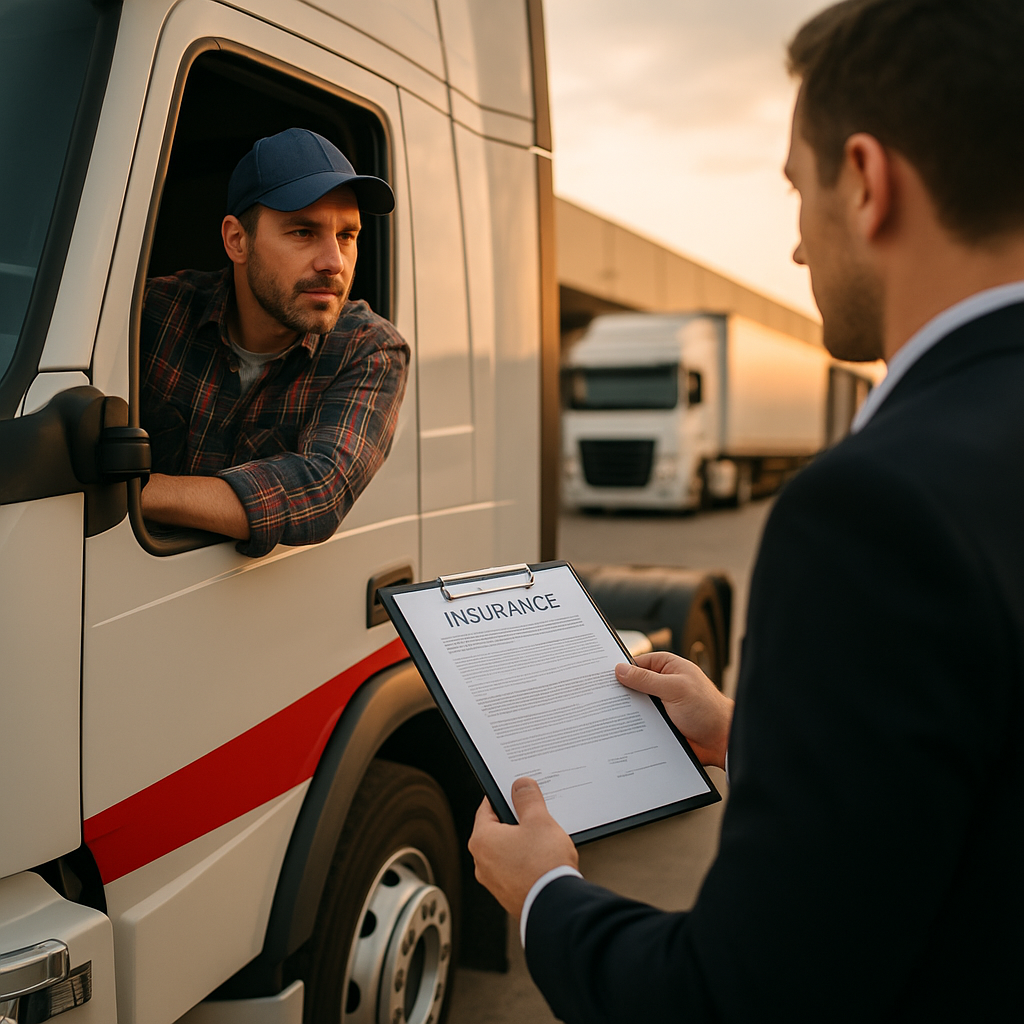

Learn how commercial auto insurance works—coverages, add-ons, claims, and 2026 cost drivers—plus trucking examples. Get quotes fast.
How does commercial auto insurance work? Commercial auto insurance works like personal auto insurance, but it’s written for business driving: it pays covered liability claims (injury/property damage) and can add physical damage (collision/comprehensive) for your vehicles, all subject to policy limits, deductibles, and exclusions. In practice, the insurer prices your risk based on business use—miles, drivers, vehicle type/weight, radius, and jobsite or delivery exposure—because those factors change claim frequency and severity.
If you’re running loads, hauling tools, making deliveries, or dispatching drivers, a personal policy can turn into a claim denial and a cash-flow crisis. Start with the fundamentals of commercial auto insurance basics so you can choose limits that actually match your operation—not just the cheapest proof-of-insurance card.
Table of Contents
Reading time: 8 minutes
- Key takeaways
- When you need commercial auto (and why personal auto often fails)
- What commercial auto insurance covers (and what it doesn’t)
- Optional add-ons that close the most expensive gaps (HNOA + contract needs)
- Claims, compliance, and cost in 2026 (what affects your premium the most)
- Next steps: pick smart limits, close gaps, and protect your cash flow
- Frequently Asked Questions

Key takeaways
Commercial auto insurance is a state-regulated policy contract that typically combines liability coverage, optional physical damage, and endorsements into one set of terms, limits, and deductibles for business-owned or business-used vehicles.
- Commercial auto is a contract: You pay premium; the insurer pays covered claims and often provides legal defense—up to your limits.
- Coverage depends on how you operate: Vehicles, drivers, radius, and business use classification matter as much as the truck itself.
- Endorsements prevent common gaps: Especially Hired & Non-Owned Auto (HNOA) if you rent/borrow vehicles or employees run errands in personal cars.
- Cost control is operational: Driver selection, telematics/dashcams, clean records, and accurate classifications often move premiums more than “shopping harder.”
When you need commercial auto (and why personal auto often fails)
Commercial auto insurance is designed for vehicles used in business activities (deliveries, hauling tools, for-hire work, employee driving), and many personal auto policies exclude or restrict those uses—creating a real claim-denial risk if your driving doesn’t match the policy.
What it is (plain English)
Commercial auto is built around business exposure: more miles, more stops, more drivers, heavier vehicles, and higher-severity losses when something goes wrong.
Why it’s essential (real-world risk)
When an adjuster sees business use, they’ll check whether the policy was rated and written for business use. Owner-operators, contractors, hotshot drivers, and anyone with employees behind the wheel usually carry more exposure than a commuter sedan.
- More time on the road means more chances to be hit by distracted drivers.
- Higher weight and size can increase property damage and injury severity.
- Tight delivery windows and urban routes can increase low-speed crash frequency.
- Multiple drivers introduce more variability (and more underwriting scrutiny).
If you want the practical differences spelled out (and where denials come from), read this breakdown of commercial auto vs personal auto insurance comparison.
Who needs it (common triggers)
You typically need commercial auto insurance if any of these are true:
- The vehicle is titled to an LLC/corporation (or financed in the business name).
- You haul tools/materials regularly (contractors, service vans, jobsite trucks).
- You deliver goods, food, or equipment (even local routes).
- Employees drive—full-time or “just sometimes.”
- You’re in trucking (commercial truck insurance, semi truck insurance, or hotshot insurance exposures), especially for-hire hauling.
Pro tip (avoid a coverage gap)
Don’t assume “I’m a sole prop” means personal auto is fine. Ask your agent/carrier in writing whether your policy allows your exact use case (deliveries, for-hire, tools, jobsite visits, multiple drivers), and keep that documentation with your records.
What commercial auto insurance covers (and what it doesn’t)
Most commercial auto policies start with liability (bodily injury and property damage) and then layer in physical damage (collision and comprehensive) plus optional coverages, with payment capped by your limits and reduced by deductibles where applicable.
What it is (the coverage building blocks)
Below is a plain-language map of the coverages you’ll see most often on business auto policies.
| Coverage | What it generally pays for | Why it matters to small operators |
|---|---|---|
| Liability (BI/PD) | Injuries and property damage you cause to others | This is the “one claim can wipe you out” coverage |
| Medical Payments / PIP (where applicable) | Medical costs for occupants (rules vary by state) | Helps with immediate medical bills depending on state/policy |
| Uninsured / Underinsured Motorist | Injuries/damages when the at-fault driver can’t pay | Protects you from broke or underinsured drivers |
| Collision | Repair/replace your vehicle after a crash (deductible applies) | Keeps your truck earning instead of sitting |
| Comprehensive | Theft, fire, vandalism, hail, animal strike (deductible applies) | Critical if you park outside, run rural routes, or face storm risk |
| Towing / roadside / rental (optional) | Towing, jump starts, substitute vehicle costs | Reduces downtime costs (but check limits) |
For consumer-friendly definitions that also apply to how commercial policies think about liability vs physical damage, see the NAIC explainer: https://content.naic.org/consumer/auto-insurance.
What it typically does not cover
These are common “surprise” gaps that show up at claim time:
- Mechanical breakdown / wear and tear: Maintenance isn’t an insurable accident.
- Intentional acts: Deliberate damage isn’t covered.
- Undisclosed high-hazard use: For-hire hauling, hotshot operations, hazmat, or other uses can be excluded or disputed if not properly rated and disclosed.
- Non-auto business liability: A slip-and-fall at your shop isn’t an auto claim.
That last point matters: commercial auto is not a replacement for general liability vs auto coverage differences. In trucking terms, auto follows the truck; GL follows your business operations.
Who needs extra attention here (trucking-specific note)
If you’re pulling for-hire loads, your needs often look more like trucking insurance (commercial truck insurance, semi truck insurance, hotshot insurance) than a basic contractor pickup policy—especially once broker, shipper, or motor-carrier authority requirements enter the picture.
Optional add-ons that close the most expensive gaps (HNOA + contract needs)
Hired and Non-Owned Auto (HNOA) is an endorsement that typically adds liability protection for vehicles your business doesn’t own—like rentals, borrowed vehicles, or employees’ personal cars used for work errands.
What it is (the gap most small businesses miss)
A common problem for small operators is assuming “we don’t own many vehicles, so we’re fine,” then getting hit with a business-related accident in a rented van or an employee’s personal car.
Use this guide to understand the coverage clearly: Hired and non-owned auto (HNOA) explained.
Why it’s essential (what it actually protects)
- Hired Auto: Liability when you rent, lease, or borrow a vehicle for business.
- Non-Owned Auto: Liability when employees use personal cars for business errands.
Important: HNOA is usually about liability, not physical damage to the employee’s car. Their personal policy typically handles their vehicle—if the situation is covered.
Who needs it (quick self-check)
You should strongly consider HNOA if:
- You ever rent vehicles (Home Depot runs, jobsite swaps, temporary replacement vehicles).
- Employees use personal cars for bank deposits, parts runs, or customer visits.
- Contracts require it (many do—even for small fleets).
Pro tip (COI and contract reality)
Brokers, shippers, and general contractors don’t care what you meant to buy—they care what your Certificate of Insurance shows (limits, named insured, additional insureds, waivers, and endorsements).
Claims, compliance, and cost in 2026 (what affects your premium the most)
Commercial auto premiums in 2026 are primarily driven by measurable underwriting inputs—drivers (MVR/claims), vehicle type/value, mileage and radius, business class (delivery vs contractor vs for-hire), and the limits/deductibles you choose.
How claims work (what to do after a crash)
Commercial claims are won or lost on documentation and timing—especially if injuries are involved.
A practical post-accident workflow:
- Safety first: Triangles, move if safe, call EMS if needed.
- Document the scene: Photos, skid marks, DOT numbers, plates, location.
- Get a report: Police/incident report when appropriate.
- Report promptly: Late notice can create coverage disputes.
- Expect an investigation: Driver statement, dashcam, maintenance, logs if relevant.
- Settlement/repairs: Deductibles apply to physical damage.
For a more detailed checklist and documentation timeline, use how to file an insurance claim.
Legal requirements (state rules vs trucking rules)
Most businesses must meet state financial responsibility rules, but interstate for-hire trucking can add federal requirements and insurance filings depending on authority, commodity, and operation type.
FMCSA publishes insurance filing requirements and minimum public liability limits (for example, $750,000 for many for-hire interstate carriers and up to $5,000,000 for certain hazmat, depending on commodity and operation): https://www.fmcsa.dot.gov/registration/insurance-filing-requirements.
Commercial auto insurance cost in 2026 (what drives price)
Underwriters rate what they can measure, and these variables are the ones that most often move your quote:
- Drivers: MVRs, experience, violations, prior claims.
- Vehicles: Pickup vs box truck vs tractor, value, modifications.
- Use & radius: Local service vs regional highway vs delivery frequency.
- Business type: Artisan contractor vs delivery vs for-hire hauling (hotshot/semi truck insurance exposure is usually higher).
- Coverage choices: Limits, deductibles, physical damage, HNOA, additional insured/waivers.
If you want a deeper pricing breakdown and the levers that actually move your premium, start here: commercial auto insurance cost factors.
Scenario-based cost framing (illustrative, not a national average)
| Operation type | Typically rated as | Why it trends cheaper or more expensive |
|---|---|---|
| Single pickup for local service calls | Lower-to-mid risk | Fewer miles, local radius, single driver (when clean MVR) |
| 3–5 vehicle service fleet | Mid risk | More drivers means more variability; needs tighter controls |
| Delivery-focused vans (dense urban) | Mid-to-higher risk | High stop frequency + congestion typically increases losses |
| Hotshot / for-hire hauling / heavier units | Higher risk | Higher severity potential + contract limits + for-hire exposure |
How to lower premiums (what actually moves the needle)
- Driver eligibility rules: Set standards and enforce them (don’t “hope” a risky driver behaves).
- Telematics/dashcams: Can improve claims defensibility and sometimes carrier appetite.
- Higher deductibles (strategically): Only if you can absorb the out-of-pocket without starving maintenance.
- Accurate garaging + radius: Misrating can backfire at claim time.
- Renewal discipline: Remove inactive vehicles, update mileage/use, and shop early.
Common mistakes that lead to denials or ugly surprises
- Using a personal policy while routinely doing business deliveries/hauling.
- Not adding HNOA when employees drive personal cars for work.
- Forgetting to add a new vehicle/driver immediately.
- Buying the cheapest limit even though your broker/shipper requires more.
- Lapses in coverage (often triggers re-underwriting and higher pricing).
Next steps: pick smart limits, close gaps, and protect your cash flow
Commercial auto insurance is simple on paper—premium in, covered claims out—but performance depends on matching your drivers, vehicles, and business use to the correct classifications, limits, and endorsements.
If you’re growing beyond one unit or adding drivers, start with fleet insurance overview.
If brokers, shippers, or GCs keep asking for proof of coverage, tighten your paperwork with this Certificate of Insurance (COI) guide.
Frequently Asked Questions
Commercial auto insurance terms (like PIP, UM/UIM, and minimum liability requirements) vary by state and policy form, so the answers below focus on the standard structure most U.S. commercial auto policies follow.
Commercial auto insurance works as a contract where you pay premium and the insurer pays covered claims (and often provides legal defense) when a covered driver in a covered vehicle causes bodily injury or property damage, up to the policy’s liability limits. You can also add collision and comprehensive for your own vehicle, subject to deductibles and any exclusions. After a crash, documentation and prompt reporting matter because late notice or unclear facts can create disputes. For a step-by-step workflow, see how to file an insurance claim.
Commercial auto insurance covers liability for bodily injury and property damage you cause to others, and many policies also include or offer medical payments/PIP (where applicable), uninsured/underinsured motorist, and physical damage coverage (collision and comprehensive) for your vehicle. Optional add-ons like towing/roadside assistance and rental reimbursement can reduce downtime, but the benefit depends on the dollar limits you select. Coverage always follows the written policy terms, so exclusions (like wear and tear or undisclosed high-hazard use) can matter as much as the declarations page.
You typically need hired and non-owned auto insurance (HNOA) if you rent or borrow vehicles for business use or if employees drive their personal cars for work errands, because HNOA is designed to cover the business’s liability in those situations. HNOA usually does not pay to repair the employee’s car; their personal physical damage coverage generally responds to their vehicle if the loss is covered. Many contracts also require HNOA to be shown on the Certificate of Insurance, which is why it’s a common “small business blind spot.”
Commercial auto insurance can sometimes cover personal use, but it depends on the policy language and whether the vehicle and drivers are disclosed and rated correctly for that use. Many commercial policies allow some personal use by an owner or listed driver, while restricting personal use for certain classes or driver types. The safest approach is to confirm in writing what the insurer considers “personal use,” then keep garaging, mileage, and usage classifications accurate so you don’t create a claim-time dispute.
Conclusion: Buy commercial auto like an operator, not like a commuter
Commercial auto insurance works best when your policy matches your real-world operation: drivers, vehicles, radius, and business use—plus the endorsements your contracts and day-to-day errands actually require. If you want affordable trucking insurance or stable renewal pricing, focus on clean underwriting inputs, tight documentation, and no coverage gaps.
Key Takeaways:
- Match your policy classification to your real use case (delivery, contractor, for-hire, hotshot) to avoid disputes.
- Use HNOA to cover the “rental/employee car” liability gap that hits small businesses hard.
- Control premium drivers that underwriters rate: driver quality, miles/radius accuracy, safety tech, and claims defensibility.
If you want to compare options quickly, get quotes early—before renewal pressure forces rushed decisions.





