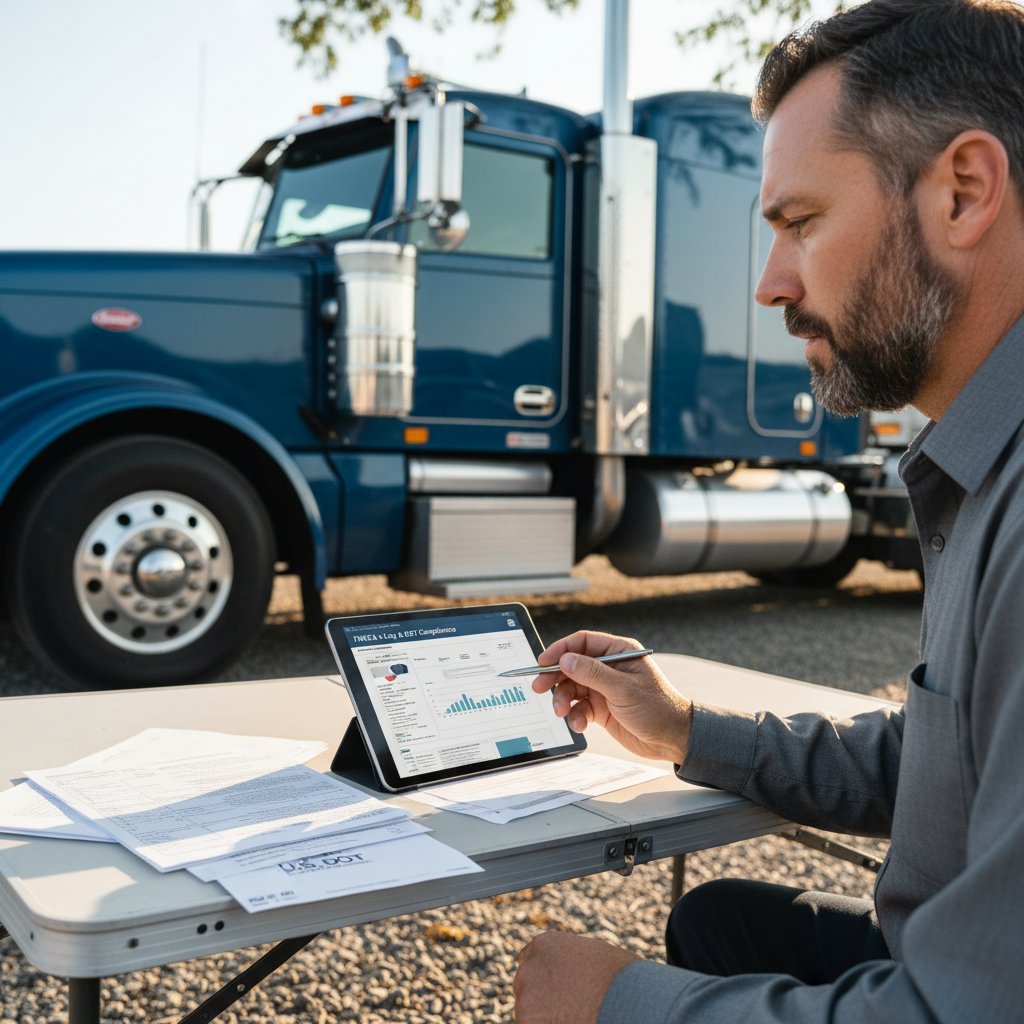
INS Philadelphia search? Compare 7 ways to buy insurance—especially commercial truck insurance—plus 2026 cost drivers and a quote checklist. Get quotes.
If you typed ins philadelphia, you’re usually trying to find insurance in Philadelphia fast—without getting stuck in confusing quote forms or mismatched coverage. For trucking and commercial auto, one wrong detail (garaging ZIP, radius, commodity, or driver info) can change your premium and even create claim problems later.
What insurance companies operate in Philadelphia? Philadelphia is served by major national carriers, regional insurers, and independent agencies/brokers that can access multiple markets, and the best fit depends on the line of insurance (personal vs. commercial truck insurance), underwriting rules tied to your ZIP/garaging location, and whether you want direct online buying or an agent who shops carriers for you.
If you want to compare options quickly, start with an insurance quote checklist for faster comparisons so every quote uses the same limits, deductibles, vehicles, drivers, and operating details.
Table of Contents
Reading time: 8 minutes
- Key takeaways for INS Philadelphia searches
- What “INS Philadelphia” usually means (and how to find the right result)
- 7 common ways to buy insurance in Philadelphia (2026)
- Insurance types Philadelphians (and Philly-area truckers) shop for most
- 2026 cost drivers in Philadelphia + a 5-step checklist to choose the right policy
- Frequently Asked Questions
- Conclusion: Buy the right Philadelphia policy, not just the lowest price
Key takeaways for INS Philadelphia searches
“INS Philadelphia” is most often a shorthand query for “insurance in Philadelphia,” and shoppers usually get better results by choosing a buying path (direct carrier vs. independent agent vs. specialty broker) based on the exact risk and coverage needed.
- “INS Philadelphia” is usually just shorthand for “insurance in Philadelphia,” but sometimes it’s part of a company name—verify before you pay.
- For commercial truck insurance, a specialty trucking agent/broker with multiple markets is often faster than a generic online form.
- 2026 pricing is still driven by underwriting inputs like garaging ZIP, loss history, vehicle/driver profile, and limits/deductibles—shopping alone won’t fix bad inputs.
- To get affordable trucking insurance, standardize quote inputs and show risk controls (clean MVR/PSP where applicable, telematics, maintenance, tight claim reporting).
What “INS Philadelphia” usually means (and how to find the right result)
“INS Philadelphia” typically means “insurance in Philadelphia,” but search results can also include unrelated businesses using “INS” in their name, so you should confirm licensing, legal names, and policy documents before paying.
If you meant “insurance in Philadelphia”
Most people are really looking for one of these paths:
- Carrier direct: Buy online or by phone from one company.
- Captive agent: An agent who sells for a single carrier.
- Independent agency: An agency that can quote multiple carriers.
- Specialty broker: A broker focused on commercial, trucking, higher limits, or niche operations.
For owner-operators, the “right” path also depends on authority: leased-on (a motor carrier often provides primary liability) versus running under your own authority (you typically need primary auto liability and any required filings).
If you meant a business named “INS” (services/consulting)
Some listings aren’t consumer insurance sellers at all (they may be consulting, corporate profiles, or unrelated services). Before you give anyone money, confirm they’re a legitimate producer/agency and that the name on your paperwork matches the legal name you verified.
A practical next step is how to verify a trucking insurance agent (PA)—even if you’re buying non-trucking coverage, the same basics apply: verify licensing, get a written binder, and avoid paying anyone who won’t document coverage in writing.
7 common ways to buy insurance in Philadelphia (2026)
In 2026, most Philadelphia insurance buyers choose among seven channels—direct carriers, captive agents, independent agencies, specialty commercial brokers, insurtech/digital agencies, affinity programs, and direct-to-underwriter commercial placements—each with different speed, pricing, and coverage tradeoffs.
| Buying Path | Best For | Tradeoffs (read this) |
|---|---|---|
| 1) National carrier direct (online/phone) | Standard personal auto/renters; simple small business | Fast, but limited flexibility for unusual risks; service varies |
| 2) Captive agent (one carrier) | Bundles; “one throat to choke” | You’re not truly shopping the market |
| 3) Independent agency | Comparing multiple carriers quickly | Quality varies—ask what markets they actually have |
| 4) Specialty commercial broker | Trucking, contractors, higher limits, complex ops | More underwriting questions; better fit for real exposures |
| 5) Insurtech/digital agencies | Fast docs, digital COIs, simple endorsements | Still backed by traditional carriers—read forms, not the app |
| 6) Membership/affinity programs | Potential discounts | A discount doesn’t help if limits/exclusions are wrong |
| 7) Direct-to-underwriter (commercial) | Larger accounts; some niche programs | Most small ops still benefit from agent advocacy |
1) National insurers (online or captive agents)
National insurers sell through websites, call centers, and captive agents, and they’re often the quickest option for straightforward personal auto or renters. For DOT-exposed operations, don’t assume a generic “commercial auto” quote equals true trucking coverage.
2) Independent agencies in Philadelphia
Independent agencies can quote multiple carriers without making you fill out multiple applications, but quality varies by agency and by the markets they can actually access. Ask directly: “Which trucking markets can you access for my class of business?”
3) Specialty brokers (commercial truck insurance, higher risk, niche)
Specialty trucking brokers are built for underwriting-heavy accounts (radius, garaging, commodity, driver history, filings/COIs), which is why they’re often the fastest path to accurate commercial truck insurance in Philly-area lanes. If you want deeper guidance on structure and shopping, see semi truck insurance options for owner-operators.
- What they’re good at: Matching your operation to carrier appetite (port work, power-only, hotshot, regional lanes).
- What you must provide: Accurate driver and equipment info, plus clear operations details (radius, commodity, garaging).
4) Health insurance routes (keep it simple)
Health insurance shopping in Philadelphia typically runs through employer plans, marketplace options, or private plans, and eligibility/timing (open enrollment or qualifying events) can matter as much as price. Treat online estimates as estimates until you confirm eligibility and plan details.
5) Insurtech / digital agencies (PHL ecosystem)
Digital agencies can be great for speed (payments, COIs, endorsements, document access), but the policy form and endorsements decide coverage at claim time. If a quote looks “too easy,” ask for forms and key endorsements in writing.
6) Membership/affinity programs
Affinity discounts can help, but only after you confirm the coverage fits your operation and contract requirements. A cheaper premium doesn’t fix exclusions that create gaps.
7) Direct-to-carrier commercial underwriters
Direct underwriting relationships are more common for larger accounts, but small fleets (1–5 trucks) often get better market access and advocacy through strong independent agents or specialty brokers.
Action: Compare at least 3 quotes with matching limits and deductibles so you’re comparing coverage, not just payment plans.
Insurance types Philadelphians (and Philly-area truckers) shop for most
Philadelphia buyers most commonly shop personal auto/renters/homeowners/umbrella and business coverages like commercial auto and commercial truck insurance, and trucking operators typically add physical damage, motor truck cargo, and contract-driven COI requirements.
Personal: auto, renters, homeowners, umbrella
Personal lines protect your household, vehicles, and assets, and umbrella liability is usually priced efficiently only when your underlying auto/home limits are set correctly. Dense traffic and higher claim severity risk can make liability limits worth re-checking.
Commercial: commercial truck insurance (primary liability, physical damage, cargo)
Commercial truck insurance is typically built around primary auto liability, with optional (but often essential) add-ons like physical damage and motor truck cargo. If you want a plain-English breakdown of what each line covers—and what tends to get excluded—see commercial truck insurance coverages explained.
Hotshot insurance (a common Philly-area question)
Hotshot insurance is commonly structured for for-hire hauling using a pickup and trailer, and many “regular commercial auto” policies don’t match that exposure when a claim happens. If you’re setting up coverage, review hotshot insurance requirements and setup before you bind.
- Be accurate: for-hire use, trailer type, GVWR, operating radius, and commodities.
- Why it matters: misclassification can trigger coverage disputes or non-renewal.
Small business add-ons: GL, workers’ comp, cyber, hired/non-owned auto
Even if trucking is the core business, you may still need protection beyond the truck:
- General liability (GL): premises and non-auto third-party claims
- Workers’ comp: required in many employee situations; penalties can be severe if ignored
- Cyber: ransomware, invoice fraud, dispatch/email compromise
- Hired & non-owned auto (HNOA): liability when personal/hired vehicles are used for business
COIs in Philly contracting and landlord contexts
Certificates of Insurance (COIs) are frequently required by warehouses, brokers, landlords, and job sites, and the wording (additional insured, waiver of subrogation, primary/noncontributory) is often as important as the limit. For permit and compliance context, the City’s Department of Licenses & Inspections is a reference point: https://www.phila.gov/departments/department-of-licenses-and-inspections/.
2026 cost drivers in Philadelphia + a 5-step checklist to choose the right policy
Philadelphia insurance pricing in 2026 is primarily driven by territory/garaging ZIP, driver and loss history, vehicle and usage details, operations (radius/commodity), and coverage structure (limits, deductibles, endorsements), which is why “shopping harder” doesn’t fix inconsistent inputs.
The big 2026 cost drivers (what’s really changing your premium)
- Garaging/territory (ZIP): dense areas can price differently than suburbs
- Driver profile: MVR and (for trucking) PSP where applicable, experience, prior claims
- Vehicle details: VIN, value, safety tech, annual miles, usage
- Operations: radius, commodity, overnight parking, power-only vs. trailer interchange
- Coverage choices: limits, deductibles, exclusions, endorsements, and any required filings
- Claims reality: the cheapest premium can come with restrictive forms or slow claims handling
For general consumer guidance on comparing coverage (not just price), the NAIC is a solid reference: https://content.naic.org/consumer.
5-step checklist (Philly-proof, broker-proof)
Step 1: Verify licensing/authorization (PA)
Pennsylvania requires insurance producers to be properly licensed, and you can verify agent/agency information using official state resources before you pay any premium. Start at the Pennsylvania Insurance Department: https://www.insurance.pa.gov/.
Red flags: pressure to wire money, refusal to provide binder pages, or paperwork that doesn’t match the legal name you verified.
Step 2: Standardize your quote inputs
You can’t compare insurance quotes fairly unless limits, deductibles, vehicles, drivers, radius, and commodities are identical across every quote. If one quote is “cheaper” because it changed radius or omitted a coverage line, it’s not a true savings.
Step 3: Compare coverage, not just premium
Coverage gaps are most often created by exclusions and missing endorsements, not by the liability limit printed on a certificate. Ask for key exclusions and endorsements in writing, and confirm anything contract-driven (COI wording, additional insured language, cargo requirements).
Step 4: Ask about discounts and risk controls
Underwriters commonly credit risk controls like telematics, dash cams, driver training, maintenance documentation, secure parking, and disciplined claim reporting because they reduce frequency and severity. For practical levers, see how to lower trucking insurance premiums.
Step 5: Run renewals early (45–60 days)
Commercial policies are commonly re-underwritten at renewal, and starting 45–60 days early gives you time to fix data issues and shop markets before deadlines hit. Update your policy when you change garaging ZIP, add/remove drivers, change commodities/radius, buy/sell equipment, or lease on/off a carrier.
Frequently Asked Questions
These FAQ answers are written to be quote-ready and compliance-safe, including where to verify licensing in Pennsylvania and how coverage types differ for trucking and hotshot operations.
“INS” in “INS Philadelphia” most often means “insurance,” and the search is usually shorthand for “insurance in Philadelphia” rather than a specific insurer. Sometimes “INS” is part of a business name (for example, an “INS Services” listing), so you should confirm you’re contacting an actual licensed insurance producer and not an unrelated company profile. For trucking buyers, it also helps to decide the channel first—direct carrier, independent agency, or specialty trucking broker—because commercial truck insurance quotes require consistent details like garaging ZIP, operating radius, and commodity to be accurate.
Philadelphia is served by major national carriers, regional insurers, and independent agencies that can quote multiple markets, and availability depends on underwriting rules tied to your ZIP/garaging location, loss history, and the exact risk type (personal lines vs. commercial). For commercial truck insurance, “who operates here” is less about household brand names and more about which specialty markets will write your operation (radius, commodity, power-only vs. with trailer, and driver history). If you’re comparing quotes, make sure limits and deductibles match so you’re not comparing different policies disguised as different prices.
You can verify a Pennsylvania insurance agent or agency by checking official state resources and confirming the legal name on your paperwork matches the licensed entity before you pay. Start with the Pennsylvania Insurance Department website (https://www.insurance.pa.gov/) and keep copies of your binder pages showing the insurer name, effective dates, and limits. For trucking-specific steps (including avoiding payment scams and confirming authority), follow how to verify a trucking insurance agent (PA). Don’t send funds if the seller won’t provide a written binder or if the insurer name can’t be clearly identified.
Hotshot insurance is typically structured for for-hire hauling using a pickup and trailer, and it often requires liability limits, trailer considerations, and endorsements that a “regular commercial auto” policy may not include for that specific exposure. The difference matters because claims are judged by the policy form, classifications, and endorsements—not by what the quote site called it. If you’re hauling for hire, be accurate about radius, commodities, trailer type, and GVWR so you don’t create a misclassification problem. For a setup checklist and what brokers commonly expect, see hotshot insurance requirements and setup.
Conclusion: Buy the right Philadelphia policy, not just the lowest price
If “INS Philadelphia” brought you here because you’re done with the runaround, keep it simple: verify who you’re dealing with, standardize quote inputs, and compare coverage terms—not just the monthly payment. For trucking, the right policy protects your authority, your equipment, and your ability to keep hauling after a claim.
Key Takeaways:
- Use a consistent input sheet so your 3+ quotes have matching limits, deductibles, and operations details.
- Verify licensing and demand written binders before paying any premium.
- Start renewals 45–60 days early to avoid last-minute coverage gaps and price spikes.
Related reading (keep your coverage tight):
- Pennsylvania trucking insurance requirements/minimums
- Bobtail vs non-trucking liability (what you actually need)
When you’re ready, shop intelligently: same inputs, clear documents, and coverage that actually matches how you operate.