
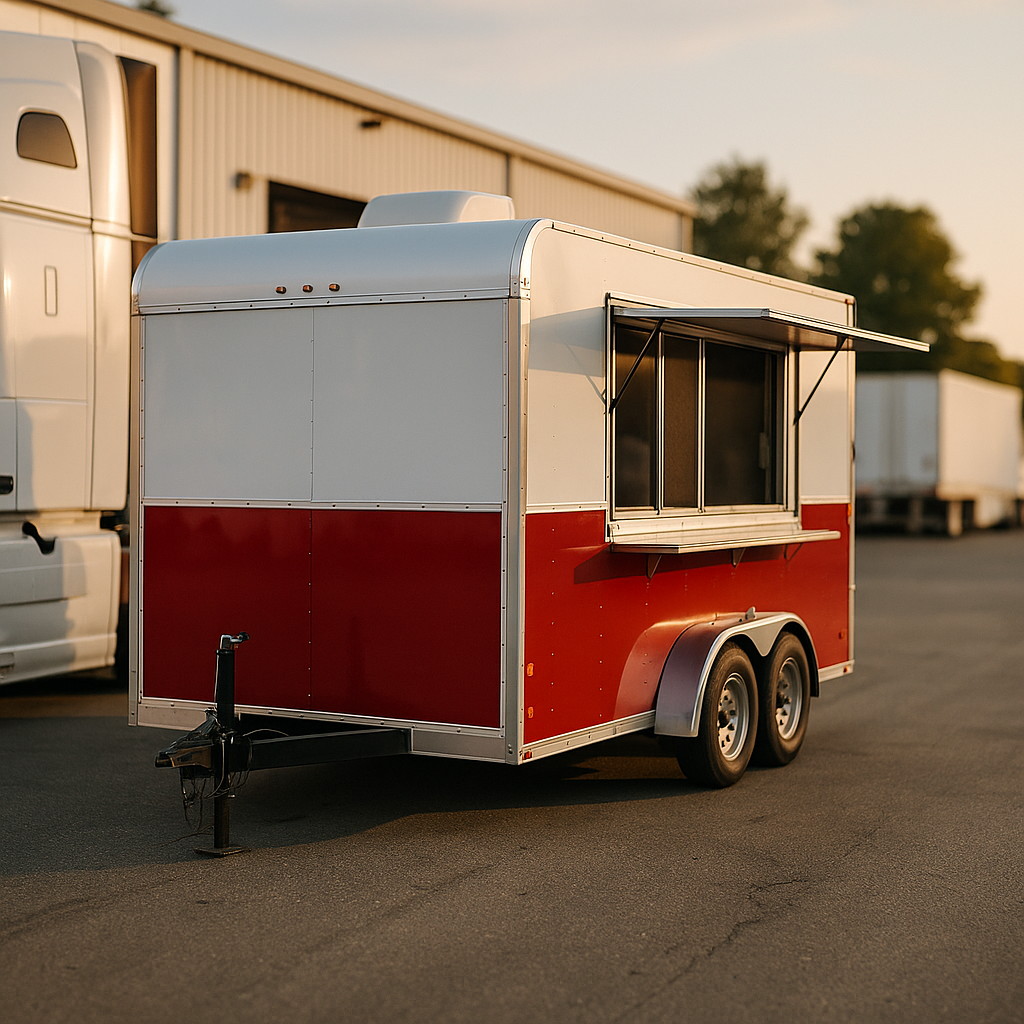

Insurance for concession trailer owners: 6 must-have coverages, 2026 cost ranges, COI/venue limits, and tow-vehicle rules. Get covered fast.
If you’re shopping for insurance for a concession trailer, here’s the real-world answer: you usually need a small “stack” of policies (not one magic plan) so venues will accept your COI and you’re protected when something goes wrong. In practice, that stack is general liability + product liability + coverage for your trailer and gear + the right tow-vehicle auto coverage.
If you’ve ever rolled into a festival, farmers market, or stadium lot and got stopped at check-in, you know the drill: “Show us your insurance and COI.” No COI, no setup—meaning you can lose the day’s revenue after paying fees, fuel, prep food, and labor. Start with the baseline most venues want: general liability insurance for vendors, then build from there.
What types of insurance do I need for a concession trailer?
Most concession trailer owners need general liability (often required by venues), product liability for food/drink claims, coverage for equipment inside the trailer, physical damage coverage for the trailer itself, and commercial auto for the tow vehicle. If you hire help, workers’ comp may be required by state law or contracts. Your exact stack depends on venue rules, travel, and menu risk.
Need a COI for an event date? Get a fast quote comparison and confirm the wording before you show up.
Table of Contents
Reading time: 8 minutes
- Key takeaways
- What is concession trailer insurance (and why venues ask for it)?
- 6 coverages most concession trailer owners need (required vs optional)
- Do you need commercial auto insurance for a concession trailer? (Trailer vs tow vehicle)
- Concession trailer insurance cost in 2026 (and how to keep it affordable)
- Frequently Asked Questions
- Conclusion: Get covered (and get your COI approved the first time)

Key takeaways
Many U.S. venues commonly require a COI showing $1,000,000 per occurrence general liability (and correct Additional Insured wording) before a concession trailer can set up.
- Venues care about the COI more than your logo. If “Additional Insured” or limits are wrong, you can be turned away.
- Trailer insurance and tow-vehicle insurance are not the same thing. Big liability losses usually attach to the tow vehicle’s auto policy.
- Your menu changes your risk class. Fryers, grilling, dairy, raw proteins, and alcohol typically raise premiums.
- Event-only coverage can be smart for occasional vendors—but frequent sellers usually win with annual coverage.
What is concession trailer insurance (and why venues ask for it)?
Concession trailer insurance is typically a bundle of coverages—often anchored by $1M/$2M general liability—that protects customers, venues, and your business from lawsuits and property losses.
What it is (plain English)
“Insurance for a concession trailer” usually isn’t one policy. It’s a practical coverage stack that protects:
- Customers: injuries, burns, and food-related claims
- The venue/organizer: contract requirements and Additional Insured requests
- Your business: lawsuits, property losses, and income disruption
Why it’s essential (business reality)
A single claim can wipe out a season’s profit. Common scenarios include a customer slipping near your service window, a burn allegation from coffee or fryer oil, a food allergy incident, or theft of your generator right before a big weekend.
Most venues won’t let you operate without proof of insurance—usually shown via a certificate of insurance (COI). Learn the COI process early, because it’s the fastest path to “approved.” This guide on Certificate of insurance (COI) explained for vendors covers what the document shows (and what it doesn’t).
External reference: The NAIC explains what certificates of insurance are used for and why they matter as proof of coverage: https://content.naic.org/cipr_topics/topic_certificates_of_insurance.htm
Who needs it
- Weekend vendors doing a few fairs per year
- Full-time mobile concession trailer operators
- Multi-state vendors chasing event circuits
- Anyone with employees/paid helpers (setup and teardown injuries are common)
6 coverages most concession trailer owners need (required vs optional)
The six coverages most concession trailer owners buy are general liability, product liability, equipment/inland marine, trailer physical damage, commercial auto for the tow vehicle, and workers’ compensation when employees are paid.
Your venue contract and your risk profile decide what’s required versus optional, but this is the stack you’ll see over and over.
Coverage cheat sheet (common starting points)
| Coverage | What it protects | Who usually requires it | Common starting limits (varies) |
|---|---|---|---|
| General Liability (GL) | Slip-and-fall, burns, property damage | Venues/markets | $1M / $2M aggregate is common |
| Product Liability | Food/drink illness, allergens, contamination | Venues + smart operators | Often included with GL (confirm) |
| Equipment / Tools (Inland Marine) | Gear inside trailer (POS, grills, warmers, generator) | You (and sometimes lenders) | Set to replacement cost |
| Trailer Physical Damage | Trailer theft, fire, storm, collision | Lenders/lessors | Based on trailer value |
| Commercial Auto (tow vehicle) | Roadway liability + sometimes physical damage | Smart operators + some contracts | Depends on use/vehicle |
| Workers’ Comp | Employee injuries | State law + contracts | Depends on payroll/state |
1) General Liability (GL)
General liability is your core “someone got hurt / someone’s property got damaged” policy, and it’s the first coverage most venues look for on a COI.
- What it helps pay for: legal defense, settlements, and judgments for covered third-party claims
- Typical request: $1,000,000 per occurrence and $2,000,000 aggregate (venue-specific)
- Common COI gatekeeper: Additional Insured wording (exact name and entity)
2) Product liability (food & beverage claims)
Product liability covers claims tied to what you sell—like foodborne illness allegations, allergen exposure, or contamination.
Your biggest “silent” risk isn’t the trailer—it’s the product leaving your window. Confirm in writing whether product liability is included with GL and whether your menu changes classification. This breakdown of Product liability insurance for food vendors shows the questions that actually matter.
3) Equipment coverage (often called inland marine)
Inland marine equipment coverage is designed for tools and equipment that move around, which fits concession life (transport, setup, teardown, storage).
Replacing a generator, POS system, warmer, and smallwares can crush cash flow mid-season—especially if you lose gear right before a top-grossing weekend.
4) Trailer physical damage
Trailer physical damage covers the trailer itself for perils like theft, fire, storm damage, and collision, usually under comprehensive/collision-style terms.
If the trailer is financed or leased, this coverage is often required, and the limit typically needs to match the trailer’s value.
5) Commercial auto for the tow vehicle (the “gotcha” coverage)
Commercial auto is often the difference between a covered claim and a painful denial when the tow vehicle is used for business income.
If you cause a crash, auto liability typically follows the tow vehicle, and personal auto policies can restrict or exclude business use depending on the carrier and facts of the loss. This Commercial auto insurance guide explains personal vs commercial use in plain English.
6) Workers’ comp (if you have employees)
Workers’ compensation pays for employee injuries (medical care and wage replacement) and is often required by state law once you have employees.
Setup and teardown is where strains, cuts, burns, and falls happen. Also, “They’re a contractor” isn’t a magic shield—misclassification can trigger penalties and uncovered injuries.
Do you need commercial auto insurance for a concession trailer? (Trailer vs tow vehicle)
In a towing setup, auto liability for crashes generally follows the tow vehicle’s policy, while trailer coverage is usually focused on physical damage to the trailer and scheduled equipment.
What it means in plain English
If your concession trailer is being towed by a pickup, van, or medium-duty truck, your biggest liability exposure is usually the power unit (the tow vehicle). That’s why saving a little on auto coverage can be a costly mistake.
Who needs to pay extra attention
- You tow with a personal pickup and “only do weekends”
- You cross state lines for events
- You have multiple drivers (family/staff)
- You borrow or rent a tow vehicle (ask about hired and non-owned auto)
Interstate events & compliance (when DOT rules might apply)
Most concession trailer owners are not regulated for-hire motor carriers, but interstate commerce rules can apply depending on your combined weight rating and how you operate.
- FMCSA: “Do I need a USDOT number?” overview: https://www.fmcsa.dot.gov/registration/do-i-need-usdot-number
- FMCSA: Insurance filing requirements (situational): https://www.fmcsa.dot.gov/registration/insurance-filing-requirements
Practical advice: Don’t guess—tell your agent exactly how you operate (states, frequency, tow vehicle, and whether you haul anything for others). Those details decide whether the policy matches the job.
Concession trailer insurance cost in 2026 (and how to keep it affordable)
In 2026, event-only liability for concession vendors is sometimes marketed from about $49 per event, while annual general liability commonly ranges from a few hundred to $1,000+ per year depending on limits, venue requirements, and risk.
Typical price ranges (realistic planning numbers)
These are broad planning ranges—not a quote:
- Event-only general liability: sometimes advertised starting around $49 per event for basic setups (varies by insurer, limits, and vendor type). Example reference: https://www.insurancecanopy.com/concession-insurance
- Annual GL (with product liability where applicable): often the low hundreds to over $1,000+/year depending on risk and limits
- Equipment + trailer physical damage: priced heavily off replacement value, storage, and theft exposure
- Commercial auto: depends on tow vehicle, drivers, radius, and business use
Quick pricing table (planning only)
| Scenario | What you’re buying | Typical “budget range” (very broad) |
|---|---|---|
| 1–3 events/year | Event-only GL + COI | Lower upfront, can add up if you book more events |
| Weekly markets + festivals | Annual GL/product + easy COIs | Usually better value + fewer admin headaches |
| High-value build-out | Add trailer physical damage + equipment | Higher premium, but protects your biggest asset |
| Multi-state circuit | Annual + higher limits + stronger auto | More underwriting scrutiny |
Top cost drivers carriers rate on
- Venue type & crowd size: county fair vs stadium vs private corporate event
- Cooking method: fryer oil, open flame, grills, smoke, grease management
- Menu risk: dairy, raw proteins, allergens, sampling, alcohol
- Claims history & time in business
- Equipment value + theft exposure (especially storage)
- Travel radius & frequency (local vs multi-state)
If you want a clean explanation of what moves your premium up or down, start here: Business insurance cost factors.
Short-term event insurance vs annual: which wins?
- Short-term makes sense if you’re testing the concept, doing a few events, or only need a COI for a single date.
- Annual is usually better if you vend consistently, store expensive gear, or don’t want every COI request to be a scramble.
Quote checklist (so you don’t waste time)
Have this ready before you request quotes or a COI:
- Business legal name/DBA, years in business, experience
- Events per year + states traveled
- Menu and cooking methods (fryer/grill/smoker), sampling, allergens, alcohol
- Trailer: year, value/build-out cost, storage location
- Equipment list with replacement cost (photos/receipts help)
- Tow vehicle info + drivers + estimated mileage
- Venue requirement sheet (limits + wording for Additional Insured)
CTA: Compare quotes for your next event date—and get the COI emailed with the wording the venue actually wants.
Frequently Asked Questions
Concession trailer insurance typically covers a stack of risks: general liability (often written at $1,000,000 per occurrence) for customer injuries and property damage, product liability for food and beverage claims (often bundled with GL, but you must confirm), and property coverage for equipment like generators, POS systems, and appliances. Many operators also add trailer physical damage for theft, fire, storm, or collision losses, plus the right tow-vehicle auto coverage for crash liability. If you have paid staff, workers’ comp may be required by your state or by venue contracts.
Concession trailer insurance cost depends on your menu risk (fryer oil, grilling, dairy, allergens, alcohol), venue-required limits (many ask for $1M/$2M GL), claims history, states traveled, and the replacement value of your trailer and equipment. For budgeting, event-only liability is sometimes marketed from about $49 per event, while annual general liability commonly runs from a few hundred to $1,000+ per year for many small vendors, with equipment/trailer coverage and commercial auto adding more. If you’re doing frequent events, annual coverage is usually simpler because COIs can be issued repeatedly without rebuying coverage.
If you tow to paid events, you often need an auto policy that permits commercial use for the tow vehicle because crash liability generally follows the power unit, not the trailer. Trailer coverage may handle physical damage to the trailer, but it doesn’t replace auto liability for a roadway accident. Personal auto policies can restrict or exclude business use depending on the carrier and the facts of the loss, so the safe move is to disclose towing-for-income and get the policy matched to your operation. If you cross state lines, review whether any DOT rules apply to your specific weight ratings and business use.
Yes, many insurers offer short-term, event-based coverage for a specific date and location, and they can issue a COI that matches the venue’s requested limits (commonly $1,000,000 general liability) and Additional Insured wording. Short-term policies can be a good fit if you only do a few events per year or you’re testing demand before committing to annual coverage. If you vend weekly or you’re booking a season, annual coverage is usually easier because you can request multiple COIs without starting over each time. For the event-only approach and COI timing, see Event insurance for vendors.
Conclusion: Get covered (and get your COI approved the first time)
Concession trailer insurance is about staying open and staying paid. For most operators, the practical stack is GL + product liability + equipment + trailer physical damage + the right tow-vehicle auto coverage, followed by COI wording that matches the venue contract.
If you want to build a broader protection plan, read Food business insurance and keep this prep list handy: Small business insurance checklist.
Key Takeaways:
- Expect COI requests for $1M per occurrence GL and Additional Insured wording before most events will approve setup.
- Protect your income by covering both your gear/trailer and your tow vehicle correctly.
- Control premium by giving accurate menu details, setting realistic replacement values, and avoiding last-minute COI errors.
When you’re ready, get your coverage lined up early so you’re not fixing COI wording in the parking lot on event day.





