
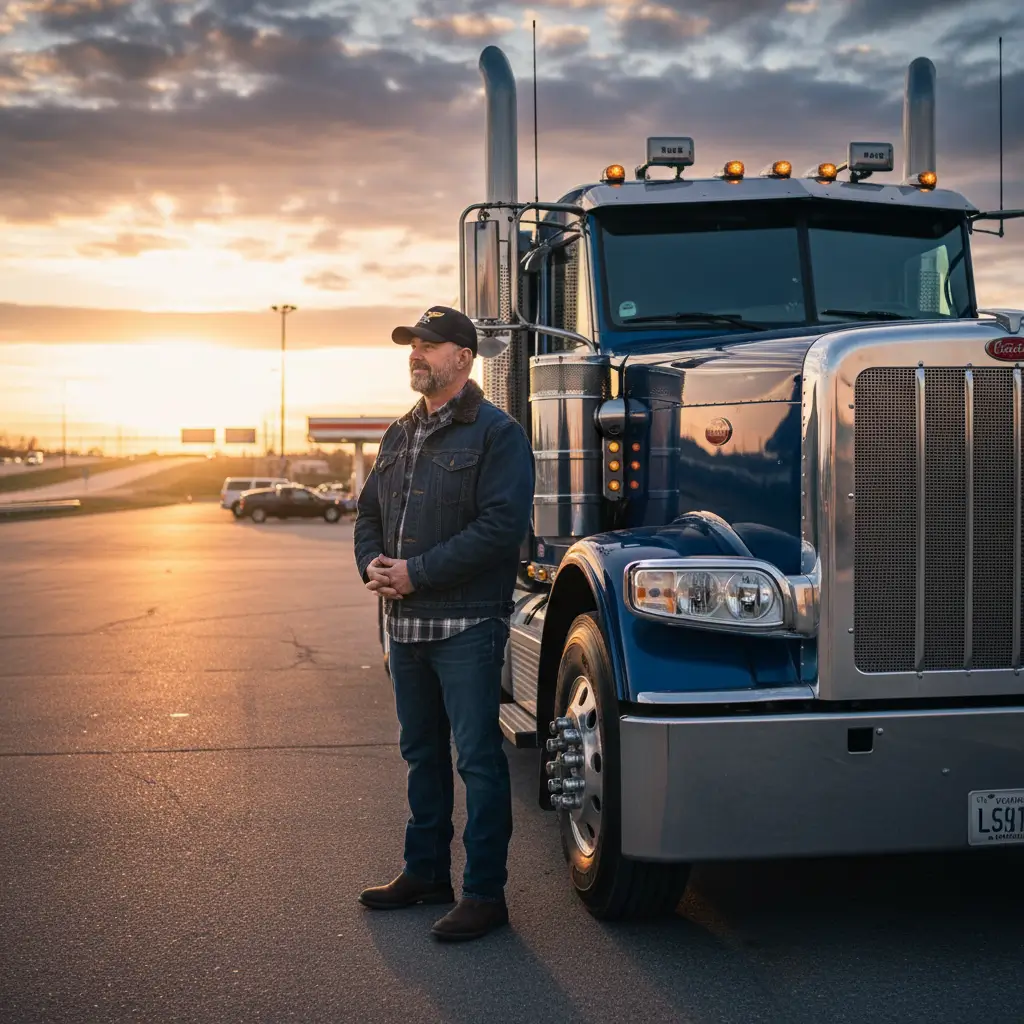

Commercial truck insurance requirements change based on whether you’re interstate vs. intrastate, for-hire vs. private, and what you haul (especially hazmat or passengers). The baseline for many interstate for-hire carriers is $750,000 CSL for general freight liability, but hazmat and passenger operations can require $1,000,000 to $5,000,000 and brokers often demand $1,000,000 even when the legal minimum is lower.
If you’re an owner-operator, this isn’t just “compliance”—it’s cash flow protection. One wrong limit, a filing that doesn’t post, or a policy lapse can park your truck and pause revenue. For a broader breakdown of what a complete policy includes, see Trucking Insurance 101: 6 Critical Coverages for the Owner-Operator’s Cash Flow.
Minimum insurance requirements for commercial trucks in the U.S. (FMCSA baseline):
- General freight (for-hire, interstate): commonly $750,000 CSL minimum liability
- Hazmat: typically $1,000,000 to $5,000,000 CSL depending on commodity/class
- Passenger carriers: higher minimums, especially 16+ passengers
- Reality check: many brokers/shippers require $1,000,000 even when the legal minimum is lower
Want the fast “what coverages do I actually need?” breakdown?
Legal minimums are only half the battle. If you want to protect your truck, your freight, and your income, start with the coverage checklist.
Key Takeaways: Essential Commercial Truck Insurance Requirements
- Federal minimums are the baseline—not the finish line: FMCSA limits depend on cargo type (hazmat) and passengers, and brokers often require more.
- States can add rules for intrastate work: Some states set higher intrastate minimums or require extra state filings.
- Filings matter as much as the policy: A correct limit doesn’t help if your BMC-91/91X isn’t posted or your COI is wrong.
- Cargo coverage is usually “required to get paid,” not “required by law”: Brokers commonly expect $100,000 cargo, higher for reefer/high-value freight.
Table of Contents
Reading time: 11 minutes
- Federal (FMCSA) Minimum Liability Requirements: The Baseline
- Hazmat & Passenger Hauling: Higher Minimums (and Why)
- Commercial Truck Insurance Requirements by State: How to Check (and What Changes)
- Required Filings & Endorsements Explained (BMC-91/91X, MCS-90, COIs)
- Is Cargo Insurance Required for Commercial Trucks?
- How Much Does Compliance Cost? Benchmarks + What Drives Your Premium
- Penalties for Not Meeting Requirements (and How to Avoid Getting Shut Down)
- The Logrock Difference: Insurance Built for Business Owners
- Next Steps: Confirm Your Minimums, Then Build a Policy That Actually Gets You Loads
- Frequently Asked Questions
- Conclusion

Federal (FMCSA) Minimum Liability Requirements: The Baseline
FMCSA financial responsibility rules in 49 CFR Part 387 set minimum public liability limits for many for-hire interstate carriers, commonly starting at $750,000 CSL for general freight and increasing for hazmat and passengers.
When federal rules apply (interstate + for-hire)
FMCSA insurance requirements generally apply when you’re for-hire and operating in interstate commerce (crossing state lines, or hauling loads that are part of interstate commerce).
- Interstate + for-hire authority: expect FMCSA filings and minimums to apply.
- Intrastate-only: your state’s DOT/PUC/PSC rules may apply instead (and can be higher).
- Private carrier (hauling your own goods): can still have insurance requirements, but the filing/authority setup can differ.
Pro tip: Don’t confuse “10,001+ lbs triggers DOT stuff” with “insurance minimums are always the same.” Weight triggers some compliance rules, but insurance minimums are mainly driven by operation type and what you haul.
For a full breakdown of how FMCSA insurance requirements apply to owner-operators, including authority types and operation classifications, see the dedicated guide.
FMCSA minimum liability limits (quick table)
FMCSA liability is typically discussed as CSL (Combined Single Limit), meaning one total limit per accident for bodily injury plus property damage.
| Operation type (interstate, for-hire) | Common federal minimum liability limit (CSL) | What it means for your business |
|---|---|---|
| General freight / non-hazmat | $750,000 | Legal baseline, but many brokers require $1M to tender loads. |
| Oil / certain hazmat (varies by commodity) | $1,000,000 | Higher severity exposure; shippers often demand higher. |
| Other hazmat (higher-risk classes) | $5,000,000 | Expect strict shipper screening and tight compliance. |
| Passenger carriers (16+ passengers) | Higher minimums apply | Contracts often exceed minimums (schools, tours, municipal work). |
Reality check (owner-operator perspective): the cheapest legal minimum can cost you revenue if it blocks you from better broker freight. Many dispatchers won’t even send a rate confirmation if you’re under their limit.
Figures reflect FMCSA’s published minimum financial responsibility levels — verify current tiers before filing.
Not sure whether the $750K legal minimum is enough for your operation, or whether you should carry $1M? This breakdown explains when the minimum works — and when it doesn’t.
Hazmat & Passenger Hauling: Higher Minimums (and Why)
Hazmat and passenger carriers often face $1,000,000–$5,000,000 federal liability minimums because claims can include multi-vehicle injuries, fires, environmental cleanup, and higher litigation severity than general freight.
Hazardous materials transport minimums
Hazardous material truck insurance minimums jump because the potential claim size jumps—fires, cleanup costs, shutdowns, and higher injury severity.
- Minimums are tiered: often $1M to $5M CSL based on hazmat class/commodity.
- Shippers commonly require higher than the legal minimum: plus specific documentation before tendering.
- Small paperwork mistakes become “no load” problems: one wrong assumption can turn into a refused pickup.
Scenario: hauling fuel is a different risk profile than hauling dry van general freight. Your insurance (and filings) need to match what you actually run, not what you plan to run someday.
Passenger carriers
Passenger operations carry different liability exposure, and if you’re moving people (especially 16+ passengers), minimum limits are higher and contracts often require limits above minimums plus very specific certificates.
Bottom line: passenger and hazmat are high-stakes categories—get limits, filings, and certificates reviewed before your first trip.
For a detailed look at hazmat insurance for owner-operators — including coverage tiers, required limits, and documentation — see the full breakdown.
Commercial Truck Insurance Requirements by State: How to Check (and What Changes)
State rules can set higher intrastate minimum liability limits and require extra proof-of-insurance filings through agencies like a state DOT, PUC, or PSC, even when federal FMCSA minimums are lower.
For a full 50-state reference, see truck insurance requirements by state — including intrastate minimums, state-specific filings, and how limits vary by vehicle class.
Do states have higher requirements than federal?
Yes—some states require higher minimums for intrastate operations and/or require additional state-specific filings. Even if a state’s minimum matches the FMCSA baseline, brokers and shippers can still require higher limits as a condition of doing business.
- Higher intrastate liability minimums for certain vehicle classes or cargo
- Public utility / commission rules (PUC/PSC) for for-hire intrastate authority
- State-specific proof-of-insurance filings (varies by state and operation)
State comparison framework (use this table to stay organized)
Don’t rely on forum advice for compliance. Use a simple framework, then verify with the state agency and your agent.
| State (examples) | Intrastate minimum liability (for-hire) | Hazmat/passenger notes | Possible state filings | Notes |
|---|---|---|---|---|
| Texas | $500k–$1M (often cargo-dependent) | Hazmat higher | Varies | Verify before local-only work; intrastate rules can differ from FMCSA. |
| North Carolina | Often aligns near $750k (general freight) | Hazmat $1M–$5M tiers | Varies | Commodity matters. |
| Pennsylvania | Often $750k (PUC for certain ops) | Hazmat higher | Varies | Some operations may require additional documentation. |
| Florida | Varies by operation | Passenger/hazmat higher | Varies | Metro exposure can increase scrutiny and premiums. |
| New Jersey | May be higher for some ops | Hazmat higher | Varies | Verify current limits; some states adjust over time. |
| California | Varies by operation | Passenger/hazmat higher | Varies | Stricter enforcement culture; keep paperwork tight. |
How to verify your state requirements (quick checklist):
- Confirm whether you’re intrastate-only or interstate.
- Identify your authority type (for-hire, private, exempt, etc.).
- Check your state DOT/PUC/PSC site for “minimum financial responsibility” rules.
- Ask your agent/insurer: “What filings are required for my exact operation, and when will they post?”
Examples (how requirements and costs vary by state)
If you want state-specific cost context (which matters for budgeting your cost-per-mile), start here:
- Texas example: How Much Does Commercial Truck Insurance Cost in Texas?
- Florida example: How Much Does Commercial Truck Insurance Cost in Florida?
Required Filings & Endorsements Explained (BMC-91/91X, MCS-90, COIs)
FMCSA authority can be delayed or suspended if required proof-of-insurance filings (like BMC-91/BMC-91X) are missing, incorrect, or dropped, even when the underlying policy exists and premiums are paid.
What’s required vs what’s an endorsement
People use “filings” and “endorsements” like they’re the same thing, but they’re not.
| Term | What it is | Why it matters |
|---|---|---|
| Policy | The insurance contract | Defines coverage, limits, deductibles, and exclusions. |
| Endorsement | An add-on changing coverage/obligations | May be required depending on operation. |
| Filing | Proof submitted to FMCSA/state (usually by your insurer) | If it doesn’t post, your authority can be delayed/suspended. |
| COI (Certificate of Insurance) | Proof shown to brokers/shippers | If it’s wrong, you can lose the load even with good coverage. |
BMC-91 vs BMC-91X (proof of liability filing)
Think of BMC-91/91X as “proof to the government that you have the liability coverage you’re required to carry.” Your insurer files these forms electronically through FMCSA’s Licensing & Insurance system — you can also use this portal to confirm your filing status.
- BMC-91: typically used when one insurer provides the required coverage.
- BMC-91X: can apply when multiple insurers share the required coverage.
Business risk: if your filing isn’t correct or doesn’t post, you can be stuck in “not authorized” status—or face authority suspension—meaning no loads, no revenue.
For a step-by-step walkthrough of the BMC-91X filing process for small carriers, including what to confirm before your authority activates, see the dedicated guide.
MCS-90 (why it matters, when it’s required)
The MCS-90 endorsement is tied to federal financial responsibility and is designed as a compliance backstop to protect the public in certain required situations.
- MCS-90 is not “extra insurance you can rely on” the same way normal coverage works.
- It does not replace cargo coverage, physical damage, or correct limits for your actual operation.
- It does not fix a policy that doesn’t match your lanes/cargo/authority.
If you’re unsure whether you need it (or when it applies), ask for a written confirmation based on your authority, cargo, and lanes.
For a deeper look at how the MCS-90 endorsement works for owner-operators — including when it applies and what it doesn’t cover — see the full guide.
How the filing process works (step-by-step)
- Buy the right policy (limits + operation match).
- Your insurer files BMC-91/91X electronically (plus state filings if needed).
- You confirm it posts (don’t assume—verify).
- You maintain continuous coverage (non-pay cancellations can spike pricing later).
What to ask your agent (so you don’t get burned):
- “What filing(s) are required for my authority?”
- “When will they post—and how do I confirm?”
- “Can you issue COIs fast for brokers (additional insureds if needed)?”
- “If I add hazmat, reefer, or expand radius, what changes?”
New to the filing process? This quick overview covers the three filings you need to get authorized — and what to confirm before you consider yourself live.
For new authorities, this checklist helps you avoid delays: Start Your Trucking Company: 6 Steps to Prep Your FMCSA Authority Application.
New authority? Don’t let filings delay activation.
Your insurance can be paid and still not be “live” if filings aren’t posted correctly. Use the prep checklist, then line up coverage with the right filings.
Is Cargo Insurance Required for Commercial Trucks?
Cargo insurance is usually contract-required by brokers and shippers (often at $100,000 per truck) rather than mandated by a single nationwide legal minimum for every for-hire carrier.
Cargo insurance is often required to get loads and get paid, and requirements vary by authority type, commodity, and contract language.
- Liability covers injuries/damage to others.
- Cargo coverage helps keep one freight claim from wiping out your month.
- Many brokers want $100,000 cargo as a starting point.
- Reefer, high-value freight, and specialized shipments can require higher limits and tighter terms.
Common “gotchas” to review before you sign
- Unattended vehicle / theft exclusions
- Temperature-control requirements (reefer compliance and logs)
- Improper securement language (especially if you’re doing your own load checks)
- Commodity exclusions (electronics, pharmaceuticals, alcohol, etc.)
If you’re budgeting for coverage, see what cargo insurance costs in 2026 — including monthly ranges, what drives the price, and how commodity type affects your premium.
Need help matching cargo limits to what brokers require?
If your cargo limit is too low—or exclusions are too tight—you often find out after the claim, not before.
How Much Does Compliance Cost? Benchmarks + What Drives Your Premium
New authority insurance for one truck commonly budgets around $900–$1,800+ per month for primary liability plus cargo for general freight, while hazmat and tougher lanes can push premiums much higher.
National benchmark ranges (set expectations)
Commercial truck insurance pricing moves with loss trends, your operation, and your authority profile. These are ballpark ranges to help you budget (not a guarantee):
- New authority, 1 truck (general freight, OTR): often $900–$1,800+/month for primary liability + cargo (varies widely).
- Established authority, cleaner history: often improves, but still depends on lanes, radius, and claims.
- Hazmat: commonly higher due to limit requirements and severity risk.
- Hotshot (for-hire): can be cheaper than semi in some cases, but claims, radius, and new authority status can still hit hard.
The key point: the “minimum required” policy isn’t always the “minimum affordable” long-term—cheap coverage that causes rejections, cancellations, or uncovered losses gets expensive fast.
Top factors that change your cost
If you’re trying to control cost-per-mile, these levers typically move premiums:
- Driving history + violations
- DOT/CSA exposure and inspection outcomes
- Operating radius (local vs regional vs OTR)
- Cargo type (general freight vs hazmat vs reefer)
- Garaging location (theft and claim frequency matter)
- Truck value + physical damage deductible
- Authority age (new venture pricing is real)
- Payment history (lapses/non-pay cancellations spike rates)
For a deeper breakdown of rating factors, read Truck Insurance Costs 2025: What Affects Your Rates? and Truck Insurance Costs 2025: Your Guide to Rates & Savings.
Get a compliance-ready quote based on your routes, cargo, and authority type.
The fastest path to affordable trucking insurance is a policy that matches your real operation (radius, cargo, filings) so you don’t get re-rated mid-term.
Penalties for Not Meeting Requirements (and How to Avoid Getting Shut Down)
Missing required limits or letting your liability filing drop can trigger authority suspension and immediate load loss, because brokers and enforcement can see coverage and filing status in near real time.
Non-compliance isn’t just a fine. For an owner-operator, it’s usually a revenue stop.
What can happen when requirements aren’t met:
- Authority suspension (dead in the water)
- Roadside problems at the chicken coop (delays, inspections, and sometimes out-of-service depending on the issue)
- Lost loads due to expired/incorrect COIs
- Higher premiums and fewer options at renewal
- Personal asset exposure when a claim blows past limits or coverage doesn’t apply
Real-world failure scenarios we see
- Filing lapse: you paid late, insurer cancels, filing drops—brokers see it immediately in FMCSA’s public L&I database.
- Wrong limit for hazmat: you book a higher-class load than your policy supports.
- Named insured mismatch: your authority is under one entity, policy is under another.
- Operation drift: you started local, then ran OTR or added a trailer type without updating the policy.
Here’s why treating the legal minimum as your target can cost you loads — and what brokers actually look for.
Prevention checklist (simple, effective)
- Set a renewal calendar + autopay where possible.
- Confirm filings posted (don’t assume).
- Keep COIs accessible on your phone (email + cloud folder).
- Update your agent when you change radius, cargo, trailer type, or driver setup.
Compliance impacts pricing long-term. This is why a clean record matters: DOT Record & Trucking Insurance: How a Clean Score Protects Your Margins. If you’re trying to save money without cutting corners, use Affordable Trucking Insurance: Save Without Losing Coverage and Top 5 Mistakes Truckers Make That Increase Insurance Costs — And How to Avoid Them.
Don’t risk a filing lapse—compare compliant quotes and get coverage set up correctly.
A lapse can cost you loads today and raise your premiums tomorrow. Set up a policy that’s compliant, correctly filed, and built for how you actually run.
The Logrock Difference: Insurance Built for Business Owners
Owner-operators and small fleets typically need coverage built around lanes, cargo, and filings, because a policy that’s “technically insured” can still fail broker requirements or authority activation if documentation isn’t right.
Logrock works with owner-operators and small fleets who don’t have time for paperwork surprises. We focus on what actually keeps your business running:
- Correct limits for your lanes and cargo (so you can book loads)
- Filing-ready setups (so your authority doesn’t stall)
- Fast COIs and clean documentation (so you’re not stuck at pickup)
- Practical guidance to control premiums without gambling coverage
This is commercial truck insurance as a business tool—not a checkbox.
Next Steps: Confirm Your Minimums, Then Build a Policy That Actually Gets You Loads
FMCSA minimums are a starting point, but state intrastate rules and broker contracts often set the real working requirement, so your policy must match your lanes, cargo, and authority type to avoid downtime.
Your next step is simple: confirm your operation type, confirm your cargo class, confirm your required filings, and keep coverage continuous—because downtime is what kills margins.
Get a compliant commercial truck insurance quote (fast and filing-ready).
Tell us what you haul, where you run, and how your authority is set up. We’ll quote coverage that meets requirements and works in the real world.
Related reading: Truck Insurance Costs 2025: Your Guide to Rates & Savings, Affordable Trucking Insurance: Save Without Losing Coverage, and DOT Record & Trucking Insurance: How a Clean Score Protects Your Margins.
Frequently Asked Questions
The minimum insurance requirement for commercial trucks depends on whether you operate for-hire in interstate commerce and what you haul, and many carriers start at $750,000 CSL for general freight liability under FMCSA financial responsibility rules (49 CFR Part 387). Hazmat and passenger operations can require $1,000,000 to $5,000,000, and many brokers still require $1,000,000 even when the legal minimum is lower. Minimum liability is only one piece of a workable setup, because cargo, physical damage, and non-trucking/bobtail are usually needed to protect revenue and satisfy contracts; use Trucking Insurance 101: 6 Critical Coverages for the Owner-Operator’s Cash Flow to compare the full checklist.
CSL stands for Combined Single Limit — one total coverage amount per accident that applies to both bodily injury and property damage combined, rather than separate sub-limits per person or per incident. Most FMCSA minimums are quoted in CSL terms (for example, $750,000 CSL for general freight). A CSL structure gives the insurer flexibility in allocating the limit across multiple claimants from one accident. For a detailed explanation of how CSL works in practice, see LogRock’s CSL guide.
Hazardous materials transport typically requires $1,000,000 to $5,000,000 CSL in public liability coverage for interstate for-hire operations, with the exact minimum tied to the hazmat class/commodity under FMCSA financial responsibility tiers (49 CFR Part 387). Shippers and brokers frequently require limits above the legal minimum and may demand specific documentation before tendering the load. The practical rule is simple: don’t book hazmat until your agent confirms (in writing) that your policy limits, filings, and commodity description match what’s on the bill of lading, because a mismatch can turn into a refused pickup or a serious compliance issue.
Interstate for-hire carriers typically need federal proof of financial responsibility through insurer-filed forms like BMC-91 or BMC-91X, and some operations also involve the MCS-90 endorsement tied to federal financial responsibility requirements (49 CFR Part 387). The key operational point is that your authority can be delayed or suspended if required filings aren’t posted correctly—even if you paid for the policy. If you’re setting up authority now, use Start Your Trucking Company: 6 Steps to Prep Your FMCSA Authority Application so you know what to buy, what to file, and how to confirm it’s live.
Electronic filings typically post within 1–3 business days after your insurer submits them, but timing can vary. The safest approach is to confirm the filing posted in FMCSA’s public L&I database before scheduling your first load — don’t assume it’s live just because you paid the premium. Filing delays happen, especially around weekends or holidays. Your agent should be able to confirm the submission date and show you where to verify it. For a step-by-step overview of the filing process, see the BMC-91X filing guide for small carriers.
Yes, states can require higher intrastate commercial truck insurance minimums and additional state filings through agencies like a DOT, PUC, or PSC, even when federal FMCSA minimums are lower. This matters if you run intrastate-only or have a state-level for-hire authority because “FMCSA compliant” doesn’t automatically mean “state compliant.” Even when a state minimum matches federal numbers, brokers and shippers often set a higher working requirement—commonly $1,000,000 liability—to tender freight. The safest approach is to verify your operating states’ rules and keep your operation classification (intrastate vs interstate) clear on your policy.
Cargo insurance requirements are usually contract-driven by brokers and shippers rather than set by one nationwide legal minimum, and a common broker starting point is $100,000 in motor truck cargo coverage. Reefer, high-value loads, or specialized commodities may require higher limits and stricter terms. The part that causes the most painful surprises is exclusions—like unattended vehicle/theft, temperature-control compliance for reefer, and commodity exclusions (electronics, pharmaceuticals, alcohol). Before you sign a broker packet, match your cargo limit and exclusions to the freight you actually run so “I thought I was covered” doesn’t become a five-figure loss.
Motor truck cargo insurance is the policy the carrier (you) buys to cover freight in your care, custody, and control while it’s on your truck. It’s what brokers verify and what pays when freight is lost or damaged during transport. Shipper’s interest insurance is a policy the shipper or broker buys to cover their own goods in transit — it follows the cargo, not the truck. As an owner-operator, you need motor truck cargo insurance. A shipper’s interest policy is the shipper’s protection, not yours, and it does not satisfy the cargo requirements in your broker packets. When in doubt, ask your agent which policy covers the specific claim scenario you’re concerned about.
If your insurance lapses or your liability filing drops or never posts, you can lose loads immediately and may face authority suspension depending on your authority type and filing requirements. Even after you reinstate coverage, a lapse (especially a non-pay cancellation) often increases premiums and reduces carrier options at renewal. Compliance and safety history also matter because underwriters price risk based on claims, inspections, and operational stability; see DOT Record & Trucking Insurance: How a Clean Score Protects Your Margins for how recordkeeping and safety performance connect to insurance availability and cost.
Interstate carriers — crossing state lines, or hauling freight that’s part of interstate commerce — are generally subject to FMCSA financial responsibility rules under 49 CFR Part 387. Intrastate carriers operating entirely within one state are typically governed by that state’s DOT, PUC, or PSC rules instead, which can be higher or structured differently than federal minimums. For a full state reference, review truck insurance requirements by state.
It depends on your lease agreement. Owner-operators leased to a motor carrier are often covered under the carrier’s primary liability policy while under dispatch, but they typically still need non-trucking liability insurance for when they are operating outside the carrier’s dispatch, plus physical damage on their own truck. Always confirm what the carrier covers, what is excluded, and what you must carry yourself before signing.
A responsive agent should be able to issue a standard COI the same day, often within minutes. Some broker or shipper requests require additional insured wording or special certificate language, which can add a step, but slow COI service can still cost you a load. Keep your COI accessible on your phone and factor certificate speed into your renewal decision.
No. Your policy is written and rated based on the radius, cargo type, trailer type, and operating lanes you disclosed. If you add a new trailer type, start running reefer or hazmat, or expand from regional to OTR, notify your agent before the change creates a claim problem. Mid-term updates are usually easier than trying to explain an undisclosed exposure after a loss.
Primary liability covers the truck while it is operating under dispatch or in the course of your trucking business. Non-trucking liability, sometimes called bobtail insurance, covers certain off-dispatch use, such as driving home between loads or personal use, depending on the policy. The two coverages work together and are not substitutes, especially for owner-operators leased to a carrier.
Physical damage insurance covers repair or replacement of your own truck after a collision, rollover, fire, theft, or weather event. It typically has two components: collision (accident-related damage) and comprehensive (non-collision events like fire, theft, or weather). FMCSA does not require it as a condition of operating authority, but if you’re financing or leasing your truck, your lender almost certainly does. Even if you own your truck outright, an uninsured total loss can end your operation permanently. For cost ranges and deductible options, see physical damage insurance for semi trucks.
Yes, but expect higher premiums and fewer carrier options than an established authority. Insurers treat new authority as a higher risk because there’s no claims history, safety record, or track record of continuous coverage — “new venture” pricing is real. The same truck and driver combination typically costs more in year one than in year two or three. The best way to manage new authority costs is to present a clean driving record, maintain continuous coverage with no lapses, and choose a garaging location strategically. Some specialty markets focus on new authority accounts and can be competitive even in the first year. See best trucking insurance for new authority for a breakdown of carrier options.
Conclusion: Meet the Minimums, Then Build for Real-World Loads
FMCSA minimums are a baseline, but your real requirement is usually a mix of federal rules, state intrastate rules, and broker contracts. The fastest way to protect cash flow is to match limits and cargo to what you actually haul, confirm filings post, and avoid lapses.
Key Takeaways:
- Start with the right liability minimum: general freight often starts at $750,000 CSL, but hazmat/passenger can require $1M–$5M and brokers often want $1M.
- Verify state intrastate rules: some states set higher minimums or require extra filings via DOT/PUC/PSC.
- Document matters: a correct policy doesn’t help if your filing isn’t posted or your COI is wrong.
If you’re unsure whether your limits meet FMCSA requirements, satisfy broker minimums, or have the right filings posted for your authority type, LogRock can help you review your setup — no guesswork, no surprises at dispatch. Talk to our team to confirm your minimums, identify any gaps, and get a compliance-ready quote built around how you actually run.





