
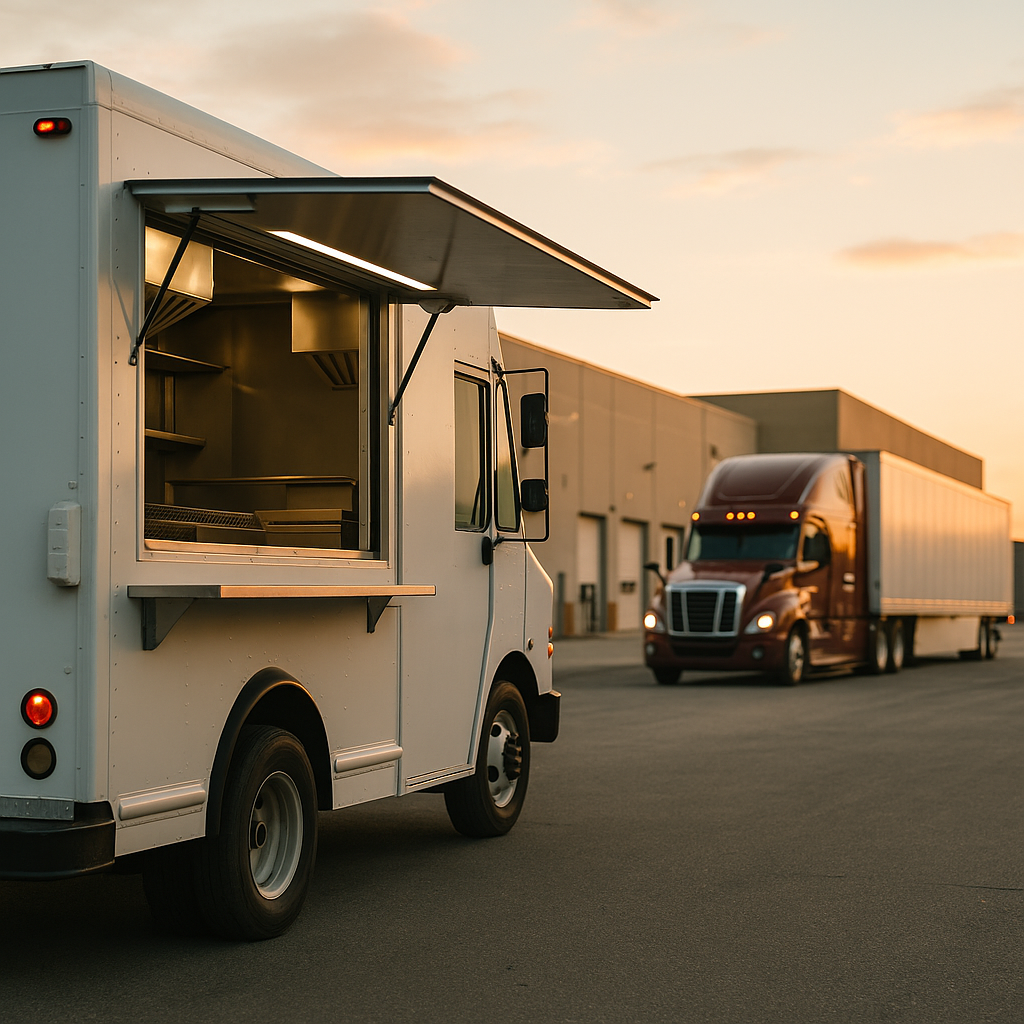
Mobile catering insurance: 7 key coverages, 2026 cost ranges, COI/Additional Insured checklist, and savings tips. Get compliant and book more jobs.

Mobile catering insurance is often the difference between “we’d love to book you” and “send your COI by Thursday or we move on.” Most mobile caterers need general liability (often including product liability), equipment coverage for gear that travels (often written as inland marine/equipment-in-transit), and auto coverage for business driving; add workers’ comp when you have employees (state rules vary), and expect many venues to require a COI with Additional Insured.
If you want the baseline coverages most catering businesses start with, read our broader catering insurance guide first—then use this page to dial it in for mobile risks like trailers, deliveries, and equipment in transit.
Table of Contents
Reading time: 8 minutes
- What is mobile catering insurance (and why it’s not a restaurant policy)?
- The 7 core coverages mobile caterers typically need
- Mobile catering insurance cost in 2026: realistic ranges
- COI + Additional Insured best practices
- Frequently Asked Questions
- Conclusion: Get compliant, get booked, and protect your gear
What is mobile catering insurance (and why it’s not a restaurant policy)?
Mobile catering insurance is an insurance package designed for off-premise food service where you operate at changing locations, transport equipment, and drive for deliveries or events—exposures a single-location restaurant policy often doesn’t match.
Restaurant insurance assumes one controlled address; mobile catering is the opposite. One week you’re in a barn venue, the next week you’re in a corporate lobby, then a city park with temporary power. Each setup changes your slip-and-fall risk, property-damage risk, and contract requirements.
Three realities venues and insurers price for
- More third-party exposure: cords, chafers, spilled liquids, temporary flooring, and crowded service lines at someone else’s property.
- Property that moves: hot boxes, tents, generators, POS systems, cambros, warming cabinets, and smallwares that spend time in vehicles and trailers.
- Driving exposure: deliveries, errands, towing, and occasional rentals—often the biggest hidden risk on the account.
If you want the venue-friendly baseline behind most contracts, it helps to understand how general liability insurance for small businesses typically works and why it’s usually the first line item a venue asks to see on a COI.
The 7 core coverages mobile caterers typically need
Most US mobile catering insurance programs are built from seven coverage types: general liability, product liability, equipment (often inland marine), property (for a fixed storage/commissary exposure), business interruption/extra expense, commercial auto (plus hired/non-owned when needed), and workers’ compensation.
Carrier names vary, and some coverages are bundled together, but what matters is the coverage function, the limits, and the endorsements your venue contract requires.
Quick coverage table (high-level)
| Coverage | What it protects | Who usually requires it | Common limit examples* | Mobile catering example |
|---|---|---|---|---|
| General Liability (GL) | Bodily injury & property damage to others | Venues/clients | $1M per occurrence / $2M aggregate | Guest trips over your power cord |
| Product Liability | Harm from the food you serve | Venues/clients | Often included within GL | Allergen reaction or foodborne illness claim |
| Tools/Equipment (often Inland Marine) | Gear in transit and off-site | You/lenders | Based on equipment value | Generator stolen from trailer overnight |
| Property (fixed location) | Stuff at commissary/storage | You/landlord | Based on values | Fire damage at storage unit |
| Business Interruption / Extra Expense | Income/extra costs after a covered loss | You | Scenario-based | Rent replacement hot boxes to keep jobs |
| Commercial Auto | Liability for owned business vehicles | State + contracts | Varies (often $1M CSL) | At-fault crash driving to venue |
| Workers’ Comp | Employee injuries | State laws + contracts | Statutory | Cook gets burned during service |
*Limits are commonly requested by venues but aren’t universal; always follow the contract.
1) General Liability (the coverage most venues ask for)
General liability typically responds when your business causes bodily injury or property damage to a third party, which is why it’s the first thing most venues screen for.
- Slip-and-fall: a guest slips where your team spilled ice water behind a bar.
- Property damage: a chafing stand tips and damages a venue floor or linens.
- Setup/tear-down: gear scratches walls or doorways during load-in.
2) Product Liability (foodborne illness + allergen claims)
Product liability addresses claims that your food caused injury or illness, and it’s commonly included inside GL for caterers—but you should confirm it’s not excluded.
For a food-operations explanation (including how “completed operations” and foodborne claims typically show up), see product liability insurance for food businesses.
3) Equipment coverage (why “in transit” matters)
Equipment that leaves a fixed address often needs coverage built for off-premises and in-transit loss, because standard property coverage can be limited away from the scheduled location.
Think: hot boxes, tents, folding tables, POS tablets, small appliances, and generators—especially when they’re stored in a trailer overnight or left on-site during a multi-day event.
4) Business interruption / extra expense (optional, but underrated)
Business interruption and extra expense can help replace income and cover emergency costs after a covered loss (like a fire at storage or theft of critical equipment), so you can keep booked events instead of canceling.
5) Commercial auto (owned vehicles) + trailer considerations
Commercial auto covers liability for vehicles used in the business, and it’s the cleanest way to avoid “business-use” disputes that can happen on personal auto policies.
Trailer setups are often misunderstood: liability frequently follows the tow vehicle, but trailer physical damage and equipment inside the trailer may need to be scheduled or endorsed depending on the carrier and how the rig is titled/financed.
6) Hired & non-owned auto (HNOA) (if staff drive personal/rental vehicles)
HNOA covers your business’s liability if an employee causes an accident while driving a personal vehicle (or a rented vehicle) for work, and it usually does not pay for damage to their car.
7) Workers’ comp (when you have employees—requirements vary)
Workers’ compensation pays for covered employee medical costs and wage replacement after work-related injuries, and requirements depend on state rules and your employee count.
Mobile catering injury patterns are predictable: burns, cuts, slips on wet floors, and lifting injuries during load-in/load-out. (National injury datasets for industries like food service are tracked through the US Bureau of Labor Statistics.)

Mobile catering insurance cost in 2026: realistic ranges and what drives the price
In 2026, many venue contracts still center on $1,000,000 per occurrence and $2,000,000 aggregate general liability limits, and your total premium is driven most by payroll (workers’ comp), driving exposure (auto), equipment value, and cooking method (open flame/frying/propane use).
Below are practical ballparks to help you budget; your actual quotes will vary by state, loss history, operations, and the endorsements your clients require.
Typical 2026 cost ranges (US ballparks)
| Policy / Coverage | Typical annual range (2026) | What usually pushes it up |
|---|---|---|
| General Liability (often incl. product liability) | $400–$2,500+ | Higher revenue, large guest counts, prior liability claims, higher limits/endorsements |
| Equipment / inland marine (scheduled gear) | $150–$1,500+ | Higher equipment values, theft exposure, frequent overnight storage in vehicles/trailers |
| Commercial auto (per vehicle) | $1,200–$5,000+ | More miles, more drivers, poor MVRs, towing, claims, higher liability limits |
| Workers’ compensation | Often priced as a rate per $100 of payroll | Higher payroll, job duties (hot work, heavy lifting), claims history, state rules |
| Liquor liability (if you serve/sell alcohol) | $300–$2,500+ | Higher alcohol sales, bartending exposure, venue requirements, late-night events |
What makes premiums jump (the “truth list”)
- More and larger events: higher severity exposure when something goes wrong.
- Prior claims: especially slip/fall, property damage, or auto losses.
- Driving: more drivers, younger drivers, poor MVRs, or delivery-heavy operations.
- Cooking hazards: open flame, frying, and propane-heavy setups can price higher.
- Alcohol exposure: liquor service can materially change underwriting.
If you want cost control ideas that don’t create coverage gaps, use how to lower business insurance premiums as your checklist.
COI + Additional Insured best practices (so you don’t lose the booking)
A Certificate of Insurance (COI) is a one-page proof-of-coverage document that lists your policy numbers, effective dates, limits, and insurer, and many venues won’t let you load in without it.
Most “COI problems” are really endorsement problems. A venue may need to be added as an Additional Insured, and they may require wording like Primary & Noncontributory or a Waiver of Subrogation.
The common reasons a COI gets rejected
- Named Insured mismatch: your COI doesn’t match your legal business name (LLC vs DBA, spelling, etc.).
- Wrong dates: event date falls outside policy dates.
- Wrong location/address: venue wants the event address shown in the description box.
- Additional Insured not actually endorsed: typed text on a COI isn’t the same as an issued endorsement.
- Contract wording missing: Primary & Noncontributory and/or Waiver of Subrogation requested.
For a step-by-step walkthrough (including certificate holder vs additional insured), bookmark our certificate of insurance (COI) guide.
A practical COI workflow (use it every time)
- Get the venue’s insurance requirements in writing (email is fine).
- Send the requirements to your agent before the week of the event.
- Confirm the COI shows the right certificate holder and the correct limits, and that any required endorsements were issued.
- Save the PDF by year + venue so you can reuse it and move faster next time.
Frequently Asked Questions
These FAQs cover the most common mobile catering insurance questions, including typical $1M/$2M venue liability limits, trailer/auto gaps, and what a venue expects to see on a COI.
Most mobile caterers need general liability (commonly shown as $1,000,000 per occurrence and $2,000,000 aggregate on venue contracts), product liability for food-related claims, and equipment coverage for gear that travels and sits off-premises.
If you drive to events or deliver food, you also need commercial auto (or at least a business-appropriate auto solution) and hired/non-owned auto when employees drive personal/rental vehicles. If you have employees, workers’ compensation may be required by state law and is often demanded by larger venues and corporate clients.
Mobile catering insurance cost in 2026 is driven mainly by payroll (workers’ comp), driving exposure (commercial auto), equipment value, and cooking hazards (open flame/frying/propane), so premiums can range from a few hundred dollars per year for basic GL to several thousand when auto and payroll are included.
A solo operator with limited deliveries may see GL in the lower end of the market, while a staffed, delivery-heavy operation often pays more because auto and workers’ comp become the largest line items. Liquor service and tight venue endorsement requirements can also increase cost.
Your trailer may need its own coverage for physical damage and the equipment inside it, even when liability generally follows the tow vehicle.
Many owners discover too late that “liability follows the truck” doesn’t automatically mean the trailer is covered for collision, theft, vandalism, or weather—and financed trailers often require physical damage coverage. The tow vehicle itself should be insured correctly for business use; this overview of commercial auto insurance for business use explains the common personal-auto exclusions and why proper business auto matters when you’re hauling gear to paid events.
Many venues require a Certificate of Insurance (COI) from caterers before load-in, and it often must show $1,000,000 per occurrence general liability and list the venue as an Additional Insured when the contract asks for it.
Weddings, corporate venues, municipalities, and venues with alcohol exposure are especially strict, and they may also require Primary & Noncontributory wording or a Waiver of Subrogation. The fastest way to avoid booking delays is to request the COI and any endorsements several business days before the event and make sure your named insured and policy dates match what the venue is verifying.
Conclusion: Get compliant, get booked, and protect your gear
Most mobile caterers can meet common venue requirements with $1M/$2M general liability, clearly included product liability, and a COI process that handles Additional Insured endorsements quickly.
Don’t let the “mobile” part be your blind spot: equipment that moves and business driving are where the expensive surprises usually live.
Key Takeaways:
- Match coverage to operations: deliveries, towing, rentals, and off-premise setup change what you need.
- Budget by exposure: payroll and driving often cost more than GL once you scale past solo jobs.
- Standardize COIs: correct named insured + correct dates + issued endorsements keeps your calendar full.
Related reading (keep your coverage tight)
One quick terminology note: If you run a heavy-duty pickup + trailer or a box truck, some agents will group your auto needs under “commercial truck” or “trucking” insurance. The label matters less than having the right commercial auto liability, physical damage, and towing/trailer details for how you actually operate.





