
2026 mobile food truck insurance costs often run $2K–$8K/yr. Learn 7 coverages, permit/venue requirements, add-ons + savings tips—compare quotes today and save.

Mobile food truck insurance in 2026 typically costs $2,000–$8,000 per year for many small operators because it’s usually a stack of policies (not one). The practical baseline is commercial auto plus general liability/product liability, then add coverage for your equipment, employees, and downtime based on how you actually operate.
If your truck can’t roll, you can’t sell—and if an event organizer won’t accept your Certificate of Insurance (COI) by Friday, you can lose a weekend that was supposed to pay the month’s bills. Start with a clean understanding of vehicle coverage and exclusions here: commercial auto insurance basics for mobile vendors.
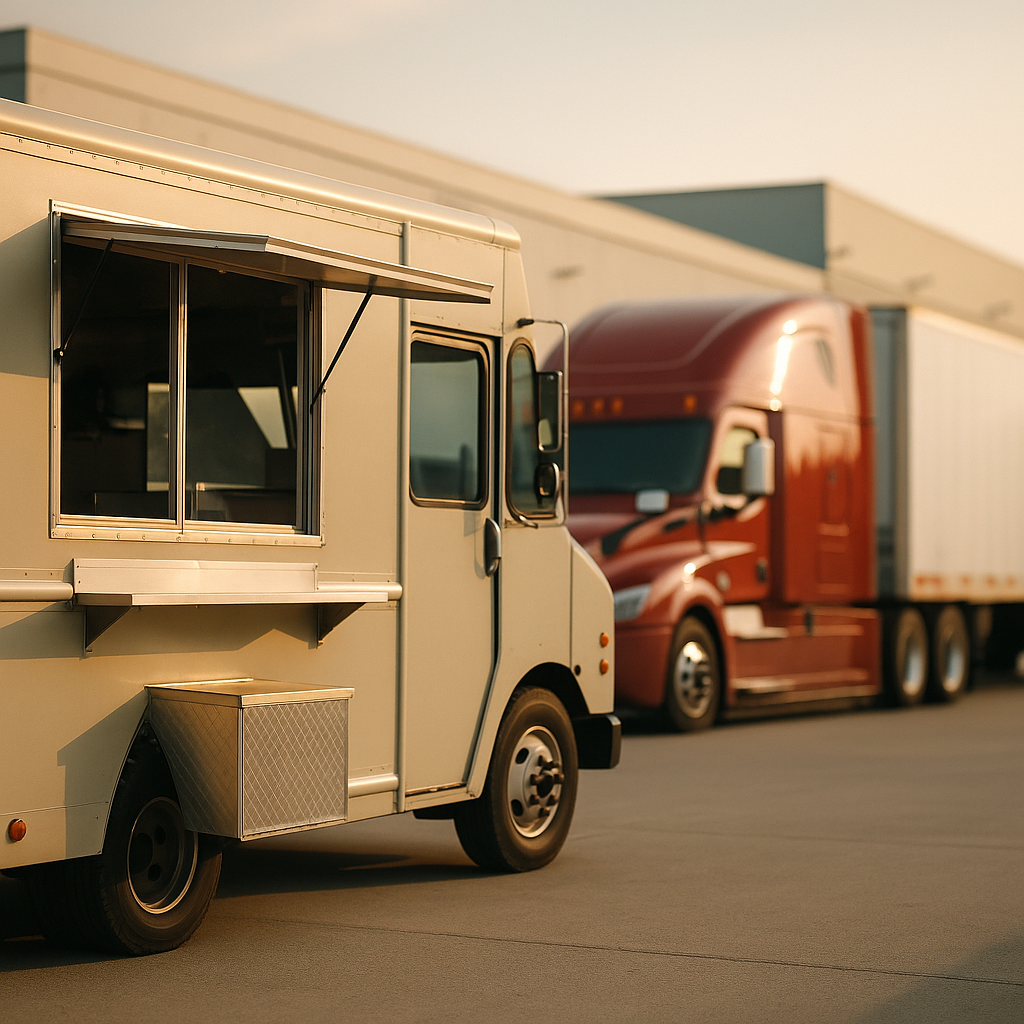
Hero image placeholder
Alt text: “Mobile food truck owner reviewing insurance coverage and permits”
Table of Contents
Reading time: 8 minutes
- Key Takeaways
- What Is Mobile Food Truck Insurance (and Why It’s Different)?
- The 7 Coverages Food Trucks Most Often Need (Required vs. Recommended)
- Add-On Coverage That Actually Matters: Equipment, Spoilage, and Cyber
- How Much Does Food Truck Insurance Cost in 2026? (Realistic Ranges + What Drives Them)
- Insurance Requirements: State, City, Venue, and COI Details (What Actually Gets You Approved)
- Frequently Asked Questions
- Conclusion: Get the Right Limits (and the Right COI Wording)
Key Takeaways
In 2026, many small food truck operators land in the $2,000–$8,000/year range, but employees, festivals, vehicle/equipment value, and higher liability limits can push the total higher.
- Expect $2K–$8K/year (typical) in 2026: Many small trucks fall in this band, but payroll and festivals can change the math fast.
- Most “requirements” come from cities and venues: COI wording like Additional Insured and Primary & Noncontributory can be the difference between “approved” and “come back later.”
- Commercial auto + general liability are the usual non-negotiables: Equipment, spoilage, cyber, and workers’ comp depend on your setup and staffing.
- You can often lower costs without going bare-minimum: Tighten drivers, deductibles, documentation, and safety routines so underwriting stays predictable.
What Is Mobile Food Truck Insurance (and Why It’s Different)?
Mobile food truck insurance is usually a bundle of at least two core policies—commercial auto and general liability—plus add-ons for equipment, employees, and lost income based on your menu and where you vend.
It’s a bundle of policies, not a single policy
Food trucks stack exposures that most small businesses don’t carry at the same time. You drive on public roads, serve customers at a window, sell products people consume, and store expensive movable gear on board.
- Auto risk: Collisions, property damage, injuries, and vehicle theft.
- Premises risk: Slip-and-fall claims near your service area.
- Product risk: Foodborne illness allegations, allergens, cross-contamination.
- Equipment/property risk: Generators, refrigeration, hood systems, POS tablets, tools.
If you’re still building your budget and timeline, treat insurance like a fixed operating cost, not a “later” line item. It affects permits, commissary agreements, and event bookings—this planning overview helps: starting a food truck business (licenses, budgeting, setup).
Food truck vs. trailer vs. cart: what changes
The “vehicle” part of your risk changes based on what moves and what gets towed. Venues can still require the same liability limits and COI language even if the setup is smaller.
- Truck (self-propelled): Commercial auto is central, and physical damage (comp/collision) often protects a big chunk of your capital.
- Trailer (towed): Coverage may split between the tow vehicle and trailer physical damage; confirm how the trailer is scheduled.
- Cart: Less auto exposure, but customer injury and product liability still apply—especially at public events.
The 7 Coverages Food Trucks Most Often Need (Required vs. Recommended)
Most food truck operators end up carrying seven common coverages, and “required” usually means required by a city, venue, commissary, landlord, or lender—not a single universal national rule.
Image placeholder
Alt text: “Checklist of 7 food truck insurance coverages”
1) Commercial auto (often required)
Commercial auto insurance covers liability for injuries/property damage you cause while driving and can include comprehensive/collision to repair or replace your rig after theft, hail, or a crash.
Personal auto policies commonly exclude business use, so a “cheap” personal policy can become a denial when you need it most. The NAIC’s consumer overview explains the difference between personal and commercial auto coverage: https://content.naic.org/consumer/commercial-auto-insurance.
Mini breakdown (quick reference)
| Part of coverage | What it typically handles | Why you care |
|---|---|---|
| Auto liability | Injuries/property damage to others | One at-fault wreck can create a business-ending claim without enough limits. |
| Physical damage (comp/collision) | Your truck after theft, hail, crash | Protects you from paying $40,000–$150,000 out of pocket for many builds. |
| Hired & non-owned auto | Borrowed/rented vehicles used for business | Helps if you rent a van for an event run or an employee uses a personal car on errands. |
2) General liability (often required by venues/cities)
General liability (GL) insurance covers third-party claims like customer injury and property damage, and many venues commonly request $1M per occurrence / $2M aggregate (requirements vary).
A simple slip near your service window can turn into medical bills, lost wages, and legal costs. For limits, COI wording, and common venue requirements, see: general liability insurance limits & COI language.
3) Product liability (commonly included with GL)
Product liability covers claims tied to the food you sell, including foodborne illness allegations, cross-contamination, and allergen issues.
One incident can create multiple claimants at once, especially at a festival or corporate event. Underwriters also like documentation—clear allergen labeling, refrigeration temp logs, and supplier invoices can make underwriting (and claims) easier.
4) Business property / inland marine (recommended—often critical)
Inland marine or mobile property coverage insures equipment and business property that moves with your operation, such as generators, POS systems, hood systems, and refrigeration.
This is where a lot of your capital sits, and theft or damage can stop your service immediately. Ask how equipment is valued (replacement cost vs. actual cash value) and whether off-truck storage is covered.
5) Business interruption (recommended for cash-flow protection)
Business interruption coverage can help replace lost income when a covered claim forces you to stop operating, but the trigger depends on the policy form.
Downtime hurts fast in this business: your payroll, commissary fees, and loan payments don’t pause because your truck is in the shop.
6) Workers’ compensation (required in many states if you have employees)
Workers’ compensation pays medical and wage benefits for employees injured on the job, and many states require it once you meet their employee-count rules (part-time may still count).
Burns, slips, and lifting injuries happen quickly in tight quarters. If you’re hiring, use this overview to understand the basics and what to ask: workers’ compensation insurance overview.
7) Umbrella / excess liability (recommended—sometimes required for festivals)
An umbrella policy adds extra liability limits (often $1M–$5M+) over your underlying GL and auto policies and is a common way to meet festival or corporate requirements efficiently.
If you’re booking higher-traffic venues, an umbrella can be cheaper than raising every base policy limit—assuming your underlying policies meet eligibility rules.
Add-On Coverage That Actually Matters: Equipment, Spoilage, and Cyber
Equipment breakdown, spoilage, and cyber liability are three add-ons that can prevent a one-day problem from becoming a multi-week shutdown, especially when your menu depends on refrigeration, generators, and card payments.
Equipment breakdown (refrigeration, electrical, generator)
Equipment breakdown coverage can pay for certain sudden mechanical or electrical failures of covered equipment, but what counts as a “breakdown” depends heavily on the endorsement or form.

A dead refrigeration unit isn’t just a repair bill—it can cancel service and trigger inventory loss. Before you add it, use this deep dive so you ask the right form questions: equipment breakdown coverage for refrigeration/generators.
Spoilage (refrigeration failure) and inventory loss
Spoilage coverage can reimburse perishable inventory lost due to covered causes, but triggers and sub-limits vary widely by carrier and endorsement.
- Confirm the trigger: Is it covered for power outage, equipment failure, or both?
- Ask about sub-limits: Some policies cap refrigerated property losses even when the overall limit looks high.
- Document inventory: Receipts and inventory logs help validate value during claims.
Cyber liability for POS, QR ordering, and online payments
Cyber liability coverage can help pay for breach response, notification costs, ransomware recovery, and certain payment card-related expenses after a cyber incident.
Even small trucks process card data and run apps, so one compromised tablet can turn into a real bill. If you run Square/Toast-style POS, QR ordering, customer email lists, or a hotspot, learn what cyber policies typically cover here: cyber liability insurance for POS/online ordering.
How Much Does Food Truck Insurance Cost in 2026? (Realistic Ranges + What Drives Them)
For many small operators, food truck insurance in 2026 commonly falls around $2,000–$8,000 per year, usually reflecting commercial auto plus general liability/product liability, with pricing driven by drivers, payroll, equipment values, cooking hazards, and required limits.
Image placeholder
Alt text: “Table showing food truck insurance cost ranges by policy type in 2026”
Typical 2026 cost range (featured-snippet friendly)
For many small operators, food truck insurance in 2026 commonly falls around $2,000–$8,000 per year. That usually reflects commercial auto + general liability/product liability, with pricing swinging based on vehicle value, drivers, payroll, cooking methods (propane/fryers), claim history, and the higher limits festivals or cities may require.
Cost by policy type (guide-level signals, not a quote)
These are typical market “signals” for smaller operators, not a guaranteed quote. Your state, loss history, limits, and insured values can move these materially.
| Policy | What it covers (plain English) | Typical cost signal | Biggest price drivers |
|---|---|---|---|
| Commercial auto | Road liability + optional comp/collision | Often the largest line item | Vehicle value, radius/miles, driver MVRs, prior claims |
| General liability + product | Customer injury + food-related claims | Often modest to mid | Limits required by venues, foot traffic, claims |
| Property / equipment | Gear, tools, mobile property | Depends on insured values | Total equipment value, theft controls, deductibles |
| Workers’ comp | Employee injuries | State/payroll dependent | State rules, payroll, job class codes |
| Umbrella | Extra liability limits | Can be efficient for higher limits | Underlying limits, claims, risk class |
| Add-ons (breakdown/spoilage/cyber) | “Keeps you operating” protections | Usually incremental | Equipment type, data handling, deductible |
If you want a clear explanation of what insurers price (and what you can control), use: what affects business insurance cost (drivers & levers).
3 operator examples (why the same “type” of truck can price differently)
- Example A: Newer step-van build + 2 employees + frequent festivals: Higher limits, more COIs, and more payroll exposure typically increases the total premium.
- Example B: Food trailer + limited events + no employees: Less auto complexity (depending on tow setup) and no workers’ comp often lowers the package.
- Example C: Coffee truck with high equipment value + online ordering: Mid-range premium, but equipment and cyber add-ons can be worth it if downtime kills revenue.
“Trucking insurance” keywords you might hear (and when they apply)
Most food truck owners aren’t shopping semi-truck coverage, but some agents will still use “commercial truck insurance” language. The key is matching the policy to the actual use of each vehicle—coverage written for freight risks may not fit a food-service operation with product and premises exposure.
Insurance Requirements: State, City, Venue, and COI Details (What Actually Gets You Approved)
Food truck insurance requirements usually come from contracts and permits, and many venues commonly require proof of coverage via a COI with endorsements such as Additional Insured and Primary & Noncontributory.
Where requirements really come from
You can be legal to operate and still get turned away if your COI doesn’t match the venue’s wording. Requirements most often come from:
- City/county permitting offices: Often specify minimum liability limits and proof of insurance to issue permits.
- Event organizers: Frequently strict on limits, endorsements, and certificate details.
- Landlords/commissaries: May require GL and sometimes property coverage.
- Lenders/lessors: Often require physical damage coverage and may dictate deductibles.
Licensing and permit rules vary by location, so use the SBA’s guide as a starting point and then confirm locally: https://www.sba.gov/business-guide/launch-your-business/apply-licenses-permits.
COI checklist (bring this to your agent)
When a venue asks for “proof of insurance,” they usually want a COI plus specific endorsements. The most common asks include:
- Limits required: General liability and (sometimes) auto liability.
- Additional Insured: The venue wants to be listed on your policy for that event/location.
- Primary & Noncontributory: Your policy responds first.
- Waiver of Subrogation (sometimes): Common in larger events or corporate contracts.
- Correct details: Venue name, address, event dates, and a clear description of operations.
Practical tip: Build a COI request template (venue name, address, required limits, required wording) so you can turn COIs around fast and book more events.
Do food trucks ever need USDOT/FMCSA filings?
Most food trucks do not need USDOT/FMCSA filings, but if you cross state lines or meet specific thresholds (vehicle weight/use), you should verify using FMCSA’s criteria page: https://www.fmcsa.dot.gov/registration/do-i-need-usdot-number.
If your operation starts looking more like a transport business (multiple vehicles, long distances, hauling), confirm licensing, registration, and insurance requirements before you expand routes.
Frequently Asked Questions
These food truck insurance FAQs use common 2026 pricing ranges ($2,000–$8,000/year) and typical venue limits ($1M/$2M) to answer buying questions in a way you can share with a permitting office or event organizer.
In 2026, many small operators see about $2,000–$8,000 per year as a typical range for food truck insurance, depending on coverages and limits. Commercial auto often swings the most based on truck value, driver MVRs, and how far you travel, while workers’ compensation can add meaningful cost based on payroll and state rules. Event and festival requirements also matter: if a venue requires higher limits or specific endorsements on your COI, your premium can rise even if your day-to-day risk hasn’t changed.
Most food trucks commonly need commercial auto plus general liability (often including product liability) because those are the policies cities and venues ask for most often. Many operators then add property/inland marine to cover onboard equipment, workers’ compensation if they have employees, and an umbrella when events require higher total limits (often $2M–$5M+). The fastest way to choose is to get venue/city requirements in writing, then match your limits and endorsements to that checklist.
Insurance is often required in practice because cities, event organizers, landlords/commissaries, and lenders frequently require a Certificate of Insurance (COI) before they approve permits, contracts, or bookings. Typical venue requirements include $1M per occurrence / $2M aggregate general liability and COI language such as Additional Insured and Primary & Noncontributory, but the exact numbers vary by location and event. Always request requirements in writing so your agent can issue the correct endorsements the first time.
Yes, food trucks can often insure onboard equipment through mobile property/inland marine coverage and may add equipment breakdown for certain mechanical or electrical failures. Spoilage coverage may also be available for perishable inventory, but the details matter: you should confirm whether the trigger is power outage, equipment failure, or both, and whether refrigerated inventory has a separate sub-limit. If refrigeration is mission-critical, ask for the exact endorsement language and keep invoices and inventory logs for claims support.
Many states require workers’ compensation based on employee count and business type, and “part-time” status does not automatically exempt you from the rule. Even when not strictly required, workers’ comp can protect your business from paying out of pocket for medical bills and lost wages after common food truck injuries like burns, slips, and lifting strains. Start with the basics and then verify your state’s threshold here: workers’ compensation insurance overview.
Conclusion: Get the Right Limits (and the Right COI Wording)
For most operators, the safest baseline is commercial auto plus $1M/$2M general liability with product liability, then you layer in equipment, workers’ comp, and an umbrella to match your menu, staffing, and venue contracts.
Food truck insurance isn’t about buying the cheapest policy—it’s about buying coverage that actually responds when a claim hits and paperwork that gets you approved for permits and events. Before you shop, gather vehicle details, driver list, equipment values, payroll (if any), and the exact COI wording from your city or venues.
Key Takeaways:
- Build for approvals: Match your COI endorsements (Additional Insured, Primary & Noncontributory) to the venue’s written requirements.
- Protect the stuff that makes you money: Insure equipment and consider breakdown/spoilage if refrigeration or generators drive your revenue.
- Control your price drivers: Driver selection, radius/miles, deductibles, and documentation can meaningfully affect premiums.
If you want a cleaner bundle and often better value, learn how a: business owner’s policy (BOP) explained. Then compare quotes apples-to-apples on limits, deductibles, exclusions, and endorsements so you can keep rolling.





