
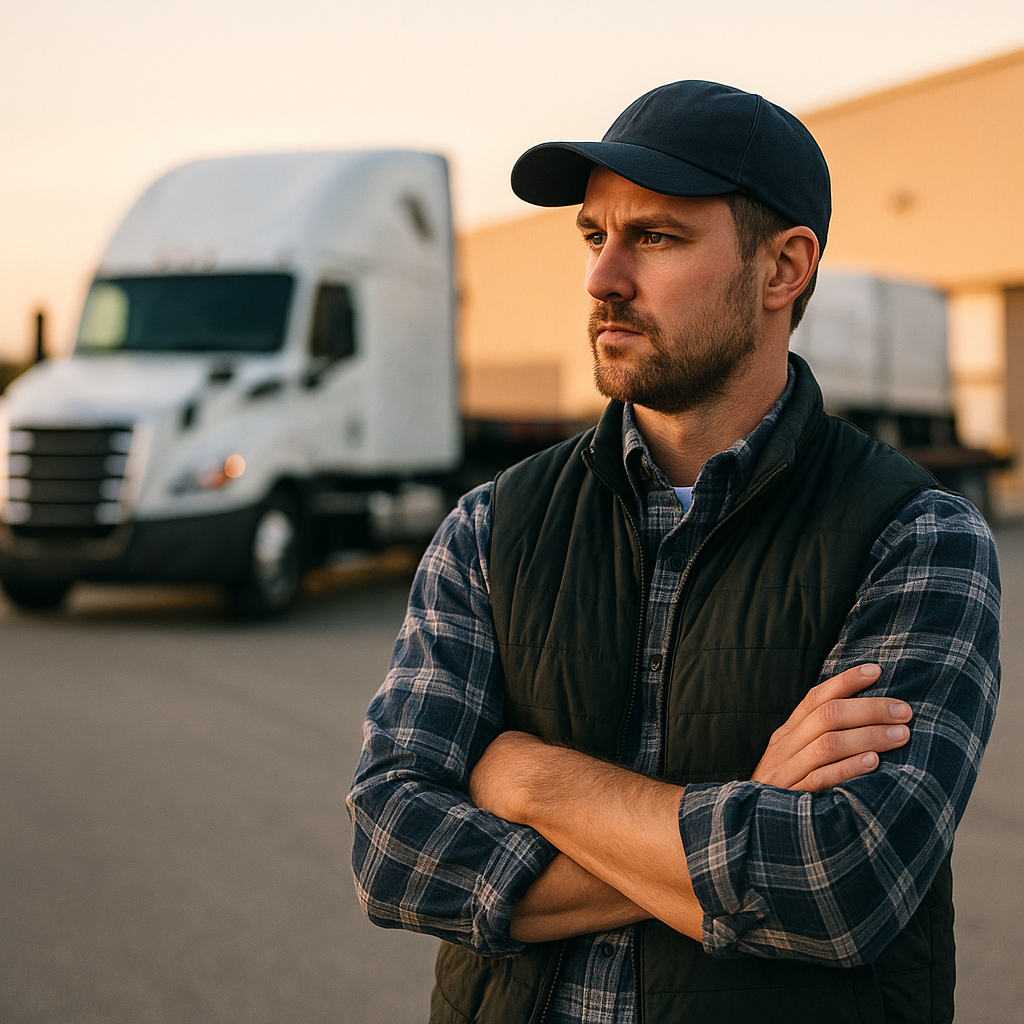
Non cdl hotshot insurance requirements explained: liability, cargo, filings, and 2026 cost ranges—plus a checklist to get compliant fast. Get started.

Non cdl hotshot insurance requirements usually come down to (1) whether you’re for-hire under your own authority, (2) what you haul, and (3) what brokers require to tender loads. In most cases, a load-eligible package includes primary liability (often $750,000–$1,000,000), motor truck cargo ($50,000–$250,000 is common), and physical damage, plus situational coverages like general liability, trailer interchange, non-trucking liability/bobtail, and occupational accident. If you get your own authority, FMCSA activation typically requires a BOC-3 and your insurer’s BMC-91/BMC-91X filing, then you verify status on SAFER before rolling.
If you want the bigger context first, start with Commercial truck insurance basics (hotshot is still commercial trucking insurance, even when you’re in a pickup).
Table of Contents
Reading time: 8 minutes
Key takeaways
Non-CDL hotshot compliance is driven by for-hire vs. private carriage, your cargo, and whether you operate under your own MC authority or a carrier’s authority.
- Non-CDL doesn’t mean “less insurance.” If you’re for-hire, the market expects trucking-grade coverage regardless of license class.
- Most load-ready packages include primary liability, cargo, and physical damage, then add-ons like GL or trailer interchange depending on your accounts.
- Own authority requires filings. If your insurer doesn’t file BMC-91/91X, your authority won’t show active with FMCSA.
- Fastest cost wins: accurate radius, correct cargo limit, no coverage lapses, clean MVR, and shopping early.
Non-CDL hotshot basics: when you can (and can’t) stay non-CDL
CDL enforcement is typically based on GVWR/GCWR ratings (truck rating + trailer rating), not your “actual weight today,” and officers usually reference the door jamb and trailer data plate.
If your combination crosses a CDL threshold and you operate without the correct license, you risk citations, out-of-service, and early safety history problems that can raise your trucking insurance premiums.
The weight thresholds that usually trigger a CDL
Most hotshot “near-threshold” builds are 1-ton duallies pulling a 30–40’ gooseneck, and the surprises happen when the ratings add up on paper even if you’re light on a given day.
- Check ratings first: add truck GVWR + trailer GVWR before you buy a trailer.
- Don’t rely on curb weight: enforcement often focuses on rated capacity.
- Stay consistent: mismatched equipment decisions can create compliance and insurance headaches later.
To see how coverage is commonly bundled for pickup hotshots, use Hotshot trucking insurance overview as your baseline.
Non-CDL hotshot insurance requirements: the 7 coverages most drivers need
Non cdl hotshot insurance requirements usually fall into three buckets: (1) required by law/authority, (2) required by brokers/shippers, and (3) required by lenders or required to protect your business.
Hotshot insurance is still commercial auto/trucking insurance; the difference is the equipment class, not the exposure.
Image placeholder
Alt: Table of required non-CDL hotshot insurance coverages and typical limits
Description: Simple coverage table: liability, cargo, physical damage, general liability, trailer interchange, non-trucking liability, occupational accident
Quick reference table (typical market expectations)
| Coverage | Who usually needs it | Typical limits you’ll see | Why it matters |
|---|---|---|---|
| Primary liability | Own authority / for-hire | $750k–$1M+ | Required to run for-hire and get loaded |
| Motor truck cargo | Most for-hire hotshot | $50k–$250k | Brokers commonly require it |
| Physical damage | Anyone financing equipment | Stated value / ACV | A single wreck doesn’t end the business |
| General liability | Many jobsite/contract loads | Often $1M | Covers non-auto claims (premises/operations) |
| Trailer interchange | Only if pulling non-owned trailers | Varies | Protects you for damage to someone else’s trailer |
| Non-trucking liability (NTL) / bobtail | Mostly leased-on | Often $1M | Coverage when you’re not under dispatch |
| Occupational accident | Many owner-operators | Varies | Medical/disability benefits for the driver |
1) Primary liability (the must-have for for-hire)
Primary liability pays for injuries and property damage to others when you cause a crash, and it’s the coverage FMCSA typically requires for for-hire authority to go active via an insurance filing.
Even when a legal minimum can be lower depending on operation/cargo, many brokers won’t tender freight without $1,000,000 liability on the COI.
- Who usually needs it: for-hire hotshot operators under their own authority
- Reality check: “legal minimum” and “load minimum” are not the same thing
2) Motor truck cargo (often required to get loads)
Motor truck cargo coverage pays for covered loss or damage to the freight you’re hauling, subject to exclusions and conditions in the policy.
Brokers commonly require cargo limits like $50,000 or $100,000, and specialized freight can drive higher requirements.
- Watch exclusions: unattended theft, improper securement, and commodity restrictions are common issues.
- Match your actual freight: don’t buy “general freight” cargo if you routinely haul excluded items.
3) Physical damage (truck + trailer)
Physical damage is comprehensive and collision coverage for your pickup and trailer based on stated value or actual cash value (ACV), and lenders commonly require it when equipment is financed.
Underinsuring trailers is one of the fastest ways to turn a claim into a cash-flow disaster, especially with higher-end goosenecks.
4) General liability (GL)
General liability (GL) covers non-auto claims such as premises/operations exposures, and many job sites or direct-shipper accounts require a $1,000,000 GL limit for vendor approval.
If you’re regularly on construction sites, yards, or customer property, GL is often the “access ticket” that keeps you from being turned away.
5) Trailer interchange (situational)
Trailer interchange covers physical damage to a non-owned trailer in your care under a written trailer interchange agreement, and it’s not automatically included in standard physical damage.
If you only pull your own gooseneck, you may not need trailer interchange at all.
6) Non-trucking liability / bobtail (mostly leased-on drivers)
Non-trucking liability (NTL) and bobtail liability are designed to cover certain off-dispatch liability exposures, and the exact trigger depends on the policy wording and your lease agreement.
If you’re leased to a carrier, the carrier’s liability often applies while dispatched, so the confusion usually happens when you’re driving without a load, between jobs, or running personal errands.
Before you buy the wrong add-on, read Bobtail vs non-trucking liability explained and compare it to your lease requirements.
7) Occupational accident (common owner-operator protection)
Occupational accident provides medical and disability-style benefits for the driver, and it’s commonly used by owner-operators who don’t have workers’ compensation coverage.
Occ/Acc protects you; it does not replace liability coverage that protects the public.
Authority and insurance filings: USDOT, MC, BOC-3, and BMC-91 (step-by-step)
FMCSA requires an active operating authority record to show required insurance on file (typically via BMC-91/BMC-91X) and a BOC-3 process agent filing before many for-hire authorities can go active.
Reference pages (official sources):
- Operating authority (MC): https://www.fmcsa.dot.gov/registration/get-mc-number-authority-operate
- Insurance filing requirements: https://www.fmcsa.dot.gov/registration/insurance-filing-requirements
- SAFER verification: https://safer.fmcsa.dot.gov/
Image placeholder
Alt: Flowchart showing USDOT and MC authority steps with BOC-3 and BMC-91 filings
Description: Process graphic: decide authority → apply → BOC-3 → insurer files BMC-91/91X → verify on SAFER
Step 1: Decide if you need operating authority (MC)
A USDOT number is an identifier for DOT compliance, while an MC (operating authority) is permission to haul for-hire in many interstate scenarios.

If you’re leased-on, you may run under the carrier’s authority, which can change who provides primary liability and what filings are required in your name.
For a deeper walkthrough, see FMCSA operating authority (MC number) guide.
Step 2: Apply and set up the compliance dominoes
Authority setup is a sequence, and mismatches between your FMCSA application name, your insurance name, and your filings can delay activation.
- Keep naming consistent: legal entity, DBA, and addresses should match across paperwork.
- Plan the start date: don’t bind a policy “just to start shopping” and accidentally create a lapse later.
Step 3: Your insurer files BMC-91/BMC-91X (you don’t upload it)
The BMC-91/BMC-91X is the insurer’s electronic proof-of-liability filing submitted directly to FMCSA, and without it your authority typically won’t show active for brokers and enforcement.
When you bind coverage, ask two questions: (1) when will it be filed, and (2) when should it show active on FMCSA systems.
Step 4: Verify on SAFER before you roll
SAFER is the public status page brokers use to confirm your authority and insurance filings, and you should verify “Active” before you burn fuel to the first pickup.
Save a screenshot of your active status; it can speed up onboarding when a broker’s setup team is behind.
Don’t let BOC-3 be the thing that delays you
BOC-3 designates process agents for service of legal documents, and it’s a common activation step that first-time authorities forget until the last minute.
If you want the plain-English version, read BOC-3 filing (process agent) breakdown.
Non-CDL hotshot insurance cost in 2026: realistic ranges + checklist
Non-CDL hotshot insurance cost in 2026 typically varies most by radius, lanes, cargo type/value, driver experience, and whether you’re a new venture/new authority.
For the rating variables that cause the biggest swings, see What affects the cost of truck insurance.
Image placeholder
Alt: Chart showing non-CDL hotshot insurance cost ranges by scenario in 2026
Description: Scenario-based bars: leased-on vs own authority vs higher cargo/wider radius
Typical 2026 premium ranges (scenario-based)
These ballpark ranges are commonly seen in the market, but underwriting can move pricing substantially based on MVR, claims, commodities, and states of operation.
- Leased-on (NTL/bobtail + physical damage): often $2,500–$6,000/year
- Own authority ($1M liability + cargo + physical damage): often $6,000–$12,000/year
- Higher-risk lanes / higher cargo limits / new venture: often $10,000–$20,000+/year
One avoidable budget killer: a coverage lapse, even for 1–2 weeks, can raise premiums and reduce carrier options.
State variations (don’t ignore intrastate rules)
State motor carrier rules can add intrastate insurance and filing requirements on top of federal rules, so “federally compliant” does not always mean “state compliant.”
Example (Texas motor carrier insurance requirements): https://www.txdmv.gov/motor-carriers/insurance-requirements
Printable checklist: non-CDL hotshot insurance & authority requirements
This checklist is designed to catch the common mistakes that delay onboarding or stop your authority from going active.
Image placeholder
Alt: Printable checklist for non-CDL hotshot insurance and authority requirements
Description: Downloadable checklist-style graphic for compliance items and documents
- Operation decisions
- Leased-on or own authority?
- Operating radius (local/regional/OTR)
- Cargo types + maximum cargo value you’ll haul
- Insurance policies (typical)
- Primary liability (own authority)
- Cargo (most brokered freight)
- Physical damage (truck + trailer)
- General liability (GL) if required by shippers/jobsites
- NTL/bobtail if leased-on and required by lease
- Authority & filings (if own authority)
- USDOT/MC application submitted (FMCSA)
- BOC-3 process agent filed
- Insurer filed BMC-91/91X (FMCSA)
- Verified “Active” on SAFER before hauling
Related reading (cost control)
Frequently Asked Questions
Most non-CDL hotshot drivers need primary liability (typically $750,000–$1,000,000 for for-hire), motor truck cargo (often $50,000–$250,000 to meet broker requirements), and physical damage for the truck and trailer.
If you’re leased-on to a carrier, you may also need non-trucking liability/bobtail (often $1,000,000) for off-dispatch driving if your lease requires it, plus physical damage and any lender-required coverages. Many job sites also require general liability (commonly $1,000,000). The “right” package is determined by your authority setup, cargo, radius, and contract requirements—not your license class.
FMCSA liability minimums for for-hire operations vary by operation and cargo type, and the official reference is FMCSA’s insurance filing requirements page (BMC-91/91X): https://www.fmcsa.dot.gov/registration/insurance-filing-requirements.
In real load boards and broker onboarding, $1,000,000 liability is a common contract requirement even when the legal minimum might be lower for your specific operation. The practical rule is: meet the legal requirement to operate, then meet the broker/shipper requirement to get freight tendered—otherwise you can be legal and still “unloadable.”
For for-hire interstate hauling, non-CDL hotshot operators typically need an MC (operating authority) unless they are leased-on and operating under a motor carrier’s authority, as outlined by FMCSA: https://www.fmcsa.dot.gov/registration/get-mc-number-authority-operate.
If you get your own authority, your insurer must file your liability electronically (usually BMC-91/BMC-91X) and you should verify status on SAFER before hauling: https://safer.fmcsa.dot.gov/. Authority decisions also change which party carries primary liability and what your COI needs to show for brokers.
Yes, a BOC-3 (process agent) filing is commonly required as part of activating your own FMCSA operating authority, and missing it is a frequent reason new authorities sit inactive.
BOC-3 designates process agents who can accept legal documents on your behalf in required states, and it’s separate from insurance—meaning you can buy a policy and still not go active if BOC-3 isn’t filed. If you want the plain-English breakdown and the “what it does vs what it doesn’t,” read BOC-3 filing (process agent) breakdown before you pay for rush fixes.
Conclusion: build a compliant package that actually gets you loaded
A load-eligible hotshot setup typically requires the right coverages (liability, cargo, physical damage, plus situational add-ons) and the right filings (BOC-3 and insurer-filed BMC-91/91X) to show active in FMCSA systems.
The goal isn’t “the cheapest policy.” It’s a package that keeps your authority active, satisfies broker limits, and protects the truck that pays your bills.
Key Takeaways:
- Separate legal vs broker requirements: being legal doesn’t guarantee you’ll get tendered freight.
- Own authority means filings: confirm BMC-91/91X timing and verify status on SAFER before you haul.
- Budget realistically: 2026 ranges often land at $6,000–$12,000/year for own authority, with higher-risk cases reaching $10,000–$20,000+.
If you want pricing that matches your real operation, get quotes using your actual radius, lanes, cargo, and authority plan—then confirm filings are submitted before you book the first load.





