
Oklahoma commercial truck insurance rates (2026): $750–$1,400/mo for many owner-ops. See OK requirements, coverage costs, CPM math, and savings levers—get quotes.

In 2026, Oklahoma commercial truck insurance rates commonly land around $750–$1,400 per month per truck for many established owner-operators buying a typical package (liability + cargo + physical damage). New authority, hotshot operations, long radius, higher-risk freight, or a rough loss history can push that number materially higher.
That monthly bill isn’t “just insurance.” It’s cash flow. One slow-paying broker, one big repair, or a couple weeks of deadhead and suddenly your premium is eating the profit you thought you had.
If you want a faster path to a realistic number—and a cleaner way to compare quotes—this guide breaks Oklahoma rates into tables, cost-per-mile math, and the levers that actually move your premium. If you’re also hunting for the lowest compliant options, start with this companion guide on cheapest commercial truck insurance in Oklahoma.
Table of Contents
Reading time: 10 minutes
- Key Takeaways
- Quick Rate Tables: Oklahoma Trucking Insurance by Operation (2026)
- Oklahoma Requirements (2026): FMCSA Interstate vs Oklahoma Intrastate
- Oklahoma Insurance CPM (Cost Per Mile): Reality-Check Your Quote
- Where Your Premium Usually Goes (And How to Lower It Without Getting Burned)
- Frequently Asked Questions
- Conclusion: Get the Right Oklahoma Rate (Not Just the Lowest Quote)
Key Takeaways
In 2026, many established Oklahoma owner-operators pay roughly $750–$1,400/month per truck for a common liability+cargo+physical damage package, while new authority can price much higher.
- Expect $750–$1,400/mo for many established OK owner-ops; new authority can run much higher, especially with long-haul lanes or tougher freight.
- Don’t compare quotes by monthly payment—compare by limits, deductibles, cargo class, radius, and filings (apples-to-apples).
- Use insurance CPM (cost per mile) to price loads and contracts:
annual premium ÷ annual miles. - The fastest savings usually come from tightening underwriting info, choosing smart deductibles, and shopping the right markets—not from stripping coverage.
Quick Rate Tables: Oklahoma Trucking Insurance by Operation (2026)
In Oklahoma, a typical owner-operator insurance “package” (liability + cargo + physical damage) often prices in the $9,000–$16,500/year range for established operations, but new ventures commonly land $18,000–$30,000+/year.
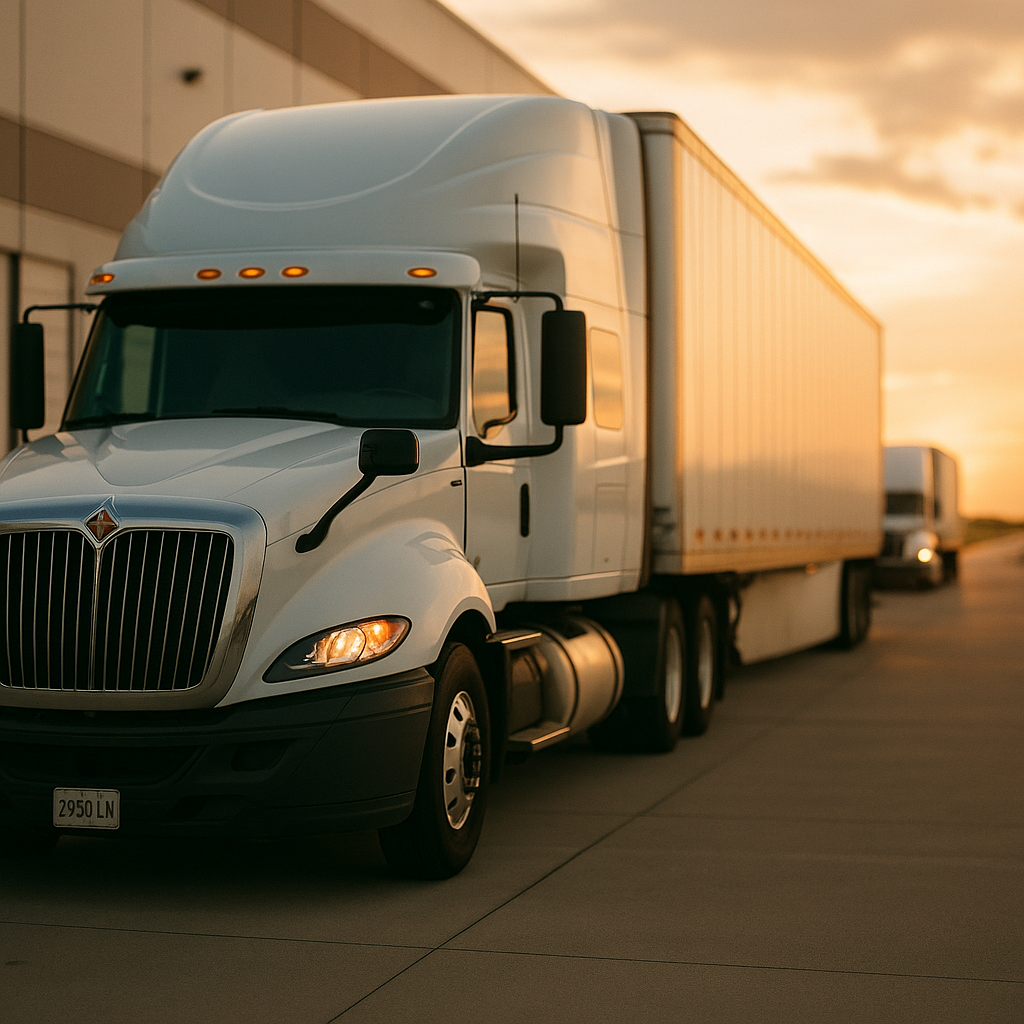
Image placeholder (hero): Commercial semi truck in Oklahoma with driver reviewing insurance rates
Alt text: Commercial semi truck in Oklahoma with driver reviewing insurance rates
Table 1 — Typical Rate Ranges (Monthly + Annual) by Operator Type
These ranges reflect common packages built around commercial truck insurance essentials (liability + cargo + physical damage), and your exact premium depends on authority age, losses, MVR/PSP, equipment value, lane/radius, and commodity.
| Operator profile (Oklahoma-based) | Typical monthly range | Typical annual range | Notes (what usually drives the number) |
|---|---|---|---|
| Established owner-op (authority, general freight / dry van) | $750–$1,400 | $9,000–$16,500 | Radius, cargo class, claims, and truck value/deductible |
| Leased-on owner-op | $250–$600 | $3,000–$7,200 | Often less coverage needed personally; depends on carrier program |
| New authority (0–24 months) | $1,500–$2,500+ | $18,000–$30,000+ | Limited safety history + underwriting caution (liability often spikes) |
| Small fleet (2–5 trucks) | $900–$1,700 (per unit, blended) | $10,800–$20,400 | Driver roster + claim frequency matter more than one clean driver |
| Hotshot (pickup + trailer) | $600–$1,600+ | $7,200–$19,200+ | Hotshot insurance varies a lot by trailer value, cargo, and radius |
Image placeholder (H2 table graphic): Table showing Oklahoma commercial truck insurance rate ranges in 2026
Alt text: Table showing Oklahoma commercial truck insurance rate ranges in 2026
Table 2 — Rate Differences by Truck Type (Semi, Box, Hotshot)
Different equipment types price differently because liability exposure, radius, and physical damage values change the insurer’s risk.
| Truck / operation type | Typical monthly range | Why it changes pricing |
|---|---|---|
| Tractor-trailer (semi truck insurance) | $750–$2,500+ | Highest liability exposure + long-haul radius + higher limits common |
| Straight truck / box (commercial auto style) | $300–$1,200+ | Often local/regional; liability still matters, PD depends on unit value |
| Hotshot (pickup + trailer) | $600–$1,600+ | Cargo + trailer value + radius + driver/claims history |
What these tables don’t include: certain add-ons can be separate line items—bobtail/non-trucking liability, trailer interchange, occupational accident, general liability, or higher umbrella limits. For a broader national comparison, see 2026 commercial truck insurance cost benchmarks. [INFERRED — verify before publish]
Oklahoma Requirements (2026): FMCSA Interstate vs Oklahoma Intrastate (Don’t Guess)
FMCSA financial responsibility minimums for for-hire interstate carriers hauling non-hazardous property in vehicles over 10,001 lbs is commonly $750,000 (with higher minimums for certain oil and hazardous materials) and your insurer must file proof of coverage tied to your authority.
Rates are useless if you can’t haul because your filings or limits don’t match your operation, so use the split below to sanity-check what you’re being quoted and what you can actually book.
If You Run Interstate: FMCSA Minimums + Filings (The Baseline)
What it is (plain English): If you cross state lines (or haul certain freight tied to interstate commerce), you’re typically operating under FMCSA rules, and your insurer files proof of financial responsibility connected to your authority.
Why it’s essential: Even if the federal minimum is lower for some operations, brokers and shippers often require $1,000,000 liability to tender loads. If you’re under the requirement, you’re shopping rates on freight you can’t legally (or contractually) haul.
Where to verify: FMCSA’s official overview of insurance filing requirements is here: https://www.fmcsa.dot.gov/registration/insurance-filing-requirements
If You Run Intrastate Only: Oklahoma Rules Can Be Different
What it is: You operate strictly within Oklahoma borders (no crossing state lines), which can mean different filing processes and minimums depending on your carrier type.
Why it matters: Buying the “lowest premium” without matching Oklahoma’s intrastate requirements can get you shut down at the worst time—right when you need revenue to cover that premium.
How to verify (do this before you bind):
- Confirm whether your operation is intrastate-only or interstate
- Confirm the correct carrier classification
- Confirm what Oklahoma expects for proof/filings
A starting point for official Oklahoma guidance is the Oklahoma Corporation Commission (OCC) Transportation Division: https://oklahoma.gov/occ/divisions/transportation.html
New Authority Note (Why Your Premium Jumps)
If you’re starting authority, the insurance piece and the authority process are tied together—miss a step and you’ll lose time (and sometimes get re-quoted). This guide helps you prep: How to prepare for the FMCSA authority application. [INFERRED — verify before publish]
Oklahoma Insurance CPM (Cost Per Mile): The Fastest “Reality Check” for Quotes
Insurance CPM is calculated as annual premium ÷ annual miles, and it’s one of the quickest ways to see if a quote will break your load pricing.
Insurance is one of the big operating cost categories in trucking (ATRI tracks these cost buckets year after year): https://truckingresearch.org/
Image placeholder (CPM infographic): Cost-per-mile formula example for Oklahoma truck insurance premiums
Alt text: Cost-per-mile formula example for Oklahoma truck insurance premiums
The CPM Formula (Use This Today)
Insurance CPM = Annual premium ÷ Annual miles

Example A — Same premium, different miles (CPM changes fast)
- Annual premium: $14,400 ($1,200/mo)
- Miles/year: 120,000
- Insurance CPM: $14,400 ÷ 120,000 = $0.12/mile
Example B — If you run fewer miles (regional/intrastate)
- Annual premium: $14,400
- Miles/year: 70,000
- Insurance CPM: $14,400 ÷ 70,000 = $0.206/mile
Same policy. Same premium. But the second operation needs more money per mile just to cover insurance.
CPM Benchmarks (Practical Ranges)
These are planning bands, not guarantees:
- Established owner-op (often $9,000–$16,500/year)
- At 100k miles: $0.09–$0.165 CPM
- At 70k miles: $0.129–$0.236 CPM
- New authority (often $18,000–$30,000+/year)
- At 100k miles: $0.18–$0.30+ CPM
- At 70k miles: $0.257–$0.429+ CPM
If you want to compare Oklahoma vs national expectations, reference Average cost of commercial truck insurance. [INFERRED — verify before publish]
Frequently Asked Questions
These Oklahoma truck insurance FAQs use the guide’s planning ranges (like $750–$1,400/month for many established owner-ops) so you can compare quotes apples-to-apples.
Many Oklahoma owner-operators see about $750–$1,400 per month ($9,000–$16,500/year) for a common package (liability + cargo + physical damage). New authority, hotshot operations, higher-risk freight, long operating radius, prior claims, and expensive equipment can push premiums well above that range.
If you’re trying to compare quotes cleanly, lock the inputs: same liability limit, same cargo limit, same physical damage value, same deductible, and the same radius/lanes—then compare.
Required coverages depend on whether you run interstate (FMCSA) or intrastate (Oklahoma), and interstate operations generally require FMCSA financial responsibility filings tied to your authority. FMCSA minimums vary by operation and cargo, and many brokers still require $1,000,000 liability by contract even when the legal minimum is lower.
Lenders and lease agreements often require physical damage, and cargo insurance is frequently contract-required by brokers and shippers. Verify filing requirements directly with FMCSA here: https://www.fmcsa.dot.gov/registration/insurance-filing-requirements.
Lowering commercial truck insurance costs in Oklahoma usually comes from controlling what underwriters rate: accurate garaging ZIP, accurate radius/lanes, correct commodity/cargo class, and a deductible you can genuinely cash-flow after a claim. You’ll also get better “sticky” pricing by avoiding coverage lapses and keeping MVR/PSP and claims clean.
For the full list of underwriting variables that move premiums, see What affects the cost of truck insurance. [INFERRED — verify before publish]
Yes—new authority (often defined as the first 0–24 months) typically costs more because insurers have limited safety and loss history to price, which often pushes premiums into the $18,000–$30,000+/year range depending on lanes, cargo, and driver history. You can reduce the pain with documented experience, a clean MVR, stable lanes, consistent cargo, and complete submission data (especially prior insurance and loss runs).
In many cases, pricing improves after 12–24 months of continuous coverage with a clean record and consistent operations.
Conclusion: Get the Right Oklahoma Rate (Not Just the Lowest Quote)
The “best” Oklahoma truck insurance quote is the one that meets FMCSA/Oklahoma requirements, clears common broker minimums (often $1M liability), and still fits your cash flow and lanes.
If you’re trying to control your business (not just survive the month), treat insurance like any other cost line: compare it cleanly, convert it to CPM, and buy limits that match the freight you want to haul.
Key Takeaways:
- Use planning ranges like $750–$1,400/month only after you match quote inputs (limits, radius, cargo class, deductibles).
- Convert premiums to CPM so you can price lanes and contracts with a real insurance cost per mile.
- Save money by tightening underwriting data, choosing realistic deductibles, and shopping the right markets—not by stripping coverage.
Related reading (to keep shopping smart):
- Understand what coverages you actually need as an independent: Owner-operator insurance coverage overview. [INFERRED — verify before publish]
- If you run OK↔TX lanes, compare how nearby markets price risk: Commercial truck insurance cost in Texas. [INFERRED — verify before publish]
When you’re ready, use the checklist above and compare quotes before you bind—clean inputs are how you avoid “revised” premiums after the fact.





