
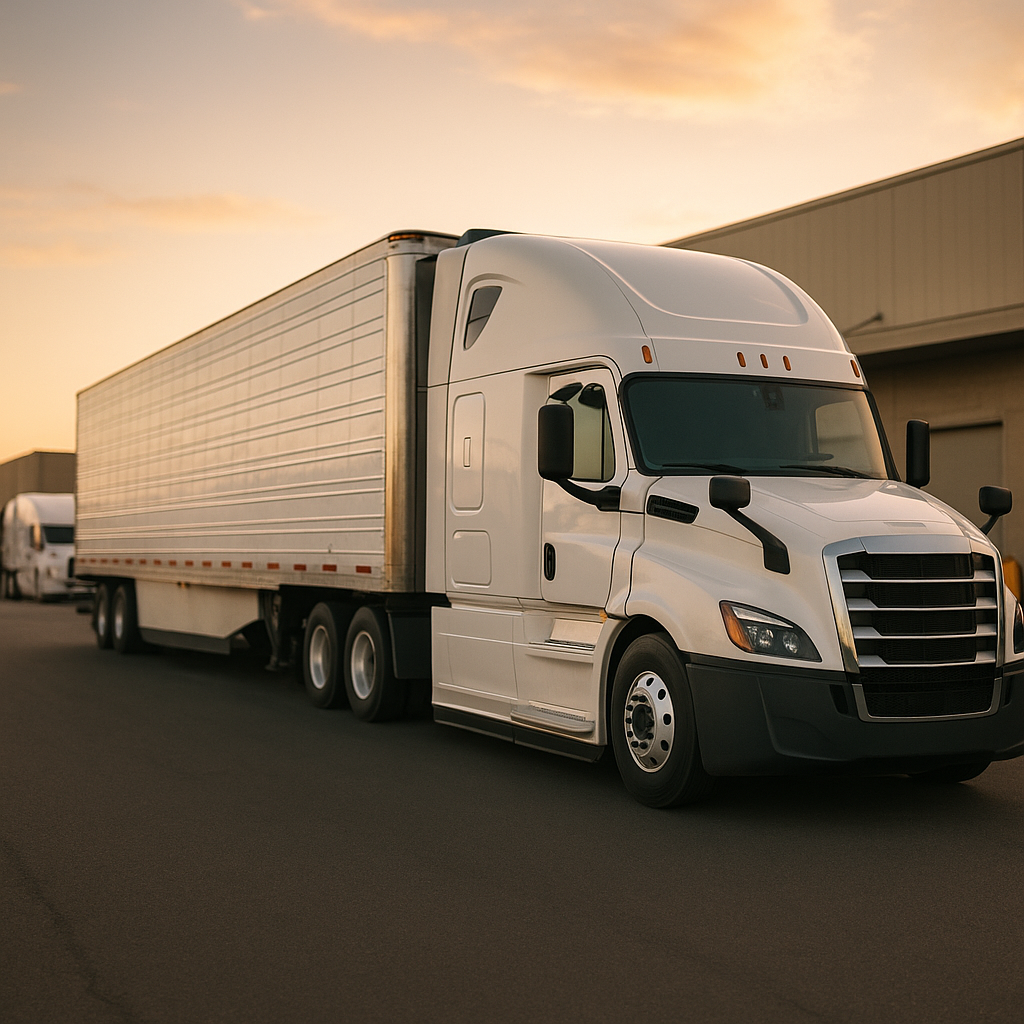

Reefer truck insurance for small fleets runs about $8K–$14K per truck in 2026. Compare coverages, add-ons, and quote-ready steps—get pricing.
If you run 2–20 reefers, you already know the ugly math: one rejected load can erase a month of profit, and the broker still wants paperwork clean by 5 PM. Reefer truck insurance for small fleets is commercial trucking coverage built for refrigerated freight, where cargo value is higher and temperature control adds extra failure points.
2026 cost snapshot: Most 2–20 truck reefer fleets land around $8,000–$14,000 per truck per year, driven by commodity (produce vs. pharma), lanes/radius, loss history, and whether you’re new authority/new venture. If you want a quick refresher on how the whole trucking insurance stack fits together, start with these commercial truck insurance basics.
Quick next step: Jump to “The 6 Core Coverages” and sanity-check your current policy against your real commodity list and broker contract requirements.
Table of Contents
Reading time: 10 minutes
- Key takeaways (save time, protect margins)
- What Reefer Truck Insurance Covers (and what it usually doesn’t)
- 2026 Reefer Truck Insurance Cost for Small Fleets
- The 6 Core Coverages a Small Reefer Fleet Typically Needs
- Reefer Breakdown Coverage + Underwriting Checklist
- Frequently Asked Questions
- Conclusion

Key takeaways (save time, protect margins)
Small reefer fleets typically pay more than dry van fleets because refrigerated cargo claims can be higher severity (spoilage/rejection) and are often harder to prove without temperature documentation.
- Reefer fleets pay more because claim severity is higher (spoilage/rejection), and contracts often demand higher limits and tighter wording.
- Cargo coverage and reefer breakdown aren’t the same thing, and confusing them is one of the most expensive coverage gaps.
- Underwriting is paperwork + proof: temperature SOPs, maintenance logs, and clean submissions often matter as much as limits.
- The cheapest quote isn’t “affordable trucking insurance” if it can’t pay a claim when a shipper rejects a load.
What Reefer Truck Insurance Covers (and what it usually doesn’t)
Reefer truck insurance is usually a standard commercial trucking policy stack (liability, physical damage, cargo, and related coverages) plus endorsements that address temperature-control losses and refrigerated freight documentation requirements.
Reefer fleet insurance vs. standard trucking insurance
What it is (plain English): Reefer trucking insurance is typically your normal trucking insurance stack plus endorsements that deal with temperature-controlled exposures.
If you already understand the basics of semi truck coverage, reefer is basically that—with higher cargo pressure and tighter claim documentation. Here’s a helpful baseline explainer on semi truck insurance basics.
- Why it’s essential: A fender-bender is bad; a temperature excursion on a high-dollar load can be catastrophic.
- Where claims get messy: Reefer claims often become data disputes (setpoint, pulldown time, door openings, fuel/defrost events).
- Who needs it: Any carrier hauling refrigerated or temperature-controlled freight (produce, meat, dairy, frozen foods, and strict receiver commodities).
Pro tip: Your insurance needs to match your actual commodity list, not the commodity list you wish you hauled, because underwriting and claims both follow what you actually do.
Common “surprise” exclusions (where small fleets get burned)
Policy wording varies by carrier and endorsement, but these patterns show up often in reefer cargo claims.
| Usually covered | Often excluded (unless endorsed / documented) |
|---|---|
| Crash-related cargo damage | Spoilage tied to mechanical breakdown (if no reefer breakdown/temperature endorsement) |
| Theft of cargo (subject to terms) | Wear-and-tear, poor maintenance, “known” mechanical issues |
| Physical damage to tractor/trailer (comp/collision) | Temperature claims with missing/contradictory logs or setpoint disputes |
| Liability to others (bodily injury/property damage) | Delay-only claims (late delivery without physical damage), depending on forms |
Image idea: Small reefer fleet manager reviewing truck insurance and cargo coverage options.
2026 Reefer Truck Insurance Cost for Small Fleets (benchmarks + the levers that move it)
In 2026, many small reefer fleets (2–20 trucks) budget roughly $8,000–$14,000 per truck per year for the combined cost of liability, physical damage, cargo, and reefer-specific endorsements, with wide variation by lanes, losses, and commodities.
Typical 2026 per-truck ranges (2–20 trucks)
Costs vary by state, radius, CSA/loss history, equipment value, and commodity mix, but these are practical planning benchmarks many small fleets see.
| Region (typical lanes) | Illustrative annual premium per truck (small fleet) | What usually pushes you to the high end |
|---|---|---|
| Midwest / Plains | $7,500–$12,500 | New venture, mixed commodities, older equipment, weak driver files |
| South / Southeast | $8,500–$14,500 | Higher theft exposure, dense traffic, strict produce claims scrutiny |
| West | $9,000–$16,000 | Higher operating costs, congestion, tougher markets in some states |
| Northeast | $9,500–$17,000 | Tight roads, higher severity, heavier litigation environment |
What this represents: This range is the combined effect of multiple coverages (liability + physical damage + cargo + endorsements), not a single line item.
Industry benchmarking: For broader cost and operating research, the American Transportation Research Institute (ATRI) publishes reports and resources at https://truckingresearch.org/.
Why reefer is more expensive than dry van (the honest reasons)
- Higher claim severity: One reefer failure can wipe an entire load—often with no meaningful salvage.
- Tighter shipper rules: Receivers reject loads quickly, and contracts demand specific limits/endorsements.
- Documentation risk: If your temp logs don’t line up, the claim can stall even when you did “everything right.”
The levers that move your price fast (and how to use them)
Underwriters typically price small reefer fleets off loss history, driver quality, commodity exposure, lanes/parking, and documentation controls like maintenance and temperature SOPs.
- Loss runs (frequency and severity)
- Driver MVR/PSP quality and reefer experience
- Commodity list + max value per load (and any high-value/pharma exposure)
- Radius/lane mix and where trucks are parked overnight
- Equipment value (tractor/trailer/reefer unit) + deductibles
- Safety controls: dash cams, telematics, ELD discipline, maintenance program
For a deeper breakdown of rating factors (beyond reefer), use this explainer on what affects the cost of truck insurance.
Image idea: Table graphic showing 2026 reefer insurance cost benchmarks for small fleets by region.
The 6 Core Coverages a Small Reefer Fleet Typically Needs (plus reefer-specific add-ons)
A typical reefer fleet insurance program includes auto liability, physical damage, motor truck cargo, a reefer breakdown/temperature endorsement, general liability, and workers’ comp or occupational accident depending on your driver structure and state rules.
1) Auto liability (primary)
What it is: Pays for bodily injury/property damage you cause to others.
Why it’s essential: Brokers and shippers commonly require higher limits than legal minimums, and severe crashes can exceed low limits quickly.
Who needs it: Every for-hire motor carrier.
2) Physical damage (tractor + trailer)
What it is: Comprehensive and collision for your equipment (subject to deductibles and valuation terms).
Why it’s essential: Downtime kills cash flow; physical damage helps prevent one incident from becoming a multi-week financial spiral.
Who needs it: Anyone financing equipment, and most fleets that can’t comfortably self-insure repairs/total losses.
3) Motor truck cargo (reefer commodities)
What it is: Pays for covered cargo losses (subject to exclusions, limits, and conditions).
Why it’s essential: Reefer loads are often high-value and “time fragile,” so limits that were fine for dry van can be dangerously low for produce, meat, or specialty loads.
Who needs it: Any carrier hauling freight for others—especially temperature-controlled.
Use this deeper guide to understand limits, exclusions, and common claim friction: motor truck cargo insurance for refrigerated loads.
4) Reefer breakdown / temperature control endorsement (the big add-on)
What it is: An endorsement that may respond when cargo spoilage is tied to temperature control failure, based on the policy’s trigger wording.
Why it’s essential: Cargo coverage alone may not pay if the proximate cause is mechanical breakdown or improper temperature management.
Who needs it: Any fleet that wants to survive one major spoilage event without eating the full loss.
5) General liability (non-auto)
What it is: Covers certain non-auto bodily injury/property damage claims (dock incidents, premises exposure, and related risks).
Why it’s essential: Not every claim involves your truck moving on the roadway.
Who needs it: Carriers with customer/shipper interactions, yards, or non-owned premises risks.
6) Workers’ comp (or occupational accident, depending on structure/state)
What it is: Injury coverage for drivers/employees (structure depends on state rules and your business model).
Why it’s essential: Misclassification and gaps here can become a business-ending problem—especially if a serious injury claim collides with an audit.
Who needs it: Fleets with W-2 drivers (and many fleets using owner-ops should still review exposure carefully).
Image idea: Coverage matrix showing the 6 core coverages and what each protects (spoilage, crash liability, theft, equipment damage, dock incidents, employee injury).
Requirements: federal filings + shipper/broker demands (don’t guess)
- Federal filings/minimums vary by operation and cargo: verify current requirements directly with FMCSA at https://www.fmcsa.dot.gov/registration/insurance-filing-requirements.
- Contracts often go beyond legal minimums with higher liability limits, higher cargo limits, and specific COI wording (for example, additional insured or waiver of subrogation when required).
If you’re expanding lanes or adding customers, treat contract requirements like part of dispatch: review them before you accept the rate con.
Reefer Breakdown Coverage + Underwriting Checklist (how to avoid the “denied claim” nightmare)
Reefer breakdown (temperature-control) claims are often won or lost on documentation—setpoint proof, continuous temperature logs, and maintenance records—because adjusters typically require evidence that temperature compliance was maintained.
Reefer breakdown: what triggers a claim (and what you must prove)
What it is: Coverage that may apply when temperature-controlled cargo is damaged due to a covered failure (mechanical/electrical/control system/power loss), depending on the policy form.
Why it’s essential: In reefer, the adjuster’s first question is often, “Prove setpoint and continuous compliance,” and weak documentation can turn a claim into a negotiation instead of a payout.
Who needs it: Any small fleet that can’t absorb a $40,000–$150,000 cargo loss without wrecking cash flow.
Operational proof that helps:
- Pre-trip reefer inspection logs (not just “checked ok”)
- Maintenance intervals and repair history
- Downloadable temperature records (plus driver SOPs for alarms/door openings)
- Fuel management records (yes, it matters)
Simple ROI math (a “break-even” way to think)
One practical way to evaluate the endorsement is to compare annual endorsement cost to your expected annual spoilage loss using a simple probability estimate.
Break-even formula (rough):
Annual endorsement cost ≤ (Average spoilage loss) × (Probability of 1 covered event per year)
Example: If your average spoilage loss is $75,000 and you estimate a 2% annual chance of one serious incident, expected annual loss is $1,500. If the endorsement costs around $900–$1,400 per truck (varies), the math can work—especially if your probability is higher due to older units, parking risk, or inconsistent SOPs.
Image idea: Calculator-style graphic showing the break-even math for a temperature-control endorsement.
Underwriting prep checklist (get better quotes faster)
Clean submissions often unlock more markets and fewer back-and-forth emails, which matters when you’re trying to control premium without cutting coverage.
- 3–5 years of loss runs (or a letter of no losses if truly new)
- Driver list + DOB + license info + hire dates + MVR/PSP authorization
- Units: VINs, values, garaging ZIP, trailer details, reefer unit details
- Commodity list + max load value + any high-value or pharma exposure
- Lanes/radius, percentage of deadhead, and typical pickup/delivery states
- Safety program summary (camera/telematics, coaching, hiring standards)
- Maintenance + reefer PM schedule and documentation
- Example shipper/broker insurance requirements (COI requests)
Underwriters will also look at your public footprint, so it’s smart to check what they see on SAFER before you submit: https://safer.fmcsa.dot.gov/.
Note for mixed operations: If part of your business is hotshot and part is semi/reefer, don’t blend it casually—different risks, different markets, and sloppy classifications can create coverage gaps.
The costliest mistakes small reefer fleets repeat
- Buying cargo but skipping the correct reefer endorsement (or buying the wrong trigger)
- Undisclosed commodities: “we sometimes haul high-value” is still high-value exposure
- No temperature SOP (so the driver improvises under stress)
- Coverage lapses (even short ones) that can re-label you as higher risk
- COIs that don’t match the contract, causing rejected tenders and scramble shopping
Frequently Asked Questions
Reefer insurance questions usually come down to four things: which coverages are required, what causes spoilage denials, what endorsements matter, and what a realistic per-truck budget looks like in 2026.
Reefer truck insurance typically covers the same core items as other commercial trucking programs—auto liability, physical damage, motor truck cargo, and general liability—and it often adds a temperature-control/reefer breakdown endorsement for refrigerated freight. The biggest gap is assuming cargo insurance automatically pays for spoilage caused by a reefer unit failure; many cargo forms exclude mechanical breakdown or temperature-control issues unless you endorse them. To make claims smoother, fleets should keep consistent temperature logs, setpoint proof, and maintenance records that match the story of the shipment.
For many 2–20 truck reefer fleets, a practical planning range in 2026 is about $8,000–$14,000 per truck per year, with higher prices for new ventures, poor loss runs, tougher lanes, theft-prone parking, and higher-value commodities. Your final number is usually a combined result of liability + physical damage + cargo + reefer endorsements, not one “reefer line item.” If you run heavy Texas lanes and want local context, compare against Texas commercial truck insurance costs and then adjust upward for reefer cargo exposure and temperature-control requirements.
Reefer breakdown coverage (often written as a temperature-control endorsement) is coverage intended to help when refrigerated cargo is damaged due to a covered failure, such as mechanical, electrical, or control system issues—depending on the policy’s trigger wording. It commonly comes with its own deductible and may have a sublimit specific to temperature losses. Carriers and adjusters usually expect documentation like setpoint verification, continuous temperature records, and maintenance history, because reefer claims frequently hinge on whether the unit was operated and maintained properly throughout the trip.
Spoilage is sometimes covered under motor truck cargo insurance, but many policies treat mechanical breakdown and temperature-control failures as excluded unless you add the correct reefer/temperature endorsement and meet documentation conditions. In practice, the “right” answer is to align your cargo form, your reefer endorsement triggers, and your operating procedures (logs, maintenance, alarm response SOPs) so the cause of loss fits the coverage grant. If you’re still building your coverage structure, start with get a truck insurance quote and request an apples-to-apples comparison on cargo wording and temperature endorsements.
Conclusion: Price it like a business, document it like a claims adjuster
Reefer freight can be profitable, but it punishes coverage gaps and sloppy documentation. If your policy, endorsements, commodity list, and temperature SOP don’t match your real operation, you’re budgeting premium without actually buying protection.
Key Takeaways:
- Budget realistically: many small reefer fleets plan around $8K–$14K per truck per year in 2026, with wide variation based on lanes, losses, and commodities.
- Separate cargo from temperature-control: cargo insurance and reefer breakdown triggers are different, and confusing them is a common denial driver.
- Clean submissions win: tight loss runs, driver files, commodity lists, and reefer maintenance/temperature logs can improve quoting speed and options.
If you’re trying to lower premium without creating coverage gaps, review Affordable trucking insurance strategies and tighten your safety/compliance posture using a DOT compliance checklist for fleets.





