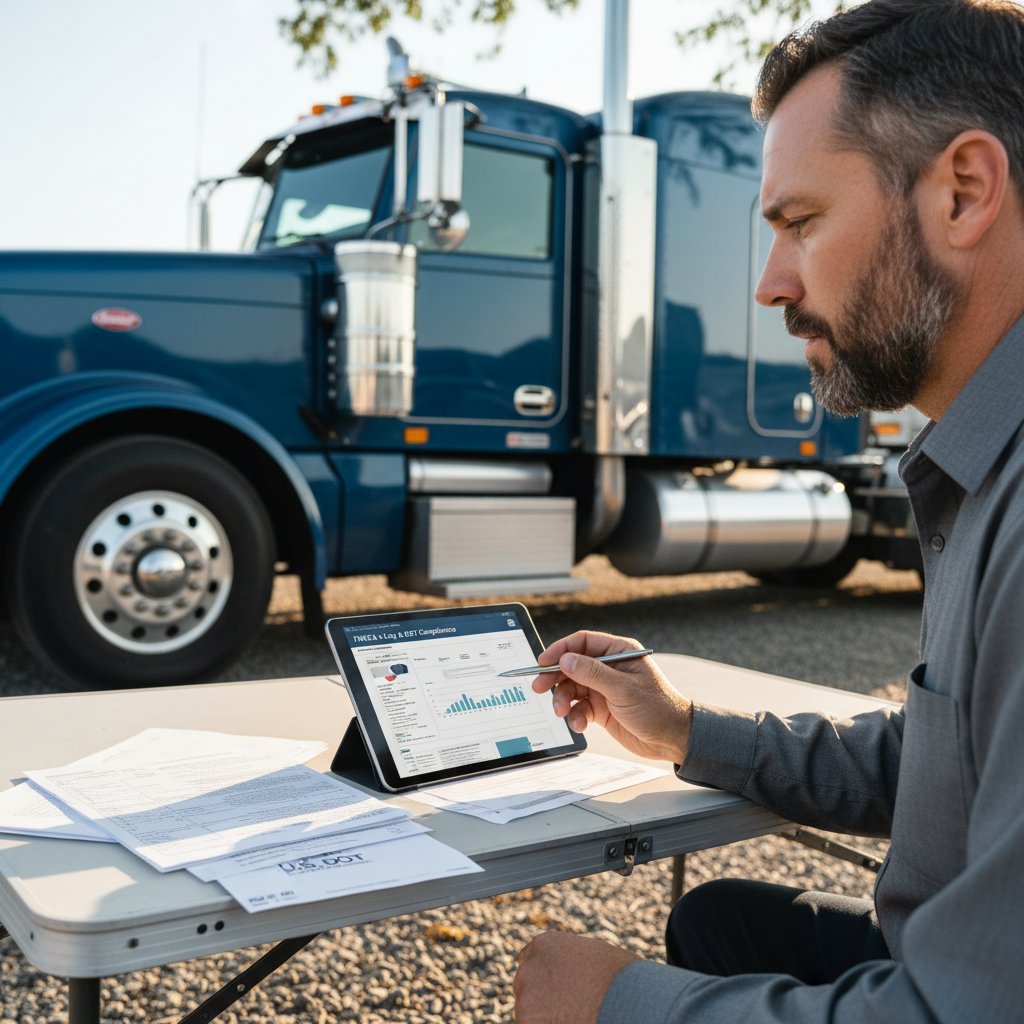
Register for a USDOT number in 2026 with this 7-step URS guide—docs, ID verification, timing, and next steps like commercial truck insurance. Start now.

If you need to register for a USDOT number, the fastest clean path is FMCSA’s Unified Registration System (URS): create/sign in, pick USDOT-only or USDOT + authority, enter your carrier details, complete identity verification if prompted, certify, and submit—then save your confirmation and verify your status in FMCSA’s public systems.
This walkthrough is written for real-world setups (hotshot, power-only, new carrier, intrastate vs interstate) and calls out the mistakes that stall applications. If you’re brand-new, start with the owner-operator startup checklist so you don’t miss a “start right” step beyond the USDOT application.
Table of Contents
Reading time: 7 minutes (about 1,575 words)
- Introduction (Read This Before You Click “Apply”)
- USDOT Number Basics (So You Don’t Apply for the Wrong Thing)
- Before You Start: What You’ll Need (and What You Might Need Next)
- How to Register for a USDOT Number in URS (Step-by-Step)
- Next Steps After You Register (Keep Momentum Without Getting Burned)
- Frequently Asked Questions
- Conclusion
Introduction (Read This Before You Click “Apply”)
FMCSA states you can register for a USDOT number online through the Unified Registration System (URS), and the USDOT portion of registration is generally a $0 filing fee. (FMCSA FAQ: https://www.fmcsa.dot.gov/faq/how-do-i-register-usdot-number)
If you’re trying to book loads, get set up with a broker, or stop getting turned away at the shipper, registration is where the clock starts. One wrong selection in FMCSA’s system can trigger days (sometimes weeks) of cleanup while your truck sits.
Featured-snippet answer (50–70 words)
To register for a USDOT number, apply online using FMCSA’s Unified Registration System (URS). Create or sign in to your account, choose USDOT-only or USDOT plus operating authority, enter your company and operation details, complete identity verification if prompted, review your answers, and submit. Save your confirmation and verify your status in FMCSA systems after submission.
Key takeaways (fast)
- USDOT is an identifier: it ties your business to safety and compliance records.
- Operating authority is permission: many for-hire interstate carriers need it, but not all operations do.
- USDOT registration is typically $0: costs show up when you add authority, UCR, insurance filings, and related requirements.
- Most delays are self-inflicted: mismatched name/address/entity details and identity verification failures are common.
USDOT Number Basics (So You Don’t Apply for the Wrong Thing)
A USDOT number is a federal identifier used by FMCSA and enforcement to track a company’s safety and compliance record in inspections, audits, and public databases. This identifier becomes the “carrier ID” brokers, shippers, and insurers often use to confirm you exist and to check basic status.
Why it’s essential (business + compliance reality)
Even if you’re running one truck, a USDOT number is often the first gate in onboarding and verification. It also starts the compliance responsibilities that catch new entrants off guard—driver qualification files, vehicle maintenance records, drug & alcohol testing (when applicable), logs, and required updates.
If you want the bigger picture of what starts after you register, review these DOT compliance requirements so you’re not surprised later by paperwork, inspections, or “show me your logs” conversations.
Who needs it (common real-world triggers)
You may need a USDOT number when you operate a commercial vehicle for business and fall under federal (or state-adopted) DOT rules. Common triggers include:
- Interstate commerce: crossing state lines or hauling freight that’s part of interstate movement.
- For-hire or private carrier operations: depending on how you’re moving goods and how your state adopts DOT rules.
- Intrastate-only operations in certain states: some states require USDOT numbers for intrastate carriers, so don’t assume “in-state only” means exempt.
Pro tip: If you’re “intrastate only,” verify with your state DOT before you spend time (or money) on the wrong setup.
Before You Start: What You’ll Need (and What You Might Need Next)
FMCSA’s URS application asks for legal identity and operational details (business name, EIN/SSN, address, contact info, driver/vehicle counts, and operation classification), and errors in those fields are a top cause of stalled applications. (FMCSA registration guidance: https://www.fmcsa.dot.gov/registration/registration-forms)
Information to gather before opening URS
- Legal business name and DBA (if used)
- EIN or SSN (based on entity setup)
- Principal business address (match it everywhere: bank, insurance, filings)
- Phone + email you control long-term
- Operation profile: trucks, drivers, commodities, operation classification
- Quick self-check: “What am I today?” (for-hire vs private; interstate vs intrastate)
FMCSA’s “getting started” overview can help you see the full chain (USDOT vs authority and what happens next): https://www.fmcsa.dot.gov/registration/getting-started
USDOT vs operating authority (MC): the money-and-time difference
Operating authority (often called “MC”) is not the same thing as a USDOT number, and mixing them up is one of the most expensive new-carrier mistakes.
| Item | What it does | Who usually needs it |
|---|---|---|
| USDOT number | Identifies your company in FMCSA safety/compliance systems | Many interstate carriers and some intrastate operators (state-dependent) |
| Operating authority (“MC”) | Federal permission to operate for-hire in many interstate situations | Many for-hire interstate carriers hauling regulated freight |
If you’re unsure which box to check, don’t guess. Use a real guide like the FMCSA authority application guide so you don’t end up paying for a setup you can’t actually use yet.
Insurance reality: when “commercial truck insurance” becomes a gate
For new authority, FMCSA and the market often require insurance proof and filings before you can move freight, and brokers/shippers commonly ask for insurance documentation during onboarding. If you want a plain-English breakdown of coverage types and how filings connect to authority, use commercial truck insurance basics.
Where this hits hardest: new authority + tight margins. You don’t want a compliance issue and an insurance gap in the same month.
How to Register for a USDOT Number in URS (Step-by-Step)
FMCSA requires USDOT applicants to use the Unified Registration System (URS) for online registration, and FMCSA’s own FAQ is the safest “start here” link to avoid third-party lookalikes. (FMCSA FAQ: https://www.fmcsa.dot.gov/faq/how-do-i-register-usdot-number)

Step 1: Use the official URS path (avoid paid lookalike sites)
- If a site implies a mandatory USDOT fee: slow down—USDOT registration is generally $0.
- If someone cold-calls after you search: assume you landed on a lead site.
- If they won’t show the exact FMCSA page: walk away.
Step 2: Create/sign in and choose the correct registration type
You’ll typically choose one of these paths:
- USDOT-only: identifier only
- USDOT + operating authority: identifier + for-hire permission (with extra steps)
Choose based on how you haul today—unless you’re ready to finish everything authority triggers (insurance filings, process agents, and other items).
Step 3: Enter carrier details carefully (this is where delays are born)
The most common “self-made” delays come from data mismatches and typos:
- Name mismatch: business name doesn’t match EIN/SSN records
- Address mismatch: “Suite” vs “Ste,” “Rd” vs “Road,” old address, missing unit
- Email typo: then you can’t confirm or recover later
- Wrong operation type: selections don’t match what you actually do
Recordkeeping move that saves headaches: screenshot confirmations and store them in a dedicated “FMCSA” folder (Google Drive/Dropbox).
Step 4: Identity verification (what to expect + how to avoid fails)
If URS prompts identity verification, most failures come from mismatched profile data or unusable ID photos.
- Mismatch issues: name/address/phone doesn’t match what you entered
- Photo issues: glare, blur, cropped corners, low light
- Phone/email issues: you can’t receive codes or access the email later
Don’t do this: re-submitting duplicate applications “to see if it works.” Duplicates often create cleanup work and delays.
Step 5: Review, certify, and submit
Before you hit submit, re-check the fields that cause the most pain to fix later: legal name/DBA, address, email, phone, operation type (for-hire vs private; interstate vs intrastate), and commodity selections.
Step 6: Timeline + cost expectations (2026-safe language)
- Cost: USDOT registration is generally $0; costs usually show up with authority and related compliance items.
- Timing: the form can be fast, but verification and system processing can add time—build a buffer if you’re trying to book loads.
Step 7: After you get it—don’t go inactive later
USDOT numbers are not “set it and forget it,” and outdated company info can create compliance problems and status issues in public systems. Use how to update your MCS-150 to keep your profile current and avoid preventable headaches.
Next Steps After You Register (Keep Momentum Without Getting Burned)
After submitting URS, the three smartest moves are to save your submission proof, verify your USDOT status using official tools, and decide whether you’re staying USDOT-only or completing operating authority requirements. Those three steps prevent duplicate filings, missed onboarding deadlines, and “inactive” surprises later.
Do this right after submission
- Save proof: screenshots + confirmation details (store them where you can find them quickly).
- Verify status: don’t rely on a random third party; confirm what’s visible publicly.
- Decide your next move: USDOT-only vs authority + compliance + insurance.
Verify what the world can see
When a broker says “we can’t find you,” they usually mean your public record doesn’t show what they expect yet. Use the DOT number lookup guide to confirm status and basic public details after submission.
Related reading (next smart clicks)
- Hotshot: budget and coverage basics in the hotshot insurance guide.
- Tractor-trailer: budgeting help in the semi truck insurance cost guide.
Why Logrock cares about this
Registration isn’t complicated, but small errors are expensive in trucking because they stall cash flow. If you’re stuck, don’t keep re-submitting and creating duplicates—get it cleaned up once, then get back to hauling.
Frequently Asked Questions
Many commercial carriers operating in interstate commerce need a USDOT number, and some intrastate-only operators also need one because several states adopt USDOT requirements for in-state commercial vehicles. The exact trigger depends on your operation type (for-hire vs private), vehicle use, and whether your freight movement is considered part of interstate commerce. If you only run intrastate, confirm requirements with your state DOT before you assume you’re exempt, because “in-state only” doesn’t always mean “no USDOT.”
You register for a USDOT number by applying online through FMCSA’s Unified Registration System (URS) and submitting your carrier identity and operation details. In URS, create or sign in to your account, choose USDOT-only or USDOT + operating authority, enter your company profile (name, address, contact info, vehicles/drivers, and operation classification), complete identity verification if prompted, then certify and submit. FMCSA’s official FAQ is the safest starting point: https://www.fmcsa.dot.gov/faq/how-do-i-register-usdot-number.
USDOT registration in URS typically requires accurate legal business details (EIN or SSN), a consistent principal address, reliable phone/email, and an operations profile (drivers, vehicles, and what you haul). FMCSA can also prompt identity verification, so you should be ready to provide valid identification and clear images if requested. The most common “document” problem isn’t missing paperwork—it’s mismatched name/address details across your EIN/SSN records, banking, and insurance, which can trigger verification failures and delays.
The URS application can be completed quickly, but identity verification and system processing time can vary, so you shouldn’t book tight load windows assuming everything will be instantly usable. The most reliable approach is to submit with perfectly matching legal details (name/address/entity info), save your confirmation, and then verify what’s showing in public systems before you start broker onboarding. If you need a step-by-step way to confirm what’s visible, use the DOT number lookup guide.
Conclusion: Register clean, then verify and maintain
Registering a USDOT number is usually straightforward, but it’s easy to stall yourself with mismatched business details, the wrong registration type, or duplicate submissions. Use URS, keep your info consistent, save proof, and verify your public record before you depend on it for loads.
Key Takeaways:
- Start with URS: FMCSA’s URS is the official path for USDOT registration, and USDOT is generally a $0 fee.
- Separate USDOT vs MC: USDOT identifies you; operating authority (MC) is for-hire permission in many interstate cases.
- Protect your timeline: identity verification and data mismatches are common delay points—double-check name/address/email before submitting.
If you’re stuck between USDOT-only and authority (or you’re trying to avoid a costly do-over), get support and make the first submission the right one.