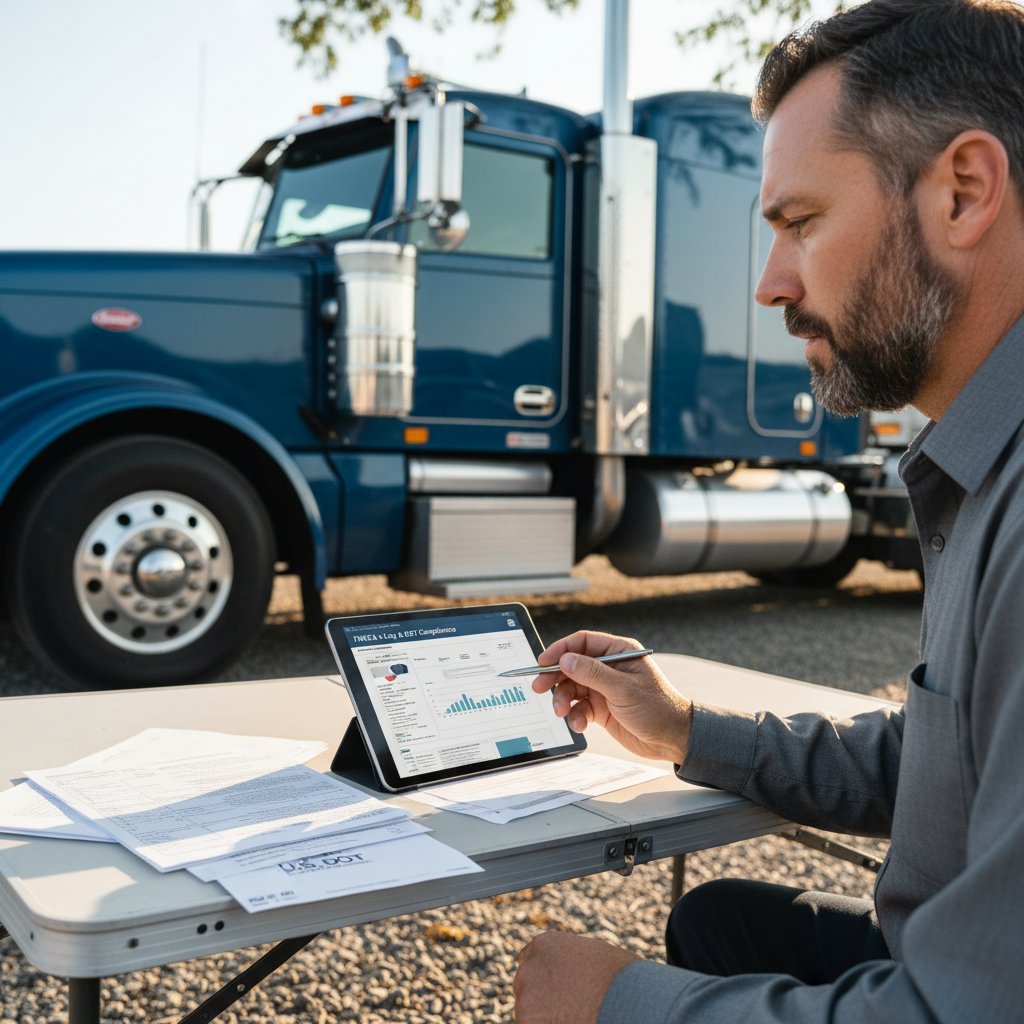
Compare semi truck roadside assistance programs for 2026—ETAs, membership vs pay-per-use, plus a cost calculator to choose fast. Get started.

Semi truck roadside assistance programs are dispatch-and-billing networks that help you get the right Class 8 provider faster and reduce surprise fees—especially when a “quick fix” turns into towing or recovery.
In 2026, most basic roadside events typically land around $300–$1,000+, while heavy towing/recovery can run $2,500–$5,000+ depending on mileage, after-hours, and complexity. If you want a quick baseline on what’s usually included (and excluded), start with Semi truck roadside assistance basics.
Table of Contents
Reading time: 8 minutes
Key takeaways for semi truck roadside assistance programs
In 2026, the highest-cost roadside scenario for a Class 8 truck is typically towing/recovery at $2,500–$5,000+, not small services like jump starts or fuel delivery.
- Programs don’t “make repairs cheap”: they reduce dispatch friction, improve accountability, and can limit worst-case pricing.
- Your biggest cost risk is towing/recovery: budget and plan for that scenario first.
- Membership vs pay-per-use is math: call frequency + lanes + downtime risk + billing needs.
- Bad info = bad ETA + higher invoice: tire size, exact location, and symptoms matter.
What is a semi truck roadside assistance program (and who should use one)?
A semi truck roadside assistance program is a commercial dispatch system that routes Class 8-capable vendors and standardizes billing, documentation, and authorization—unlike a one-off “mobile mechanic” search result.
What it is (plain English)
A real program usually gives you one call/app workflow, then handles the hard parts: finding an available heavy-duty provider, dispatching the right equipment, documenting the event, and billing you in a repeatable way.
- Dispatch + vendor network: providers that can handle 24V systems, heavy tires, and towing coordination.
- Workflow + billing controls: especially useful for fleets with authorization thresholds.
- Documentation: timestamps, service notes, and invoices that can be audited.
Who it fits best (specific use cases)
If you’re newer and building your risk-management stack, read Trucking insurance 101 overview so you don’t confuse roadside dispatch with insurance coverages like towing, physical damage, or downtime protection.
- Owner-operators: appointment freight, reefer loads, high-value cargo, and tight lanes.
- Small fleets: consistent driver procedures, consolidated invoices, and fewer “mystery charges.”
- Rural lane operations: long corridors where “near me” options are thin and ETAs swing hard.
Pro tip: “Nationwide coverage” marketing matters less than depth in your lanes (your actual states, mountains, winter routes, and typical breakdown zones).
What services are included—and what to do to protect your ETA (and your CSA headaches)
Most semi truck roadside calls fall into a few categories (tires, batteries, fuel, lockouts, minor repairs), but invoices spike when the event turns into towing/recovery or the driver can’t provide key details like tire size and exact location.
Common services most programs can dispatch
| Service | Typically available? | Extra charges to expect |
|---|---|---|
| Tire service (repair/replace) | Yes | Tire cost, mounting, trip charge, after-hours, disposal |
| 24V jump start / battery service | Yes | Minimum labor, battery cost, cables/connectors |
| Fuel delivery (diesel/reefer) | Yes | Delivery fee + fuel price + after-hours premiums |
| Lockout | Often | Minimum labor + key cutting if needed |
| Minor mobile repairs (air lines, hoses, belts) | Sometimes | Parts markup, diagnostics time, multiple labor hours |
| Towing coordination | Yes | Hook-up, mileage, storage, recovery/winch/rotator |
What’s often excluded or heavily limited
“Covered” typically means dispatch, not free parts or unlimited labor, so budget for the common exclusions below.
- Parts and fluids: usually paid by you, often marked up.
- After-hours/weekend premiums: multipliers are common.
- Long tow mileage and storage: especially painful on rural breakdowns.
- Recovery: winching, rotators, off-road pullouts—where bills get ugly fast.
Realistic ETAs (and how to reduce your wait)
A realistic semi-truck roadside ETA is often 30–90 minutes in metro areas and 90–180+ minutes on rural corridors, mountain passes, or during winter events.
Driver + dispatch checklist (copy/paste into Notes):
- Exact location: mile marker + direction of travel + nearest exit + GPS pin
- Unit details: tractor/trailer type, VIN last 6, tire size, wheel position (steer/drive/trailer)
- Symptoms + photos: dash lights, air pressure behavior, leak location, battery voltage (if known)
- Safety: triangles, 4-ways, and get as far off the travel lane as possible
- Freight needs: reefer fuel status, hazmat, appointment time, customer contact
Roadside situations can overlap with inspection and documentation expectations, so keeping cab procedures consistent helps—review DOT compliance basics and reference FMCSA’s roadside inspection overview here: https://www.fmcsa.dot.gov/safety/roadside-inspections.
Pro tip: If you’re in a dead zone, text your dispatcher mile marker + direction + tire size before the call drops.
Membership vs pay-per-use vs insurance add-on: pick the program model that matches your risk
Roadside assistance program models generally fall into three buckets—membership, pay-per-use, and insurance add-ons—and the right choice depends on call frequency, lanes, and how much pricing variability you can tolerate.
Pick #1–#3: Membership programs (best for repeat callers and fleets)
What it is: an annual fee plus dispatch access, sometimes with standardized or discounted admin/dispatch fees.
- Best for: operators averaging 2+ events per year, team trucks, or fleets that want one workflow.
- Watch-outs: memberships rarely cover parts/labor fully; exclusions matter more than the headline fee.
Pick #4–#5: Pay-per-use dispatch (best for low call frequency)
What it is: no annual fee; you pay per event and accept more variability based on time, weather, and location.
- Best for: 0–1 event per year and anyone protecting cash flow.
- Watch-outs: after-hours + rural mileage + minimum labor is where “cheap calls” turn expensive.
Pick #6: OEM/telematics roadside (best for newer equipment)
What it is: manufacturer or telematics-driven triage that can speed diagnosis and coordinate service during the warranty-era window.
- Best for: late-model trucks with integrated diagnostics.
- Watch-outs: OEM plans may still dispatch third parties; coverage varies by plan and warranty period.
Pick #7: Roadside through insurance (endorsement or bundled service)
Roadside assistance through Commercial truck insurance options may exist as an endorsement or add-on, but it is not standardized and often has towing limits and exclusions.
If you’re relying on an insurance-based roadside benefit, verify the maximum payout, tow distance limits, and whether heavy-duty recovery (winch/rotator) is excluded—then compare against Truck insurance endorsements explained.
Pro tip: Don’t confuse “roadside assistance” with “downtime coverage.” Roadside gets help to the truck; downtime coverage (if purchased) is about lost revenue after a covered loss.
2026 pricing for semi truck roadside assistance programs (with a simple calculator)
For 2026 budgeting, a practical planning range is $300–$1,000+ for many basic roadside calls and $2,500–$5,000+ for heavy towing/recovery, with after-hours, mileage, and recovery equipment as the biggest multipliers.

Typical 2026 cost ranges (real-world budgeting)
- Basic roadside call (dispatch + minimum labor): $300–$1,000+
- 24V jump start: often $300–$700+ (more if batteries are replaced)
- Fuel delivery: delivery fee + fuel price (premium pricing after-hours is common)
- Tire service: service fee + tire cost + mounting (an easy path to four figures)
- Heavy towing / recovery: $2,500–$5,000+ depending on mileage and complexity
For the “budget buster” side of the equation, use this deeper guide: Heavy-duty roadside cost breakdown.
Why pricing varies so much (invoice line items that sting)
Most surprise totals come from predictable line items—especially when the call is rural or after-hours.
- After-hours multipliers
- Trip/mileage charges (rural corridors add up fast)
- Minimum labor hours
- Parts/fluids markup
- Special equipment (winch-outs, rotator, recovery)
For cost context beyond a single invoice, ATRI’s Operational Costs of Trucking research tracks repairs and maintenance as a major component of per-mile costs: https://truckingresearch.org/operational-costs-of-trucking/. For a wage benchmark (not the billed shop rate), BLS data is a directional reference: https://www.bls.gov/oes/current/oes493031.htm.
Simple breakeven calculator (membership vs pay-per-use)
Use the breakeven math below to pick a model with numbers instead of guesswork.
- Inputs:
M(annual membership cost),C(expected events/year),D_pay(avg dispatch/admin pay-per-use),D_mem(avg dispatch/admin membership),L(avg labor/parts per event) - Pay-per-use (annual):
C * (D_pay + L) - Membership (annual):
M + C * (D_mem + L) - Breakeven call frequency: membership starts winning when
C > M / (D_pay - D_mem)
How to pick a provider (fast vendor checklist)
A one-page checklist beats a glossy brochure, especially when you’re authorizing a tow at 2:00 a.m.
- Class 8 capability: Do they dispatch true heavy-duty providers (24V, heavy tire capability, towing coordination)?
- Written fee explanation: Dispatch, trip/mileage, after-hours, minimum labor?
- Towing billing method: Direct bill-through, markup, or pass-through?
- Escalation process: What happens if no provider accepts the call?
- Lane support: Can they support your real lanes (not just “nationwide”)?
Owner-operator rule: prioritize transparent pricing + towing coordination.
Fleet rule: prioritize authorization controls + consolidated billing + documentation.
Frequently Asked Questions
Most roadside assistance plans for Class 8 trucks cover dispatch for common events, but parts, labor hours, and heavy towing/recovery are typically billed separately and can push totals into the thousands.
Most semi-truck roadside programs can dispatch tire service, 24V jump starts, fuel delivery (diesel/reefer), lockouts, minor mobile repairs, and towing coordination, typically 24/7.
What’s usually not included in the “covered” part of the program is where invoices grow: parts/fluids (often marked up), after-hours multipliers, long-distance tow mileage, storage, and complex recovery work like winching or rotator service. If you budget for 2026, plan for basic dispatch + minimum labor around $300–$1,000+, and treat towing/recovery as the separate high-risk bucket.
Semi-truck roadside ETAs are commonly 30–90 minutes in metro areas and 90–180+ minutes in rural corridors, mountain passes, or severe weather, depending on vendor availability and equipment needs.
Your fastest lever is the information you give dispatch: mile marker + direction of travel, a GPS pin, tire size and wheel position (steer/drive/trailer), and clear symptoms with photos. When a provider rolls out without the right tire or tools, you often pay twice—once in downtime and again in additional trip/labor charges.
Roadside assistance is sometimes available through a commercial policy as an endorsement or bundled benefit, but limits and exclusions are common—especially for heavy towing and recovery.
Before you rely on it, confirm the maximum payout, tow distance limits, whether the benefit applies to your class of truck, and whether recovery tools (winch/rotator) are excluded. The safest move is to compare your declarations/endorsements against what you assume you have; start with Truck insurance endorsements explained and verify the wording on towing and roadside services.
Yes—pay-per-use roadside has no annual fee and is usually the best fit for operators expecting 0–1 events per year, while membership programs add a fixed cost but can stabilize dispatch/admin fees and improve workflow for repeat callers.
Membership tends to win when your annual fee is less than the savings on dispatch/admin costs across multiple calls (breakeven: C > M / (D_pay - D_mem)). Fleets also like membership models for authorization controls, consolidated billing, and documentation, even if parts and labor are still billed per event.
Heavy-duty roadside costs range from hundreds for minor service calls to several thousand dollars for towing and recovery, with 2026 towing/recovery totals often landing around $2,500–$5,000+ depending on mileage, after-hours, storage, and recovery complexity.
Ask for itemized fees before authorizing whenever you can: hook-up, mileage, minimum labor, after-hours rates, and whether a winch-out or rotator is required. For realistic line items and scenarios, use Heavy-duty roadside cost breakdown as your budgeting reference.
No—roadside assistance is a backup plan for unplanned breakdowns, while preventive maintenance reduces call frequency and helps you avoid expensive towing/recovery scenarios.
A roadside program can shorten dispatch time and improve documentation, but it doesn’t change the fact that after-hours labor, parts markups, and rural trip charges exist. Treat roadside as an “emergency workflow” and budget tool, then reduce your actual exposure with PM discipline (tires, batteries, air lines/hoses, belts, and fluid checks) so you’re scheduling shop time instead of paying shoulder-time premiums.
Conclusion: Choose a roadside program that matches your lanes, equipment, and call frequency
A roadside assistance program won’t stop breakdowns, but it can cut chaos by improving dispatch speed, authorization control, and invoice transparency—especially when the “simple call” risks turning into a $2,500–$5,000+ tow or recovery.
Key Takeaways:
- Budget two buckets: $300–$1,000+ for basic calls and $2,500–$5,000+ for towing/recovery scenarios.
- Pick the model with math: membership wins when call volume and admin-fee savings beat the annual fee.
- Coordinate roadside decisions with coverage and cost strategy using How to save on affordable trucking insurance and What affects the cost of truck insurance.
If you want fewer surprises at 2:00 a.m., pick a provider that can support your actual lanes, publish clear fee rules, and document every event like it’ll be audited later.