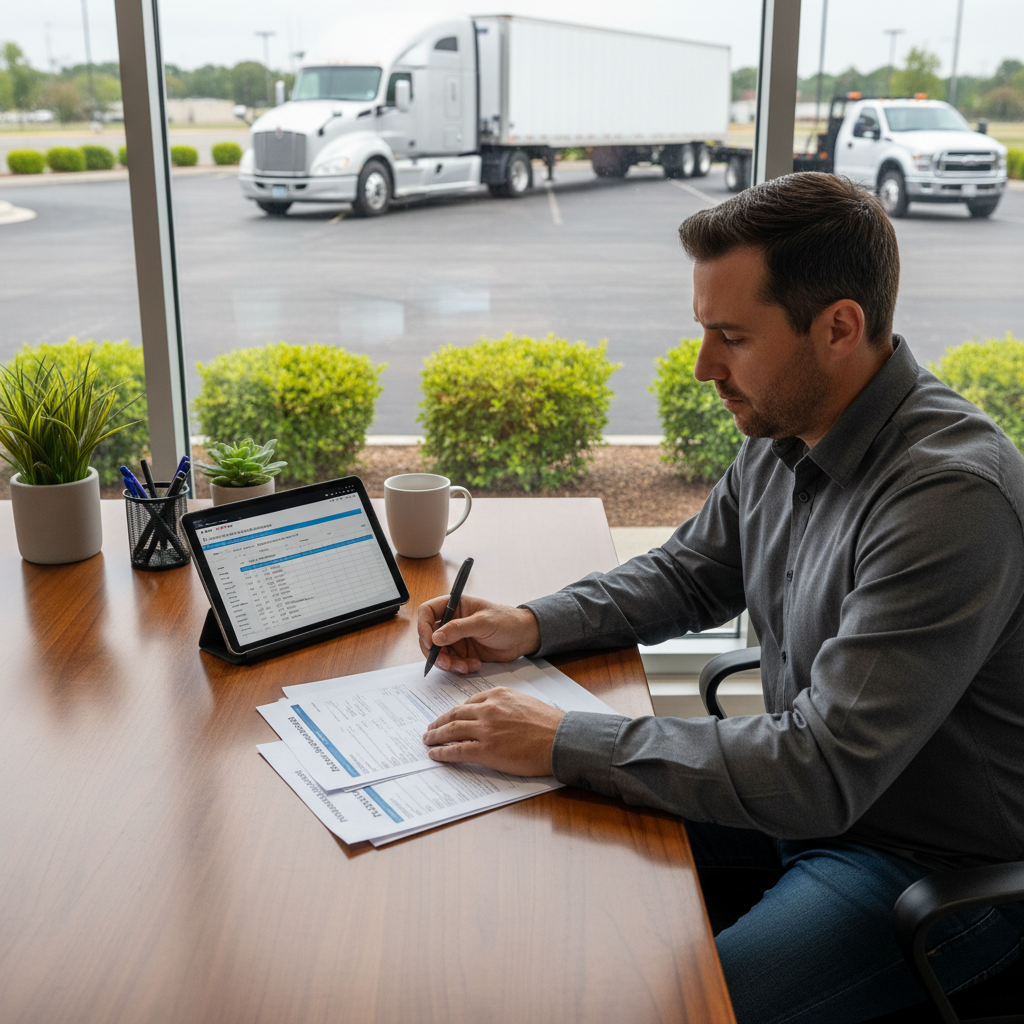

Why buy commercial truck insurance through a broker? Get better markets, faster COIs/filings, claims support, and fewer gaps. Compare now.
If you’re running under tight margins, why buy commercial truck insurance through a broker often comes down to one thing: staying dispatchable when paperwork, endorsements, and claims hit at the worst possible time. A single missing COI requirement, wrong radius, or excluded commodity can park a truck just as fast as a mechanical issue.
Why should a trucking business use a broker for commercial truck insurance? A trucking-focused broker can shop multiple carrier appetites, build coverage around your operation (not a generic application), turn COIs and endorsements quickly, coordinate required filings when they apply, and advocate when a claim gets complicated—especially at renewal time when rates can jump.
To see what that support should look like day-to-day, review Company insurance brokers and compare it to what you’re actually getting right now.
Table of Contents
Reading time: 8 minutes

Key takeaways
A commercial truck insurance broker helps most by improving market options, turnaround time, and policy accuracy so you avoid dispatch delays and coverage gaps.
- A broker’s real value is options + speed: more markets, faster COIs/endorsements, fewer last-minute re-quotes.
- “Cheapest” trucking insurance can get expensive when you hit contract requirements, exclusions, or a claim.
- Brokers can help you find affordable trucking insurance by improving the submission, aligning deductibles, and planning renewal—without gutting protection.
- If you’re new authority, changing radius/cargo, adding units, or needing frequent COIs, a broker usually beats direct.
The real problem: Trucking insurance is easy to buy—hard to buy right
Commercial trucking insurance is a package of coverages, limits, deductibles, and endorsements that must match your radius, commodity, equipment, and contracts to respond correctly in a claim.
Trucking moves fast, and your insurance has to keep up with load boards, broker packets, shipper compliance portals, and the reality that your operation can change mid-month (new lane, new trailer, new commodity).
For definitions on common coverages and terms, start with Commercial truck insurance basics (coverages & terms).
What it is (plain English)
“Commercial” isn’t one coverage—it’s a stack of decisions: liability limits, physical damage, cargo, non-trucking liability/bobtail, and the endorsements/exclusions that decide whether a loss is paid or denied.
- Liability: Pays for bodily injury/property damage you cause (and may be required by contracts and regulations).
- Physical damage: Helps repair/replace your truck for covered losses (comprehensive/collision, subject to deductible).
- Motor truck cargo: Helps cover cargo you’re responsible for (often with strict conditions and exclusions).
- Non-trucking liability / bobtail: Typically applies when you’re not under dispatch for business use (details vary by policy and lease arrangement).
Why it’s essential (business reality)
COIs and contracts care about what’s actually written in your policy—not what you meant to buy—and that mismatch is where downtime and denied claims come from.
- Brokers and shippers don’t care what you meant to buy. They care what the COI says and what the endorsements support.
- A policy can be “active” and still fail a broker packet if wording/limits/additional insured don’t match the contract.
- A claim can be limited or denied if your radius/cargo/equipment doesn’t match what’s on file with the insurer.
Insurance is also one of the biggest operating cost buckets for motor carriers, which is why structure matters as much as price. Source: ATRI, Operational Costs of Trucking (https://truckingresearch.org/atris-operational-costs-of-trucking/).
Who needs extra help here
New authorities, hotshot operators, leased-on owner-ops, and fleets with changing lanes and freight tend to hit underwriting and contract issues more often.
- New authorities: Underwriters want a clean story and consistent data.
- Hotshot operators: Equipment and commodity changes can create coverage conflicts.
- Owner-ops leased on: Bobtail/NTL needs to match your lease and real use.
- Regional/OTR carriers: Lanes, deadhead, and broker requirements change fast.
Pro tip (saves time and re-quotes)
A one-page “underwriting snapshot” reduces re-quotes because every carrier is rating the same operation details.
- Garaging ZIP, radius (local/regional/OTR), states, commodities, max cargo value
- Who dispatches you (self / leased / power-only)
- Equipment list (tractor VIN, trailer type, any non-owned trailers)
7 reasons to buy trucking insurance through a broker (not just “get a quote”)
A commercial truck insurance broker adds value by handling market shopping, coverage fit, COIs/endorsements, filings coordination, claims advocacy, and renewal strategy in one place.
If you want the quick list of avoidable traps that spike premiums (and create coverage gaps), read Common truck insurance mistakes that raise costs.
Reason #1: Access to more markets (carrier “appetite” matters)
Carrier appetite means insurers price and accept risks differently based on experience, radius, equipment, commodity, and loss history, so market access directly affects your quote and terms.
- What it is: Independent brokers can shop multiple insurers/programs.
- Why it’s essential: Some carriers want 2+ years CDL and clean MVRs; others will consider new ventures but tighten terms.
- Who needs it: New authority, prior lapses, higher-value cargo, or anything non-standard.
- Pro tip: Ask, “What markets are you approaching—and why would they want my risk?”
Reason #2: Better coverage fit at the same premium (fewer nasty surprises)
Coverage fit means your limits, deductibles, exclusions, and endorsements match your real operation so a claim or broker packet doesn’t fail due to technicalities.
- What it is: Matching limits, deductibles, and endorsements to your real operation.
- Why it’s essential: Two “same price” policies can have totally different exclusions (cargo types, unattended vehicle, theft conditions, driver eligibility).
- Who needs it: Reefer, expedited, hotshot, and high-value loads (even non-haz freight can have special contract requirements).
- Pro tip: When comparing, require apples-to-apples: same limits, same deductibles, same key endorsements.
Reason #3: COIs and additional insured requests handled fast (stay dispatchable)
A COI (Certificate of Insurance) is a proof-of-coverage document used by brokers and shippers, and slow COI turnaround can directly cost loads and revenue.
- What it is: COIs prove coverage and list certificate holders and, when applicable, additional insureds/waivers.
- Why it’s essential: Waiting hours (or days) on a COI can lose a load on competitive boards.
- Who needs it: Anyone pulling brokered freight, power-only, or doing shipper compliance portals.
- Pro tip: Set a service standard: “COIs same day (often within 1–2 hours) unless underwriting approval is required.”
Real-world scenario: It’s 9:40 AM and a broker says, “Need COI with additional insured + waiver of subrogation to tender.” A trucking-literate broker treats that as urgent, not as a 48-hour ticket.
Reason #4: Filings and verification help (when regulated)
FMCSA insurance filings are proof-of-financial-responsibility documents that can impact authority activation and compliance, and errors or delays can stall operations.
- What it is: Certain operations require filings/verification as proof of insurance responsibility.
- Why it’s essential: A filing error can delay authority activation or stall a contract.
- Who needs it: New authorities and anyone changing business structure/authority details.
- Pro tip: Confirm who owns follow-up: broker vs carrier vs third-party filing service.
FMCSA overview: https://www.fmcsa.dot.gov/registration/insurance-filing-requirements
Reason #5: Claims advocacy when it’s your truck on the line
Claims advocacy means helping you report, document, and escalate a claim so the insurer has what it needs to make a timely, correct coverage decision.
- What it is: A broker can help you document, present, and escalate—especially when there’s ambiguity.
- Why it’s essential: Delays can mean lost revenue, rental costs, and missed reloads.
- Who needs it: Financed equipment, high downtime risk, or frequent shipper requirements.
- Pro tip: Ask: “If I have a claim at 6 PM, who answers—and what do you need from me in the first 24 hours?”
Reason #6: Renewal strategy (rate control is a process, not a panic)
Renewal strategy means starting early—often 45–60 days before expiration—to gather loss runs, clean up underwriting data, and re-market if needed.
- What it is: Planned renewals, early loss runs, and re-shopping when it makes sense.
- Why it’s essential: Last-minute renewals reduce leverage and options.
- Who needs it: Everyone, especially growing fleets adding units or drivers.
- Pro tip: A good broker schedules a renewal call like maintenance: planned, not reactive.
Reason #7: Ongoing risk management that actually lowers cost over time
Risk management improves underwriting confidence through documented safety practices like dashcams, driver qualification discipline, and maintenance records.
- What it is: Practical steps that reduce uncertainty for underwriters and prevent avoidable losses.
- Why it’s essential: Underwriters price uncertainty; clean operations get better terms over time.
- Who needs it: Fleets adding drivers, congested metro routes, or anyone trying to stabilize premiums.
- Pro tip: Keep a simple “underwriting folder”: maintenance logs, dashcam policy, driver onboarding checklist, and safety plan.
Bottom line inside the bottom line: Brokers don’t prevent accidents, but they can prevent preventable coverage failures—the stuff that costs you money even when you did everything right.
Broker vs direct (quick comparison)
| Factor | Through a broker | Direct/captive channel |
|---|---|---|
| Market access | Multiple carriers/programs | Usually one carrier family |
| Coverage design | Built around your operation + contracts | More standardized |
| COIs/endorsements | Often faster + broker coordinates changes | Can be fast, depends on carrier service |
| Filings/verification | Broker helps coordinate and fix issues | Carrier handles, you chase support |
| Claims support | Broker advocacy + escalation | Carrier-only process |
| Renewal strategy | Can re-market and negotiate | Limited to that carrier |
How to choose a truck insurance broker in 2026 (and keep it affordable)
A good trucking insurance broker should be licensed in your state, specialize in commercial auto/trucking, and commit to clear service standards for COIs, endorsements, and renewals.
If your main goal is cost control without cutting protection, use Affordable trucking insurance savings tactics for deeper levers beyond “get the cheapest quote.”
Vetting checklist (licensing, trucking experience, service standards)
Vetting a broker is a quick audit of whether they can support quoting, compliance paperwork, mid-term changes, claims help, and proactive renewals.
Ask these questions:
- Trucking focus: “What % of your book is trucking/commercial auto?”
- Carrier options: “Which markets do you have for my radius/cargo/experience?”
- COI SLA: “What’s your typical COI turnaround time?”
- Endorsement speed: “If I add a trailer or change radius mid-month, what happens?”
- Renewal process: “Do you start renewals 45–60 days out?”
- Claims support: “Who helps me with documentation and escalation?”
- Licensing/fees: Verify producer licensing through your state DOI license lookup and request written fee disclosure.
Commissions, fees, and conflicts (plain English)
Brokers are commonly paid by insurer commissions, and some arrangements may include fees depending on state rules and your written agreement.
- What to ask for: “Are there broker fees, and are they separate from premium?”
- What you want in writing: What services are included (COIs, endorsements, renewal reviews, claims help).
General producer guidance: https://content.naic.org/consumer/insurance-producers
When you should definitely use a broker (and when direct might be enough)
A broker is usually the better choice when your operation changes often or requires frequent COIs, endorsements, or re-marketing at renewal.
Use a broker if you have:
- New authority (or a story underwriters need to understand)
- Frequent COIs/additional insured requests
- Cargo/radius changes, multi-state operations, or high-value freight
- Hotshot insurance needs that shift with equipment/cargo
- Prior claims, lapses, or a tougher underwriting profile
Direct might be fine if:
- Single-state, stable operation, standard freight, minimal COIs
- You can read endorsements/exclusions and compare policies accurately
- Your direct carrier has strong trucking service (not just a call center)
Compare quotes the right way (so “cheap” doesn’t backfire)
The most accurate way to compare trucking insurance pricing is to match limits, deductibles, and key endorsements across each quote so you’re not comparing different products.
If you want the rating factors that typically move price (so you can submit clean, consistent info), read What affects the cost of truck insurance.
Frequently Asked Questions
Often, yes—because trucking operations change quickly and COIs, endorsements, and renewals are where downtime usually happens. A broker can shop multiple carrier appetites and help your policy match your radius, cargo, and contract wording so you don’t discover gaps during a claim. Direct can be enough for stable, standard risks with minimal paperwork needs, but you still need an apples-to-apples comparison (same limits, deductibles, and key endorsements) to avoid trading a lower bill for a denial later.
Sometimes, but the bigger “savings” is often better terms for the same premium and fewer expensive mistakes. Brokers can improve your submission consistency (radius, commodities, driver info), help pick realistic deductibles, and re-market 45–60 days before renewal so you have options instead of a last-minute scramble. For a deeper breakdown of what actually moves price, see What affects the cost of truck insurance.
A trucking insurance broker should handle submissions and quoting, coverage design, COIs and additional insured requests, endorsement changes (adding units, changing radius, adding trailers), coordination on filings/verification when required, claims reporting support and escalation, and proactive renewal planning with re-marketing when it makes sense. If COIs routinely take days, or renewals are handled after the renewal notice arrives, you’re not getting the operational support you’re indirectly paying for.
Usually yes, but you need to coordinate effective dates and bind/cancel order in writing to avoid a lapse. Request loss runs early, confirm the new policy is bound before the old one is cancelled, and protect any time-sensitive COIs so broker packets don’t break during the handoff. If you’re mid-claim or mid-audit, switching can add friction—so switch with a plan, not in the middle of a crisis.
Conclusion: Options, speed, and fewer coverage surprises
A good trucking broker earns their keep by opening more markets, keeping you dispatchable with fast COIs and endorsements, and protecting you when claims and renewals get messy.
If you’re buying semi truck insurance (or hotshot insurance) purely on price, you’re betting your business on paperwork being perfect and claims being easy—which isn’t how trucking works.
Key Takeaways:
- Shop fit, not just price: Carrier appetite and endorsements often matter more than the lowest premium.
- Protect dispatchability: Fast COIs/changes keep you from losing loads over admin delays.
- Win renewals with time: Start 45–60 days early so you have leverage and options.
Next step: if you’re actively shopping, start at Truck insurance quotes hub and compare matched options based on your real radius, cargo, and equipment. If you want a state-specific example of underwriting differences, see Texas commercial truck insurance cost guide.