Compare 2026 annual vehicle inspection rules, DOT vs state requirements, inspection checklists, typical costs, and records needed to keep your truck compliant.
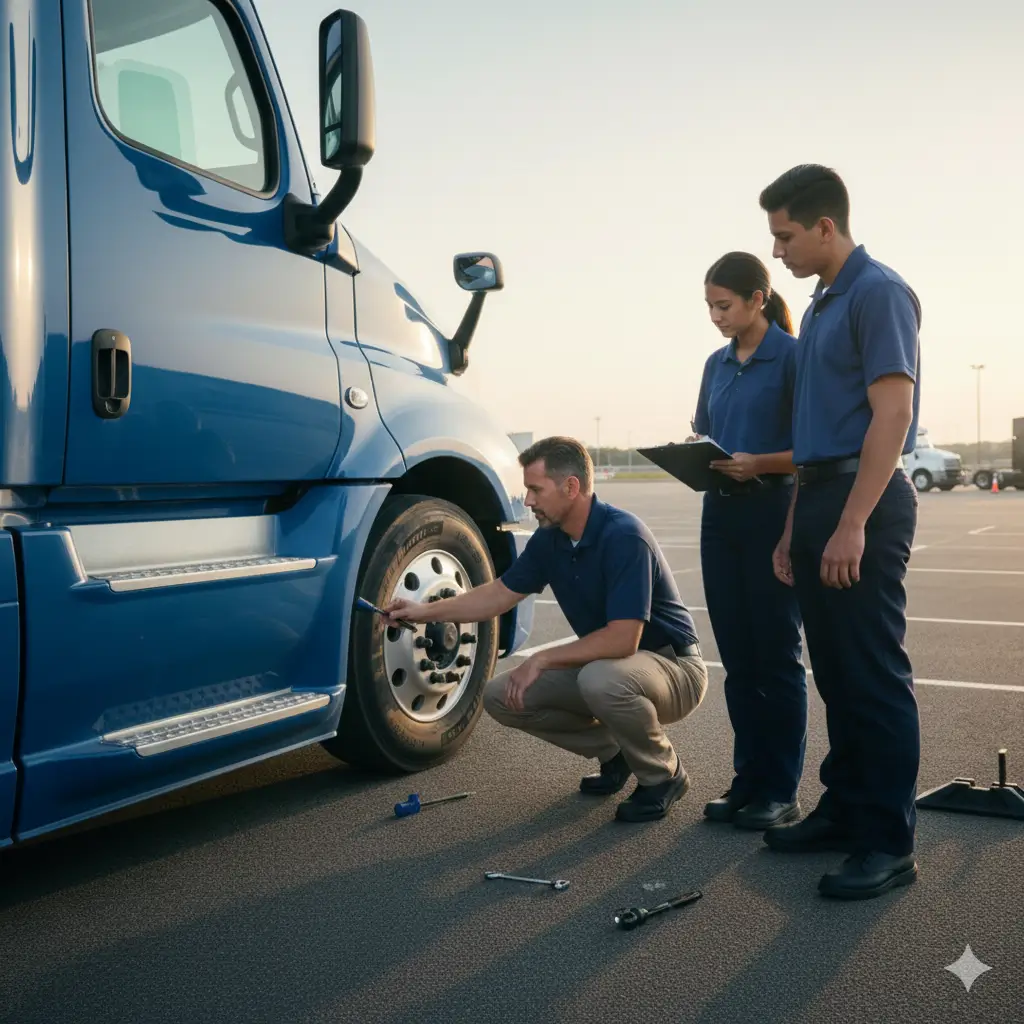
If you’re running under your own authority, an annual vehicle inspection isn’t “just another box to check.” It’s the difference between rolling past the scale house or getting parked Out-of-Service (OOS) while the load (and the money) moves on without you.
Miss it, lose the paperwork, or fail it on something basic like brakes, tires, or lights—and you’re looking at downtime, repair bills, missed appointments, and compliance history that can follow you into insurance shopping. If you want your paperwork (and broker requests) to stay simple, start with Certificates of Insurance (COIs) for owner-operators.
Key Takeaways: Essential Annual Vehicle Inspection Moves
- DOT Annual ≠ State Inspection: Most owner-operators need a DOT annual inspection (49 CFR 396.17) even if their state doesn’t do annual stickers for cars.
- Paperwork matters as much as parts: If you can’t produce the inspection report, you can still get jammed up roadside—even if the truck is mechanically fine.
- The “easy fails” are predictable: Tires, brakes, lighting, air leaks, and loose steering/suspension parts are where OOS starts. Pre-checking saves real money.
- Compliance protects your rates: Preventable violations can hurt quote options and make affordable trucking insurance harder to find.
Table of Contents
Reading time: 9 minutes
- What Is an Annual Vehicle Inspection (DOT vs State)?
- Which Trucks Need an Annual Inspection (and How Often)?
- What Annual Vehicle Inspections Check: A Practical Checklist
- Cost, Downtime, and Where to Get It Done
- Paperwork to Keep (So Roadside Doesn’t Turn Into a Shutdown)
- 2025–2026 Program Changes: What to Watch by State
- How Annual Inspections Affect Commercial Truck Insurance
- Frequently Asked Questions
- Conclusion: Stay Rolling, Stay Insurable
What Is an Annual Vehicle Inspection (DOT vs State)?
An “annual vehicle inspection” for a commercial truck commonly refers to the DOT annual inspection required at least once every 12 months under 49 CFR 396.17, while separate state safety inspections and emissions tests may also apply based on registration rules.
Mixing up DOT vs state requirements gets expensive because roadside enforcement usually cares most about the DOT annual and your ability to prove it fast. The clean way to run it is like a simple process: DOT annual + state requirements (if any) + consistent maintenance records. If you want to build a system — not just check a box — a preventive maintenance program is the backend that keeps your DOT annual from producing surprises.
If you also want fewer admin delays when brokers request compliance documents, build your insurance paperwork workflow alongside your inspection records (and keep your COIs ready to send).
DOT Annual Inspection (49 CFR 396.17) — The One That Gets Checked Roadside
- What it is: A required safety inspection completed at least once every 12 months for most commercial motor vehicles (CMVs) operating in interstate commerce.
- Why it matters: If you’re overdue or can’t show proof, you’re inviting delays, violations, and OOS risk that can follow you into renewals and quoting.
- Who performs it: A qualified inspector (shop, fleet, or mobile) who documents the inspection properly.
- What you get: An inspection report and often a sticker/label showing the month and year.
State Safety Inspections and Emissions Tests — Separate From DOT
- What it is: Some states require periodic safety inspections (lights, brakes, tires, etc.) and/or emissions tests.
- Why it matters: State non-compliance can lead to registration holds, citations, or inability to renew tags—still downtime even if DOT paperwork is perfect.
- Who needs it: It depends on state + vehicle type + GVWR + county (emissions often changes by metro area).
Quick Comparison Table — DOT Annual vs State Inspection
| Item | DOT Annual Inspection | State Safety/Emissions |
|---|---|---|
| Trigger | Federal CMV rules (interstate/in many cases) | State registration rules |
| Frequency | Every 12 months | Varies (annual, biennial, or none) |
| Focus | Safety/roadworthiness (CVSA-style) | Safety and/or emissions compliance |
| Typical proof | Inspection report + sticker/label | Sticker, report, or DMV database |
| Roadside focus | Very common | Depends on state/enforcement |
Which Trucks Need an Annual Inspection (and How Often)?
Most for-hire owner-operators operating a CMV should plan on a DOT annual inspection every 12 months unless a qualified compliance resource confirms a specific exemption for the operation.
If you’re hauling in commerce with a truck/truck-tractor and/or trailer combination that meets CMV thresholds, it’s safest to assume the DOT annual applies. Getting flagged roadside isn’t just a ticket; it’s often a missed appointment, tow/repair costs, and a compliance trail that can shrink your insurance options.
The Practical Rule: If You’re Running Like a CMV, Expect DOT Annual Requirements
- Common “yes” cases: Interstate tractor-trailer, straight truck + trailer used commercially, and many hotshot (pickup + trailer) setups depending on how they’re registered and operated.
- Business risk: A preventable OOS event can trigger chargebacks, rejected loads, and broker relationship damage—then show up when you’re trying to renew or re-shop.
How Often Are Inspections Required?
- DOT annual: Every 12 months (not “once per calendar year”).
- State programs: Vary by state and sometimes county (especially emissions).
Owner-operator pro tip: Schedule the annual inspection 30–45 days before it expires so you’re not forced into a “whoever has a bay today” decision.
If you’re uncertain whether your setup triggers CMV classification, review the full DOT requirements for trucks before your next compliance check.
What Annual Vehicle Inspections Check: A Practical Checklist
A DOT annual vehicle inspection evaluates safety-critical systems (including brakes, tires/wheels, lights, steering, suspension, coupling devices, and visibility equipment) to confirm the vehicle is roadworthy for commercial operation. For a printable reference before your next appointment, see our DOT-compliant inspection checklist with a free template.
A good inspection isn’t about being perfect—it’s about being legal, safe, and documented. Most failures are predictable, and you can catch many of them in your yard or at a truck stop before you pay shop labor.
Before diving into the checklist, here’s a quick overview of what FMCSA vehicle inspection prep looks like in practice:
1) Brakes and Air System (Where OOS Starts)
- What gets checked: Service brakes, parking brake, hoses/lines, chambers, slack adjusters, and air leaks.
- Why it’s high-risk: Brake defects can trigger immediate OOS and create a scheduling domino effect.
Brake defects are among the most common triggers for an Out-of-Service order under CVSA criteria — and a single OOS event can derail a day’s revenue.
Pre-check you can do: Listen for air leaks, confirm air build feels normal, verify the parking brake holds, and don’t ignore a “minor” pull.
2) Tires, Wheels, and Hubs (Cheap to Catch, Expensive to Ignore)
- What gets checked: Tread depth, sidewall damage, exposed cords, mismatched tires, loose/missing lug nuts, wheel cracks, and hub oil leaks.
- Why it hits your wallet: Blowouts cost hours, sometimes destroy airlines/fenders, and can create claim activity that makes renewals tougher.
3) Lights, Reflectors, and Electrical (The “Ticket Magnet”)
- What gets checked: Headlights, turn signals, brake lights, trailer lights, reflectors, and conspicuity tape condition.
Pro tip: Do a full light check every time you hook. It’s faster than arguing about a right rear turn signal that “worked earlier.”
4) Steering, Suspension, and Frame (Small Play = Big Problem)
- What gets checked: Tie rods, steering gear, springs/air bags, shocks, U-bolts, frame cracks, and fifth wheel mounting.
- Why it matters: These issues are less common than lights, but they can be serious enough for OOS.
5) Coupling Devices (Fifth Wheel / Pintle / Safety Chains)
- What gets checked: Fifth wheel jaws, kingpin condition, locking mechanism, mounting bolts, slider function, and air/electrical lines.
- Hotshot note: Pintle hitches, goosenecks, safety chains, and breakaway battery systems get attention—especially on heavier GCWR setups.
6) Windshield, Wipers, Mirrors, and Driver Visibility
- What gets checked: Wiper condition, washer function, mirror security, and windshield cracks in critical areas.
- Why it matters: Visibility defects are easy citations and easy downtime.
Common “Easy Fail” Items and Fast Fixes
| Easy fail | Why it fails inspections | Fast fix before the shop |
|---|---|---|
| Marker/turn/brake lights out | Corrosion, broken pigtails, bad grounds | Carry spare bulbs, dielectric grease, and a test plug |
| Air leaks | Dry-rotted lines, loose fittings | Replace suspect lines, tighten fittings, don’t ignore hissing |
| Low tread / irregular wear | Alignment, underinflation, suspension wear | Fix the cause first or you’ll burn the new tire too |
| Loose lug nuts | Poor torque practices | Re-torque properly and inspect for wallowed holes |
| ABS light on trailer | Sensor/wiring issues | Diagnose early; don’t wait until inspection day |
Cost, Downtime, and Where to Get It Done
A DOT annual vehicle inspection commonly costs $100–$250 per power unit (plus trailers), but for most owner-operators the biggest expense is usually downtime, not the inspection fee.
If the truck fails, the inspection charge isn’t the pain point. The pain point is parts + labor + losing a revenue day (or more) while a bay opens up and parts show up.
Typical Cost Ranges (Real-World)
- DOT annual inspection: Commonly $100–$250 per power unit; trailers often cost extra; regional pricing varies and repairs are additional.
- State inspection/emissions: Varies widely by state and county; some states post fixed fees while others don’t.
Where to Get It Done (Without Burning a Full Day)
- Dealer/service center: Good documentation, often higher labor rates.
- Independent truck shop: Often the best balance of speed and cost if they’re organized.
- Mobile inspector/service: Can be efficient if you plan ahead.
Scheduling tip: Book it on a day you already planned for maintenance (PM service, brakes, tires). One bay visit, one downtime event. For a full scheduling framework, see the annual truck maintenance calendar for owner-operators.
Paperwork to Keep (So Roadside Doesn’t Turn Into a Shutdown)
FMCSA inspection rules require that the annual inspection is documented, and drivers/operators need to be able to produce proof quickly when asked during an enforcement contact.
A clean truck with messy paperwork still costs you time. Roadside doesn’t care that “the shop has it” or “my email’s down.” Your goal is to produce the record in under a minute.
What to Carry/Store (Minimum Smart Set)
- Annual inspection report: Keep a copy in the truck and a digital copy in cloud storage.
- Sticker/label details: Photo it (month/year and unit info).
- Maintenance/repair records: Especially brakes and tires.
- DVIRs: If you use them in your operation.
- Registration/IRP cab card and IFTA credentials: Where applicable.
For the full in-cab document checklist, see The Owner-Operator’s In-Cab Checklist: 12 Documents to Keep You Legal and Profitable.
If you want a step-by-step walkthrough of what belongs in your compliance binder before your next roadside stop, this video breaks it down:
If you’re tightening up the admin side to protect cash flow and reduce back-and-forth, keep your filings and insurance documents as organized as your maintenance folder (see: Trucking insurance filings explained).
Roadside Reality Check
At a roadside inspection, you don’t get extra credit for saying “my shop has it.” If you can’t produce proof quickly, you’re the one losing hours. If you’re tightening up the admin side, start by learning how to organize your trucking paperwork so inspectors see what they expect fast.

2025–2026 Program Changes: What to Watch by State
State safety and emissions inspection programs can change year to year, but those changes do not automatically remove the federal DOT annual inspection requirement for CMVs operating under 49 CFR 396.17.
The key for owner-operators is to separate what’s changing for passenger vehicles from what’s required for commercial operation. Don’t plan compliance around a viral post—plan it around what an officer will ask for at roadside.
A Practical Way to Stay Current (Without Chasing Rumors)
- Check your state DMV/DPS website: Search “commercial vehicle inspection” and “periodic inspection.”
- If you run interstate: Treat the DOT annual as non-negotiable unless a qualified compliance resource confirms an exemption.
- If your state changes passenger-vehicle rules: Confirm whether commercial vehicles are excluded from the change.
Examples You May Hear About (Verify Before You Decide)
- Texas: Widely reported changes affecting non-commercial safety inspections; commercial rules can differ.
- New Hampshire: Legislation has been discussed about changing periodic inspections for some vehicles; confirm effective dates and what classes are covered.
Owner-operator takeaway: If enforcement will expect a DOT annual report at roadside, build your calendar and document storage around that reality.
How Annual Vehicle Inspections Affect Commercial Truck Insurance (and Your Ability to Get Affordable Rates)
Commercial truck insurance pricing is influenced by risk signals like violations, inspections, OOS events, and claims history, and preventable maintenance-related problems can reduce the number of carriers willing to quote competitively. See how your DOT record affects trucking insurance and what a clean score protects.
Insurance isn’t just “a bill”—it’s a business tool. Underwriters and brokers pay attention to how you run, and it shows up in down payments, deductibles, required safety tech, and sometimes whether you can even get terms you like.
Why Compliance Shows Up in Trucking Insurance Pricing
- What it is: Violations and OOS events can feed into the profile insurers evaluate when quoting commercial truck insurance.
- What it can cause: Fewer quoting options, higher down payments, tighter terms, and higher premiums (including semi truck and hotshot programs).
Here’s a closer look at how FMCSA violations feed directly into your insurance rates:
Claims Reality: Inspections Don’t “Guarantee Coverage,” But They Protect You
Insurers don’t usually deny a claim just because you’re overdue on an annual inspection, but being out of compliance can complicate investigations and increase liability exposure if maintenance becomes part of the story.
If you’re trying to keep affordable terms, your cheapest move is often boring: prevent violations and document maintenance.
The Logrock Difference: Insurance Built for Owner-Operators Who Think in CPM and Cash Flow
FMCSA requires for-hire interstate motor carriers to carry at least $750,000 in public liability coverage in many operating categories (and many shippers/brokers require $1,000,000), so coverage has to match how you actually run—not a generic guess.
At Logrock, we treat insurance like a business system: coverage built around lanes, cargo, radius, power-only vs trailer, and the real risks that cause downtime and missed revenue.
- Fit-to-operation coverage: Hotshot vs semi, power-only, and trailer changes shouldn’t create surprise gaps.
- Paperwork that moves fast: COIs and filings should support getting loads booked and paid.
- No mystery product: Clear terms, clear expectations, and a compliance-aware approach.
Frequently Asked Questions
An annual vehicle inspection is a documented safety inspection completed at least once every 12 months, and for most CMVs the key requirement is the DOT annual inspection under 49 CFR 396.17. In practice, this means a qualified inspector checks safety-critical items like brakes, tires, lights, steering/suspension, coupling devices, and visibility equipment. Some states also require separate state safety inspections and/or emissions tests based on where the truck is registered. The easiest way to stay out of trouble is to schedule the DOT annual before it expires and keep the inspection report stored both in the truck and digitally.
States vary on state safety and emissions inspections, but the DOT annual inspection requirement (49 CFR 396.17) applies nationally to most CMVs operating in interstate commerce regardless of the state program for passenger vehicles. In other words, a state can reduce or eliminate periodic inspections for non-commercial cars and you may still need your DOT annual as an owner-operator. State rules can also differ by vehicle type, GVWR/GCWR, and county (emissions programs often change by metro area). To confirm what your registration requires, check your state DMV/DPS site for “commercial vehicle inspection” and “emissions.”
DOT annual inspections check safety-critical systems including brakes and the air system, tires/wheels/hubs, lights and electrical, steering/suspension, coupling devices, and visibility equipment (wipers, mirrors, windshield condition). The goal is roadworthiness and compliance, not cosmetic perfection. The “easy fails” are usually predictable: inoperative lights, air leaks, low tread/irregular wear, loose lugs, and trailer ABS faults. If you pre-check those items 24–48 hours before the inspection, you’re more likely to avoid a fail that turns into a bay wait, parts delay, and lost load revenue.
Emissions testing is usually a state or county requirement, and it’s typically separate from the DOT annual inspection required every 12 months under 49 CFR 396.17. Some jurisdictions tie emissions checks to registration renewal, and requirements can change by county (especially around major metro areas). That means you might need both: a DOT annual for roadside compliance plus emissions testing to keep tags current. If you’re unsure, check your DMV/DPS site for commercial emissions rules and keep proof with your registration documents so renewals don’t get held up.
The most reliable way to protect affordable trucking insurance options is to prevent avoidable violations and OOS events by keeping your DOT annual inspection current, fixing common fail items (brakes, tires, lights, air leaks), and documenting maintenance. Insurers price risk using your operational history, and preventable compliance problems can reduce the number of carriers willing to quote or push premiums, down payments, and deductibles higher. If you want a quick baseline on coverage that matches your operation (hotshot vs semi, cargo, lanes), start with owner-operator trucking insurance basics.
A DOT annual inspection typically costs $100–$250 per power unit, with trailers often priced separately. Mobile inspectors may vary in cost. The bigger expense usually is not the inspection fee — it is the repair cost and downtime if something fails. Pre-checking predictable items like brakes, lights, tires, and air leaks before you go in is the most reliable way to control the total cost of inspection day.
If your truck fails, the inspector will note the defects on the inspection report. Depending on severity, you may be placed Out-of-Service on the spot, which means you cannot move the truck until defects are corrected and a re-inspection is completed. Failures that do not trigger immediate OOS still need to be repaired and documented before you can pass. Use a commercial vehicle inspection checklist before the appointment to catch the obvious items early.
Yes — trailers used in commercial operation are also subject to the DOT annual inspection requirement under 49 CFR 396.17. Inspectors check trailer brakes, lights, tires, wheels, coupling devices, and safety chains on hotshot setups. Trailer inspections are usually priced separately from the tractor. If you run a trailer regularly, schedule the tractor and trailer inspections together to minimize downtime.
A good rule is 30–45 days before your current inspection expires. This gives you time to address issues without being forced into emergency repairs at whichever shop has a bay open. If you wait until the last week, you lose negotiating power on scheduling and pricing. Tie it to your next PM service or major maintenance event to keep downtime in one window; the annual truck maintenance calendar can help you plan it.
Not automatically. A passed annual inspection proves roadworthiness at the time of inspection, but it does not protect you from a roadside OOS order if a new defect develops afterward. Equipment can fail between inspections — a blown bulb, air leak, cracked tire, or loose connection can still get you cited. The annual inspection and your pre-trip/DVIR process work together: the annual catches systemic issues, and daily pre-trips keep you legal between inspections.
Conclusion: Stay Rolling, Stay Insurable
The annual vehicle inspection isn’t red tape—it’s a downtime prevention system and a business protection move when you run on lean margins.
When you schedule early, pre-check the predictable fails, and keep paperwork clean, you avoid the problems that derail your week and follow you into renewal season.
Key Takeaways:
- Schedule the DOT annual early and treat it like a revenue-protection deadline.
- Pre-check predictable OOS items: brakes, tires, lights, air leaks, and coupling.
- Store inspection and maintenance records so roadside inspections don’t turn into lost hours.
If you’re an owner-operator trying to keep your DOT annual current, avoid OOS events, and protect affordable insurance rates — LogRock can help you review your operation, coverage needs, and available options. Talk to our team to ask questions, identify possible gaps, and request a quote built around how you actually run.
Related reading: Certificates of Insurance (COIs) for owner-operators, Trucking insurance filings explained, and Owner-operator trucking insurance basics.