
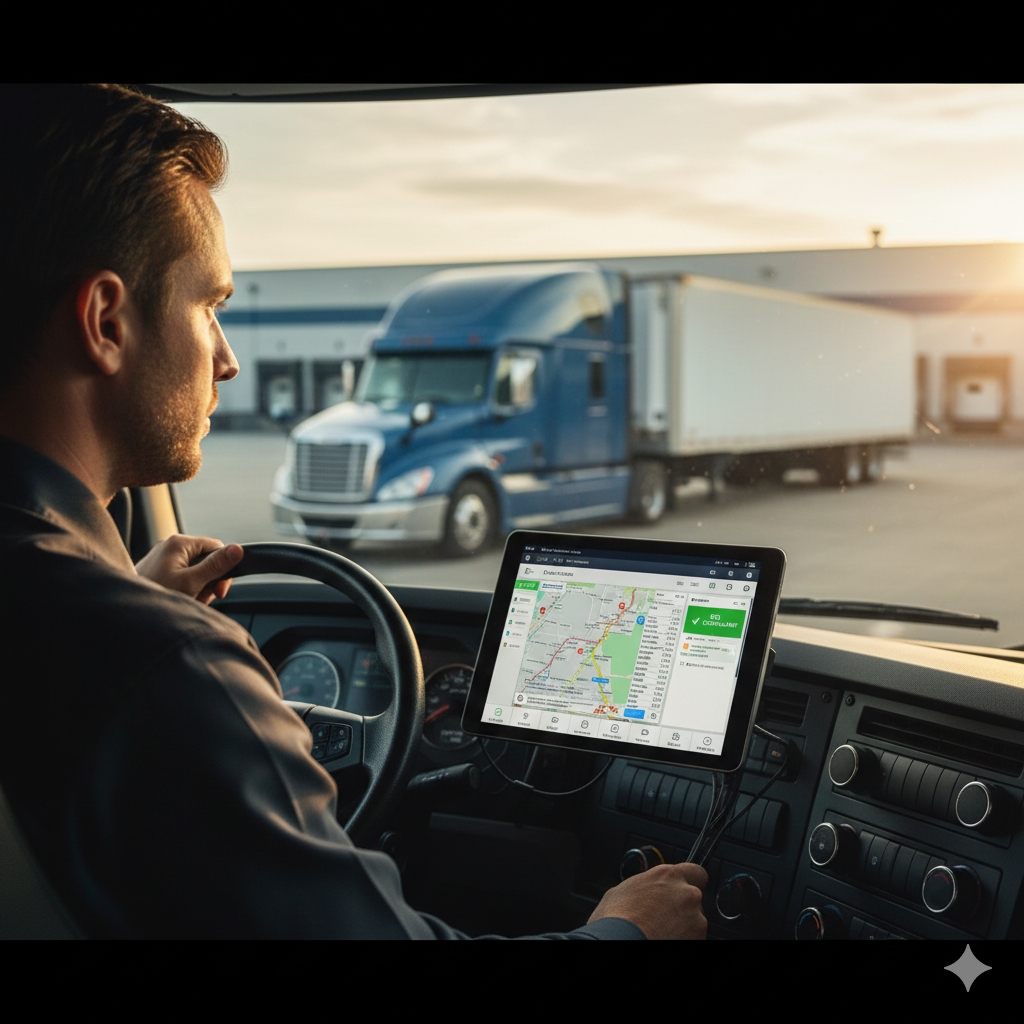
ELD compliance keeps you legal, inspection-ready, and profitable. Learn who needs an ELD, exemptions, malfunctions, and 2026 updates—then get a trucking insurance quote.
ELD compliance means using an FMCSA-registered (non-revoked) Electronic Logging Device to record Hours of Service (HOS) correctly and to display or transfer the last 8 days of logs during a DOT inspection. If you’re required to keep RODS, an ELD is usually required unless you meet a specific exemption—and “I didn’t know” doesn’t help at roadside.
If you’re tightening up the business side too, pair this with IFTA reporting made simple for owner-operators so your compliance workflow doesn’t live in five different places.
Table of Contents
Reading time: 8 minutes
- What Is ELD Compliance (In Plain English)?
- Who Needs an ELD? (Fast Decision Tool + Common Exemptions)
- ELD Compliance Requirements That Actually Matter at Roadside
- Roadside Inspection Workflow (What to Do So You Don’t Waste an Hour)
- Malfunctions, FMCSA Revoked Devices, and 2026 Enforcement Reality
- Why ELD Compliance Is a Profit Tool (Not Just a DOT Requirement)
- The Logrock Difference: Insurance Built for Business Owners
- Conclusion & Get a Quote That Matches How You Actually Run
- Frequently Asked Questions
What Is ELD Compliance (In Plain English)?
ELD compliance means your ELD meets FMCSA technical standards and your HOS records are complete enough for an officer to review or receive the current day plus the previous 7 days (8 days total) during a roadside inspection.
It’s a mix of (1) having a compliant device, (2) using it correctly, and (3) keeping the backup paperwork that proves your log matches real life.
What enforcement typically checks at roadside
- ELD required or exempt: Are you required to keep RODS, or do you legitimately qualify for an exemption?
- Device status: Is your ELD on the FMCSA registered list, and not revoked?
- Log integrity: Duty status changes, edits, and unidentified/unassigned driving handled properly.
- 8-day availability: Can you display the last 8 days of RODS quickly?
- Supporting documents: Can you back up the “story” with BOLs, fuel, tolls, dispatch, scale tickets, etc.?
For the source of truth on devices and updates, FMCSA’s ELD portal is the authoritative reference: https://eld.fmcsa.dot.gov/
Who Needs an ELD? (Fast Decision Tool + Common Exemptions)
Most drivers who are required to keep Records of Duty Status (RODS) under 49 CFR Part 395 must use an ELD, unless they meet a defined exemption such as short-haul, the 8-days-in-30 paper log allowance, driveaway–towaway, or a pre-2000 engine.
Quick decision tree: do I need an ELD?
- Step 1: Do you operate a CMV under FMCSA HOS rules and normally need RODS? If no (example: you qualify for short-haul timecard rules every day), you likely don’t need an ELD.
- Step 2: If yes, do you qualify for a common exemption?
- Short-haul exemption: Timecard-style operations with specific radius/return requirements.
- 8-days-in-30 exemption: Paper logs used no more than 8 days in any rolling 30-day period.
- Driveaway–towaway: The vehicle being driven is the commodity.
- Pre-2000 engine exemption: Engine model year matters—verify the engine year, not just the truck title.
- Step 3: If none apply, you need an ELD.
Owner-operator reality check (where people get caught)
- Hotshot setups: “Hotshot” isn’t an automatic exemption; many hotshot operations still fall under HOS/ELD depending on CMV thresholds and how you operate.
- Mixed weeks: If you bounce between short-haul and non-exempt runs, your log requirements can change mid-week—if the load might break your exemption, run ELD from the start.
- Carrier policy: If you’re leased on, the carrier may require ELD use even if you could be exempt, because their compliance and liability program is bigger than one trip.
ELD Compliance Requirements That Actually Matter at Roadside
Roadside ELD enforcement focuses on three things you can control: device compliance status, your ability to display/transfer logs, and documentation that supports your 8-day record of duty status.
1) Use an FMCSA-registered (non-revoked) ELD
Your ELD must appear on FMCSA’s registered list and cannot be operating under a revocation notice period that’s expired.
- Business risk: A revoked/non-compliant device can make “clean logs” look like no logs, which is how drivers get delayed, cited, or placed out of service.
- Owner-op habit: Set a monthly reminder to check the FMCSA ELD list so you don’t get surprised by a revocation.
2) Know the two things DOT wants fast: display + transfer
You must be able to show logs on the screen and, when requested, transfer them using the methods supported by your device.
- Telematics transfer: Web services and/or email (device-dependent).
- Local transfer: USB 2.0 and/or Bluetooth (device-dependent).
3) Handle edits and unassigned driving correctly
ELDs automatically capture driving when the truck moves, and unidentified/unassigned driving events must be reviewed and properly assigned according to your operation’s setup.
- Why this matters: Unassigned miles can look like log manipulation even when it’s just a shop move or yard reposition.
- Practical tip: If a shop moves the truck, tell them your ELD will capture it and keep a work order timestamp to support the event.
4) Keep supporting docs and be able to prove the story
Supporting documents (BOLs, fuel receipts, tolls, dispatch messages, scale tickets, lumper/detention notes) should align with your duty statuses and locations.
- Why this matters: If your ELD says one thing and your paperwork says another, the officer assumes the log is wrong.
- Workflow tip: Scan documents same-day and store them by load number so you can pull them quickly if asked.
5) Record retention (carrier requirement you still feel as an owner-op)
FMCSA requires motor carriers to retain ELD records and supporting documents for 6 months, and owner-operators under their own authority carry that responsibility directly.
If you’re leased on, missing documents can still become your problem when the carrier audits or a claim triggers deeper review.
Roadside Inspection Workflow (What to Do So You Don’t Waste an Hour)
A clean roadside ELD inspection typically requires three deliverables: an 8-day log display, a working data transfer method, and matching shipping/supporting documents.
The 60-second ELD compliance playbook
- Step 1 (display): Open “RODS/Logs” for current day + previous 7 days and confirm the correct driver profile.
- Step 2 (transfer): If asked, transfer via web services/email or USB/Bluetooth based on your device.
- Step 3 (basics): Have license, med card (if applicable), registration, insurance, and shipping papers/BOL accessible.
- Step 4 (explanations): Don’t freestyle; if something is unusual (shop move, yard move, split sleeper confusion), tie it to documentation.
Screenshot-friendly workflow
Inspection → Open ELD logs (8 days) → Officer reviews or requests transfer → Transfer (web/email OR USB/Bluetooth) → If malfunction: paper logs + reconstruct (8 days) + notify carrier → Complete inspection → keep report + fix defects fast
Malfunctions, FMCSA Revoked Devices, and 2026 Enforcement Reality
FMCSA malfunction rules require paper-log fallback, notification within 24 hours, and repair or replacement within 8 days, and revocation notices can make a previously “fine” ELD non-compliant after the notice period ends.
If your ELD malfunctions: the rules that keep you rolling
Do these three actions immediately to protect yourself at roadside and during audits:
- Reconstruct RODS on paper: For the current day and previous 7 days (8 days total) using whatever history you can access.
- Notify your carrier within 24 hours: If you’re the carrier, document it for your compliance file.
- Repair/replace within 8 days: Or request an extension through the FMCSA process if circumstances truly prevent repair.
Business move: treat an ELD malfunction like a breakdown—keep blank log sheets, your login credentials, and a written “what I do next” checklist in the truck.
FMCSA ELD revocations (what changes in 2025–2026)
FMCSA periodically removes or revokes ELDs from the registered list, and you can be running normal lanes with normal paperwork while your device becomes non-compliant after a notice period.
- Check status monthly: Match your ELD model against FMCSA’s list and announcements.
- If flagged/revoked: Contact the vendor for replacement/upgrade steps, document your actions (email trail matters), and be prepared to run paper logs temporarily if required.
Status updates and notices live here: https://eld.fmcsa.dot.gov/Support/NewsAndEvents
Why ELD Compliance Is a Profit Tool (Not Just a DOT Requirement)
ELD compliance protects revenue by reducing out-of-service downtime, missed appointments, and repeat inspection scrutiny that can follow a poor CSA pattern.
Compliance ROI: where the money actually shows up
- Fewer delays at roadside: Less time sitting means better on-time performance and fewer blown appointment windows.
- Lower violation risk: Fewer log problems means fewer citations, fewer OOS scenarios, and fewer reschedules.
- Cleaner risk profile over time: Underwriters and business partners prefer predictable operations, especially at renewal.
The “affordable” move is preventing the expensive week
Most owner-operators aren’t chasing perfect—they’re chasing stable. The cheapest week is the week you don’t get parked, don’t miss a reload, and don’t trigger a compliance spiral.
If you’re comparing coverage options, it also helps to understand Non-trucking liability vs. bobtail insurance explained so you’re not paying for the wrong protection for how you actually run.
The Logrock Difference: Insurance Built for Business Owners
Logrock helps owner-operators match trucking insurance to real operations—authority setup, lanes, cargo, trailer type, and broker/shipper requirements—so coverage lines up with how you run.
Owner-ops live with tight margins, ELD/HOS pressure, IFTA/IRP admin, parking shortages, and brokers who want COIs yesterday. We move fast when you need paperwork for a load, and we don’t pretend every operation is the same.
If you’re trying to bring your monthly cost down without cutting the wrong corners, see How to lower your trucking insurance cost per month.
Frequently Asked Questions
ELD compliance is using an FMCSA-registered (non-revoked) electronic logging device to record HOS/RODS accurately and to display or transfer the last 8 days of logs (current day + previous 7) during a DOT inspection. Compliance also includes correctly handling edits and unidentified/unassigned driving events and keeping supporting documents like BOLs, dispatch records, fuel receipts, tolls, and scale tickets. FMCSA’s device list and official ELD resources are published on the ELD portal at https://eld.fmcsa.dot.gov/.
Most drivers who are required to keep RODS under FMCSA HOS rules must use an ELD, unless they meet a specific exemption allowed by the ELD rule. Common exemptions include qualifying short-haul operations, using paper logs no more than 8 days in any rolling 30-day period, driveaway–towaway operations, and CMVs with a pre-2000 engine model year (engine year matters). If you mix exempt and non-exempt runs, treat it like a business risk: if the load might break your exemption, run ELD from the start to avoid backtracking errors.
ELD non-compliance can lead to citations and can escalate into an out-of-service (OOS) situation when an officer treats your status as “no logs” or “invalid logs,” especially if you can’t produce the last 8 days of RODS. Dollar amounts vary by state and situation, but the bigger hit is operational: lost time at roadside, missed appointments, load reschedules, and extra scrutiny that can follow you into future inspections. Over time, repeated log-related issues can worsen your safety profile and make renewals and business conversations harder than they need to be.
The most common ELD exemptions are qualifying short-haul operations, the paper-log allowance of 8 days in any rolling 30-day period, driveaway–towaway operations, and CMVs with a pre-2000 engine model year. Each exemption has conditions, and if you break the conditions on a trip (radius, return-to-work requirements, frequency of paper logs, etc.), you’re back in ELD territory for that period. Hotshot operations are not automatically exempt—the correct answer depends on how your CMV is classified and whether you’re required to keep RODS.
ELDs typically transfer inspection data using either telematics (web services and/or email, depending on the ELD) or local transfer methods (USB 2.0 and/or Bluetooth, depending on the device). The practical goal is simple: the officer can receive your RODS output quickly without you fumbling through menus or connectivity surprises. A smart habit is to do a practice transfer in your yard once per quarter and anytime you update the app, swap phones/tablets, or change carriers—because the scale house is the worst place to learn your process.
Conclusion & Get a Quote That Matches How You Actually Run
ELD compliance in 2026 is about inspection readiness: a valid device, accurate 8-day logs, a working transfer method, and a paper-log plan for malfunctions.
When devices malfunction or get revoked, enforcement won’t negotiate your schedule—so build the habits that keep you moving and keep your operating costs predictable.
Key Takeaways:
- Verify your ELD isn’t revoked: Check FMCSA’s list monthly and document vendor conversations if your device is flagged.
- Know your exemption status: Mixed short-haul/long-haul weeks are where mistakes happen—if the run might break the exemption, start on ELD.
- Master the inspection basics: Display 8 days, transfer quickly, and keep supporting documents organized by load.
If you want coverage that matches your lanes, cargo, and authority setup, get a quote and keep your operation protected.



