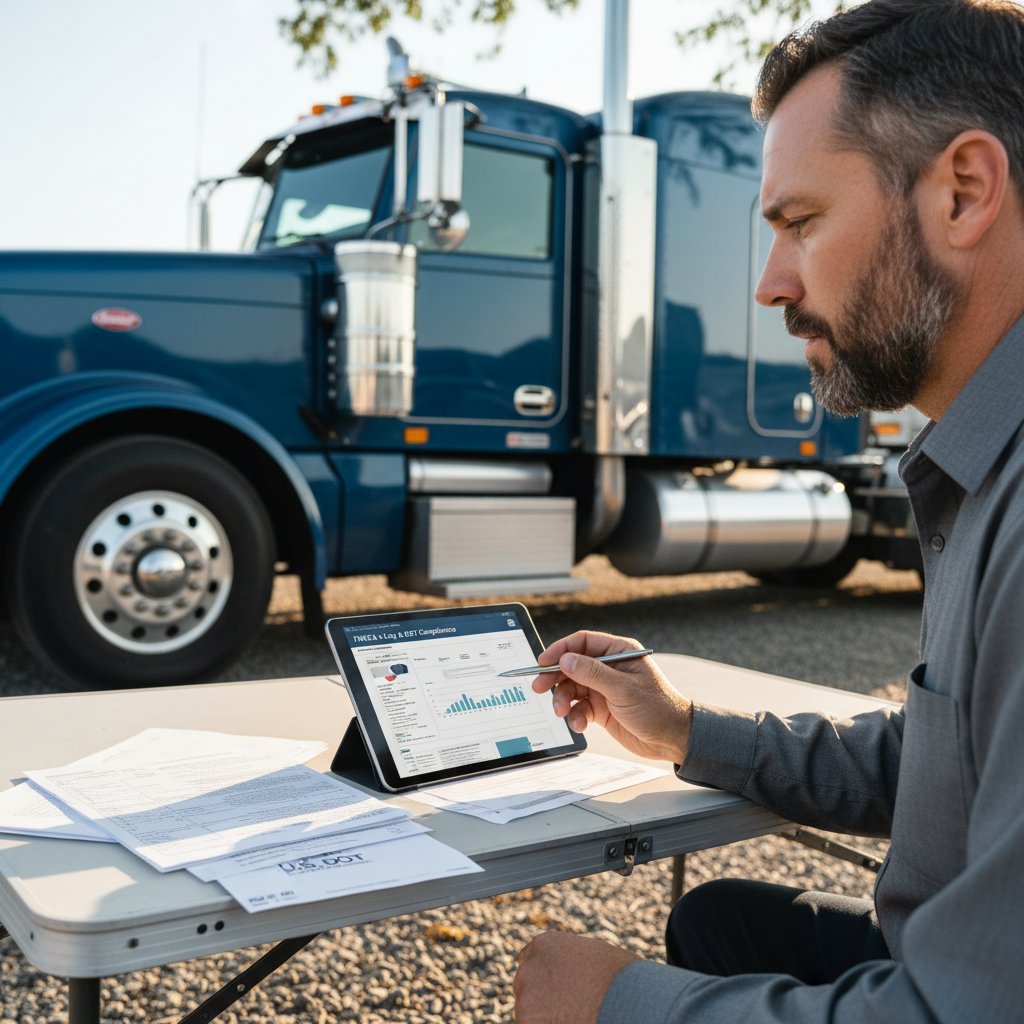
As an owner-operator, you're not just a driver; you're the CEO, and your primary job is to manage cash flow. You're constantly analyzing your cost-per-mile (CPM), and right after fuel, commercial truck insurance is one of the biggest fixed costs draining your profits.
You've heard the sales pitch-"bundle your policies and save!"-but it sounds like a car insurance gimmick. Is it a smart business decision, or is it a shell game where you "save" on one policy just to get overcharged on another?
The answer isn't one-size-fits-all. At Logrock, we're not captive agents; we're business partners. We believe you deserve a no-fluff breakdown of the math. This guide is a business-focused analysis of bundling: the pros, the cons, and when it makes sense for your bottom line.
The Business Logic of Bundling
- What It Is: Bundling means purchasing your "Big 3" coverages-Primary Auto Liability, Physical Damage, and Motor Truck Cargo-from a single insurance carrier.
- The Main Pro (Cash Flow): The incentive is twofold: 1) Simplicity (one bill, one renewal date, one point of contact) and 2) Cost Savings (carriers often give a 5-15% discount for package policies).
- The Main Con (The Risk): It's not always the cheapest option. A carrier might offer a great rate on liability but have uncompetitive, high-priced cargo insurance. The "discount" can easily be wiped out if one part of the bundle is a bad deal.
- The Verdict: Bundling is only a good decision if the total cost is lower than buying each policy from a separate, "best-in-class" carrier. You must compare the numbers.
What "Bundling" Means for Your Trucking Business
For an owner-operator with your own authority, you're not just buying one policy; you're buying a package of separate coverages to protect your entire operation.
The "Big 3" Policies You Can Bundle
- Primary Auto Liability: This is the non-negotiable, federally-mandated coverage that pays for damage you cause to others.
- Physical Damage: This protects your asset-your truck and trailer. It covers collision, theft, and fire.
- Motor Truck Cargo: This protects your customer's freight and your reputation.
Many carriers will also allow you to add General Liability (for non-driving risks) and Non-Trucking Liability (if applicable) to the package for a comprehensive business policy.
The Two Main Business Benefits
- Cost Savings: This is the main draw. A 2024 survey by the National Association of Insurance Commissioners (NAIC) found that businesses bundling commercial auto and cargo insurance save an average of 10-12% annually. (Source: NAIC, 2024)
- Operational Simplicity: This is a major factor for a one-person operation.
- One Bill: You manage one monthly payment, not three.
- One Renewal: You shop for your insurance once a year, not three different times.
- One Call: If you have an accident that damages your truck and the cargo, you file one claim with one adjuster, not two.
The Financial Risk: When Bundling is a Bad Deal
While bundling looks good on paper, it can sometimes hide a bad deal. This is the part most captive agents won't tell you.
The "Weak Link" Problem
Insurance carriers are just like any other business: they have specialties.
- A carrier might be excellent at pricing Primary Liability for new authorities.
- But they may be terrible at pricing Motor Truck Cargo for reefer freight.
If you bundle with them, their cheap liability rate might look great, but their overpriced cargo policy could cost you thousands more per year than buying it from a different, specialized carrier. The "bundle" ends up costing you more money, even with the discount.
As Chad Boblett, founder of the Rate Per Mile Masters group, says: "Bundling is like hauling a full load-you need to make sure every part of it makes sense for your route." (Source: Boblett, 2023)
Bundling Pros vs. Cons: A Business Analysis
| Aspect | The Upside (Pro) | The Downside (Con) |
|---|---|---|
| Cost | You can get a multi-policy discount, often 10-12%. | The total price may still be higher if one policy in the bundle is uncompetitive. |
| Simplicity | One bill, one renewal date, one claims contact. | You lose the flexibility to switch out one piece of your insurance (e.g., cargo) if you find a better deal elsewhere. |
| Coverage | You have one carrier handling your entire risk profile. | A "one-size-fits-all" carrier may not offer the specific endorsements you need for your cargo (e.g., reefer breakdown). |
Your Questions Answered: "People Also Ask" FAQs
A: The savings are real and can be significant. Carriers offer discounts that are often between 5-15%. A 2024 survey by the National Association of Insurance Commissioners (NAIC) confirmed that businesses bundling commercial auto and cargo insurance save an average of 10-12% annually. (Source: NAIC, 2024)
A: The main drawback is that you might be overpaying for one part of the package. A carrier might have cheap liability but expensive physical damage coverage. You must compare the total bundled cost to the cost of buying each policy separately from different, specialized carriers.
A: Bundling is often a great fit for owner-operators and small fleets who value simplicity and are looking for a competitive, all-in-one price. It's most effective when you work with an independent specialist (like Logrock) who can compare multiple different bundled packages from various carriers to find the one that is truly the best deal.
The Logrock Difference: We Do the Math For You
This is where working with a specialist broker versus a "captive agent" makes all the difference for your business.
- A captive agent works for one insurance company. They will always tell you to bundle, because that's all they can sell you.
- Logrock is an independent specialist. We work for you. Our job is to protect your bottom line. We have access to dozens of top "A-rated" carriers.
We'll run the numbers for you both ways:
- The Best Bundled Rate: We'll find the most competitive "all-in-one" package from a single carrier.
- The "Best-in-Class" Rate: We'll find the cheapest liability from Carrier A, the cheapest cargo from Carrier B, and the cheapest physical damage from Carrier C.
Then, we'll show you the math, side-by-side, so you can make the right business decision.
Bundling is a Math Problem, Not a Gimmick
Bundling can be a very smart move that saves you money and, just as importantly, time. But it's not an automatic win. It's a math problem, and you have to run the numbers.
Your job as CEO is to get the best value to protect your assets and your cash flow. Our job is to give you the data to do it.