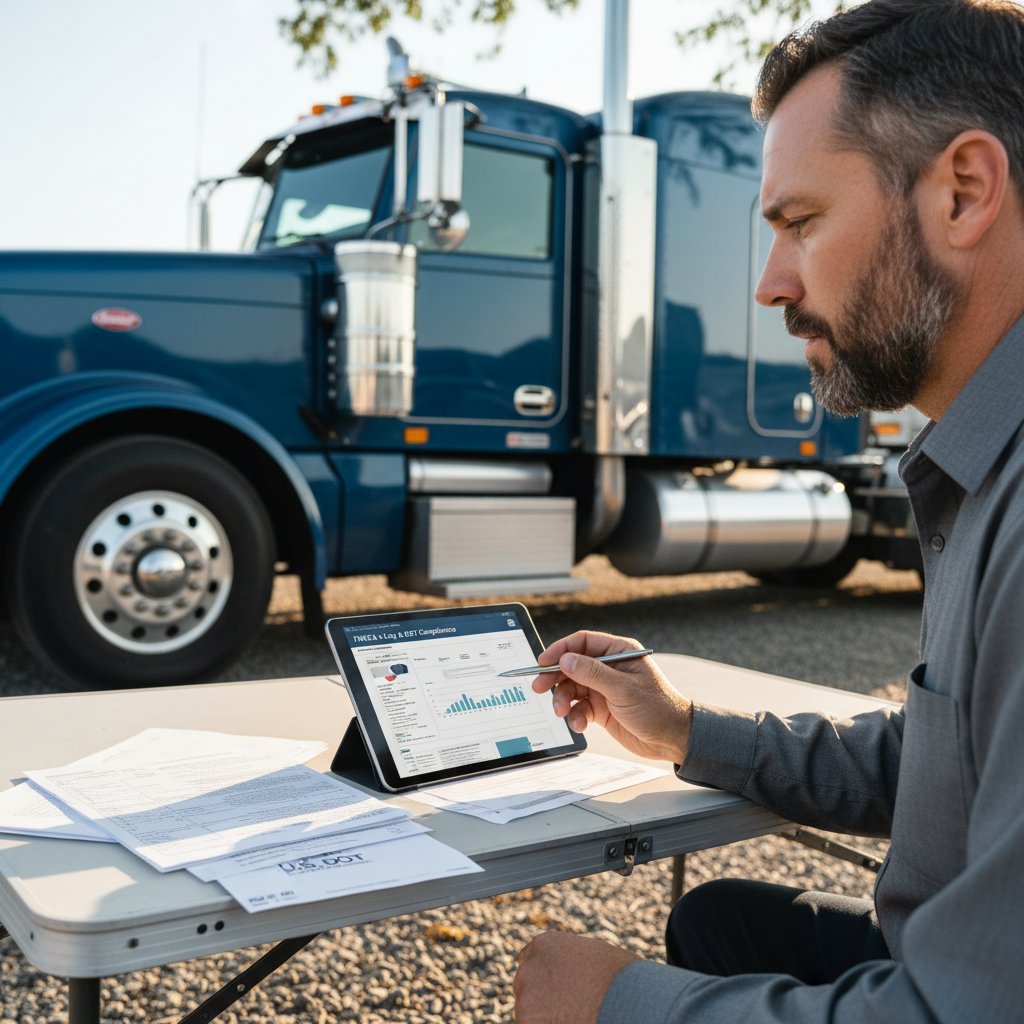
Getting your own authority is the ultimate goal for an owner-operator. It means true independence: you're no longer just a driver; you're the boss. You control your loads, you control your schedule, and you build your own legacy. But this freedom comes with a new set of challenges: a mountain of paperwork, complex regulations, and serious financial risks. Too many great drivers jump in, pay the FMCSA application fee, and then get hit with a $20,000 insurance quote they can't afford, or realize they set up their business wrong, putting their personal assets at risk. This isn't a legal manual; it's a business prep guide. Here are the 6 critical steps you must take before you file for your FMCSA authority to protect your cash flow and start your company on a solid foundation.
FMCSA Authority Prep Essentials
- Insurance First: Before you apply, get quotes for commercial truck insurance. This will be one of your largest fixed costs and is the first and most important test of your business's financial viability.
- Protect Your Assets: An LLC (Limited Liability Company) is vital. It creates a legal wall between your business debts and your personal assets (like your house). Operating as a sole proprietorship is a financial gamble.
- Filter the Noise: The moment you apply, your information becomes public. You will be flooded with spam calls and mail. Set up a separate business phone and email so you don't miss the critical FMCSA communications about your new entrant audit.
6 Critical Steps to Take Before You Apply for FMCSA Authority
Don't just fill out the form. Build your business first.
1. Get Your Insurance Quotes First
- What It Is (In Plain English): Getting firm quotes for your primary auto liability, motor truck cargo, and physical damage insurance.
- Why It's Essential (The Business Risk): You cannot activate your authority without insurance. This is a massive, non-negotiable expense. Applying, paying the FMCSA fee, and then discovering you can't afford the $15,000 - $25,000+ premium kills your business before it even starts.
- Pro Tip (Veteran Advice): Get your insurance quotes before you even register your LLC. This is your number one financial reality check. It tells you exactly how much cash you need on hand.
2. Choose the Right Business Structure (Hint: It's an LLC)
What It Is (In Plain English): The legal entity for your business. The most common choices are a Sole Proprietorship (you) or a Limited Liability Company (LLC).
Why It's Essential (The Business Risk): A sole proprietorship means you are the business. If you're in a major accident, they can come after your personal house, your savings, and your family's assets. An LLC creates a legal separation, protecting your personal life from your business liabilities.
Pro Tip (Veteran Advice): An LLC is simple to file, but consult an accountant. They can advise if an LLC taxed as an S-Corp is a better move to save you money on self-employment taxes down the road.
3. Nail Down Your Address Strategy
- What It Is (In Plain English): You will have at least four addresses: your personal address, a business physical address, a business mailing address, and a garaging address (where you park the truck).
- Why It's Essential (The Business Risk): Insurance companies and banks demand consistency. Having your business registered in one state, your truck garaged in another, and your mail sent to a third is a massive red flag. It complicates compliance and will spike your insurance rates.
- Pro Tip (Veteran Advice): Keep all your business addresses in the same state if possible. It's fine to use a P.O. Box or a mail forwarding service for your mailing address, but your physical and garaging addresses must be legitimate and consistent.
4. Pick a Simple, Professional Business Name
What It Is (In Plain English): The legal name for your LLC and your FMCSA application.
Why It's Essential (The Business Risk): You will say, spell, and type this name thousands of times-to brokers, dispatchers, shippers, and insurance agents. Complicated symbols, punctuation, or "clever" spellings just waste time and look unprofessional.
Pro Tip (Veteran Advice): Keep it simple. Check the FMCSA database and your state's business registry to make sure the name isn't already taken.
5. Set Up a "Spam Filter" (Separate Comms)
- What It Is (In Plain English): A separate business phone number (a cheap Voice-over-IP line works great) and a dedicated business email address.
- Why It's Essential (The Business Risk): The moment your application is public, your information is sold. You will be buried in a barrage of spam calls, voicemails, and physical mail for factoring, ELDs, insurance, etc.
- Pro Tip (Veteran Advice): Set up the voicemail on your new business line. The one call you actually care about from the FMCSA or a state auditor about your new entrant audit-will get lost in the noise if you don't have a filter.
6. Prepare for the New Entrant Audit
- What It Is (In Plain English): The FMCSA will audit you within your first 18 months. They send official information about this.
- Why It's Essential (The Business Risk): This audit is not optional. You must pass it to keep your authority active. This is where they check your HOS (Hours of Service) logs, maintenance records, drug & alcohol program, and other compliance files.
- Pro Tip (CRITICAL): The FMCSA communicates via official mail (USPS) and email. They will not call you demanding money to "activate your authority" or "complete your registration." Those calls are 100% scams. Ignore them.
Frequently Asked Questions
It's high. A new owner-operator with one truck should budget between $12,000 and $25,000+ for their first year. Your final cost depends on your driving record (MVR), garaging location, cargo type, and coverage limits.
The USDOT Number is your main safety identifier for the FMCSA (used for inspections, audits, and crash records). The MC (Motor Carrier) Number is your "authority" to operate as a for-hire carrier in interstate (across state lines) commerce. You'll apply for both, but the MC number is what makes you an independent carrier.
"Hotshot insurance" is just an industry term for commercial truck insurance that's tailored for Class 3-5 trucks (like a dually) pulling a flatbed or gooseneck. You still need the same core coverages: $750k-$1M in Primary Auto Liability, $100k in Motor Truck Cargo, and Physical Damage for your truck and trailer.
The Logrock Difference: We're Business Partners, Not Just Brokers
We know you're not just a driver; you're an entrepreneur. You're worried about cash flow, compliance headaches, and rising costs. We speak your language-IFTA, IRP, HOS, ELD-and we're here to help you navigate the business side of trucking, starting with a smart, affordable trucking insurance plan that protects your new company.
Build Your Business on a Solid Foundation
Starting your own trucking company is the biggest step you'll take toward professional and financial independence. By preparing your business before you file with the FMCSA, you avoid the costly rookie mistakes that sink other new carriers and set yourself up for long-term success.