
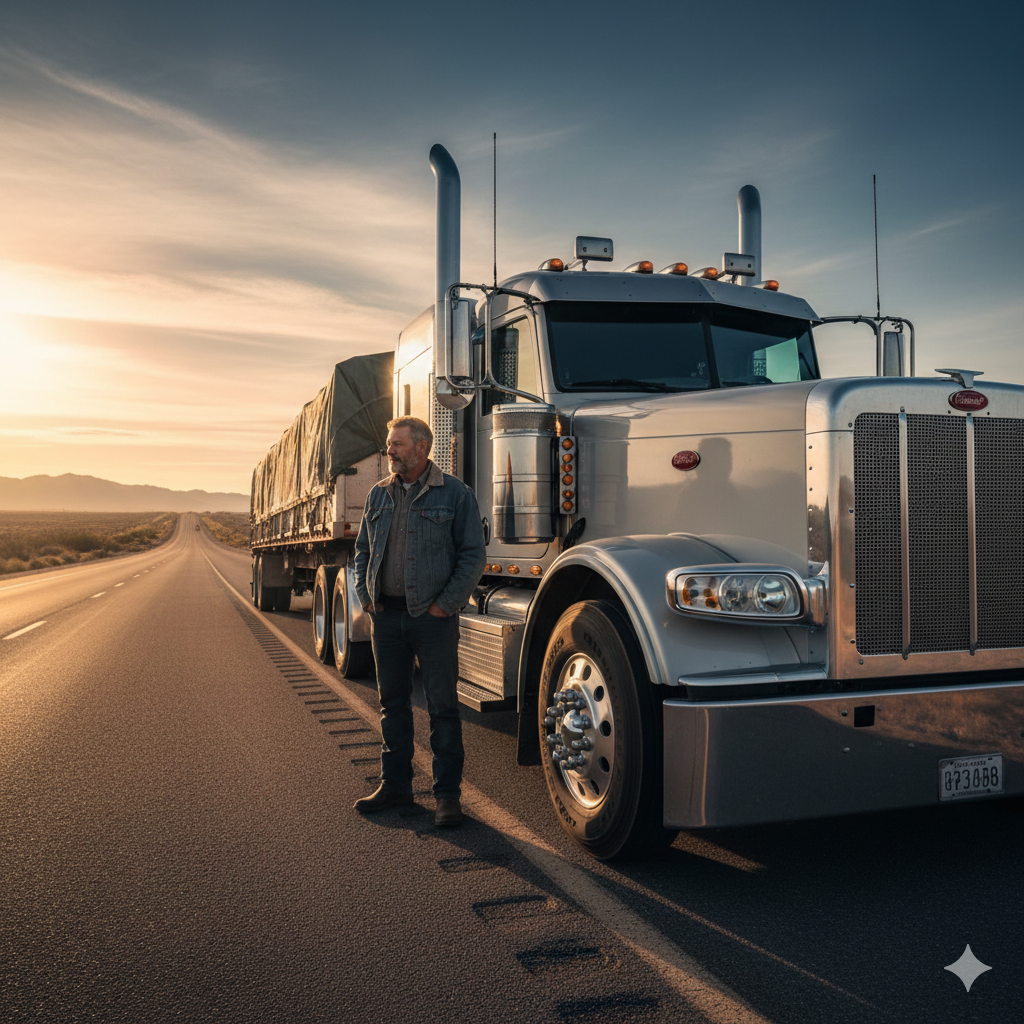
Don’t guess on trucking insurance when buying a truck. Use these commercial truck buying questions to cut risk and control TCO—get a quote.
Commercial truck insurance gets priced off the truck you buy (VIN, value, safety tech, radius, and cargo), so the smartest move is to ask business-first questions before you sign. Before you buy, ask about (1) how the truck’s spec matches your freight lanes, (2) full maintenance history and fault codes, (3) independent inspection results, (4) warranty and dealer support, (5) total cost of ownership (payment + fuel + tires + repairs), and (6) how the VIN/spec will impact trucking insurance and compliance.
Buying a truck changes your costs on day one—payment, fuel burn, downtime risk, and how underwriters view you. If you’re lining up coverage, get a baseline quote early so you’re not surprised after the purchase; start here: commercial truck insurance.
Key Takeaways: Essential Commercial Truck Buying Questions
- Spec drives profit: Gear ratio, wheelbase, and engine setup determine fuel burn, load options, and resale value.
- History beats hype: ECM downloads, maintenance records, and an independent inspection matter more than shiny paint.
- TCO is the real price: Payment is only one line item—repairs, tires, downtime, and insurance can make or break CPM.
- Insurance isn’t “later”: The truck you buy can change eligibility and pricing for semi truck insurance and affordable trucking insurance quotes.
Table of Contents
Reading time: 8 minutes
- Start With the Business: What Job Is This Truck Actually Doing?
- Specs That Decide Your CPM: Questions That Prevent an Expensive Mistake
- Used Truck Due Diligence: The Inspection Questions That Save You
- Money Questions: TCO, Financing, and Warranty
- Compliance + Insurance Questions (Yes, Before You Buy)
- 2026 Tech + Safety Questions That Actually Matter
- Closing the Deal: Paperwork Questions That Avoid Regret
- Frequently Asked Questions
- The Logrock Difference: Insurance Built for Business Owners
- Conclusion & Get a Quote Before You Buy
Start With the Business: What Job Is This Truck Actually Doing?
A truck purchase should be evaluated like a 6–12 month operating plan because lanes, weights, and home time directly affect CPM, downtime risk, and commercial truck insurance rating (radius, garaging ZIP, and stated value).
If you don’t define the job, you’ll overbuy (higher payment + higher insurance) or underbuy (more breakdowns + fewer loads). Before you even look at a VIN, map your operation and numbers—then shop.
1. What freight am I hauling—and what’s my realistic lane map for the next 6–12 months?
- What it is (plain English): Your freight type and lanes decide weight, grades, weather, and how hard the truck will work.
- Why it’s essential (business risk): Buying a heavy-haul spec for light regional freight (or vice versa) raises CPM and kills flexibility when the load board shifts.
- Who needs it: Everyone—especially new authorities relying on spot freight.
2. What’s my target cost-per-mile (CPM) and break-even number?
- What it is: Your “survival” number (fuel + payment + maintenance escrow + insurance + plates/IRP/IFTA + tolls + overhead).
- Why it’s essential: A truck that looks affordable can still push your break-even above what your lanes pay—then every deadhead mile hurts more.
- Pro tip (veteran advice): Run two CPM scenarios: good week (2,800–3,200 miles) and bad week (1,800–2,200 miles + detention + deadhead).
3. Am I buying the right class of truck for my authority (semi vs hotshot)?
- What it is: Matching truck class and trailer to your revenue plan and compliance workload.
- Why it’s essential: The wrong setup can mean higher wear, tougher load access, and different insurance needs (including hotshot insurance vs semi truck insurance).
- Who needs it: Anyone cross-shopping a 1-ton dually + gooseneck vs a Class 8 tractor.
Specs That Decide Your CPM: Questions That Prevent an Expensive Mistake
Truck specs like axle ratio, transmission gearing, and wheelbase can change fuel economy by roughly 0.5–1.5 MPG in real operations, which often becomes thousands of dollars per year at 100,000+ miles.
Specs aren’t “truck nerd” stuff. Specs decide whether you’re smooth at 65 mph turning fuel, or screaming at 1,500 rpm on every grade while you watch the fuel gauge fall.
4. Is this spec built for my speed, terrain, and weight—or the previous owner’s?
- What it is: Rear axle ratio, transmission, and tire size working together.
- Why it’s essential: Mis-matched gearing raises fuel burn and heat—then you pay in repairs and downtime.
- Who needs it: Anyone running mountainous lanes, heavier gross weights, or strict appointment windows.
5. What engine platform is it—and what’s the real maintenance story on that platform?
- What it is: Engine model/year and its known patterns (aftertreatment, sensors, cooling, EGR/DPF behavior).
- Why it’s essential: One “common” failure can wipe out a month’s profit. If you’re living week-to-week cash flow, predictability matters.
- Pro tip: Ask for recent DPF regens history and aftertreatment work orders—not just “it’s been deleted” talk (that can create compliance and resale problems).
6. What’s the wheelbase and turning radius—and will it cost me loads?
- What it is: How the truck behaves in tight docks, urban stops, and customer yards.
- Why it’s essential: Too long and you lose options (and time). Too short and you may sacrifice ride quality or stability depending on setup.
- Real-world example: A great-paying shipper with tight docks can turn into a weekly headache if you’re constantly doing 12-point turns and burning HOS.
7. What’s the sleeper/comfort spec—and will I actually sleep and recover?
- What it is: Mattress quality, insulation, APU/battery HVAC, fridge space, seat condition, noise level.
- Why it’s essential: Fatigue is expensive—more mistakes, more close calls, more “I’m done with this week” days. Comfort protects consistency.
- Pro tip: If you park in hot/cold regions, prioritize battery HVAC or APU. Idling adds fuel cost and accelerates wear.
Used Truck Due Diligence: The Inspection Questions That Save You
An independent pre-purchase inspection for a Class 8 truck commonly costs about $300–$800, and it can uncover brake wear, aftertreatment problems, and fault codes that a test drive won’t reveal.
Used trucks can be smart money—if you verify, not trust. A seller’s story doesn’t pay your tow bill.
8. Can I see complete maintenance records—and do they match the odometer/ECM?
- What it is: Oil changes, overhead sets, coolant service, injector work, DPF cleaning, transmission/diff services.
- Why it’s essential: “I did my own maintenance” might be true—or it might mean “no records.” Records reduce uncertainty (and financing friction).
- Pro tip: Ask for invoice PDFs and shop names. Call the shop. Five minutes can save five figures.
9. Will the seller allow an independent inspection—and who pays if it fails?
- What it is: A third-party inspection at a dealer or trusted independent shop (not the seller’s buddy).
- Why it’s essential: This is where you catch leaks, blow-by, brakes near limits, CAC issues, suspension wear, and fault codes that don’t show on a test drive.
- Who needs it: Everyone. If a seller refuses, that’s data.
Practical inspection checklist (owner-operator focused):
- Engine: blow-by check, oil/coolant contamination, leaks, belt/pulley wear
- Aftertreatment: DPF/DEF history, active/inactive codes, regen frequency
- Drivetrain: clutch feel (if manual), trans shifts, driveline play, diff seepage
- Brakes/tires: brake lining %, rotor/drum condition, uneven tire wear (alignment/suspension clues)
- Frame/cab: rust, cracks, evidence of repairs, airbags and leveling valve function
- Electrical: batteries age, alternator output, lights, parasitic draws
- Road test: vibration under load, pull, brake response, temps stable on grade
10. What does the ECM download say (hours, idle %, events)?
- What it is: The truck’s “truth file”—hours, idle time, hard brakes, overspeeds, fault history depending on platform.
- Why it’s essential: Two trucks with the same miles can have totally different wear based on idle hours and driver behavior.
- Pro tip: High idle hours often mean more aftertreatment headaches and less “easy highway” life than the miles suggest.
Money Questions: TCO, Financing, and Warranty
Total cost of ownership (TCO) is the sum of fixed monthly costs plus per-mile variable costs, and many owner-operators budget a maintenance and repair reserve of roughly $0.10–$0.25 per mile depending on age and duty cycle.
The purchase price is loud. The total cost of ownership is what actually hits your bank account.
11. What’s my total cost of ownership (TCO) per month and per mile?
- What it is: The all-in cost to run the truck—including downtime risk.
- Why it’s essential: You can’t price freight (or choose lanes) without knowing your real number.
| TCO Line Item | What to include | Why it matters |
|---|---|---|
| Payment/lease | Principal + interest | Fixed cost that doesn’t care if freight is slow |
| Fuel | Avg MPG × lane pricing | Biggest variable expense |
| Maintenance escrow | Tires, brakes, PMs, DEF | Keeps breakdowns from becoming a crisis |
| Repairs reserve | Turbo, EGR/DPF, sensors | Big-ticket “surprise” items |
| Insurance | Auto liability + physical damage + cargo | Required to operate; varies by risk profile |
| Compliance | ELD, drug consortium, permits, IFTA/IRP | Admin costs + fine avoidance |
12. Is financing (or leasing) helping my cash flow—or trapping me?
- What it is: Rate, term, down payment, balloon, early payoff, required coverages.
- Why it’s essential: A “low down” deal can mean higher payment and more required insurance limits—your monthly nut goes up.
- Pro tip: Ask lenders what coverages they require (physical damage deductibles, maximum age of truck, etc.). That affects your ability to find affordable trucking insurance.
Lease vs buy (quick reality check):
| Option | Pros | Cons | Best for |
|---|---|---|---|
| Buy/finance | Equity, easier exit later, more control | Higher down, repair risk on you | Operators with maintenance discipline and a reserve |
| Lease | Sometimes lower upfront, simpler replacement | Can be restrictive; total cost can be higher | Shorter-term plans or predictable lanes |
13. What warranty exists—and what shop network will actually service it fast?
- What it is: Engine/drivetrain warranty terms, exclusions, and where you can get repairs done.
- Why it’s essential: A warranty you can’t use on the road is just paperwork. Downtime is the silent killer.
- Pro tip: Ask: “What’s the average wait time for this dealer’s service bay?” If it’s two weeks, that’s a real cost.
Compliance + Insurance Questions (Yes, Before You Buy)
FMCSA requires at least $750,000 in public liability coverage for for-hire interstate motor carriers transporting non-hazardous property (49 CFR §387.9), and many brokers commonly require $1,000,000—so the truck choice should be evaluated against the coverage you’ll actually need to haul.
Insurance and compliance aren’t afterthoughts. They’re part of the purchase decision—because the truck spec can change your premiums and your ability to book freight.
14. How will this truck impact my trucking insurance rate (VIN, value, radius, cargo)?
- What it is: Underwriters look at replacement cost, safety tech, garaging ZIP, operating radius, driver history, and cargo.
- Why it’s essential: If you buy a higher-value truck, physical damage costs more. If you switch cargo types, cargo coverage pricing changes.
- Who needs it: Anyone quoting trucking insurance, especially new ventures or new authorities.
15. What coverages will I need to be load-ready (and broker-ready)?
- What it is (plain English): Liability, cargo, physical damage, and sometimes non-trucking liability/bobtail depending on your setup.
- Why it’s essential: You can own a truck and still be unable to haul the loads you want because your COIs don’t match broker requirements.
- Pro tip: Many brokers won’t touch borderline limits. Build your insurance plan around the freight you want, not the minimum you can legally buy.
16. Hotshot vs semi: am I buying into the right compliance workload?
- What it is: Different equipment, but both can trigger DOT compliance (med card/CDL rules by weight, ELD/HOS, IFTA in many cases, etc.).
- Why it’s essential: If you underestimate paperwork (IFTA/IRP, permits, HOS), you’ll pay in fines and lost time—usually at the worst moment.
- Note: Always verify your exact requirements by GVWR/GCWR and your operation; rules can vary by scenario and state enforcement patterns.
2026 Tech + Safety Questions That Actually Matter
FMCSA’s ELD rule requires most drivers who must keep records of duty status to use an ELD that meets 49 CFR Part 395, so ELD compatibility and clean device transfer can prevent compliance headaches on day one.
Tech should reduce risk, reduce downtime, or reduce admin time. If it doesn’t, it’s just one more thing to break.
17. What safety systems are on it—and do they work (not just “equipped”)?
- What it is: Automatic emergency braking, lane departure, adaptive cruise, stability control, blind-spot monitoring (varies by make/year).
- Why it’s essential: Safety tech can reduce collisions and claims—claims are what drive your long-term insurance pain.
- Pro tip: Verify calibration status and windshield sensor condition. One cracked windshield can become a constant warning-light problem.
18. Is the ELD and telematics setup clean, current, and transferrable?
- What it is: ELD compatibility, data plans, GPS, maintenance tracking.
- Why it’s essential: Bad ELD setups lead to HOS headaches at the scale house and wasted time with edits, malfunctions, and paperwork.
- Modern workflow tip: Tie maintenance reminders to mileage/hours and keep documentation organized for audits and inspections.
Closing the Deal: Paperwork Questions That Avoid Regret
Title status, lien payoff documentation, and a complete bill of sale are what determine whether you can register, insure, and dispatch the truck without losing weeks to paperwork delays.
19. What exactly is included in the sale—and what’s excluded?
- What it is: Tires, wet kit, APU, inverter, headache rack, spare parts, DOT inspection status.
- Why it’s essential: “Comes with it” gets fuzzy after money changes hands. Get it in writing.
20. Can I see the title status, lien release, and bill of sale terms before I wire money?
- What it is: Clean title, any liens, VIN match, sales tax details, delivery terms.
- Why it’s essential: Title problems can park your truck while bills keep coming.
Frequently Asked Questions
You should ask for complete maintenance records, an ECM download (hours, idle %, events), independent inspection results, aftertreatment history, tire/brake measurements, and clear title/lien status before you buy a used commercial truck. Those items predict downtime and repair spend far better than a test drive or the seller’s story. Also ask how it was run (regional vs OTR, heavy vs light, high idle vs steady highway), because two trucks with the same miles can have very different wear based on engine hours and idle time.
A pre-purchase inspection should include a diagnostic scan for active/inactive fault codes, a blow-by check, brake and tire measurements, steering/suspension evaluation, leak inspection, and a road test (loaded if possible). The point is to identify issues that park the truck—aftertreatment faults, cooling leaks, brake wear, driveline problems, or alignment/suspension wear—before you own them. For many owner-operators, paying $300–$800 for an independent inspection is cheaper than one preventable tow and one missed week of revenue.
You assess total cost of ownership (TCO) by converting every major cost into a monthly fixed cost and a per-mile variable cost, then stress-testing it with a “bad month” scenario. Include payment, fuel, maintenance escrow, repairs reserve, tires, compliance (ELD/IFTA/IRP), and insurance, then run the math at both 3,000 miles/week and 2,000 miles/week. If you want to compare two trucks, keep the freight constant and change only MPG, payment, and expected repair reserve so you can see which unit stays profitable when rates dip.
Many new owner-operators see semi truck insurance costs around $900 to $1,500+ per month, but the real number depends on driving history, garaging ZIP, operating radius, cargo, limits, and truck value. Higher stated values usually increase physical damage premium, and certain freight types can raise cargo pricing or trigger extra underwriting questions. If you’re trying to keep it in “affordable trucking insurance” territory, focus on controllables like a clean MVR, consistent operations, realistic radius reporting, and choosing a truck spec/value that your cash flow can insure.
The Logrock Difference: Insurance Built for Business Owners
Logrock builds trucking insurance quotes around real operational details (radius, cargo, trailer, authority, and garaging) because underwriting inputs—not guesswork—determine price, eligibility, and how fast certificates can be issued.
Most problems owner-operators face aren’t “insurance problems”—they’re cash flow and downtime problems that insurance has to fit around. Logrock approaches trucking insurance like a business tool:
- Quotes built around your real operation (radius, cargo, trailer, authority), not generic assumptions
- Help reducing back-and-forth on COIs and filings, so you can stay focused on loads and maintenance
- Practical guidance on how your truck choice affects commercial truck insurance pricing and availability
Quote your commercial truck insurance before you buy: Shopping a truck without pricing insurance is how operators get stuck with a payment they can’t afford to insure. Get a fast, realistic quote based on the truck, your lanes, and your authority—before you sign.
Conclusion: Get a Quote Before You Buy the Truck
The most important commercial truck buying questions are the ones that protect your cash flow: spec fit, verified condition, real TCO, and insurance/compliance readiness.
Key Takeaways:
- Buy the spec that fits your lanes and freight, not the “best deal” on the lot.
- Verify with records + ECM + independent inspection—always.
- Run TCO (including insurance) before you commit to the payment.
If you want to make the purchase decision with your eyes open, price the insurance while you’re still shopping—then buy the truck that lets you stay profitable.
Related Reading: Commercial Truck Insurance Basics, Trucking Insurance Coverages Explained, and Hotshot Insurance: What You Actually Need.



