
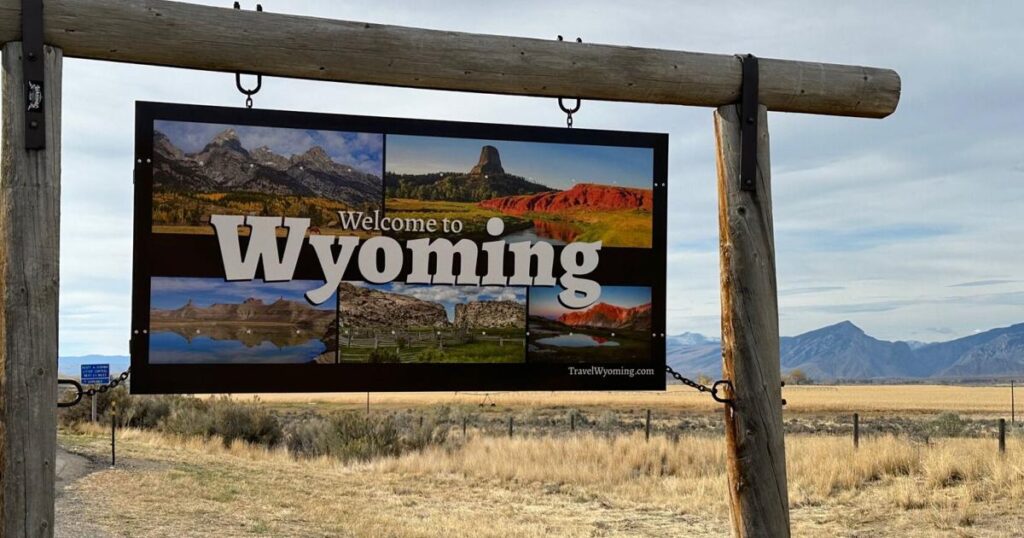
Wyoming is a tax haven for truckers—there is no state corporate income tax, and registration fees are low. This makes it a popular state for establishing a trucking authority.
However, operating here means respecting the wind. The Wyoming Department of Transportation (WYDOT) enforces strict "Weight-Based Wind Closures" on I-80 and I-25. If you ignore a wind closure and your truck blows over, you face not only a fine (up to $750) but potentially a denied insurance claim if your policy excludes "illegal acts" or willful negligence.
In Wyoming, the average commercial truck insurance premium typically lands between $5,500 and $10,500 per year. This guide breaks down exactly what you need to pay to keep your trucks legal in the Cowboy State.
Key Takeaways: Wyoming Truck Insurance Costs
- The Price Tag: Expect to pay around $8,800 annually for a Semi-Truck. Wyoming is a Tier 4 (Lowest Cost) state.
- The Wind Risk: I-80 between Cheyenne and Laramie sees wind gusts over 70 mph. "Blow-overs" are frequent. Ensure your Physical Damage deductible is affordable, as this is your biggest risk.
- Intrastate Rules: General freight is deregulated. You typically do not need to file Form E for standard trucking, just carry proof of insurance (100/300/50 limits).
- Livestock: Hauling cattle is big business here. You need "Cargo Debris Removal" coverage. If a cattle pot tips over, the cost to clean up the scene can exceed $10,000, which standard policies often miss.
Real Numbers: Estimated Costs by Truck Type
Let's look at the hard data. The following estimates represent the average annual cost for Auto Liability ($1M Limit) for a driver with a clean record in Wyoming. Rates are incredibly competitive, often 30-40% lower than coastal states.
| Vehicle Type | Limit $300,000* | Limit $750,000 | Limit $1,000,000 (Standard) |
|---|---|---|---|
| Hotshot | $4,800 | $6,200 | $7,500 |
| Box Truck | $4,200 | $5,500 | $6,800 |
| Dump Truck | $5,500 | $7,800 | $9,500 |
| Semi Truck | $6,800 | $8,500 | $10,200 |
| Livestock Hauler | $7,500 | $9,800 | $11,800 |
Last updated: December 15, 2025.
Logrock Reality Check: While rates are low, Towing & Recovery costs in Wyoming are high. If you slide off I-80 in a blizzard, the recovery bill can easily hit $15,000 - $25,000. Verify your policy has a high limit for "Towing and Storage" or "Non-Consensual Towing".
Liability Limits: Intrastate vs. Interstate
Wyoming rules change depending on whether you cross state lines. We have broken this down into two tables to make it clear.
Table 1: Intrastate Requirements (WYDOT / Regulatory Program)
For trucks that never leave Wyoming (e.g., Casper to Gillette).
| Vehicle Weight / Type | Minimum Liability Limit | Filing Required? |
|---|---|---|
| Freight (General) | $100k/$300k/$50k* | No (Proof in Cab) |
| Freight > 26,001 lbs | $750,000 CSL (Industry Std) | No (Proof in Cab) |
| Household Goods (Movers) | $300k $750k + Cargo | Yes (Form E+H) |
| Passenger (16+ seats) | $5,000,000 CSL | Yes (Form E) |
| Hazmat | $1,000,000-$5,000,000 | Yes (Form E) |
Note: "CSL" means Combined Single Limit.
Critical: Wyoming state law sets a minimum of $100,000/$300,000/$50,000 for intrastate property carriers. However, for vehicles > 10,000 lbs, federal safety adoption generally pushes this to $750,000 CSL for practical compliance. General freight carriers do NOT need to file Form E with the state; only regulated carriers (Movers/Passengers) do.
Table 2: Interstate Requirements (FMCSA / Federal)
For trucks that cross state lines (e.g., Cheyenne, WY to Denver, CO).
| Vehicle Weight / Type | Minimum Liability Limit | Filing Required? |
|---|---|---|
| Freight < 10,000 lbs | $300,000 CSL | No (Unless Hazmat) |
| Freight > 10,001 lbs | $750,000 CSL | Yes (BMC-91X) |
| Hazmat (Gas/Oil/Explosives) | $1,000,000-$5,000,000 | Yes (MCS-90) |
| Passenger (16+ seats) | $5,000,000 CSL | Yes (BMC-91X) |
Wyoming Requirements & Critical Filings
To operate legally, your insurance agent must understand the difference between regulated and unregulated freight.
- Intrastate Authority: Most general freight (hauling hay, gravel, equipment) is exempt from obtaining a "Certificate" from WYDOT. You just need a USDOT number and insurance ID card.
- Form E: Only required for Regulated Carriers (Intrastate Movers, Passengers, Towing). If you haul general freight, you save money by not paying for this filing.
- Letter of Authority: If you are a regulated carrier, you must display your name and authority number on the power unit.
- Weight-Based Wind Closures: This is not a filing, but a law. WYDOT restricts light trailers when winds exceed 50+ mph. Your driver must obey these signs. Ignoring them can be considered "Reckless Driving," potentially voiding insurance coverage for a resulting accident.
Your Questions Answered: "People Also Ask" FAQs
Yes. Wyoming adopts federal regulations. All commercial vehicles over 10,001 lbs GVW need a USDOT number.
It depends. If you crash, the insurer will cover the damages unless they can prove you violated the law or acted with "willful negligence." However, if you are towed out of a closed road, the police will fine you heavily, and your insurance may not cover the tow bill if it wasn't an accident.
No. Standard cargo covers "dead freight" (boxes). Live animals require Livestock Mortality (covering death of the animal) and Carcass Removal endorsements. Without these, you are paying out of pocket for a very messy accident.
The Logrock Difference: We Respect the Wind
Wyoming trucking is about survival in harsh elements. We don't just sell you a policy; we check your Towing limits and Wind coverage. At Logrock, we ensure you aren't paying for filings you don't need (like Form E for a hay hauler). We help you set up a policy that protects your equipment when the wind gusts hit 80 mph on Elk Mountain.
Conclusion & Get Your Wyoming Quote
Wyoming is a great place to base a trucking company, provided you are prepared for the winter. Ready to get a solid number for your business? Contact Logrock today for a customized, no-obligation quote and keep your wheels turning.



