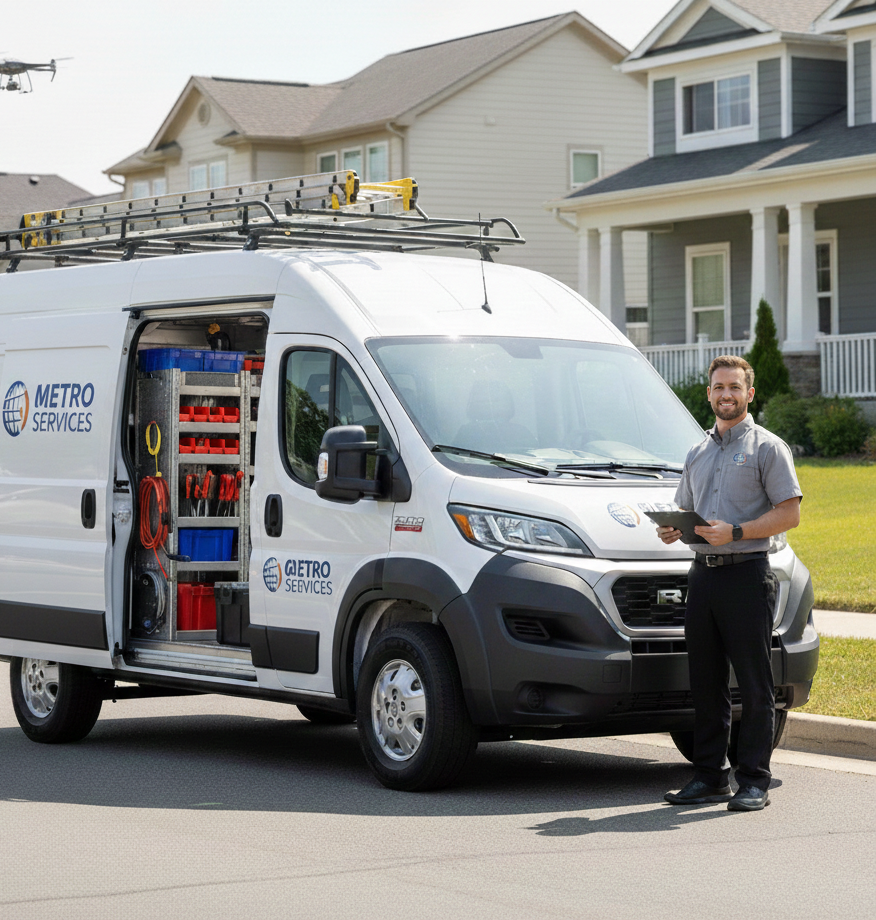
Learn what a work van is, what qualifies legally, and how trucking insurance works for work vans so you avoid coverage gaps. Get your Logrock quote.

Commercial truck insurance for a work van starts with a simple question: what is a work van? A work van is a van used primarily for business—hauling tools, parts, or freight to earn income—and it’s often upfitted with shelving, partitions, or ladder racks. Those details matter because your GVWR, your operation (service vs delivery vs for-hire), and what you carry can change your price, your compliance requirements, and whether a claim gets paid.
One wreck, one stolen tool loadout, or one “wrong policy” can wipe out a month of profit. This guide breaks down what counts as a work van (plain English + legal context), the main types, and the insurance/compliance pieces that hit cash flow the hardest—plus when to step up from commercial auto to commercial truck insurance.
Key Takeaways: Essential Work Van Basics
- A “work van” is about use, not the badge: If it’s primarily used to make money (service calls, deliveries, hauling freight/tools), treat it like a commercial asset.
- Weight and usage drive rules and cost: 10,001+ lbs GVWR, interstate operation, and “for-hire” work can trigger DOT compliance and different insurance needs.
- The biggest risk is a coverage gap: Personal auto policies often exclude business use—commercial coverage is how you keep one claim from sinking your business.
- Upfits matter: Shelving, ladders, generators, and toolboxes may need to be scheduled or covered correctly—don’t assume they’re “included.”
Table of Contents
Reading time: 8 minutes
- What Is a Work Van (Plain English)?
- What Qualifies as a Work Van? (Legal + Practical)
- Types of Work Vans (Real-World Examples)
- Work Van vs Work Truck vs Box Truck
- Do Work Vans Need DOT, ELD, IFTA, or IRP?
- Work Van Insurance: What Coverages Actually Protect You
- Your Questions Answered: “People Also Ask” FAQs
- The Logrock Difference: Insurance Built for Business Owners
- Conclusion & Get a Quote Without Guesswork
What Is a Work Van (Plain English)?
A work van is any van used primarily for business operations—service calls, deliveries, transporting tools/materials, or hauling freight—and it’s commonly upfitted with shelving, partitions, ladder racks, or bulkheads. If the van is part of how you get paid, it should be insured like a commercial asset, not a personal vehicle.
If you’re shopping coverage, start by matching the policy to how you actually operate; that’s the fastest way to avoid “we don’t cover that use” issues at claim time. If you need a policy designed around business hauling and contract requirements, see commercial truck insurance.
Why the definition matters (money, claims, and contracts)
- Claims: If your policy class is wrong (personal vs commercial, “artisan” vs “for-hire”), a carrier can deny or limit a claim based on exclusions and misclassification.
- Brokers/clients: Many commercial customers require a COI (certificate of insurance) showing specific limits and wording before you can start work.
- Compliance: Some vans stay light-duty and simple, while others cross into commercial motor vehicle (CMV) territory fast depending on GVWR and operation.
What Qualifies as a Work Van? (Legal + Practical)
There is no single universal “work van” definition across all agencies and insurers, because regulators focus on vehicle design/weight while insurers focus on business use and risk class. In practice, “work van” is a use-based label, and your underwriter will care about your body type, GVWR, radius, and whether you haul for-hire.
1) It’s a van by body style (cargo/passenger/cutaway/step)
In federal vehicle classification rules, “van” is defined as a vehicle type (more about design than business use). One reference commonly cited is 49 CFR 523.2 on Cornell Law School’s site: https://www.law.cornell.edu/cfr/text/49/523.2.
2) It’s used primarily for business (the insurance trigger)
Insurance underwriting typically classifies work vans by how the vehicle earns money, not just what it looks like.
- Artisan/service: plumber, HVAC, electrician, mobile mechanic
- Delivery/courier: packages, medical supplies, parts runs
- For-hire freight: expedited “Sprinter” work, last-mile contracts, hot loads
If you haul freight for money, you’re often in trucking insurance territory—not just basic commercial auto—because cargo responsibility and contract requirements change the risk.
3) It’s set up to work (upfits and permanently mounted equipment)
Upfits are a big clue (and a frequent claim dispute) because they add value and create theft exposure.
- Shelving and bins
- Bulkhead/partition
- Ladder racks
- Refrigeration units (reefer-style setups for vans)
- Inverters, generators, compressors
- Tool storage systems
Claims reality: Tools and upfits often need their own coverage bucket (equipment coverage, inland marine, or scheduled items). Don’t assume your “vehicle value” automatically includes every dollar you bolted into it.
Types of Work Vans (Real-World Examples)
Work vans typically fall into five common categories—cargo, passenger-converted, cutaway, step van, and compact vans—and each one is priced differently due to payload, miles, stop-and-go exposure, and theft risk. Knowing your type helps you describe the vehicle correctly to your agent and avoid misclassification.
1) Cargo van (standard or high-roof)
- What it is: Closed-body van designed to haul cargo (often no rear seats).
- Why it’s popular: Secure, weatherproof, easy to organize for tools/parts or local deliveries.
- Who uses it: trades, couriers, low-volume freight, mobile services.
- Business note: High-roof vans can improve productivity, but replacement cost and upfit value can push premiums higher.
2) Passenger van used for work (converted)
- What it is: Passenger van repurposed for business (seats removed, interior converted).
- Risk: If the title/registration says passenger but the use is commercial, make sure the policy matches the use to prevent claim issues.
- Who uses it: church/school transport, event teams, shuttle-type operations, and some contractors.
3) Cutaway van (box or specialty body)
- What it is: Van front-end with a separate rear body (box, utility, refrigerated).
- Why it matters: Often higher GVWR and more “commercial” in the insurer’s eyes.
- Who uses it: catering, linen service, rental fleets, mobile clinics.
4) Step van (walk-in delivery van)
- What it is: Walk-through delivery-style van designed for frequent stops.
- Who uses it: parcel delivery contractors, bakery/food routes, uniform service.
- Cost reality: Stop-and-go operations tend to increase collision frequency and wear on brakes/tires.
5) Mini cargo van / compact work van
- What it is: Smaller cargo vans optimized for tight city routes.
- Who uses it: urban delivery, parts runs, technicians with lighter tool loads.
- Trade-off: Lower fuel spend, but it’s easier to outgrow payload and run overloaded (a liability risk, not just a DOT issue).
Work Van vs Work Truck vs Box Truck (What’s the difference?)
A practical distinction is that “van” describes body style, “work truck” is often tied to weight/class in law, and “work van” is a use-based term that insurers rate and underwrite. This matters because the same driver can face different compliance rules and insurance requirements depending on which platform they operate.
| Term | What it usually means | Common examples | Why it matters for insurance/compliance |
|---|---|---|---|
| Work van | A van used for business (service/delivery/for-hire) | Transit, Sprinter, ProMaster | Use type drives underwriting and exclusions |
| Work truck | Often defined by weight/class in law (varies by context) | Heavy pickups, medium-duty trucks | Weight drives DOT rules; definitions vary by statute/regulation |
| Box truck | Cab + cargo box (straight truck) | 14’–26′ box trucks | More likely CMV rules, higher limits, and cargo requirements |
Practical takeaway: If you’re running a van like a small trucking operation—dispatch, deadhead miles, strict delivery windows—set it up like trucking from day one with trucking insurance, not a “close enough” policy.
Do Work Vans Need DOT, ELD, IFTA, or IRP?
FMCSA typically treats a vehicle as a commercial motor vehicle for many federal rules when it operates in interstate commerce and has a 10,001+ lbs GVWR/GCWR (including vehicle + trailer), which can trigger DOT registration and safety compliance. The hard part is that a van can “feel” like a car while still meeting CMV thresholds on paper.
1) DOT number (often starts at 10,001 lbs GVWR)
If you operate interstate and your vehicle (or vehicle + trailer) is 10,001+ lbs GVWR/GCWR, you may need a DOT number and be subject to safety rules, inspections, and related compliance. Always confirm based on your operation, since enforcement and applicability depend on how and where you run.
2) ELD and HOS (depends on operation and exemptions)
If you’re operating as a CMV and not exempt (short-haul and other exceptions exist), hours-of-service (HOS) rules can apply, and ELD requirements may apply depending on the rule set and your operation. Many van operators run local and qualify for exemptions, but guessing can cost you an out-of-service day during a roadside inspection.
3) IFTA and IRP (usually about weight and axles)
IFTA and IRP are commonly triggered by higher weight and multi-jurisdiction operation, and many jurisdictions use thresholds around 26,001+ lbs and/or 3+ axles (verify with your base state). If you’re close to the line, one equipment change—like adding a trailer or upgrading to a heavier van—can flip your requirements quickly.
- IFTA: Often applies at 26,001+ lbs GVWR/GCWR or 3+ axles (jurisdiction rules vary; verify).
- IRP: Apportioned plates are typically tied to similar thresholds for interstate operations.
Work Van Insurance: What Coverages Actually Protect You
Work van insurance typically starts with commercial auto liability and expands to physical damage, tools/upfits, and cargo based on your operation, contracts, and whether you haul for-hire. The goal isn’t “cheap coverage”; the goal is avoiding business-ending surprises when a claim happens.

1) Commercial auto liability (the non-negotiable)
- What it is: Coverage for bodily injury and property damage you cause to others.
- Why it’s essential: Injury crashes can reach six figures fast, especially with medical treatment and attorney involvement.
- Who needs it: Any van used for business.
- Veteran advice: If you touch brokered freight or contract work, ask for required limits before you sign—many clients require higher limits than “basic.”
2) Physical damage (comprehensive + collision)
- What it is: Pays to repair/replace your van after collision, theft, vandalism, hail, or animal strike.
- Business risk: No van = no revenue, and rentals aren’t always available in your spec (high-roof, upfit, refrigeration).
- Pro tip: Make sure the stated value reflects your build, or add endorsements for equipment/upfits when needed.
3) Tools, equipment, and upfits coverage (where many policies fall short)
Tools and permanently installed equipment may require separate coverage (often inland marine or scheduled equipment) because they’re not always fully included in the “vehicle value.” A stolen tool loadout can easily be a $5,000–$25,000 hit you didn’t budget for this week.
4) Cargo / inland marine (if you haul other people’s property)
- What it is: Coverage for the freight you’re responsible for while in transit.
- Who needs it: couriers, expedited operators, last-mile contractors, medical delivery, contract freight.
- Reality check: Cargo claims don’t care that you’re “just a van”—this is where semi truck insurance concepts (limits, exclusions, claims handling) overlap with van operations.
5) Hired & non-owned auto (HNOA)
Hired and non-owned auto coverage helps protect your business if you rent/borrow a vehicle during downtime or if employees use personal vehicles for work errands. This is a common fix for “we thought their insurance would cover it” losses.
6) When does a work van need trucking insurance (not just commercial auto)?
You generally need trucking insurance when you haul for-hire freight, operate under motor carrier authority (yours or someone else’s), need trucking-style COIs/filings, or run interstate regularly with commercial loads. If you’re in expedited or contract-driven work, your van operation can resemble the contract-and-cargo exposures seen in hotshot insurance more than a local service van.
Stop guessing: A quick review of your GVWR, operating radius, cargo type, and contracts is often the difference between “priced right” and “denied for the wrong use.”
Your Questions Answered: “People Also Ask” FAQs
A van qualifies as a work van when it is primarily used for business—for example, carrying tools, equipment, parts, or freight to generate income. Insurers rate this based on use (artisan/service, delivery/courier, or for-hire freight), not just the make and model, because use affects pricing, exclusions, and claim eligibility.
Commercial upfits like shelving, ladder racks, and partitions are strong signals that you need a commercial policy, and operating patterns like interstate routes or heavier GVWR can add compliance requirements. When you haul for money, consider coverage structured like trucking insurance to avoid gaps.
Legally, “work van” is not a single universal term, because many laws define vehicle type (like “van”) and commercial motor vehicle status separately based on design and weight. Federal vehicle classification rules include definitions for vans in regulations such as 49 CFR 523.2, while FMCSA compliance commonly hinges on whether you operate interstate and meet thresholds like 10,001+ lbs GVWR/GCWR for CMV-related requirements.
In plain terms, the law cares less about a “work van” label and more about what the vehicle is, how heavy it is, and where/how it operates.
A van is a body style (enclosed cargo or passenger design), while a work truck is typically a pickup or truck platform used for commercial work and is often discussed in terms of weight class in legal and regulatory contexts. A “work van” is simply a van used to do paid work, and that use is what drives most insurance underwriting decisions.
When choosing between them, focus on payload, how secure your equipment needs to be (enclosed vs open bed), and how your insurer classifies your operation. If you haul freight for-hire, your policy may need to look like commercial truck insurance rather than basic commercial auto.
Affordable trucking insurance for a work van comes from correct classification (service vs delivery vs for-hire), clean driving/claims history, and matching limits to your actual contracts so you don’t overbuy—or underinsure. The biggest pricing factors are your MVR, garaging ZIP, operating radius, cargo type, liability limits, deductibles, and whether you haul for-hire.
To control cost without creating a claim problem, choose deductibles you can truly afford, document basic safety processes, and avoid misclassifying business use as personal to “save money.” If you haul freight, review how cargo and limits are structured in semi truck insurance, because similar concepts often apply even on smaller equipment.
The Logrock Difference: Insurance Built for Business Owners
Logrock focuses on operators who think in cash flow, downtime, and contract requirements, and that means aligning coverage with real-world use—not just the VIN and a generic “business use” checkbox. Whether you run one service van or multiple delivery routes, the basics stay the same: classify it right, cover what’s actually at risk, and keep paperwork moving.
- Correct classification: service vs delivery vs for-hire
- Protection beyond the van: tools, upfits, and cargo exposures
- Speed where it counts: COIs and policy docs handled fast so you can keep rolling
If you want coverage aligned with operations, start with commercial truck insurance and build from there.
Conclusion: Get a Quote Without Guesswork
A work van is a van used to earn income, and once it’s a business asset, the smart move is insuring it like one with the right classification, limits, and coverage for tools, cargo, and upfits. If you’re near compliance thresholds (like 10,001+ lbs GVWR/GCWR interstate) or doing for-hire work, the “van” label won’t protect you from DOT rules or claim exclusions.
Key Takeaways:
- The “work van” label is mainly about business use, and use drives insurance underwriting.
- GVWR + interstate + for-hire can push you into DOT compliance and trucking-style coverage.
- The most expensive mistake is a coverage gap (wrong policy type or missing tools/cargo/upfit coverage).
If you want to protect your income without overpaying, get a quote built around how you actually operate.
Related Reading: Commercial Truck Insurance, Trucking Insurance, and Hotshot Insurance.