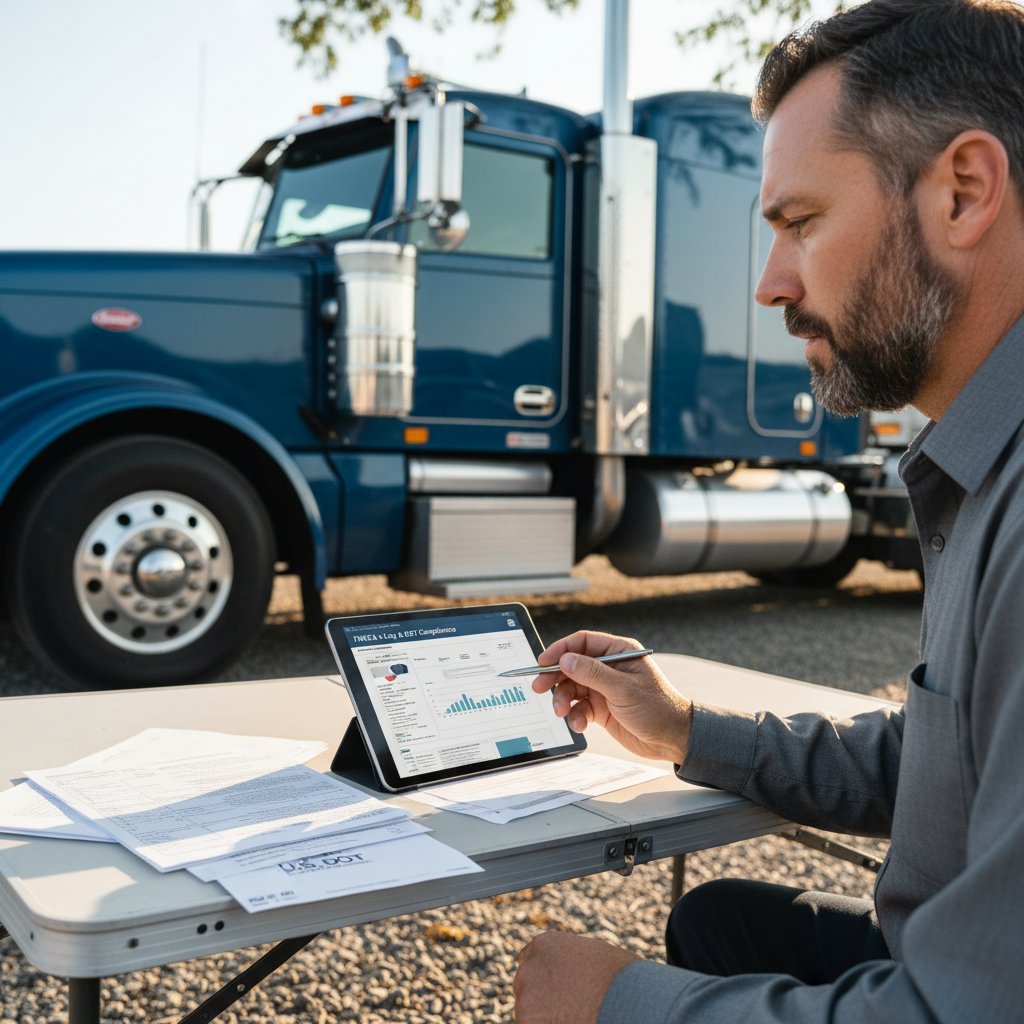
Need trucking insurance and a reliable used 26-foot box truck? Compare marketplaces, dealers, and rental fleet sales—then get the right coverage. Get a Logrock quote.
A good place to buy a used 26-foot box truck is anywhere you can verify maintenance history, complete a real inspection, and bind commercial truck insurance quickly—most often through major marketplaces (TruckPaper/MyLittleSalesman), reputable commercial dealers, and rental fleet resale programs (Penske/Ryder). The “best” channel depends on your budget, timeline, and how much repair risk you can absorb.
For an owner-operator, this isn’t a hobby purchase—it’s a cash-flow decision. One hidden transmission issue, a rotten box floor, or the wrong GVWR sticker can mean downtime, missed loads, and delays when you need proof of insurance. If you want a clean baseline before you shop, start with Commercial Truck Insurance Basics.
Key Takeaways: Essential Used 26-Foot Box Truck Buying Rules
- Buy where the paper trail exists: Rental fleet sales and established commercial dealers usually have better maintenance history, which lowers mechanical and insurance friction.
- Price is only half the number: Budget for Day 1 fixes (tires, brakes, liftgate service) plus your insurance down payment.
- GVWR decides your CDL path: Many 26-foot box trucks are spec’d at 25,999–26,000 GVWR, but you must confirm the door sticker.
- Set up insurance before you sign: Lenders and shippers often require COIs, lienholder listings, and correct radius/usage before you can roll.
Table of Contents
Reading time: 9 minutes
- The Best Places to Buy a Used 26-Foot Box Truck (Ranked)
- Online Marketplaces: Fast Inventory, Higher Screening Required
- Dealers vs Private Sellers vs Auctions (Quick Comparison)
- Rental Fleet Resale: Where the “Known History” Trucks Come From
- What You Should Pay in 2026 (Realistic Price Ranges)
- CDL, DOT, IFTA/IRP: The Rules That Can Blindside You
- Inspection Checklist: The Stuff That Actually Breaks Your Profit
- How Commercial Truck Insurance Impacts the Deal (and Your CPM)
- Frequently Asked Questions
- The Logrock Difference: Insurance Built for Business Owners
- Conclusion & Get a Quote That Matches How You Actually Run
The Best Places to Buy a Used 26-Foot Box Truck (Ranked) (and avoid commercial truck insurance surprises)
In 2026, the lowest-risk places to buy a used 26-foot box truck are rental fleet resale programs, established commercial truck dealers, and vetted listings on national marketplaces because they’re most likely to provide a clean title and VIN-traceable service history.
If you want the shortest path to a reliable truck, rank your shopping like this:
- Rental fleet resale (Penske/Ryder-type channels): Often higher miles, but scheduled maintenance is more common.
- Reputable commercial truck dealers: Financing options, faster paperwork, and occasional warranties.
- Major online marketplaces (national inventory): Big selection, but you must verify details.
- Auctions (GovDeals/Ritchie Bros type): Can be a steal, but assume “as-is.”
- Private sellers (Facebook/Craigslist): Sometimes the best price, often the least documentation.
If you’re buying to run loads immediately, prioritize documentation + inspectability over “cheap.” Cheap turns expensive fast when the truck is down.
Online Marketplaces: Fast Inventory, Higher Screening Required
Online marketplaces let you compare dozens of trucks in minutes by mileage, engine, liftgate, and GVWR, but listings frequently lack full maintenance records and can hide condition issues behind curated photos.
Use listings as a lead list, then verify the facts before you spend real time traveling or negotiating.
Marketplace comparison (what to use each site for)
| Platform | Best For | Pros | Watch-Outs |
|---|---|---|---|
| TruckPaper | Nationwide commercial inventory | Huge selection; dealer-heavy listings | Some listings are lead-gen quality—confirm specs and history |
| MyLittleSalesman | Filters + regional inventory | Strong search filters; lots of box trucks | Listing detail varies; ask for maintenance proof |
| CommercialTruckTrader | Mixed dealer/private inventory | Broad inventory; easy browsing | Condition varies widely; verify GVWR and powertrain |
| Facebook Marketplace | Local private deals | Sometimes the lowest price | Title issues, scams, unknown history—higher cash risk |
| Craigslist | Hyper-local finds | Motivated sellers exist | Inconsistent listings; inspect everything |
| Auction sites (GovDeals, etc.) | Municipal/fleet sell-offs | Sometimes clean units | As-is terms; limited test drives; unknown idle time |
Cash-flow protection tip: Don’t “decide” based on the ad. Decide after you have (1) the VIN, (2) maintenance records, (3) a photo of the door-sticker GVWR, and (4) an in-person inspection + test drive.
Dealers vs Private Sellers vs Auctions (Quick Comparison)
Buying from a dealer, private seller, or auction changes your risk level because documentation, recourse, and inspection access are usually strongest at dealers and weakest at auctions.
| Channel | Best When… | Upside | Downside |
|---|---|---|---|
| Commercial dealer | You need it running soon | Smoother paperwork; possible warranty; financing options | Higher price; still must inspect |
| Private seller | You know trucks or have a mechanic | Lowest price potential | Least documentation; title/lien surprises |
| Auctions | You can absorb repairs and downtime | Discounts can be significant | As-is; limited recourse; transport costs |
If you’re a one-truck operation (or adding your second unit), auctions can be brutal because downtime hits harder when you don’t have a backup truck.
Rental Fleet Resale: Where the “Known History” Trucks Come From
Rental fleet resale programs typically maintain trucks on scheduled intervals and can often produce service documentation, which reduces your chances of buying a 26-footer that immediately needs major repairs.
Rental fleets are popular for 26-foot box trucks because they often have standardized specs, predictable upfits (box, roll-up door, sometimes liftgate), and maintenance processes that are easier to audit.
What to expect (pros and tradeoffs)
- Upside: More consistent maintenance patterns and parts availability.
- Tradeoff: Higher miles and idle time are common, and cosmetic damage happens.
Questions to ask before you travel for a look
- Service records: oil change intervals, brake work, coolant and transmission service history.
- Accidents/repairs: any reported collisions, box repairs, or liftgate replacements.
- Tires: tread depth and DOT date codes (age matters as much as tread).
- Liftgate: service history and any hydraulic leaks (if equipped).
Why this matters for commercial truck insurance: a clear paper trail and a clearly described operation (local vs regional, cargo type, garaging ZIP) reduces underwriting back-and-forth when you need coverage bound fast.
What You Should Pay in 2026 (Realistic Price Ranges)
In 2026, most used 26-foot box trucks sell in a wide band—roughly $25,000 to $90,000+—based on engine, mileage, rust exposure, maintenance history, and options like a liftgate.
Pricing swings hard on diesel vs gas, prior fleet maintenance, and whether the truck is spec’d to stay under the common CDL threshold.
Typical used 26-foot box truck pricing in 2026 (ballpark)
| Condition / Profile | Common Use Case | Price Range |
|---|---|---|
| High miles, fleet-maintained, cosmetic wear | Local delivery / entry-level | $25,000–$40,000 |
| Mid miles, decent history, ready-to-work | Most owner-operators | $40,000–$65,000 |
| Lower miles, clean, newer box/body, liftgate | Time-sensitive operations | $65,000–$90,000+ |
Budget reality: even a “ready” truck often needs $2,000–$8,000 in Day 1 items (tires, brakes, fluids, DOT fixes, liftgate service, alignment). If your cash is tight, this is the difference between rolling next week or sitting.
CDL, DOT, IFTA/IRP: The Rules That Can Blindside You
In the U.S., CDL requirements are triggered by weight ratings—typically 26,001+ lbs GVWR/GCWR—and not by the truck’s length, which is why you must verify the door-sticker GVWR on any 26-foot box truck.
A 26-footer sounds simple until weight rules, registration, and compliance show up after you’ve already bought the truck.
1) Do you need a CDL for a 26-foot box truck?
- Plain-English rule: If the truck’s GVWR is 26,001+ lbs, it typically pushes you into CDL territory (often Class B, depending on configuration and state).
- Business risk: Buying the wrong spec can force a CDL plan you didn’t budget for.
- What to do: Verify GVWR on the door sticker, not the listing description.
2) DOT authority, MC, and “am I for-hire?”
If you’re hauling for pay across state lines (and in some intrastate scenarios depending on state rules), you may need a USDOT number and operating authority, plus items like UCR and BOC-3. Your operation may also trigger insurance filings depending on authority type and contracts.
3) IFTA/IRP: when they show up
IFTA and IRP requirements depend on vehicle weight ratings and multi-jurisdiction operations, so confirm your setup before you scale beyond local routes. Getting weight and registration wrong can lead to fines, delays, and avoidable downtime.
Inspection Checklist: The Stuff That Actually Breaks Your Profit
A professional pre-purchase inspection is one of the highest-ROI moves you can make because a single major repair (transmission, fuel system, liftgate) can erase months of profit on a one-truck operation.
If you’re not a mechanic, bring one; the inspection fee is small compared to buying a problem.
1) Engine + transmission (profit killers)
- Check for blow-by, oil leaks, and coolant condition.
- Test shifting quality under load, not just empty.
- Review idle hours if available; high idle can hide wear.
- Scan for active codes and derate conditions.
2) Brakes, tires, suspension (DOT + downtime)
- Brake lining thickness, air leaks, brake chamber condition.
- Tire age (DOT date codes) and uneven wear (alignment/suspension clues).
- Springs, bushings, steering play, and front-end looseness.
3) Box, roll-up door, and liftgate (where box trucks get expensive)
- Look for water intrusion, soft floor spots, wall delamination.
- Inspect door tracks, cables, and springs; a bad roll-up door burns time daily.
- Cycle-test the liftgate under load and check for leaks/slow operation (if equipped).
4) Rust and frame condition (especially salt states)
Surface rust is manageable, but structural corrosion can be a deal-breaker; if you’re shopping rust-belt units, price the risk or walk.
5) Paperwork you must verify
- Clean title: confirm no liens or surprises.
- VIN match: VIN on the truck matches the title exactly.
- Service history: partial records beat “trust me.”
- Odometer disclosure: where applicable.
How Commercial Truck Insurance Impacts the Deal (and Your CPM)
Commercial truck insurance cost and requirements can change a “good deal” into a bad one because lenders, brokers, and shippers commonly require $1,000,000 auto liability plus specific COIs and lienholder details before dispatch.
This is where many first-time box truck owners get squeezed: they buy the truck, then find out insurance pricing (or coverage requirements) doesn’t fit the numbers.
1) What trucking insurance you typically need for a 26-foot box truck
At minimum, most for-hire operations carry:
- Auto Liability: many brokers/shippers require $1M.
- Physical Damage: often required if financed; also protects your asset if you can’t self-insure.
- Cargo Insurance: limits depend on commodity (general freight vs higher-value goods).
Depending on your contracts and operation, you may also need General Liability, Hired/Non-Owned Auto, and Workers’ Comp or Occupational Accident (state- and setup-dependent).
2) What affects affordable trucking insurance pricing
Underwriters price risk using operational facts like garaging ZIP, operating radius, cargo type, loss history, driver history, and vehicle value/deductibles.
Business-minded move: get a quote using the exact VIN and your real operation (radius and commodities) before you sign papers, then use that number to validate your CPM. For practical tactics, see How to Lower Your Trucking Insurance Costs.
3) Buying a box truck vs hotshot vs semi: insurance reality check
- Hotshot: can be cheaper or more expensive depending on trailer, radius, and commodity.
- Semi: different exposure (tractor-trailer), often different contract expectations.
- Box truck: premiums can still spike if documentation is weak or the operation looks high-risk.
Practical rule: If you can’t explain your operation in one sentence (cargo, radius, garaging ZIP, who you haul for), you’ll usually lose time in underwriting and delay binding.
VIN-based quotes • COIs for shippers/warehouses • Coverage that matches your real operation
Frequently Asked Questions
You can buy used box trucks most reliably from commercial truck dealers, national marketplaces (like TruckPaper and MyLittleSalesman), and rental fleet resale programs because those channels are most likely to provide a clean title and service documentation. Use marketplaces to find inventory fast, then prioritize sellers who can share the VIN, maintenance records, and a photo of the door-sticker GVWR before you travel. If you buy private-party, protect yourself with a paid pre-purchase inspection and title/lien verification before any funds move.
You don’t always need a CDL for a 26-foot box truck because CDL requirements are based on GVWR/GCWR, and the common threshold is 26,001+ lbs, not vehicle length. Many 26-footers are spec’d at 25,999–26,000 GVWR to stay below that line, but you must verify the door sticker because listings can be wrong. If the sticker shows 26,001+ GVWR (or a qualifying combination weight), you’re typically in CDL territory (often Class B), and your compliance plan changes.
In 2026, a used 26-foot box truck commonly sells for $25,000 to $90,000+, with many owner-operators finding the best balance around $40,000–$65,000 depending on mileage, maintenance records, rust exposure, and options like a liftgate. The purchase price isn’t the whole cost, so plan an additional $2,000–$8,000 for Day 1 repairs and service items (tires, brakes, fluids, DOT fixes). You should also budget your insurance down payment so the truck doesn’t sit while you scramble for coverage.
If you need uptime and predictable paperwork, a commercial dealer is often worth the premium because titling, financing, and documentation are usually smoother than private-party deals. Private sellers can be cheaper, but they typically have less maintenance history and higher title/lien risk, so you should require a paid inspection and verify the VIN and title before paying. Auctions can be the lowest upfront price, but they’re commonly “as-is,” which increases downtime risk for a one-truck business.
Rental companies typically sell used box trucks through their own resale programs, partner channels, and dealer networks, and these units often come with more consistent service schedules than random private listings. Expect higher mileage and cosmetic wear, but focus on the items that drive downtime: transmission behavior under load, brakes/tires, liftgate function, and box integrity (floor and door). Before you buy, ask for service records and confirm the door-sticker GVWR, then align coverage and cargo needs—especially if you’ll carry higher-value freight (see Cargo Insurance Explained for Owner-Operators).
The Logrock Difference: Insurance Built for Business Owners
Logrock structures trucking insurance around operational facts—radius, commodities, garaging ZIP, contracts, and vehicle value—so the policy you bind matches how you actually run in the real world.
That means fewer last-minute scrambles for COIs, fewer avoidable coverage gaps, and fewer surprises when you add another unit or change lanes (local to regional, different commodity, new contract requirements).
Conclusion: Buy the Truck You Can Verify, Inspect, and Insure
The best place to buy a used 26-foot box truck is any channel where you can verify history, inspect confidently, and insure correctly—because uptime is the whole game.
Key Takeaways:
- Prioritize sellers with maintenance records and a clean title (fleet resale and reputable dealers first).
- Verify GVWR on the door sticker before negotiating to avoid CDL and compliance surprises.
- Quote commercial truck insurance with the VIN before you buy so your CPM stays real.
If you want to move fast, line up coverage first—then buy the truck that fits the operation you’re actually running.
Related reading: Commercial Truck Insurance Basics, How to Lower Your Trucking Insurance Costs, and Cargo Insurance Explained for Owner-Operators.