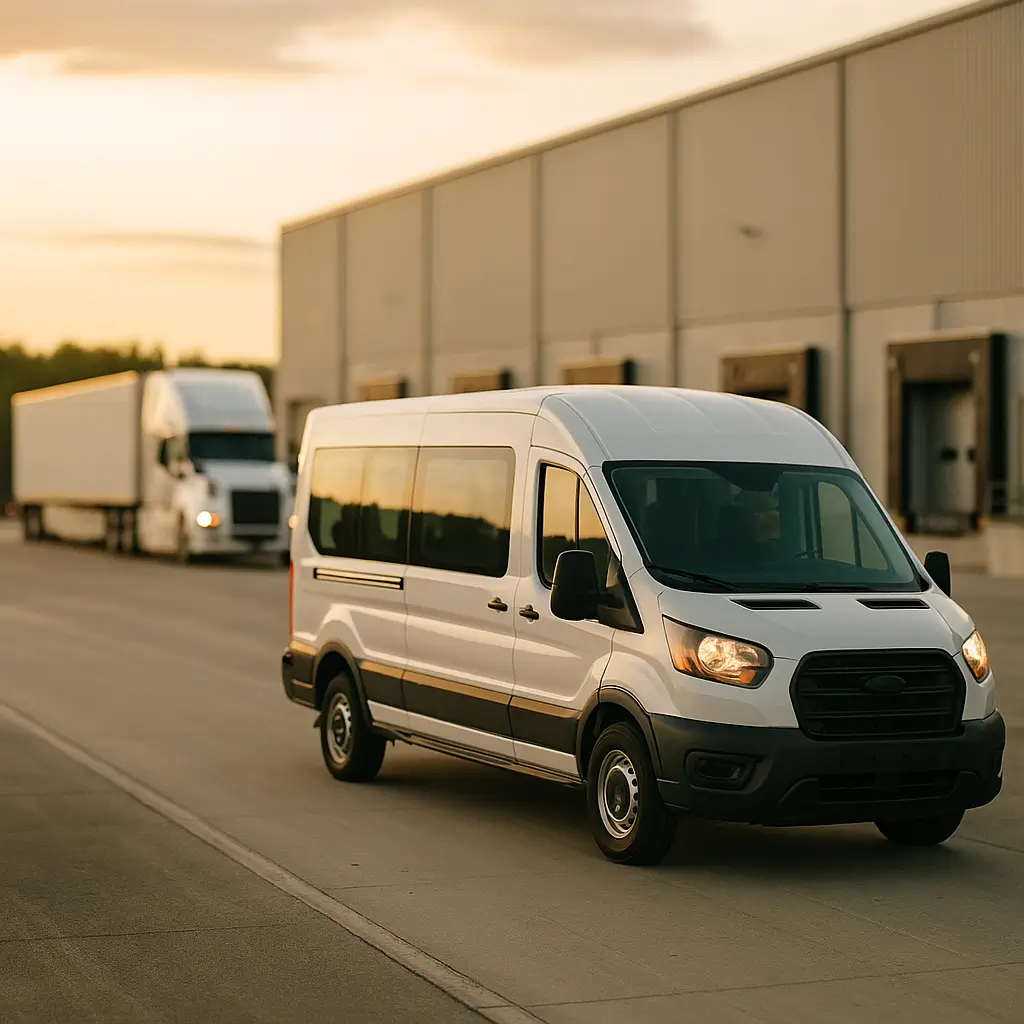
15 passenger van insurance in 2026: learn requirements, FMCSA vs state minimums, rental vs owned coverage, costs, and how to insure older vans.

15 passenger van insurance requirements start with your state’s minimum auto liability, but the right coverage depends on use (personal, organizational, or for-hire) and can jump to federally referenced limits like $1.5 million for 9–15 passengers when FMCSA passenger-carrier rules apply to interstate for-hire operations. The safest way to buy this policy is to match the policy form (personal vs commercial), set limits that fit multi-injury exposure, and verify rental coverage before you pick up keys.
If you’re hauling 10–15 people, one fender-bender can turn into a multi-claim loss fast. Most coverage failures aren’t about price—they’re about being on the wrong policy type, carrying limits that don’t match the exposure, or assuming a rental counter product “covers everything.”
Key Takeaways: Essential 15 Passenger Van Insurance
- It’s not just the van—it’s the use. Personal, church/nonprofit, business shuttle, and for-hire passenger work get underwritten very differently.
- State minimums are the legal floor. With 15 seats, a serious injury loss can blow through minimum limits fast.
- Rentals are a coverage trap. Personal policies and credit cards often exclude high-capacity vans; confirm coverage before pickup.
- Driver controls lower pain. MVR checks, training, maintenance logs, and telematics/dash cams can improve eligibility and pricing.
Table of Contents
Reading time: 9 minutes
- Quick Checklist: Personal vs Commercial vs Rental Coverage
- Federal (FMCSA) Insurance Minimums for 15-Passenger Vans
- State Minimums vs Real-World Requirements
- What Coverage Is Typically Included?
- Renting a 15-Passenger Van: What’s Covered (and What Often Isn’t)
- Personal vs Commercial 15 Passenger Van Insurance (By Use Case)
- How Much Does 15 Passenger Van Insurance Cost in 2026?
- Why 15-Passenger Vans Are Harder to Insure
- Can Older 15-Passenger Vans Be Insured?
- Why Logrock: Practical Coverage Built for Real-World Operations
- Frequently Asked Questions
- Conclusion: Get the Right Quote
Quick Checklist: Do You Need Personal, Commercial, or Rental Coverage?
A 15-passenger van can require personal auto, commercial auto, or rental counter coverage depending on ownership, who’s driving, and whether transportation involves business activity or compensation.
Usually personal auto insurance fits if…
- Van is used for family/personal transportation only
- No business use, no “paid” transport, and no donations tied to rides
- You’re not running scheduled routes or transporting the public
- Title/registration/garaging are straightforward and match the policy
Usually commercial auto insurance is needed if…
- The van is owned by a church, nonprofit, school, camp, daycare, or business
- Drivers are employees or volunteers driving on behalf of the organization
- You charge a fee (or have any form of compensation tied to transport)
- You’re doing shuttle service (hotel, airport, events) or regular routes
- You have contracts requiring Certificates of Insurance (COIs), additional insured, or specific limits
Rental coverage may be necessary if…
- Your policy excludes 15-passenger vans or limits coverage by passenger count/class
- You need damage protection for the rental (LDW/CDW) and/or supplemental liability (SLI)
- Multiple drivers will rotate in and out during the trip (more exposure and more chances to miscommunicate coverage)
Not sure which policy form you need? Share your use-case (who owns it, who drives, where it runs, and whether money changes hands) and set it up correctly before a claim exposes an exclusion.
Federal (FMCSA) Insurance Minimums for 15-Passenger Vans (When They Apply)
FMCSA financial responsibility rules generally apply when a business transports passengers for-hire in interstate commerce, and passenger-carrier minimums are commonly cited as $1.5M for 9–15 passengers and $5M for 16+ passengers depending on the operation, as set out in 49 CFR § 387.33.
For a fuller breakdown of how federal minimums stack against state requirements, see Commercial Truck Insurance Requirements (FMCSA + State Minimums). Those figures are typically structured as a combined single limit truck insurance rather than split limits.
FMCSA rules don’t trigger just because a van has 15 seats. The question is how you operate: crossing state lines, for compensation, and fitting federal definitions for passenger carriage.
What it is (plain English)
If you’re transporting passengers across state lines for compensation, you may be treated like a passenger carrier—not “just a van owner.”
Why it’s essential (the business risk)
- Operational shutdown risk: If federal compliance applies and you don’t meet it, you can face out-of-service orders and contract loss.
- Coverage gap risk: Passenger claims are high severity; limits that feel “big” on a normal car can be small when 12–15 people are involved.
Who typically needs FMCSA-aligned coverage
- For-hire shuttle operators crossing state lines
- Certain charter/group transport businesses operating interstate
- Any operation advised by counsel/agent that it falls under FMCSA passenger-carrier requirements
Practical note: Those $1.5M / $5M numbers are commonly referenced, but applicability depends on your exact operation. Confirm with a licensed agent who understands passenger transport and your routes.
State Minimums vs Real-World Requirements (Contracts, Venues, and Liability Exposure)
State auto liability minimums are designed as a legal baseline for typical vehicles, while many group transportation contracts require $1,000,000 auto liability (or higher) plus specific COI endorsements.
State minimum liability: the legal floor
Every state sets a minimum liability requirement, and those limits can be low compared to the injury exposure of a 15-seat vehicle.
Before setting your target limit, check your state minimum through your state Department of Insurance or DMV financial-responsibility page.
One serious crash can create multiple bodily injury claims, long-tail medical costs, and attorneys stacking claims against the organization, driver, and vehicle owner.
Contractual requirements: what you’ll actually be asked to carry
If you work with schools, municipalities, camps, venues, or event planners, you’ll commonly see:
- $1,000,000 auto liability (sometimes higher)
- Additional Insured and Waiver of Subrogation
- Proof of coverage delivered as a Certificate of Insurance (COI) before the trip
- Sometimes an umbrella/excess layer above auto
A simple workflow to set your limit target
- Start with your state minimum (legal requirement)
- Identify if use is commercial/organizational/for-hire
- Set a target limit based on passenger exposure and contract demands
- Confirm endorsements needed for COI compliance
Mini-template (copy/paste)
- State minimum liability: ______
- Contract required liability: ______
- Our target liability: ______
- Physical damage needed? (loan/lease/value): Yes / No
- Hired & non-owned needed? (volunteers/rentals): Yes / No
What Coverage Is Typically Included in 15 Passenger Van Insurance?
A well-built 15 passenger van insurance program typically includes liability, physical damage (comp/collision), and often UM/UIM, Med Pay/PIP, Hired & Non-Owned Auto (HNOA), and an umbrella/excess layer based on contracts and passenger exposure.
If you are comparing capacities, our 12 Passenger Van Insurance guide covers the smaller-van version of this same decision.
| Coverage | What it protects | Who needs it most |
|---|---|---|
| Liability (BI/PD) | Injuries/property damage you cause | Everyone |
| Comprehensive/Collision | Damage to the van (theft, weather, crash) | Owners with financed vans / higher-value vans |
| Med Pay / PIP | Medical costs for occupants (varies by state) | Group trips, frequent passenger transport |
| UM/UIM | If you’re hit by a driver with low/no insurance | Any operation carrying passengers |
| Hired & Non-Owned Auto (HNOA) | Organization’s liability if volunteers/employees drive personal/rented vehicles | Churches, nonprofits, camps, schools, businesses |
| Umbrella/Excess Liability | Extra liability limits above auto | High-exposure passenger transport |
1) Liability (bodily injury & property damage)
Liability pays for injuries and damage to others when your driver is at fault, and it’s the first coverage tested in a multi-passenger crash.
Not sure exactly what liability insurance does and does not pay for? This quick explainer breaks it down.
- Why it matters: With 15 seats, injuries stack quickly, and minimum limits can be exhausted fast.
- Tip: If you need COIs, align limits to contract language first, then shop carriers.
2) Physical damage (comprehensive & collision)
Comprehensive and collision cover the van itself (minus deductible), and lenders typically require it on financed vehicles.
- Why it matters: A total loss can wipe out an asset and disrupt your schedule overnight.
- Who should prioritize it: Anyone who can’t replace the van quickly out of pocket.
3) Hired & Non-Owned Auto (HNOA)
HNOA helps protect the organization if a volunteer uses a personal car, or if you rent or borrow vehicles for organizational work.
- Why it matters: Even when a driver has personal insurance, lawsuits often name the organization.
- Common miss: Assuming a volunteer’s personal policy fully protects the entity.
4) Umbrella/excess liability
Umbrella/excess provides additional liability limits above your auto policy when passenger injury exposure or contracts make standard limits feel thin.
- Why it matters: It’s the lever you pull when 15-occupant severity doesn’t match standard auto limits.
- Common trigger: Venue, school, municipal, or corporate contract requirements.
Renting a 15-Passenger Van: What’s Covered (and What Often Isn’t)
Rental coverage for a 15-passenger van often breaks down into liability (who pays for injuries/damage you cause) and physical damage (who pays for the rental van), and exclusions for large passenger vans are common in personal and credit-card coverage.
1) Your personal auto policy
- Some personal policies exclude or restrict high-capacity vans.
- “Full coverage” doesn’t automatically mean it extends to a 15-passenger rental.
- Business use, volunteer driving, or any compensation can push you out of personal coverage eligibility.
2) Credit card coverage
- Often limited to physical damage only (not liability)
- Often excludes large passenger vans, commercial use, or certain rental classes
- Usually requires strict steps (decline CDW, pay with the card, authorized renter, etc.)
3) Rental counter products (LDW/CDW, SLI)
For a deeper explanation of how HNOA and rental coverage interact, see Commercial Car Rental Insurance: Coverage, Costs & HNOA Explained. See our guide on commercial vehicle rental insurance for a full comparison of what rental products cover.
- LDW/CDW: Waives or limits your responsibility for damage to the rental vehicle.
- SLI: Adds liability limits, which can help if your underlying limits are low or unclear.
Before you pick up the keys: Confirm in writing whether your liability and physical damage coverage extend to that exact rental class (15-passenger). Don’t discover an exclusion after an accident.
Personal vs Commercial 15 Passenger Van Insurance (By Use Case)
Personal vs commercial 15 passenger van insurance is mainly decided by ownership (individual vs organization), business purpose, and whether transportation involves compensation, scheduled routes, or contract-driven COI requirements.
This is where people burn money or get denied: they buy “a policy” instead of buying the right policy form for the operation.
If your use case falls on the commercial side, see our dedicated guide to commercial passenger van insurance for coverage and cost specifics.
| Use case | Typical right fit | Common must-haves |
|---|---|---|
| Large family/personal use only | Personal (if carrier allows) | Higher liability limits, UM/UIM |
| Church/nonprofit trips | Commercial | HNOA, higher limits, umbrella, driver controls |
| School/camp/daycare transport | Commercial (often specialized) | Higher limits, strict driver screening, possible endorsements |
| Hotel/airport shuttle | Commercial | Higher limits, scheduled operation rating, strong safety program |
| For-hire interstate passenger transport | Commercial + compliance | Limits aligned to FMCSA where applicable, required filings as needed |
Pro tip (rate + eligibility): define the operation clearly
Insurers like clarity because it reduces surprises at claim time. Define these up front:
- Who drives: named drivers vs open driving
- How often it runs: occasional trips vs daily routes
- Radius: local vs multi-state
- Money: fees, charter, or donations tied to rides
Ambiguity creates underwriting friction, and that usually means higher premium or a declination.

How Much Does 15 Passenger Van Insurance Cost in 2026?
15 passenger van insurance cost in 2026 is usually driven by liability limit, passenger frequency, driver records, mileage/radius, and whether the operation is personal, organizational, or for-hire, with planning ranges often spanning $1,500 to $25,000+ per year.
Pricing varies by state, drivers, use, loss history, and carrier appetite for passenger risk, but these ranges help with budgeting.
For a closer look at real premium examples across use cases, see our full breakdown of 15 Passenger Van Insurance Cost.
Typical annual cost ranges (guidance only)
- Personal-use owned van: ~$1,500–$4,500/year
- Organizational/commercial (non-for-hire): ~$3,500–$10,000/year
- For-hire shuttle/transport: ~$8,000–$25,000+/year (often driven by higher limits + exposure)
The biggest cost drivers (what moves the needle)
- Liability limit (minimum vs $1M vs higher + umbrella)
- Passenger exposure (frequency, routes, who rides)
- Driver profile (age, MVR, experience with high-capacity vehicles)
- Radius and mileage (local loops vs highway vs multi-state)
- Vehicle age/value (condition, parts availability, physical damage eligibility)
- Claims history
- Safety controls (training, written policies, telematics/dash cams, maintenance logs)
Quote it with the limits your contract actually requires. The cheapest policy is worthless if it doesn’t satisfy the COI or denies the claim due to use or vehicle class.
Why 15-Passenger Vans Are Harder to Insure (Rollover Risk, Underwriting, Safety Controls)
Insurers often treat 15-passenger vans as higher-severity exposures because a single crash can produce 10–15 injury claims, and vehicle handling changes as load increases (center of gravity, braking distance, and sensitivity to sudden steering).
What insurers worry about
- Severity: more passengers per crash can mean more injuries and larger settlements.
- Handling when loaded: higher center of gravity and longer stopping distance.
- Volunteer/infrequent drivers: drivers who don’t operate it often may misjudge braking and turns.
- Maintenance variability: tires, brakes, and loading discipline matter a lot.
Safety steps that can improve eligibility and pricing
These are practical controls that underwriters respect because they reduce claim frequency and improve claim defensibility:
- Driver qualification: MVR checks, minimum age/experience rules, documented training
- Seatbelt enforcement: written policy + trip leader accountability
- Loading rules: avoid overloading; keep heavy gear low and forward; minimize roof cargo
- Tires and inspections: pressure checks before trips and documented maintenance intervals
- Telematics/dash cams: helpful for claims defense and behavior coaching
- Route planning: realistic buffers so drivers don’t rush
Can Older 15-Passenger Vans Be Insured? (What Carriers Commonly Require)
Older 15-passenger vans can often be insured, but carriers commonly tighten underwriting with inspections, maintenance documentation, higher deductibles, or limits on physical damage coverage based on age and condition.
What it is (plain English)
Older van usually means more uncertainty: higher chance of mechanical failure, harder parts sourcing, and less predictable physical damage values.
Why it’s essential (the business risk)
If you rely on that van to move people, a coverage restriction or a claim issue can force you to pay out of pocket, cancel trips, or refund deposits.
Who can still get coverage more easily
Older vans are typically more insurable when you can show:
- Documented maintenance (brakes, tires, fluids, inspections)
- Limited, experienced driver list (not “any volunteer with a license”)
- Clear use (non-for-hire is often easier than for-hire)
- Garaging/security details
Quick decision framework
If the premium jumps and coverage gets restrictive, compare:
- Annual premium + expected repairs
- vs
- Payment on a newer van + improved eligibility
Why Logrock: Practical Coverage Built for Real-World Operations
A passenger-transport insurance setup should function like a business tool by matching the correct policy form, using contract-ready limits, and supporting COIs and endorsements that third parties require before a trip.
- Correct policy form for your use (personal vs commercial vs for-hire)
- Limits that won’t collapse under a serious multi-injury incident
- Documentation support for COIs and additional insured requests
- A clear driver and safety plan underwriters can approve
A clean setup today prevents the expensive surprise later.
Frequently Asked Questions
At minimum, a 15-passenger van must carry your state’s required auto liability insurance, but that’s only the legal floor. If the van is used for passenger transport tied to an organization (church, school, business) or a contract requires it, you may need higher limits like $1,000,000 and specific COI endorsements. If you transport passengers for-hire across state lines, FMCSA passenger-carrier rules may apply and are commonly referenced at $1.5M for 9–15 passengers (depending on the operation). Many real-world setups also include physical damage if financed and UM/UIM to protect passengers when another driver is underinsured.
Sometimes, but you can’t assume personal auto insurance or credit-card benefits cover a 15-passenger rental van because many policies exclude large passenger vans or restrict business/organizational use. You need to confirm two items for that exact rental class: (1) liability coverage and (2) physical damage coverage (collision/comp). Credit cards commonly cover physical damage only and may exclude large vans entirely. If there’s any doubt, rental counter options like SLI (liability) and LDW/CDW (damage waiver) can close gaps, especially when multiple drivers rotate during a trip.
Yes—states set minimum auto liability limits for vehicles registered and operating in that state, and those minimums vary widely. Federal passenger-carrier minimums may apply when you transport passengers for-hire in interstate commerce under FMCSA rules, and those are commonly cited as $1.5M for 9–15 passengers and $5M for 16+ passengers depending on the operation. Separately, contracts with schools, municipalities, venues, and event planners often require $1,000,000 auto liability (or higher) plus endorsements like Additional Insured and Waiver of Subrogation on the COI. See 49 CFR § 387.33 for the federal passenger-carrier minimums.
They’re often underwritten as higher severity because one crash can involve 10–15 injured passengers, creating multiple bodily injury claims from a single event. Handling also changes when the van is loaded, including longer stopping distance and more sensitivity to speed and sudden steering. Volunteer or infrequent drivers can add risk because they may not be used to the van’s braking and turning dynamics. The best fix is operational: MVR screening, documented training, seatbelt enforcement, loading rules, tire/maintenance logs, and (when appropriate) telematics or dash cams for coaching and claims defense.
Often yes, but expect tighter underwriting, especially on physical damage coverage. Carriers may require inspections, maintenance documentation (tires, brakes, fluids, and service intervals), higher deductibles, or restrictions based on vehicle age and condition. Older vans are usually easier to place when the driver list is limited and experienced, the operation is clearly non-for-hire, and garaging/security details are stable. If you’re being declined, reducing uncertainty—documenting maintenance and clarifying use—can improve eligibility more than shopping for a “cheaper” quote.
The best insurance for a 15-passenger van is the policy that matches your use-case (personal vs organizational vs for-hire), carries limits that fit multi-injury passenger exposure, and includes the endorsements your operation needs (often HNOA and sometimes umbrella/excess). Many organizations target $1,000,000 liability because contracts and venues commonly require it, even when state minimums are lower. When comparing quotes, keep limits, deductibles, and driver schedules identical, then review exclusions (vehicle class and use) and claims handling—not just premium.
Often yes—organizations commonly need Hired & Non-Owned Auto (HNOA) when volunteers or employees drive personal vehicles or rentals on the organization’s behalf. HNOA is designed to help protect the entity, because lawsuits often name the organization even when the driver carries personal auto insurance. It typically doesn’t replace the driver’s personal policy; it helps cover the organization’s liability after the driver’s insurance responds (exact structure depends on the policy). If your trips involve rentals, rotating drivers, or off-site events, HNOA is one of the most frequently missed coverages.
Usually no — FMCSA passenger-carrier financial responsibility rules are generally tied to for-hire, interstate operations involving compensation. A church or nonprofit running free shuttle trips typically is not captured the same way a paid charter service is, but compensation can be interpreted broadly, including donations tied to rides or cost-sharing. Confirm your exact facts with a licensed agent rather than assuming you are exempt. See 49 CFR § 387.33.
Passenger count matters for both FMCSA minimums and how commercial carriers underwrite the risk. In for-hire interstate operations, 16+ passengers can trigger the higher $5M reference figure. If your fleet mixes van sizes, tell your agent about all vehicles and seating configurations up front; a mismatch between what is declared and what is driven can create a coverage dispute after a claim.
Often yes for organizations carrying passengers regularly. An umbrella or excess policy adds liability limits above your auto policy and can be especially useful when a venue, school, or municipal contract requires limits higher than the base auto policy provides. It is worth pricing even if your current limit technically satisfies a contract, because a serious multi-injury claim can exceed a $1M base limit.
Yes. Most commercial policies allow multiple named drivers, but each additional driver typically needs the same MVR and eligibility screening as primary drivers. Open, unrestricted anyone-with-a-license setups are harder to place and more expensive; insurers generally price better when you provide a defined, vetted driver list rather than an open pool.
Often both, and they do different things. Additional Insured status extends your liability coverage to protect the venue or school if it is named in a claim arising from your operation. A Waiver of Subrogation prevents your insurer from later pursuing that same venue or school to recover costs it paid. Contracts frequently require both endorsements on the COI, so confirm the exact language rather than assuming one covers the other.
Conclusion: Get the Right 15 Passenger Van Insurance Quote
15 passenger van insurance isn’t a checkbox—it’s a risk decision with real consequences when multiple passengers are involved. Start by nailing the use-case (personal vs organizational vs for-hire), then align limits to passenger exposure and any contract requirements.
Finally, tighten driver controls and maintenance documentation to protect both pricing and eligibility.
Key Takeaways:
- Choose the right policy form first: price-shopping the wrong form wastes time and can create claim denials.
- Plan for higher liability exposure: minimum limits can be a trap with 15 occupants.
- Confirm rental coverage before pickup: exclusions for large passenger vans are common.
- Operational controls matter: drivers, seatbelts, tires, and maintenance improve underwriting outcomes.
If you are trying to figure out whether your 15-passenger van needs personal, commercial, or for-hire coverage — or whether your current limits would actually hold up after a multi-passenger claim — LogRock can help you review your operation, driver list, and contract requirements before you are locked into the wrong policy form. Talk to our team to confirm your FMCSA and COI obligations and request a quote based on how you actually operate.