
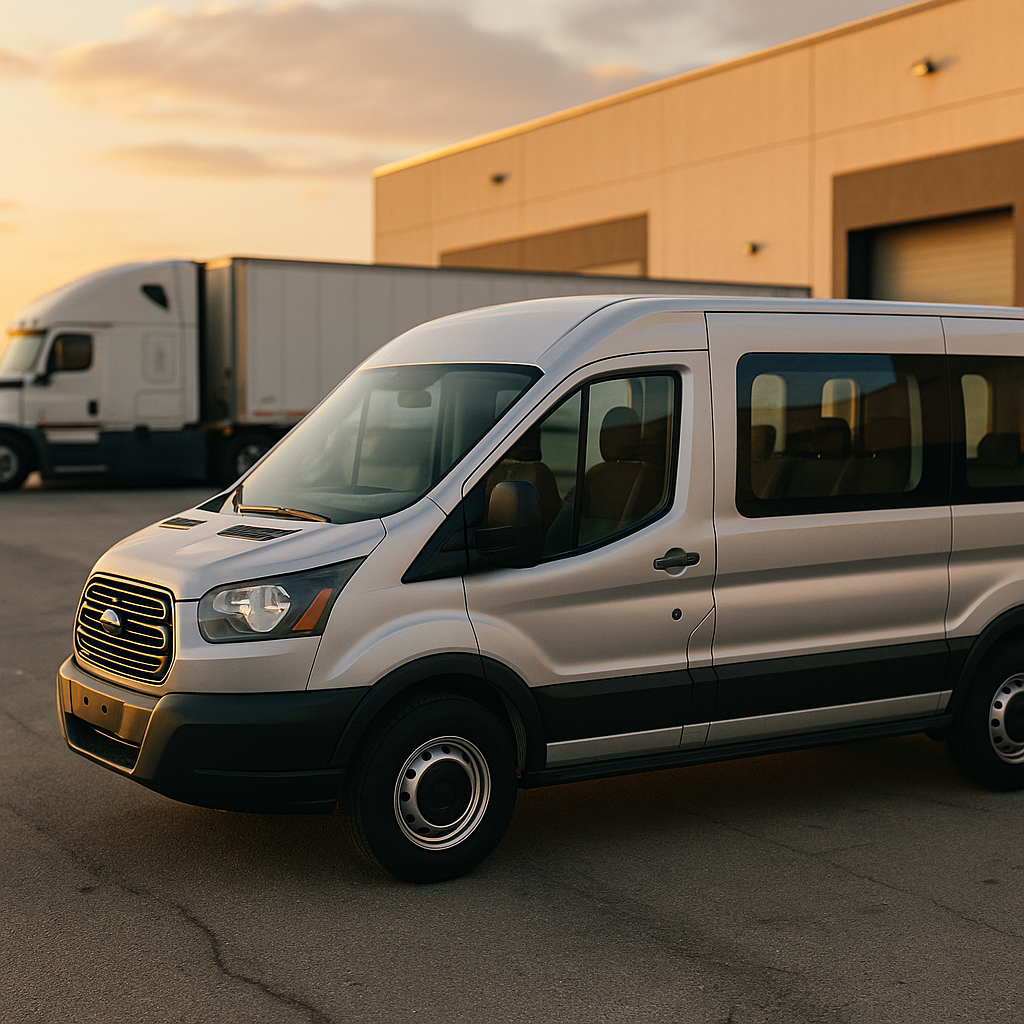
Affordable passenger van insurance in 2026 depends on seats, use (personal vs shuttle/livery), drivers, and limits. See real cost ranges and savings moves—get a quote.
Affordable passenger van insurance sounds simple—until the carrier asks how many seats you have, who drives, and whether anyone pays for the ride. In 2026, typical planning ranges are $100–$250/month for liability-only and $220–$450/month for full coverage for private, non-paid use, while commercial or livery (paid passengers) often runs $400–$1,500+/month depending on limits, drivers, and territory.
If your van is moving employees, kids, church groups, patients, or airport passengers, you’re not shopping like a normal family minivan anymore. Underwriting gets picky fast because passenger injury exposure is the whole ballgame—and the fastest way to “save” money is to insure it under the right use class so a claim doesn’t get denied.
Key Takeaways: Essential Affordable Passenger Van Insurance
- Your “use” decides the policy type: Paid passengers or scheduled routes often push you into commercial/livery—and a higher price bracket.
- Seats + drivers drive the premium: A 12–15 passenger van with multiple drivers is underwritten differently than an 8-seater with one named driver.
- Full coverage cost is mostly comp/collision: Vehicle value + deductible choices can swing the price quickly, especially if financed.
- The cheapest move is correct classification: Misstating usage can lead to a denied claim that costs far more than the premium difference.
Table of Contents
Reading time: 9 minutes
- Passenger Van Insurance Cost in 2026 (Liability vs Full Coverage)
- What Affects Passenger Van Insurance Rates the Most
- Personal vs Commercial (and Livery): How to Classify Your Passenger Van
- Best Companies for Affordable Passenger Van Insurance (How to Choose)
- How to Get Cheap Passenger Van Insurance (Discounts + Smart Coverage Choices)
- Why Rates Vary by State (and How to Shop Smart Where You Live)
- Real-World Quote Scenarios (What Changes the Price Fast)
- Your Questions Answered: “People Also Ask” FAQs
- Why Brokerage Shopping Wins (Even If You Hate Paperwork)
- Conclusion & Next Step: Get Quotes the Right Way
Passenger Van Insurance Cost in 2026 (Liability vs Full Coverage)
In 2026, passenger van insurance commonly budgets at $100–$250/month for liability-only and $220–$450/month for full coverage for private, non-paid use, while commercial and livery risks often land between $250–$1,500+/month depending on drivers, limits, and operating radius.
“Affordable” comes down to two things: your exposure (who you carry and how often) and how much of the van you’re insuring (liability-only vs adding comprehensive and collision).
Typical monthly price ranges (what “affordable” looks like)
These are typical national planning ranges for budgeting, not a promise; your garaging ZIP, drivers, limits, and usage can swing results hard.
| Policy Type | Typical “Affordable” Monthly Range (2026) | What’s Usually Driving It |
|---|---|---|
| Liability-only (private/non-paid use) | $100–$250/mo | Driver record, state minimums vs higher limits, seat count |
| Full coverage (private/non-paid use) | $220–$450/mo | Vehicle value, comp/collision deductibles, theft/weather risk |
| Commercial use (business transport; no paid fares) | $250–$900/mo | Driver roster, mileage/radius, business class, higher limits |
| Livery/shuttle (paid passenger transport) | $400–$1,500+/mo | Passenger-for-hire exposure, higher limits, stricter underwriting |
Why “full coverage” costs more
Full coverage usually means liability + comprehensive + collision, and comp/collision is often the biggest variable when the van is newer, financed, or parked in a high-theft area. If you’re choosing “cheap” by stripping comp/collision, make sure you can replace the van if it’s totaled or stolen.
What makes passenger vans pricier than other vans
- More injury exposure per trip: one at-fault crash can involve multiple bodily injury claims.
- Higher damage severity: heavier vehicles often mean higher repair and total-loss payouts.
- Frequent stop-and-go use: shuttles, daycare routes, and scheduled runs increase mileage and incident frequency.
What Affects Passenger Van Insurance Rates the Most
Passenger van premiums are primarily priced on seat count (8 vs 12–15), use class (personal, commercial, or passenger-for-hire), driver MVRs, operating radius/mileage, and garaging ZIP, with limits and deductibles acting as major secondary levers.
It isn’t mysterious. It’s a checklist—and the more you can tighten the risk profile (without “creative” answers), the more affordable gets.
Usage factors that matter specifically for passenger vans
Usage means who rides, how often, where you run, and whether money changes hands. It’s also the #1 reason a policy ends up misclassified.
- Seating capacity: 8 vs 12 vs 15 seats can change eligibility and pricing.
- Paid passengers: airport runs, tours, hotel shuttles, or rides booked through an app often trigger livery/passenger-for-hire rating.
- Passenger type: employees vs public; transporting kids/seniors can raise underwriting requirements.
- Radius + mileage: “within 25 miles of base” is often cheaper than long-radius or high-mileage operations.
- Garaging/parking: secure lot vs street parking in a high-theft area can materially change comp rates.
Practical tip: If you can truthfully cap radius and document it (dispatch policy, GPS logs, written routes), it’s often a cleaner savings lever than cutting coverage.
Driver, location, and claims history
Insurers typically rate passenger vans using each listed driver’s MVR, loss history, and continuity of coverage, and one serious violation can move you from “affordable” to “declined.”
- MVRs for each driver: tickets, at-fault accidents, DUI, and experience with larger vehicles matter.
- Claims history: frequency often hurts as much as severity.
- Prior insurance/lapses: a lapse commonly increases premium and narrows carrier options.
- Garaging ZIP/state: medical costs, litigation environment, weather losses, and theft rates vary widely.
Personal vs Commercial (and Livery): How to Classify Your Passenger Van
Insurers generally classify vans carrying passengers for pay as livery/passenger-for-hire, and many scheduled business or nonprofit operations require commercial auto even when riders don’t pay a fare.
This is where people get burned—not because they’re trying to cheat the system, but because they assume “a van is a van.” The policy form has to match the exposure.
A simple decision tree (use this before you shop)
- 1) Are you transporting passengers for pay? If yes, you’re likely in livery/shuttle.
- 2) Is the van used in a business or nonprofit operation (even if riders don’t pay)? If yes, you’re often in commercial auto territory (carrier/state dependent).
- 3) Is it truly personal/family use only? If yes, personal auto may be acceptable (with seat count disclosed).
When personal auto may be acceptable
Personal auto can fit when the van is used for private errands and trips with no paid transport, no scheduled routes, and no operational business use. Personal policies often cost less, but they may exclude business and passenger-for-hire exposures.
Real-world underwriting note: some carriers restrict 12–15 passenger vans to named drivers and may limit youthful or inexperienced drivers, even on personal policies.
When you likely need commercial auto or a livery/shuttle form
Commercial and livery forms are designed for business operations and higher passenger injury exposure, and they’re commonly required by contracts that ask for $1,000,000 liability limits or additional insured wording.
- Paid shuttle/airport runs, tours, hotel transport: passenger-for-hire is usually a separate class.
- Daycare/child transport programs: scheduled passenger transport tied to operations often needs commercial.
- Church/nonprofit scheduled transport: may be commercial-rated depending on how it’s run and who drives.
- Employee transport: business-related use often pushes you out of personal auto.
What insurers will ask you (have it ready)
- Driver roster: names and dates of birth
- Vehicle info: VIN and seating capacity
- Operations: annual mileage and operating radius
- Garaging: overnight parking location and security
- Passenger type: public vs employees/clients, and whether anyone pays
- Identifiers: DOT/MC numbers if applicable to your operation
Best Companies for Affordable Passenger Van Insurance (How to Choose)
No single insurer is “best” nationwide because eligibility for 12–15 passenger vans and passenger-for-hire use varies by carrier and state, and many shuttle contracts require $1,000,000 liability limits that some personal carriers won’t offer.
The best carrier is the one that (1) will write your exact usage, (2) prices it fairly, and (3) won’t play games at claim time.
What to compare (beyond price)
- Eligibility: will they insure your seat count and driver setup?
- Use acceptance: personal vs business vs passenger-for-hire
- Liability limits available: minimum limits can be false economy when you carry people
- Medical/PIP options: important in passenger injury situations (state-dependent)
- UM/UIM: protection when the at-fault driver has low limits
- Claims reputation + financial strength: you want predictable claims handling
Insurer comparison framework (use this template)
| Carrier / Program | Best For | Typically Competitive When… | Key Discount Angle | Watch-Out |
|---|---|---|---|---|
| Personal lines carrier | Private/family use | Named driver, clean MVR, lower mileage | Multi-policy, paid-in-full | Business use can be excluded |
| Standard commercial carrier | Business transport | Clear business class, manageable radius | Fleet/multi-vehicle | May decline passenger-for-hire |
| Specialty livery market | Shuttle/paid passengers | Clear ops, strong controls, higher limits | Safety tech/driver controls | Higher premium, stricter requirements |
Practical tip: If you’re anywhere near paid transport, don’t burn time forcing it into a personal policy. Shop the right market first.
How to Get Cheap Passenger Van Insurance (Discounts + Smart Coverage Choices)
Many passenger van operators can reduce premiums by 10–30% by tightening driver controls, choosing realistic deductibles, limiting radius (for example, 25 miles when true), and stacking discounts like paid-in-full and multi-vehicle.
“Cheap” is a strategy, not a carrier—and the best savings usually come from reducing uncertainty for underwriting.
1) Shop correctly: quotes must match your real usage
Get multiple quotes with the same limits, deductibles, listed drivers, and use. If one quote is cheaper because it’s “personal” while the others are “commercial,” you’re not comparing price—you’re comparing different risk classes.
2) Pick deductibles like a business owner (not like a gambler)
Higher comp/collision deductibles usually lower premium, but the deductible has to match your cash reserves. If you raise deductibles to save $60/month but can’t float a $2,500 repair next week, that’s not savings—it’s a cash-flow problem waiting to happen.
3) Tighten the driver roster
Fewer drivers and better drivers often beat almost any “coupon” discount because they reduce claim frequency.
- Run MVR checks before adding anyone
- Use named driver status when possible
- Require a basic orientation (one-page policy + checklist is enough)
4) Use safety tech that underwriters actually respect
Passenger claims get expensive fast, and evidence matters—especially when fault is disputed.
- Dash cams: front-facing, and cabin-facing where appropriate and legal
- Telematics/driver coaching: helps document safer driving behavior
- GPS tracking + geofencing: supports radius controls and reduces theft risk
- Maintenance logs: helpful for underwriting and claim defense
5) Ask for the discounts that fit passenger van operations
- Paid-in-full and/or EFT autopay
- Multi-vehicle or small fleet discounts
- Defensive driving or driver training (where accepted)
- Garaging/security: fenced lot, cameras, alarm/immobilizer
- Low-mileage (only if it’s true)
- Association/program discounts (where available)
Why Rates Vary by State (and How to Shop Smart Where You Live)
State rules and claim costs—such as liability minimums, no-fault/PIP requirements, medical inflation, theft, and litigation trends—can change passenger van premiums by hundreds of dollars per month between states or even between ZIP codes.
Two identical vans can price very differently simply because the insurer expects different claim frequency and severity in your territory.
State factors that change your price
- Liability minimums and what carriers consider “typical” limits in that state
- No-fault/PIP rules (where applicable)
- Litigation environment and jury verdict trends
- Theft/vandalism and severe weather (hail/flood)
- Urban density and crash frequency
Quick “state variation” mini-table (use as a shopper, not a promise)
| General Pattern | What It Usually Means |
|---|---|
| Lower-cost environments | Less claim severity, lower theft, less litigation |
| Mid-range | Average frequency/severity, moderate comp claims |
| Higher-cost environments | High medical costs, higher theft, heavy litigation, dense traffic |
Practical tip: If you operate in multiple states, rating usually follows garaging plus the primary operating territory. Be consistent and accurate.
Real-World Quote Scenarios (What Changes the Price Fast)
Switching from private use to paid shuttle, or adding multiple drivers, can move a van from roughly $100–$450/month into $400–$1,500+/month because the risk class and expected injury exposure change.
These examples are illustrative; your exact quote depends on state, drivers, limits, and claims history.
Scenario A: Private use, smaller seat count, clean drivers
- Van: 8–12 passenger, privately used
- Drivers: 1–2 named drivers, clean MVR
- Result: often lands in the lower end of the private-use ranges
Levers that helped: limited drivers, honest personal use, controlled mileage.
Scenario B: Church/daycare-style schedule, multiple volunteer drivers
- Van: 12–15 passenger
- Drivers: multiple drivers (volunteers/employees), mixed experience
- Result: often commercial-rated; full coverage can get expensive on newer vans
Levers that increased price: driver roster size, scheduled transport, passenger injury exposure.
Scenario C: Paid shuttle/airport runs (passenger-for-hire)
- Van: frequent trips, higher utilization
- Drivers: shift coverage, more mileage
- Result: typically the highest range; may require higher limits and a specialty market
Levers that increased price: paid passengers, high frequency, higher limits, stricter underwriting.
Your Questions Answered: “People Also Ask” FAQs
In 2026, passenger van insurance commonly costs $100–$250 per month for liability-only and $220–$450 per month for full coverage when the van is used privately and no one pays for rides. If the van is used commercially or to transport passengers for pay (shuttle/livery), many operators should budget $400–$1,500+ per month depending on liability limits, seat count, driver roster, operating radius, and claims history. The fastest way to get an accurate number is to quote with the correct use class and identical limits/deductibles across carriers.
The biggest passenger van pricing drivers are seating capacity (8 vs 12–15), use classification (personal vs commercial vs livery/passenger-for-hire), driver MVRs, and operating territory (state and garaging ZIP). After that, your liability limits and comp/collision deductibles do the heavy lifting on cost, especially on newer or financed vans. Claims history and insurance lapses also matter because they reduce carrier options and can trigger higher base rates.
You don’t always need commercial insurance for a 12- or 15-passenger van, but you typically do if it’s used for business or nonprofit operations, scheduled routes, or any regular transport of employees/clients. If the van is truly private family use with no business connection and no paid passengers, some carriers may accept it on a personal policy (with seat count and drivers disclosed). If anyone pays for rides, it is usually rated as livery/passenger-for-hire, and many contracts require $1,000,000 liability limits that push you into commercial markets.
You can keep passenger van insurance cheap without getting underinsured by quoting apples-to-apples (same use class, limits, deductibles, drivers), tightening the driver roster, and limiting radius/mileage when it’s truthful (for example, a documented 25-mile radius). Choose deductibles based on real cash reserves, not wishful thinking, and don’t chase minimum liability limits if you routinely carry passengers because a single multi-injury claim can exceed low limits quickly. Safety controls like dash cams and telematics can also improve underwriting outcomes in many programs.
Why Brokerage Shopping Wins (Even If You Hate Paperwork)
A broker process that collects your VIN, seat count, driver list, and exact use can generate 3–10 comparable quotes with matching limits and deductibles, which helps you find a lower price without creating a coverage mismatch.
Passenger vans get expensive when the policy doesn’t match the exposure. A good shopping process saves money by:
- Classifying the use correctly (personal vs commercial vs livery)
- Shopping the right markets instead of forcing the wrong carrier
- Building quotes with matching limits/deductibles so comparisons are real
- Helping avoid claim-denial landmines (the hidden cost)
If you’re running a tight operation, you don’t have time to redo quotes three times because someone checked the wrong box.
Conclusion & Next Step: Get Quotes the Right Way
Affordable passenger van insurance in 2026 is most achievable when your quotes match on the variables insurers price—use class, seat count, driver roster, mileage/radius, and liability limits—because changing any one of those can swing cost from $100–$450/month to $400–$1,500+/month.
Get those inputs right, and you’ll see real savings without gambling your business on a denial.
Key Takeaways:
- Classify the van correctly (personal vs commercial vs livery) before you shop.
- Control your driver roster and document safety controls (dash cam, GPS, basic driver policy).
- Use deductibles and limits that match real cash flow and real passenger injury risk.
If you want the fast path: gather your VIN, seat count, driver list, and how the van is actually used—and quote it correctly the first time.
Related Reading: Van insurance quotes (2026 guide), commercial van insurance (2026 guide), and commercial auto insurance basics.



