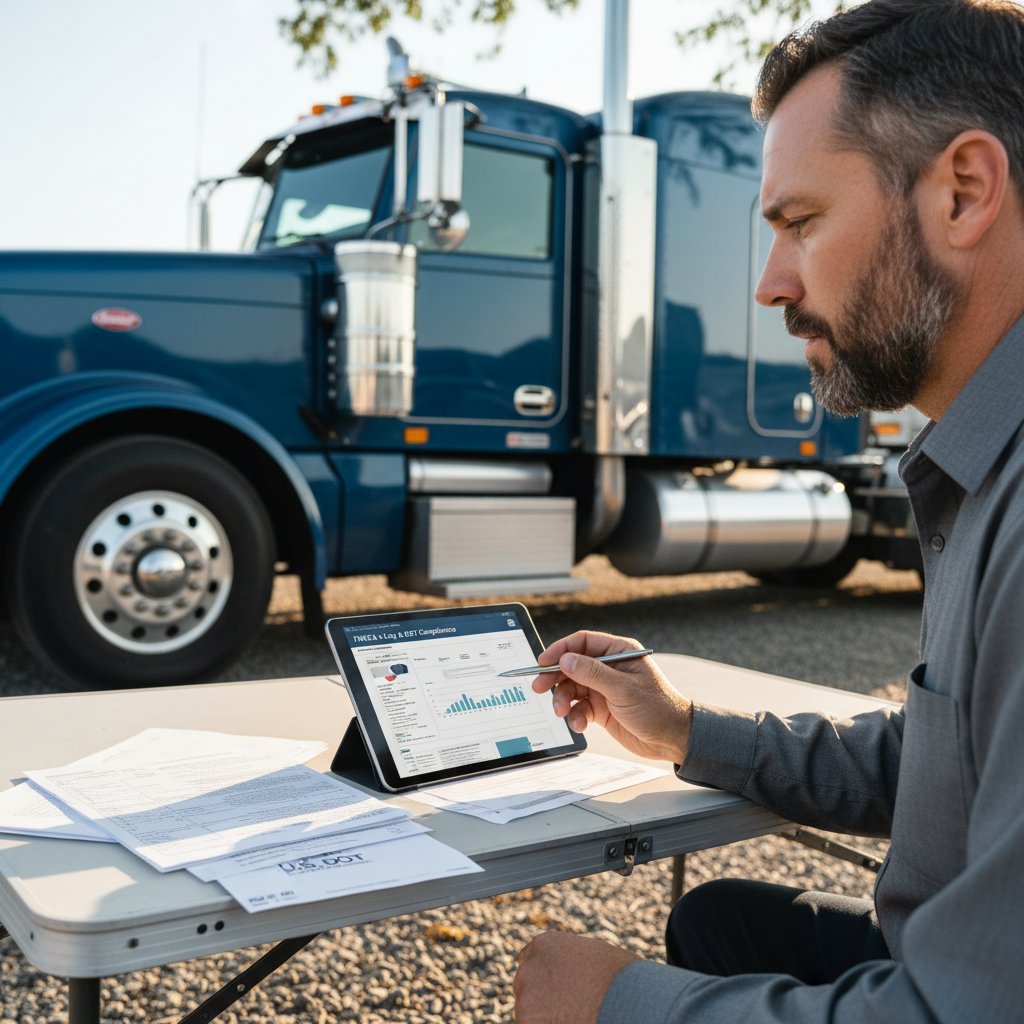
Affordable trucking insurance in 2026: real monthly costs, required coverages, and proven ways to lower premiums without risking your authority. Get a quote.
Affordable trucking insurance in 2026 usually means paying for the coverage you actually need (so brokers accept your COI) while cutting waste that doesn’t reduce risk. For many for-hire owner-operators, commercial truck insurance commonly lands around $750 to $2,500+ per month per truck depending on state, new venture status, cargo, mileage/radius, limits, deductibles, and loss history.
The cheapest quote can turn into the most expensive decision when a claim gets denied, a filing is wrong, or your limits don’t meet a rate confirmation. If you want a benchmark for “cheap vs correct,” start with cheapest commercial auto insurance (2026) and how to pay less and then compare your quotes apples-to-apples.
Key Takeaways: Essential Affordable Trucking Insurance Moves
- Cheap isn’t the same as profitable: The “lowest premium” can become the highest cost if a broker rejects your COI or a claim gets denied due to a gap.
- Your biggest pricing drivers are controllable: Mileage/radius, cargo type, new venture status, loss runs, MVR/PSP, and deductibles move rates fast.
- Match coverage to how you actually operate: Hotshot, semi truck, and local box-truck policies price differently because exposure is different.
- You can often save without cutting limits: Telematics, higher deductibles (cash-flow ready), pay-in-full, and clean submissions are the real playbook.
Table of Contents
Reading time: 9 minutes
- 2026 Cost Snapshot: What Commercial Truck Insurance Really Costs
- Why Trucking Insurance Rates Vary So Much (States, Lanes, and Compliance)
- Cost Ranges by Vehicle Type: Hotshot vs Semi Truck vs Box Truck
- What “Affordable” Coverage Should Still Include (The Non-Negotiables)
- 10 Practical Ways to Lower Your Trucking Insurance Premium
- Common “Cheap Insurance” Traps That Cost Owner-Operators Money
- Your Questions Answered: “People Also Ask” FAQs
- The Logrock Difference: Insurance Built for Owner-Operators
- Conclusion & CTA: Get an Apples-to-Apples Quote
2026 Cost Snapshot: What Commercial Truck Insurance Really Costs
In 2026, commercial truck insurance for many for-hire owner-operators typically costs about $750 to $2,500+ per month per truck, depending on authority age, state, cargo, limits, deductibles, equipment value, and loss history.
That range is wide because two quotes that look “similar” can be totally different on filings, endorsements, and deductibles. A state-minimum liability policy can advertise a very low price, but most interstate operations can’t run state minimums and still book decent freight consistently.
A reality check on “$300/month” trucking insurance
Yes, you’ll see ultra-low numbers (like “$293/month”) in ads, and they can be real for limited-use situations—often state minimum limits, short radius, or low-risk classes. But most owner-operators who want steady brokered freight end up needing:
- $1,000,000 Auto Liability (common broker/shipper requirement)
- Cargo (often $100,000+, sometimes higher by commodity)
- Physical Damage (especially if financed; usually smart even if not)
- Correct authority filings when applicable (BMC-91X/90 and the MCS-90 endorsement context)
If you want a deeper “cheap vs correct” comparison, review cheapest commercial auto insurance (2026) and how to pay less and use it as your apples-to-apples checklist.
Typical cost bands (quick reference)
| Operation profile | What “affordable” often looks like | Why it lands there |
|---|---|---|
| Local-only, light/medium duty, clean history | ~$600–$1,200/mo | Lower speed exposure + shorter radius |
| Hotshot (1-ton + trailer), interstate | ~$800–$1,800/mo | Higher mileage + equipment/theft risk |
| Semi truck insurance (power unit), interstate, $1M liability + cargo | ~$1,000–$2,500+/mo | Higher severity exposure + broker requirements |
| New venture (first 12 months) | +20% to +60% vs established | Underwriters price uncertainty hard |
Why Trucking Insurance Rates Vary So Much (States, Lanes, and Compliance)
FMCSA financial responsibility rules set a $750,000 federal liability minimum for many for-hire interstate carriers, but many brokers and shippers commonly require $1,000,000 auto liability and $100,000 cargo to tender loads.
Underwriters price trucking like a survival business: frequency + severity + legal environment. Two carriers with the same truck can get very different numbers based on where they run, what they haul, and what their driving and claims history looks like.
The big state-level drivers (what underwriters actually care about)
- Claim severity environment: Medical costs, litigation trends, and verdict sizes vary by state.
- Traffic density + lane risk: Metro-heavy routes raise claim frequency.
- Theft rates: Cargo theft and equipment theft can spike pricing fast.
- Enforcement intensity: Compliance patterns and out-of-service risk influence underwriting appetite.
Federal vs. broker reality (the compliance piece)
Even when you meet a legal minimum, you can still lose money if your COI doesn’t match the rate confirmation. If your contracts want $1M liability and $100k cargo and your policy is built below that, you don’t have affordable trucking insurance—you have lost revenue.
Cost Ranges by Vehicle Type: Hotshot vs Semi Truck vs Box Truck
In 2026, common monthly premium ranges are about $800–$1,800 for hotshot, $1,000–$2,500+ for interstate semi trucks, and $600–$1,600 for box trucks, with actual pricing driven by limits, cargo, radius, equipment value, and authority age.
Vehicle class changes the math because it changes replacement cost, typical speed/radius, cargo profile, and worst-case severity.
Hotshot insurance (1-ton/dually + trailer)
Common pricing range (2026): ~$800–$1,800/month (wide variance).
What pushes hotshot premiums up is usually a mix of new venture authority, long radius, higher equipment value (new dually + high-end trailer), and higher-theft or higher-value commodities.
If you’re running hotshot loads, build the policy around your real setup instead of force-fitting a generic commercial auto form. See hotshot insurance coverage basics and compare it to your rate confirmation requirements.
Semi truck insurance (tractor + trailer, interstate)
Common pricing range (2026): ~$1,000–$2,500+/month per power unit.
Pricing swings harder here because losses can be catastrophic. Violations, at-fault losses, high-mileage lanes, night driving concentration, and high-value freight (electronics, pharmaceuticals, alcohol, refrigerated loads) are common premium multipliers.
If you’re shopping, demand apples-to-apples: same limits, same deductibles, same cargo description, same trailer interchange (if needed), and the same filings.
Box truck / straight truck (local or regional)
Common pricing range (2026): ~$600–$1,600/month.
Box trucks can price well for local work, but expedite, dense metro delivery, and high-claim areas can still get expensive—especially with higher limits or frequent claims.
What “Affordable” Coverage Should Still Include (The Non-Negotiables)
A broker-ready affordable trucking insurance package commonly includes $1,000,000 auto liability, $100,000+ motor truck cargo, and physical damage (comp/collision) with deductibles you can cash-flow, plus correct authority filings like BMC-91X/90 when you operate under your own authority.
Affordable doesn’t mean “minimums.” It means right-sized coverage with no expensive gaps.
1) Primary Auto Liability (commercial truck insurance core)
- What it is: Pays for injuries/property damage you cause while operating.
- Why it matters: One serious loss can end your business, and brokers often require $1M.
- Who needs it: Any for-hire operation, especially under your own motor carrier authority.
- Pro tip: If you plan to run brokered freight, $1M is usually the practical minimum—don’t build your business model on bare minimums.
2) Motor Truck Cargo (protects revenue)
- What it is: Covers damage/theft of freight you’re responsible for.
- Why it matters: A denied cargo claim can lead to chargebacks, withheld payment, and broker fallout.
- Who needs it: Most for-hire carriers; many brokers require proof before tendering.
- Pro tip: Match your cargo limit to your real loads; a $100k policy doesn’t protect you on a $180k load.
3) Physical Damage (Comprehensive + Collision)
- What it is: Covers your truck for collision, theft, fire, weather, vandalism.
- Why it matters: The truck is the asset that creates cash flow; a total loss without coverage can wipe out months (or years) of profit.
- Who needs it: Anyone financed; cash owners who can’t replace the truck immediately out-of-pocket.
- Pro tip: Higher deductibles can reduce premium, but only if you can still pay for tires, brakes, PMs, IFTA, and bills.
4) Non-Trucking Liability (NTL) vs Bobtail (don’t confuse these)
A lot of “affordable” quotes look cheap because this part is wrong, missing, or misunderstood.
| Coverage | When it applies | Typical use case |
|---|---|---|
| Bobtail | Driving without a trailer (coverage details depend on the form) | After dropping a trailer, heading to pick up |
| Non-Trucking Liability (NTL) | Off-dispatch personal use | Going to dinner, going home, not under a load |
Pro tip: If you’re leased to a carrier, confirm what their liability covers and what you must carry yourself—gaps here can cause denied claims.
5) Trailer Interchange (if you pull other people’s trailers)
- What it is: Covers damage to a trailer you don’t own under a trailer interchange agreement.
- Why it matters: Many contracts require it; otherwise you’re paying out-of-pocket for trailer damage.
- Who needs it: Common for power-only and operations pulling customer or carrier trailers.
Common “Cheap Insurance” Traps That Cost Owner-Operators Money
Owner-operators most often get burned by “cheap” policies that miss contract limits (commonly $1M liability and $100k cargo), misclassify the operation, or leave NTL/bobtail gaps that trigger denied claims.
Trap 1: Buying state minimums when your business needs broker limits
If the load board requires $1M and you bought minimums to save $200/month, you didn’t save—you capped your revenue and cut your options.
Trap 2: Misclassifying your operation
Hotshot vs light trucking vs for-hire vs private carrier: classification mistakes can create claim issues, rescissions, and non-renewals.
Trap 3: Skipping physical damage on a truck you can’t replace
That’s not affordable—it’s one deer strike, theft, or hailstorm away from a cash-flow crisis.
Trap 4: Confusing NTL, bobtail, and occupational accident
Different tools, different jobs. If you’re leased on, confirm what the carrier covers. If you’re under your own authority, confirm you’re protected on-dispatch and off.
Frequently Asked Questions
You usually get cheaper commercial truck insurance by reducing controllable risk signals (clean MVR/PSP, fewer claims, accurate radius/miles, stable commodities) and choosing smart terms like higher deductibles you can actually afford. The fastest wins are (1) a clean underwriting submission, (2) shopping 60–90 days before renewal, and (3) quoting apples-to-apples with the same limits, cargo, filings, and endorsements. For a real baseline, compare your options against cheapest commercial auto insurance (2026) and how to pay less so you’re not comparing mismatched policies.
In 2026, commercial truck insurance often costs about $750 to $2,500+ per month per truck for many for-hire owner-operators, with pricing driven by state, truck type, authority age (new venture vs established), cargo, limits, deductibles, and loss history. Very low advertised rates are usually tied to state-minimum liability, short radius, limited use, or low-risk classifications that don’t match typical interstate broker requirements. If you’re booking brokered freight, plan around common contract expectations like $1,000,000 auto liability and $100,000 cargo.
Affordable trucking insurance depends more on your risk profile than the carrier’s brand name, because different insurers price differently for hotshot, local routes, new ventures, and established authorities with strong loss runs. The reliable way to find the best price is to shop multiple markets and force an apples-to-apples comparison: same liability limit (often $1M), same cargo limit (often $100k+), same physical damage values/deductibles, and the same filings and endorsements. If any of those change between quotes, the “cheapest” option may not be the cheapest after a claim or a broker audit.
The biggest trucking insurance premium drivers are new venture status (first 12 months), garaging state/ZIP and primary lanes, cargo type (theft and severity), driver history (MVR/PSP), annual mileage/radius, limits and deductibles, equipment value (physical damage), and prior claims/loss runs. A practical rule is that underwriters price what they can measure: where you run, how much you run, what you haul, and how often you’ve had incidents. Tightening those controllables (and documenting safety) usually beats cutting limits.
Non-Trucking Liability (NTL) generally applies when you’re off-dispatch and using the truck for personal use, while bobtail applies when you’re driving without a trailer (and the exact trigger depends on the policy form). They aren’t interchangeable, and having the wrong one can create a real coverage gap—especially if you’re leased to a motor carrier and your dispatch status changes. Before you buy, confirm (in writing) what your carrier’s liability covers and what your policy covers on- and off-dispatch.
The Logrock Difference: Insurance Built for Owner-Operators
Logrock builds commercial truck insurance for owner-operators around real-world contract requirements like $1,000,000 auto liability, $100,000+ cargo, and properly issued filings and COIs when your authority and lanes require them.
Owner-operators don’t have time for back-and-forth paperwork, re-quotes, or “surprises” after binding. We focus on quoting it correctly the first time and keeping your certificates broker-friendly.
- Broker-friendly Certificates of Insurance (COIs)
- Correct filings for your authority and contracts
- Right-sized coverage for hotshot insurance and semi truck operations
- Clear guidance aimed at lowering total cost (not just the down payment)
If you’re still comparing, you can also review our hub page for Commercial Truck Insurance.
Conclusion: Get an Apples-to-Apples Quote
Affordable trucking insurance in 2026 is usually the result of controlling risk signals and matching coverage to your operation—not chasing the lowest advertised price that won’t satisfy brokers or protect cash flow.
Key Takeaways:
- Compare quotes apples-to-apples: limits, deductibles, cargo, filings, endorsements, and radius.
- Cut premium the smart way: clean submissions, early renewal shopping (60–90 days), telematics where credited, and deductibles you can fund.
- Don’t “save” money by creating gaps (wrong NTL/bobtail, missing cargo, missing filings) that cost far more after a loss.
Want a straight comparison built for how you actually run? Get a quote and we’ll line it up correctly.
Related Reading: Cheapest Commercial Auto Insurance (2026): Rates, Companies & How to Pay Less, Commercial Truck Insurance, and Hotshot Insurance.