
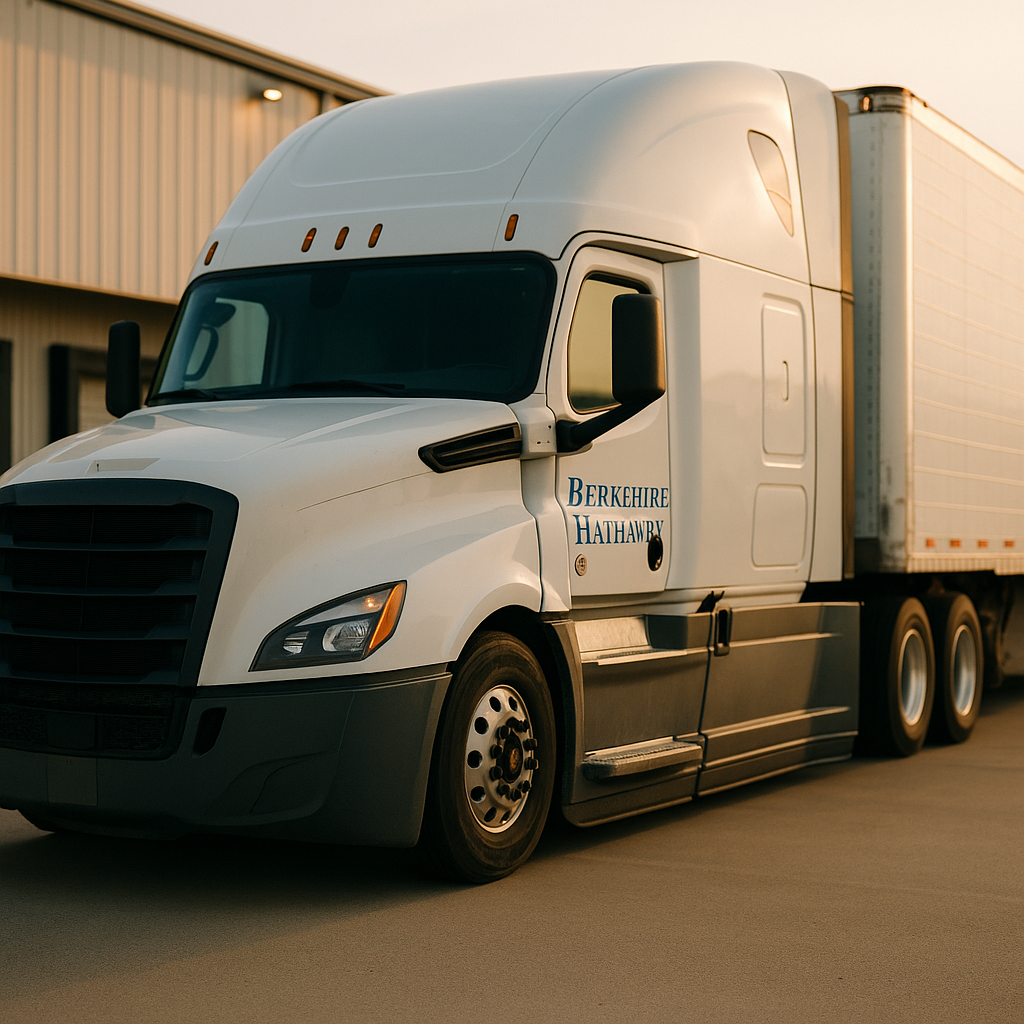
Berkshire Hathaway commercial truck insurance in 2026: which subsidiaries write trucking, what coverages to expect, realistic costs, and how to get a quote fast.
Berkshire Hathaway commercial truck insurance usually isn’t a single product you can buy by clicking a logo—it’s coverage written by a specific Berkshire-owned underwriting company and placed through an appointed agent. If you’re trying to stay broker-compliant and keep cash flow predictable, the smartest move is to confirm the exact underwriting company, match your limits and endorsements to your contracts, and submit clean info so underwriting doesn’t re-rate you at the last second.
This guide breaks down the subsidiaries/brands you’ll hear about, the coverages that matter most for owner-operators and small fleets, realistic 2026 premium ranges, and a quoting checklist you can use today.
Table of Contents
Reading time: 9 minutes
- Who actually sells “Berkshire Hathaway” truck insurance?
- What trucks and operations are typically eligible?
- Coverage options: what they do in plain English
- Telematics and safety tech in 2026: what to ask
- How much does it cost in 2026?
- How to get a quote (step-by-step)
- Availability by state: why it’s not a simple yes/no
- Frequently Asked Questions
- Why Logrock (and what we do differently)
- Conclusion & next step
Key takeaways: essential Berkshire Hathaway commercial truck insurance facts
Berkshire Hathaway Inc. is a holding company, so your trucking policy is issued by a regulated underwriting company (the name on your declarations page), not the parent brand.
- You’re not buying “Berkshire” as one insurer: appetite varies by subsidiary/program, state, and operation.
- Contracts drive coverage: brokers/shippers care about COIs, additional insured wording, cargo limits, and trailer interchange.
- Price is underwriting + operations: new venture authority, OTR radius, cargo class, lanes, and driver history move premiums fast.
- Clean submissions quote faster: DOT/MC, driver list, VINs/values, lanes/radius, and cargo details prevent mid-bind re-quotes.
Who actually sells “Berkshire Hathaway” truck insurance? (Subsidiaries & brands)
Berkshire Hathaway commercial truck insurance is typically written by a Berkshire-owned underwriting company named on the quote and declarations page, and it’s usually distributed through appointed agents rather than a single direct-to-consumer portal.
Common names you may run into (and what it means)
What it is (plain English): Berkshire Hathaway is the parent company, but your insurance is issued by an underwriting company and tied to a specific program appetite (what they’ll quote and what they’ll decline).
Why it matters: Two quotes that “feel like Berkshire” can have different exclusions, deductibles, claims handling, and required safety controls—so you can’t compare on price alone.
Brands you may see referenced in commercial auto/trucking contexts (availability varies):
- National Indemnity Company (NICO): often referenced in commercial auto/program structures.
- Berkshire Hathaway GUARD: commercial lines presence; appetite varies by state and class.
- Berkshire Hathaway Homestate / BHHC branding: referenced by agencies; class availability varies.
Practical rule: don’t buy the logo—buy the policy form, endorsements, limits, and exclusions that match how you operate.
Three questions to ask your agent before you spend a dime
- “What’s the exact underwriting company name on this quote?” (Not the agency name and not the parent.)
- “What restrictions apply to my operation?” (Radius, cargo classes, driver experience, garaging state.)
- “Which endorsements are included vs optional?” (Trailer interchange, hired/non-owned, reefer spoilage, etc.)
What types of trucks and operations are typically eligible?
Commercial truck insurance eligibility is primarily underwritten on operating radius, cargo class, driver history, and garaging ZIP code, and many standard markets require 2+ years of verifiable CDL experience for the primary driver on for-hire risks.
Common vehicle types (real-world examples)
Most commercial auto markets can consider combinations of:
- Tractors (Class 8 power units): typical “semi truck insurance” setups.
- Straight trucks / box trucks: local/regional delivery profiles.
- Dump trucks: often tied to construction exposures and jobsite driving.
- Tow trucks: frequently underwritten differently due to towing/storage exposures.
- Hotshot setups: pickup + trailer, often rated with different assumptions than Class 8.
Operational details that change underwriting fast
These are the details that swing eligibility and premium the quickest:
- Operating radius: local vs regional vs OTR.
- Garaging location: your ZIP code can change theft/vandalism exposure.
- Cargo class: general freight vs higher-hazard or high-theft commodities.
- Authority status: new venture vs established authority.
- Drivers: MVRs, experience, and prior losses.
- Prior insurance continuity: lapses often trigger higher pricing and fewer options.
Field note: If dispatch pushes high-theft lanes or unsecured drop lots, your pricing and claim outcomes usually get worse—sometimes immediately, sometimes at renewal.
Commercial truck coverage options you can expect (and what they actually do)
A broker-ready commercial truck insurance package commonly includes $1,000,000 auto liability, physical damage, and motor truck cargo (often $100,000+ depending on freight), plus endorsements like trailer interchange and hired/non-owned auto when your contracts require them.
Coverage cheat-sheet (use this to compare quotes apples-to-apples)
| Coverage | What it protects | Who typically needs it |
|---|---|---|
| Auto Liability (Primary Liability) | Injuries/property damage you cause while operating under dispatch | Most for-hire operations |
| Physical Damage (Comp/Collision) | Your truck (and sometimes scheduled equipment) | Financed trucks, newer units, anyone who can’t absorb a total loss |
| Motor Truck Cargo | The freight you’re responsible for (subject to exclusions) | For-hire carriers; required by many brokers/shippers |
| Trailer Interchange | Damage to a non-owned trailer in your care under an interchange agreement | Power-only, drop & hook, certain dedicated accounts |
| Non-Trucking Liability (Bobtail/NTL) | Liability when you’re not under dispatch (wording matters) | Leased-on owner-operators |
| General Liability | Slip/fall, loading dock incidents, business liability not tied to auto | Fleets with contracts requiring GL; yard exposure |
| Hired & Non-Owned Auto (HNOA) | Liability when employees use personal/rented vehicles for business | Companies with staff running errands, sales calls, rentals |
Primary liability (the coverage brokers actually care about)
What it is: Pays when you’re at-fault and someone gets hurt or property gets damaged.
Compliance reality: FMCSA financial responsibility minimums for interstate for-hire carriers can be $750,000 to $5,000,000 depending on the commodity hauled (49 CFR Part 387), and many broker packets still effectively expect $1,000,000 liability for standard freight.
Pro tip: Don’t assume “$1M CSL” equals “fully protected.” Contract requirements and umbrella/excess needs are separate decisions.
Physical damage (comp/collision) for semi truck insurance
What it is: Covers your truck for collision and non-collision losses (theft, fire, hail, animal strike).
Why it’s essential: If your truck is financed, physical damage is usually required by the lender, and a total loss can end a small operation overnight.
Practical deductible rule: Pick a deductible you can pay tomorrow, not “after a few good weeks.”
Motor truck cargo (the most misunderstood coverage)
What it is: Covers cargo you’re legally liable for, subject to exclusions and conditions.
Where claims get denied: commodity exclusions (electronics, pharmaceuticals), unattended theft conditions, reefer spoilage without an endorsement, or contract language that shifts responsibility to you.
Match limits to reality: set cargo limits to your rate confirmations and worst-case load value, not a guess.
Trailer interchange (the power-only gotcha)
What it is: Physical damage coverage for a trailer you don’t own but are responsible for under an interchange agreement.
Why it’s essential: If you’re drop & hook, you can be responsible for that trailer even when it’s parked.
Telematics, loss control, and fleet tech: what to look for in 2026
FMCSA’s ELD rules (49 CFR 395.8) have made electronic records standard in trucking, and insurers increasingly use telematics, dashcams, and documented safety programs to underwrite risk and defend claims.
Why safety tech matters to premium (and survival)
Carriers like seeing signals that reduce frequency and severity: forward-facing cameras, speed governance, consistent maintenance records, and tight hiring standards. Even when the discount is small, the bigger win is claims defensibility—especially in serious injury crashes.
Questions to ask your agent so you don’t buy blind
- Do any programs recognize dashcams or telematics during underwriting?
- Is loss control available (driver training, MVR monitoring, safety audits)?
- What’s the claims process and what documentation speeds it up?
- Are there required controls for certain cargo classes (secured parking, temperature monitoring, etc.)?
How much does Berkshire Hathaway commercial truck insurance cost?
In 2026, for-hire trucking premiums commonly land around $750 to $2,500+ per month per power unit, with the final price driven by state, radius, cargo, limits, deductible choices, driver MVRs, and loss history.
Realistic 2026 cost ranges (use these as guardrails)
Use ranges as a starting point, not a promise. New ventures, OTR profiles, and certain cargo classes can push pricing well above “internet averages,” especially when limits and endorsements are contract-heavy.
The biggest factors that move the needle
- Drivers: experience, violations, accidents, prior losses
- Authority status: new venture vs established; prior insurance continuity
- Operations: miles, lanes, radius, garaging ZIP
- Cargo + limits: commodity type and required cargo/interchange limits
- Equipment: unit value, safety features, deductible levels
How to get a quote (step-by-step) + what you’ll need
A bindable trucking submission typically requires your DOT/MC, VINs and stated values, a full driver list with MVRs, and prior insurance/loss history (often 3 years of loss runs if you’ve been insured).
Step-by-step quoting process (what a good agent actually does)
- Collect operation details (DOT/MC, radius, cargo, drivers, units).
- Submit to markets/programs that match your class.
- Review quotes including endorsements and exclusions.
- Confirm compliance needs: COIs, additional insureds, waivers, and any required filings.
- Bind and issue certificates.
Quote checklist (so you don’t get re-quoted later)
- DOT/MC number (or lease-on details)
- Legal entity name + garaging address
- Driver list (CDL, DOB, experience) + MVR permission
- Unit details: VIN, year/make/model, stated value, added equipment
- Expected radius/lanes (be honest about OTR vs “regional”)
- Cargo types, max cargo value, required cargo limits
- Contract requirements: additional insured, waiver of subrogation, primary & non-contributory wording
Fastest real-world move: Send the top 2–3 broker packets you run most. If your COI can’t satisfy those requirements, the “cheap” policy becomes an expensive delay.
Is it available in my state? (How availability typically works)
Truck insurance availability depends on where an underwriting company is filed/admitted and whether the current program appetite is open for your class, so the answer can change by state, cargo, radius, and loss trends.
Why availability isn’t a simple yes/no
Even inside the same state, one program may quote local general freight and decline OTR, specific commodities, or new ventures. That’s normal market behavior, not a reflection of your business being “bad.”
The fastest way to confirm
- Which Berkshire-related markets/programs can quote your class in your garaging state?
- If none can, what comparable A-rated options fit your operation right now?
Frequently Asked Questions
FMCSA financial responsibility minimums for interstate for-hire carriers range from $750,000 to $5,000,000 depending on commodity (49 CFR Part 387), so most “Berkshire Hathaway truck insurance” questions come down to limits, endorsements, and the underwriting company on the declarations page.
Berkshire Hathaway commercial truck insurance offerings depend on the specific subsidiary/program, but common trucking packages include auto liability, physical damage (comp/collision), and motor truck cargo, with optional coverages like trailer interchange, non-trucking liability (bobtail/NTL), general liability, and hired & non-owned auto (HNOA). Many broker packets expect $1,000,000 auto liability and cargo limits that match the freight you haul (often $100,000+ for general freight, higher for certain commodities). The exact forms, exclusions, and endorsements vary by underwriting company and state.
Berkshire Hathaway-related trucking coverage is typically accessed through an underwriting company or program such as National Indemnity Company (NICO) and other Berkshire-affiliated commercial auto brands (for example, GUARD or Homestate branding, depending on state and appetite). The only reliable way to confirm what you’re buying is to verify the exact underwriting company name listed on the quote and the declarations page, because “Berkshire Hathaway” is the parent name and program appetite changes over time. If an agent can’t clearly identify the underwriting company and included endorsements, don’t treat the quote as comparable.
You usually get Berkshire Hathaway commercial truck insurance quotes through an appointed agent/broker, and a bindable submission typically needs your DOT/MC, a complete driver list with MVRs, unit details including VINs and stated values, your lanes/radius, and your cargo types with required limits. If you’ve been insured, expect to provide 3 years of loss runs to avoid last-minute underwriting changes. The goal is accuracy: incomplete or “best guess” info is a common reason premiums change right before binding.
Availability is program-specific and depends on state filings/admission, your garaging location, and whether the current appetite is open for your operation. For example, the same brand/program may quote local general freight in one state but decline OTR radius, certain commodities, or new ventures in that same state. The fastest way to confirm is to have an appointed agent run your garaging state, radius, cargo, and driver profile through the actual markets—then compare any alternatives with the same limits and endorsements so you’re not comparing a “thin” quote to a “complete” one.
You typically need trailer interchange if you pull trailers you don’t own under an interchange agreement and you’re responsible for physical damage to that trailer. This is common for power-only and drop & hook operations, where you can be liable for a trailer even while it’s parked in a yard or drop lot. If you only pull your own trailer, interchange may not be necessary, but broker/shipper contracts can still require proof of interchange limits. Always match interchange limits to the trailer values you’ll actually be handling.
Bobtail insurance is commonly used as a nickname for non-trucking liability (NTL), but the coverage depends on the policy wording and your lease arrangement. NTL generally applies when you’re not under dispatch (not hauling and not being directed for business purposes), and it does not replace primary auto liability while you’re hauling a load. Many leased-on owner-operators carry NTL to cover personal use or off-dispatch driving, while the motor carrier’s liability policy responds when the truck is operated under the carrier’s dispatch.
Why Logrock (and what we do differently)
A broker-ready COI for for-hire trucking commonly needs $1,000,000 auto liability plus contract-specific wording (like additional insured and waivers), so the “right” policy is the one that clears your broker packets without surprise gaps.
You’re not buying a policy for fun—you’re buying risk control for a business that runs on thin margins. Logrock’s approach is practical:
- We quote based on how you actually run: radius, lanes, cargo, equipment.
- We focus on COI-ready coverage so you don’t lose loads over paperwork.
- We help you compare options based on coverage quality and exclusions, not just a monthly number.
Conclusion: confirm the underwriting company, match coverage to contracts, and shop smart
Berkshire Hathaway commercial truck insurance is usually issued by one of several Berkshire-owned underwriting companies and placed through an appointed agent, so the underwriting company name on your declarations page is what governs your coverage.
Confirm the underwriting company, match limits and endorsements to your broker packets, and compare quotes based on exclusions and claims handling—not just premium.
Key Takeaways:
- Know the underwriting company and program—don’t shop by parent brand.
- Buy coverage to satisfy contracts (COIs, cargo limits, interchange, endorsements).
- Price insurance into your cost per mile so you don’t haul “profitless” freight.
If you want to move fast, have your DOT/MC, lanes, cargo, drivers, and unit details ready and submit once—clean and complete.



