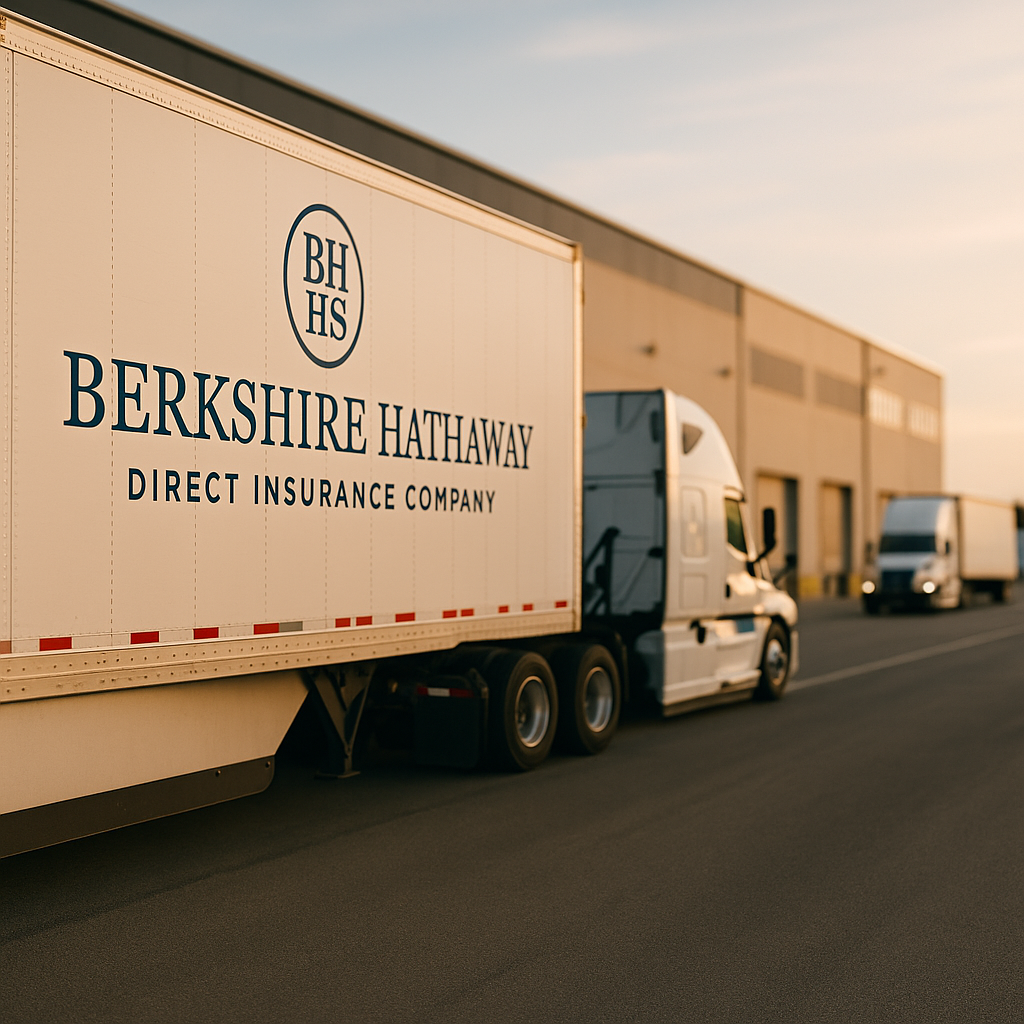
Learn what Berkshire Hathaway Direct Insurance Company (BH Direct) is, how to verify licensing, how it relates to online brands, and what to check before you buy. Get a quote.
Berkshire Hathaway Direct Insurance Company (often shown as BH Direct) is the legal underwriting/issuing insurer name that can appear on your policy documents, even if you shopped on a different brand website. In plain English: the brand you clicked is the storefront, but BH Direct may be the company actually on the contract.
If you’re a business owner (or an owner-operator under your own authority), that “random company name” on the declarations page matters because it’s the entity responsible for paying covered claims. When someone asks for proof of insurance, your fastest sanity-check is confirming the issuing insurer name on the paperwork—this walkthrough on how to read a certificate of insurance (COI) for commercial insurance shows exactly where to look.
Key Takeaways: Essential Berkshire Hathaway Direct Insurance Company Facts
- BH Direct is an underwriting/issuing insurer name that may appear on policy documents even if you bought through a brand or online platform.
- Verify licensing in your state using your Department of Insurance (DOI) lookup and match it to the exact insurer name on the policy.
- Don’t confuse brands with the carrier. A website can be the storefront; the underwriting company is the contract.
- Compare coverage first, then price. Cheap insurance that fails compliance is expensive later.
Table of Contents
Reading time: 9 minutes
- Quick Facts: What BH Direct Is (and Isn’t)
- Licensing, NAIC, and How to Verify Berkshire Hathaway Direct Insurance Company
- BH Direct vs biBERK vs Three: Understanding Brands and Platforms
- What Insurance Products Does BH Direct Offer or Underwrite?
- Where BH Direct Fits Within Berkshire Hathaway’s Insurance Organization
- Premiums and Growth: What’s Publicly Reported (2023–2025 Context)
- Shopping or Switching: How to Evaluate BH Direct/biBERK/Three vs Other Options
- Frequently Asked Questions
- Why Logrock Writes Like This (Straight Business Talk)
- Conclusion & Next Steps
Quick Facts: What BH Direct Is (and Isn’t)
Berkshire Hathaway Direct Insurance Company (BH Direct) is a legal insurance company name that may appear as the issuing/underwriting insurer on your declarations page and certificate of insurance (COI).
That’s different from the holding company name (“Berkshire Hathaway” the conglomerate), the brand/platform you shopped through (the website experience), and other Berkshire insurance subsidiaries with different niches.
Where you’ll see “Berkshire Hathaway Direct Insurance Company”
The issuing insurer name usually shows up in a few predictable places, and it’s worth checking more than one document.
| Document | Where to look for the insurer name |
|---|---|
| Declarations (Dec) page | Top header / “Company” or “Insurer” line |
| Policy jacket/forms | Footer or first pages where the carrier is identified |
| Certificate of Insurance (COI) | “Insurer” boxes and “Company” field (often ACORD 25) |
| Billing/claim instructions | Carrier name tied to the policy number |
If you’re working from a COI, start here: how to read a certificate of insurance (COI) for commercial insurance. It’s the quickest way to confirm you’re looking at the actual insurer name and not just an agency or platform.
Licensing, NAIC, and How to Verify Berkshire Hathaway Direct Insurance Company
Insurance licensing in the U.S. is regulated by 50 states plus Washington, D.C., so the correct way to verify BH Direct is through your state Department of Insurance (DOI) company lookup using the exact legal name on your paperwork.
You don’t need to be an agent to do this—you just need to be consistent about matching names and lines of authority.
Step-by-step: verify BH Direct in your state (DOI lookup)
What this check does: It confirms whether the insurer is authorized in your state and what lines it can write.
- Go to your state Department of Insurance website.
- Open the company/license lookup tool.
- Search the exact company name: “Berkshire Hathaway Direct Insurance Company.”
- Confirm status (active/authorized) and review lines of authority.
- Match what you found to your Declarations page (spelling and punctuation matter).
Why licensing can look different across states
Carrier availability can vary by state, product, and underwriting program, even inside the same insurance group. A quote experience may look identical online while the issuing entity, forms, and eligibility rules differ behind the scenes.
If you’re in trucking, paperwork confusion often shows up when a broker or shipper asks for a COI. This guide on understanding the certificate of insurance for trucking helps you verify the fields they actually check.
BH Direct vs biBERK vs Three: Understanding Brands and Platforms
A common insurance structure is “brand/platform for shopping” plus “legal insurer for issuing,” meaning the name on the website can differ from the underwriting company named on the declarations page.
The brand is the storefront; the underwriter is the contract
Marketing brands and digital platforms exist to make quoting and buying easier. The contract obligation—claims handling and payment for covered losses—follows the issuing insurer shown on the policy, not the brand name you remember clicking.
How to confirm who issued your policy (fast)
- Check the Declarations page: look for “Issued by,” “Insurer,” or “Company.”
- Cross-check the COI: the insurer boxes should match the issuing insurer name.
- Verify via DOI: confirm the exact name is authorized in your state for the line of insurance.
What Insurance Products Does BH Direct Offer or Underwrite?
BH Direct is commonly associated with direct-to-small-business insurance lines, and the exact products and eligibility can vary by state and underwriting program.
Here’s the practical way to think about it: match the coverage to your exposure first (employees, premises, contracts, vehicles), then compare carriers that actively write that risk.
Common lines tied to direct small-business insurance
| Product | What it typically covers | Common buyer |
|---|---|---|
| Workers’ Comp | Employee injury/illness on the job (state rules apply) | Businesses with employees |
| BOP (Business Owners Policy) | General liability + property (bundle) | Shops, offices, contractors with premises/equipment |
Trucking note: A BOP or general “business insurance” package doesn’t replace commercial auto liability, motor truck cargo, or physical damage on a power unit.
If you’re trying to set realistic expectations around premiums and ways to reduce them, use this cost breakdown: affordable trucking insurance in 2026: real monthly costs & how to pay less.
What BH Direct may not be (and why that’s normal)
Large insurance groups often use multiple underwriting companies for different risk types (small business, specialty, regional programs, etc.). If a carrier or program doesn’t fit your operation, the efficient move is switching to a carrier that actually targets your class of business—not forcing a mismatch.
Where BH Direct Fits Within Berkshire Hathaway’s Insurance Organization
Berkshire Hathaway’s insurance operations include multiple subsidiaries, and each subsidiary can be a separate legal underwriting company with its own licenses, forms, and appetite.
Multiple subsidiaries = multiple underwriting boxes
In real-world paperwork, it’s normal to see different names across “brand,” “agency,” “servicing,” and “issuing insurer.” For compliance and claims, the key is the issuing insurer name on the declarations page and COI.
Avoiding mix-ups (the smart way)
When you compare quotes, write down these three items for each option:
- Brand/platform name (where you shopped)
- Issuing insurer name (Declarations page)
- State DOI confirmation (authorized + correct line of authority)
Shopping or Switching: How to Evaluate BH Direct/biBERK/Three vs Other Options
Shopping for insurance is the process of buying the right coverage structure at the lowest sustainable cost while still meeting contract and compliance requirements.
Coverage checklist (don’t skip this to save 20 minutes)
- Limits: per-occurrence/aggregate (GL) and liability limits (auto)
- Exclusions: operations, radius, hiring, subcontractors, special cargo/work
- Deductibles: can you cash-flow the deductible if a claim hits?
- COI requirements: additional insured, waiver of subrogation, primary/non-contributory
- Claims process: where to report, what documents they ask for, how communications happen
When direct platforms are a good fit (and when they aren’t)
Good fit: simple operations, standard exposures, quick issuance, and you understand what you’re buying.
Not a great fit: complex operations, multiple entities, specialized contracts, unusual exposures, or when endorsements must be customized correctly.
Frequently Asked Questions
No—biBERK is typically a brand/platform used to quote and buy, while Berkshire Hathaway Direct Insurance Company (BH Direct) may be the issuing/underwriting insurer named on the declarations page and COI. The issuing insurer is the legal entity tied to claim obligations and policy forms, so that’s the name you should match exactly. To confirm, check the “Insurer/Company” line on the Dec page, then verify that exact name in your state DOI company lookup (insurance is regulated state-by-state across 50 states plus D.C.).
You can verify licensing by using your state Department of Insurance (DOI) company lookup and searching the exact legal name “Berkshire Hathaway Direct Insurance Company.” Confirm the company status is authorized/active and that the line of authority matches what you’re buying (commercial auto vs general liability vs workers’ comp). Then match the legal name from the DOI site to your Declarations page spelling. This prevents “brand vs carrier” mix-ups that can slow down COI approvals and claims reporting.
Your COI can show “BH Direct” because the website is the distribution channel, while the policy is issued by a separate legal insurer entity named on the contract. Most certificates are issued on the ACORD 25 form, and the insurer name appears in the insurer/company fields—those are the fields brokers and contractors validate. If you’re in trucking and need proof fast, use this guide on understanding the certificate of insurance for trucking to locate the right boxes and match them to your declarations page.
If you need to file a claim, follow the claim-reporting instructions on your Declarations page and report it under the correct issuing insurer name and policy number. Document the loss with photos, dates/times, location, and any invoices or repair estimates, and keep a clear email trail. If the loss involves a third party, save their contact info and any police report number. If you’re unsure which entity is listed on your paperwork, this guide on how to read a certificate of insurance (COI) for commercial insurance helps you confirm you’re calling the right place.
Why Logrock Writes Like This (Straight Business Talk)
Insurance paperwork is a compliance document and a claims contract, so “close enough” naming and vague coverage comparisons can create real delays when you’re under pressure.
Owner-operators and small business owners don’t have time for fluff. The goal is simple: coverage that holds up in the real world—contracts, COIs, renewals, audits, and claims—not just a cheap number on a screen.
Conclusion: Verify, Match, Then Buy
Berkshire Hathaway Direct Insurance Company is a name that can legitimately appear as the issuing insurer on policies connected to direct-to-business distribution. Your best move is straightforward: verify licensing in your state, match the exact insurer name to your documents, and compare coverage before you chase price.
Key Takeaways:
- Claims and compliance follow the issuing insurer shown on the Declarations page and COI.
- Verify state authorization via DOI lookup using the exact legal company name.
- Compare apples-to-apples (limits, exclusions, deductibles, endorsements) before you shop purely on premium.
If you’re trying to control cost without stepping into coverage gaps, get quotes and confirm the issuing carrier before you bind. Related reading: affordable trucking insurance in 2026: real monthly costs & how to pay less, cheapest commercial auto insurance (2026) and how to pay less, and understanding the certificate of insurance for trucking.