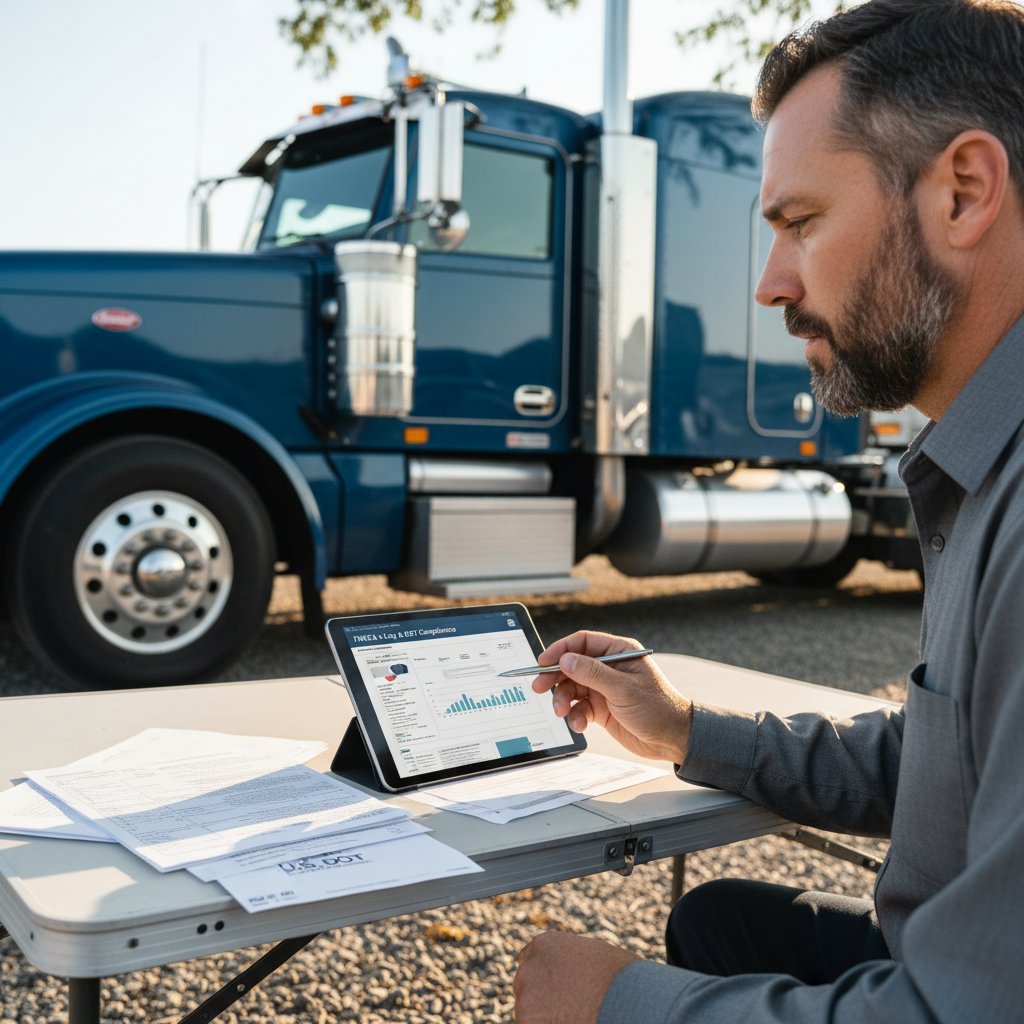
Find the best commercial insurance for hotshot trucking in 2026—required coverages, realistic cost ranges, discounts, and how to choose the right policy. Get a quote.
Best commercial insurance for hotshot trucking in 2026 is the coverage package that meets legal and broker requirements (often $1,000,000 CSL liability plus cargo), matches your real radius and commodities, and won’t fall apart in a claim because of exclusions or misclassification. If you’re trying to protect tight margins, “best” usually means the right stack: auto liability + motor truck cargo + physical damage (and often general liability), written to how you actually run.
Hotshot margins are tight. One bad claim, one denied cargo loss, or one broker packet you can’t satisfy by 5 PM can wipe out a week’s profit—and put your authority (or your lease-on income) at risk. For a quick overview of policy types and setups, start with Logrock’s hot shot truck insurance options and then use the framework below to shop correctly.
Table of Contents
Reading time: 12 minutes
- Key Takeaways: Essential Hotshot Trucking Insurance Decisions
- What makes insurance “hotshot-specific”?
- Coverages hotshot truckers actually need (minimums vs. “best”)
- Optional coverages that make a policy best-in-class
- “Best” providers in 2026: how to compare fairly
- Hotshot trucking insurance cost in 2026: realistic ranges + price drivers
- How to get cheaper hotshot trucking insurance (without getting burned)
- Broker vs. direct: which is better for hotshot?
- State-by-state requirements: intrastate vs. interstate reality
- Quote checklist: what to gather before you call
- Frequently Asked Questions
- Why Logrock: keep you compliant, keep you moving
- Conclusion & Get a Quote
Key Takeaways: Essential Hotshot Trucking Insurance Decisions
For most for-hire hotshot operators in 2026, the “best” policy is a correctly rated package built around $750,000–$1,000,000 auto liability plus cargo and equipment protection that matches your real radius and commodities.
- “Best” means best-fit + best claims performance—not the lowest monthly premium: A denied claim is the most expensive “discount” you’ll ever buy.
- Most hotshot operations need a package: auto liability + motor truck cargo + physical damage (and often general liability), matched to your lanes, radius, and commodity list.
- Your rate is mostly underwriting math: new venture status, radius, MVR/PSP, cargo type, equipment value, and garaging/security drive most pricing.
- Discounts are real in 2026—but only if you’re disciplined: telematics/dashcams, higher deductibles with cash reserves, secure parking, and no coverage lapses.
What makes insurance “hotshot-specific”?
Hotshot trucking is typically insured as for-hire commercial auto for pickups pulling gooseneck/flatbed trailers, and underwriters price it differently because radius, mixed commodities, and frequency exposure often look different than a standard tractor-trailer operation.
Hotshot isn’t “smaller semi truck insurance.” The risk profile is more variable: you may switch commodities, run last-minute lanes, and get pushed into tight delivery windows. That’s why the “cheapest” quote can be the most dangerous if it’s built on guessed details.
1. Common hotshot setups carriers rate differently
Most hotshots are ¾-ton to 1-ton pickups (often 350/3500) pulling a gooseneck or flatbed, sometimes with higher GCWR setups.
Your GVWR/GCWR, trailer type, and how you use the rig impacts eligibility, pricing, and claim handling (what’s “scheduled” vs. assumed). Don’t let anyone guess your trailer type or value—being wrong here can mean being underinsured on physical damage.
2. With authority vs. leased-on: who carries what?
Own authority means you buy and maintain the insurance package (and any required filings) under your DOT/MC. Leased-on means the motor carrier often carries primary auto liability while you’re under dispatch, but contracts commonly require you to carry other coverages.
If you misunderstand who carries what, you can end up with an off-dispatch accident and no coverage, or a cargo claim that becomes a finger-pointing contest.
Coverages hotshot truckers actually need (minimums vs. “best”)
FMCSA financial responsibility minimums for many interstate for-hire carriers start at $750,000 liability for non-hazardous property, but many brokers and shippers require $1,000,000 CSL plus cargo before they’ll tender loads.
Your goal is simple: meet legal requirements, meet broker/shipper requirements, and protect your truck + cash flow. A policy that “passes” legally can still fail in the real world if your COI doesn’t match a broker packet.
Quick reality check: Brokers don’t care what’s “technically legal” if your COI doesn’t match their packet. Insurance is a tool to access freight.
Coverage cheat sheet (typical hotshot expectations)
| Coverage | What it protects | Typical limit range (hotshot) | When it’s required |
|---|---|---|---|
| Primary Auto Liability | Injury/property damage you cause | $750k–$1M CSL is common | Legally required for authority; often required by brokers |
| Motor Truck Cargo | The freight you’re hauling | $50k–$250k+ | Common broker/shipper requirement |
| Physical Damage (Comp/Collision) | Your truck + trailer | Based on stated/ACV value | Required by lienholder; smart if you can’t self-insure |
| General Liability | Non-auto business claims | Often $1M per occurrence | Often required by shippers/warehouses |
| Non-trucking liability / bobtail | Off-dispatch liability (leased-on) | Varies | Common for leased-on operators |
1. Primary auto liability (what limits hotshot loads usually require)
Primary auto liability pays for third-party injuries and property damage when you cause an accident, and it’s the coverage that most directly protects your authority and your ability to book loads.
If you’re shopping quotes, confirm you’re comparing the same structure (CSL vs. split limits) and confirm the quote is rated for your real radius (local vs. regional vs. multi-state). Misstated radius is one of the fastest ways to get a “cheap” premium and a messy claim.
2. Motor truck cargo (why $100k isn’t always enough)
Motor truck cargo insurance covers the customer’s freight you’re legally responsible for while it’s in your care, custody, and control.
A $40k partial can turn into a bigger problem after salvage disputes, rework, and contractual liability. Match your cargo limit to what you haul most of the time, then read the exclusions that often hit hotshots:
- Unattended vehicle: Theft or loss while the vehicle is unattended may be excluded or restricted.
- Improper securement: Claims can be denied if securement doesn’t meet policy terms and “reasonable care” standards.
- Mysterious disappearance: Missing freight without clear evidence may be excluded.
- Commodity exclusions: High-theft or high-value commodities may be excluded unless scheduled.
3. General liability (GL) (when it’s required)
General liability covers non-auto business claims, such as certain loading/unloading incidents or property damage not arising from an auto accident.
Warehouses and shippers often require GL even if you rarely do hands-on work. In practice, GL is frequently a checkbox that unlocks accounts.
4. Physical damage (truck + trailer)
Physical damage (comprehensive and collision) protects your truck and trailer from theft, weather, animal strikes, and wrecks, and it’s commonly required by a lienholder on financed equipment.
Be clear on ACV vs. stated amount and choose a deductible you can actually cash-flow. A high deductible is fine only if you’ve got cash reserves ready the same week.
5. Trailer interchange + hired/non-owned (situational)
Trailer interchange applies when you pull a trailer you don’t own under a written interchange agreement, and hired/non-owned auto can address exposure to vehicles you use but don’t own (depending on your setup).
If you don’t have the right form, you may be paying out-of-pocket for damage to equipment you don’t own.
Optional coverages that make a policy best-in-class
Optional hotshot coverages are endorsements that fill common gaps—especially off-dispatch liability, injury protection for owner-operators, and downtime-related expenses that aren’t covered by standard liability or cargo forms.
Optional doesn’t mean unnecessary. It means “not always required”—but it can be the difference between a bad month and a business-ending month.
1. Non-trucking liability (bobtail) and when it applies
Non-trucking liability is designed for leased-on operators when they’re off dispatch, and the exact trigger depends on the policy language and your lease arrangement.
This is where assumptions hurt. Many leased-on drivers assume the carrier covers them 24/7; off-dispatch accidents are where gaps show up.
2. Occupational accident (Occ/Acc)
Occupational accident is a workers’ comp alternative (not the same thing) that can provide certain medical and disability benefits if you’re hurt on the job.
If you’re a one-truck operation, you don’t have “paid time off.” An injury is an income interruption, so Occ/Acc can be a practical backstop.
3. Towing/roadside + downtime-style options
Towing/roadside and downtime-related add-ons can help with towing, labor, and sometimes rental/substitute vehicle costs, depending on the program.
Hotshots run tight schedules. A breakdown isn’t just the repair bill—it’s missed revenue and sometimes freight penalties.
4. Cyber / social engineering (2026 reality)
Cyber and social engineering coverage can help with certain losses tied to email compromise, dispatch scams, and invoice fraud, depending on the form and underwriting.
Hotshots live on speed: email, text, apps, quick-pay. Scammers know it. One fraudulent wire or ACH can equal a month of profit.
“Best” providers in 2026: how to compare fairly
The best commercial insurance for hotshot trucking in 2026 is the option that can consistently deliver correct COIs and common broker endorsements (like Additional Insured, Waiver of Subrogation, and Primary/Noncontributory) while keeping claims handling and renewal terms stable.
You don’t need a “Top 10 insurance companies” list. You need a scorecard that protects your business and lets you compare quotes without getting tricked by mismatched specs.
1. What “best” actually means (hotshot scorecard)
- Hotshot appetite: Do they actually want this risk class, or are they pricing you out?
- Claims handling: Clear process, responsive adjusters, fewer “surprise” exclusions.
- COI + endorsement speed: Additional insured, waiver of subro, primary/noncontributory—done accurately and quickly.
- Cargo flexibility: Can they cover your commodity list without “gotcha” exclusions?
- Renewal stability: The cheapest first term isn’t “best” if renewal is a big hit with new restrictions.
2. Direct writer vs. specialty trucking markets vs. broker (how it impacts you)
Direct can be a solid fit when your operation is stable: clean MVR/PSP, consistent lanes and commodities, low endorsement needs, and you don’t mind handling admin yourself.
A broker is often the better fit when you’re new venture/new authority, multi-state with mixed freight, endorsement-heavy, or anything “non-standard.” A broker can shop multiple markets and keep the specs consistent.
3. Provider comparison matrix (use this table when you shop)
| Compare item | What to ask | Why it matters |
|---|---|---|
| Radius rating | What radius is the quote rated at? | Wrong radius can create denied-claim risk and surprise audits |
| Cargo form | What exclusions apply to my commodities? | Cargo claims are where hotshots get burned |
| Deductibles | Cargo + physical damage deductibles? | Determines your cash hit on day one of a claim |
| Endorsements | AI/WOS/PNC turnaround time? | Determines if you can book freight today |
| Filings help | Who files what and how fast? | Compliance and fewer shutdown surprises |
| Claims process | Carrier vs. TPA, after-hours support? | Speed matters when your truck is down |
Hotshot trucking insurance cost in 2026: realistic ranges + price drivers
Hotshot trucking insurance cost in 2026 commonly falls in broad annual ranges of $6,000–$15,000+ for liability-only, $8,000–$20,000+ for liability + cargo, and $12,000–$30,000+ for a fuller package that includes physical damage and often general liability.
If you’re asking “how much is hotshot insurance?” you’re really asking: How will underwriting price my risk profile in my state, on my lanes, with my history?
1. Typical 2026 cost ranges (ranges, not promises)
- Liability-only (authority / for-hire): often $6,000–$15,000+ per year
- Liability + cargo: often $8,000–$20,000+ per year
- Full package (liability + cargo + physical damage + GL): often $12,000–$30,000+ per year
If you want a market benchmark and savings mindset, review affordable trucking insurance cost ranges (2026) and then sanity-check that your quote assumptions (limits, radius, deductibles) are realistic.
2. Top pricing factors for hotshot specifically
- New venture / new authority: often the biggest surcharge because you have less operating history.
- MVR/PSP + violations: speeding and at-fault losses can hit hard.
- Radius and lanes: metro delivery, high-theft corridors, and severe-weather exposure can raise premiums.
- Commodity list: higher-value or theft-attractive freight typically costs more.
- Truck + trailer value: higher physical damage exposure increases premium.
- Garaging/parking security: unsecured parking can cost you.
- Continuous coverage: lapses reduce markets and usually raise premium.
3. Regional/state variation (how to think about it)
Don’t compare your Texas buddy’s premium to your Florida quote without matching the details. Loss trends, litigation climate, theft, repair costs, and medical severity vary by state. Compare against operators in similar lanes and similar cities—not just “same truck.”
How to get cheaper hotshot trucking insurance (without getting burned)
Cheaper hotshot trucking insurance usually comes from consistent underwriting inputs—continuous coverage, accurate radius and mileage, strong driver history, and documented risk controls—rather than chasing the lowest monthly number.
Cheaper is fine. Cheapest is risky, especially when you’re running under broker contracts.
1. Shop “apples-to-apples,” not “whatever number is lowest”
Hold these constant across quotes so you can actually compare:
- Liability limit + filing needs
- Cargo limit + deductible
- Physical damage value basis (ACV vs. stated)
- Radius + states traveled
- Driver list + experience
If you want a clean shopping framework, use cheapest commercial auto insurance (2026) to avoid “mismatched policy” comparisons.
2. Use tech credits the right way (telematics + dashcams)
Many programs in 2026 like forward-facing dashcams, measurable coaching, documented maintenance, and consistent safety behavior.
Don’t install tech just for a discount and ignore the data. If the data shows hard braking and speeding, it can backfire at renewal.
3. Raise deductibles only if you can cash-flow the hit
Higher deductibles can reduce premium, but a claim shouldn’t turn into a credit-card emergency.
- Simple rule: If you can’t comfortably cover the deductible the same week, don’t set it there.
4. Avoid lapses like the plague
A lapse doesn’t just raise premium—it can eliminate your best markets. Continuous coverage is one of the few levers you fully control.
Hotshot Insurance Quote (Apples-to-Apples)
Get quotes built to your real lanes, radius, trailer, and commodity list—so your COI clears broker packets and your coverage holds up in a claim.
Fast COIs & endorsements • Hotshot-friendly markets • No “mystery gap” policies
Broker vs. direct: which is better for hotshot?
Buying direct means you’re quoting a single carrier, while using a broker means shopping multiple carriers and specialty trucking markets—an approach that’s often critical for new authorities and multi-state hotshot operations.
1. When direct can be the best choice
Direct is usually a better fit when you have a clean record, stable freight, simple operations, and you rarely need endorsements.
Trade-off: fewer options if underwriting tightens or your operation changes.
2. When a broker is usually better (most hotshots)
A broker is often the best fit when you’re new venture/new authority, multi-state, mixed commodities, endorsement-heavy, or you have any non-standard history.
Trade-off: you still need to manage your details (commodity list, radius, drivers) cleanly, or shopping becomes chaos.
3. Real-world examples (how this plays out)
- Example A (new authority): Mixed freight + financed truck + running multiple states. A broker can shop markets that actually want this profile and negotiate workable terms.
- Example B (stable operation): Same lanes, same freight, owned equipment, clean MVR. Direct may be simpler and competitive.
State-by-state requirements: intrastate vs. interstate reality
Hotshot insurance requirements depend on whether you operate interstate under FMCSA authority (where federal minimums like $750,000 liability can apply) or intrastate only (where state DOT/PUC rules can differ).
Broker requirements often exceed minimums, and the rules change fast between states and commodities. Don’t guess.
The only safe way to verify (without guessing)
- Are you interstate (crossing state lines) or intrastate only?
- Are you under your own authority or leased-on?
- What does your broker/shipper packet require (liability, cargo, GL, endorsements)?
- Verify intrastate rules with your state DOT/PUC (don’t rely on social media).
If you’re unsure, treating $1M liability + cargo as a practical starting point is common for freight access, then refine based on your real commodities and contracts.
Quote checklist: what to gather before you call
To get an accurate hotshot insurance quote, underwriters typically need driver MVR details, authority status (DOT/MC), operating radius/states, annual miles, commodity list, and equipment VIN/value—because those inputs drive eligibility and rating.
If you want better rates faster, show up organized. Underwriting hates surprises.
What to send your agent/broker (one-page list)
Driver
- CDL/non-CDL, years experience
- MVR details (tickets/violations), prior claims
- Prior insurance (carrier + continuous coverage)
Equipment
- VIN(s), year/make/model
- Truck value + trailer value (and lienholder if financed)
- Safety equipment (dashcam, tracking, anti-theft)
Operations
- Authority status, DOT/MC
- Operating radius, states traveled, estimated annual miles
- Commodity list (what you actually haul)
- Garaging ZIP + where you park overnight
Paperwork needs
- COIs, additional insureds, waiver of subrogation, PNC wording
- Any special broker packet requirements
Frequently Asked Questions
Most hotshot truckers need commercial auto liability, motor truck cargo, and physical damage (especially if the truck or trailer is financed or you can’t self-insure a total loss). Many brokers and facilities also require general liability, commonly $1,000,000 per occurrence, even if you don’t think you “need” it day-to-day. If you’re leased on, your motor carrier may carry primary liability under dispatch, but you can still need off-dispatch protection and other coverages depending on the lease. Use this overview of hot shot truck insurance options to confirm what’s typical for your setup.
Hotshot trucking insurance cost in 2026 often lands around $8,000–$20,000+ per year for liability + cargo, with liability-only commonly $6,000–$15,000+ and fuller packages (adding physical damage and often GL) commonly $12,000–$30,000+. Pricing is driven by new authority status, MVR/PSP and claims, operating radius and states traveled, commodity list, equipment value, garaging/parking security, and continuous coverage history. To pressure-test whether a quote is actually “affordable” (and whether the assumptions are fair), compare against affordable trucking insurance cost ranges (2026) and make sure every quote uses the same limits, radius, and deductibles.
The best insurer for hotshot trucking is the one that (1) has a real appetite for hotshots, (2) issues COIs and broker endorsements accurately and fast, (3) has a clear claims process with fewer “gotcha” exclusions, and (4) stays stable at renewal. A recognizable brand name doesn’t help if the cargo form excludes your commodity list or the quote is rated at the wrong radius. Use a scorecard: confirm rated radius, cargo exclusions, deductibles, endorsement turnaround, and who handles claims (carrier vs. TPA). That’s how you identify “best” for your operation instead of chasing a logo.
$1,000,000 CSL liability is not always the legal minimum for every hotshot scenario, but it is commonly required by brokers and shippers to tender loads, which makes it a practical baseline for freight access. Federal minimums for many interstate for-hire carriers hauling non-hazardous property can start at $750,000, while contracts can demand higher limits and specific endorsements. The decision is business-driven: if your target brokers require $1M, then $1M is effectively required for your lanes. Always verify your packet requirements and make sure the COI matches exactly.
You get cheaper hotshot trucking insurance by controlling the inputs underwriters price: keep continuous coverage (no lapses), quote the correct radius and states traveled, maintain a clean MVR/PSP, use secure garaging/parking, and document maintenance and safety controls like dashcams or telematics when your program credits them. The biggest mistake is comparing quotes that quietly changed limits, deductibles, or radius to look “cheaper.” For a practical shopping method that keeps specs consistent, use cheapest commercial auto insurance (2026) as a comparison framework and then apply it to your hotshot package (liability, cargo, physical damage, and GL).
Often the motor carrier’s cargo policy applies while you’re under dispatch, but lease agreements and cargo forms vary, so you can’t assume you’re covered for every load and situation. The correct answer is: confirm in writing who covers cargo, what the limits are, what commodities are excluded, and whether coverage applies only under dispatch. Some leased-on setups require you to carry your own cargo or contingent cargo, especially if you haul certain commodities or do any work outside the carrier’s dispatch. If a cargo loss happens, unclear responsibility is where claims turn into delays and disputes.
You need driver history (MVR and prior claims), authority status (DOT/MC and new venture details), operating radius and states traveled, estimated annual miles, commodity list, garaging ZIP and overnight parking security, and full equipment details (year/make/model, VIN, and truck/trailer values). Those inputs determine eligibility, rating tier, and which markets will even offer terms. If you’re shopping multiple quotes, keep these specs identical across every submission—otherwise a “cheap” quote may simply be a different radius, lower cargo limit, or different deductible hidden in the paperwork.
Why Logrock: keep you compliant, keep you moving
Hotshot trucking is a business that has to clear broker packets, survive renewals, and pay you every week—so the insurance needs to match the real operation.
Logrock helps you build commercial truck insurance around your actual radius, cargo, trailer, and endorsement needs so you can book freight without last-minute COI drama and reduce the chances of claim surprises.
Conclusion & Get a Quote
The best commercial insurance for hotshot trucking is the policy package that fits your operation, satisfies broker/shipper requirements, and holds up when a claim happens—at a premium you can sustain without cutting corners.
Key Takeaways:
- Buy for fit + claims performance, not just price.
- Match liability and cargo limits to the freight you want access to (many brokers expect $1M CSL).
- Control your rate with clean operations: accurate radius, good documentation, smart tech use, and no lapses.
If you want an apples-to-apples comparison built around your lanes and freight, get a quote and keep the coverage specs consistent so you can compare for real.