
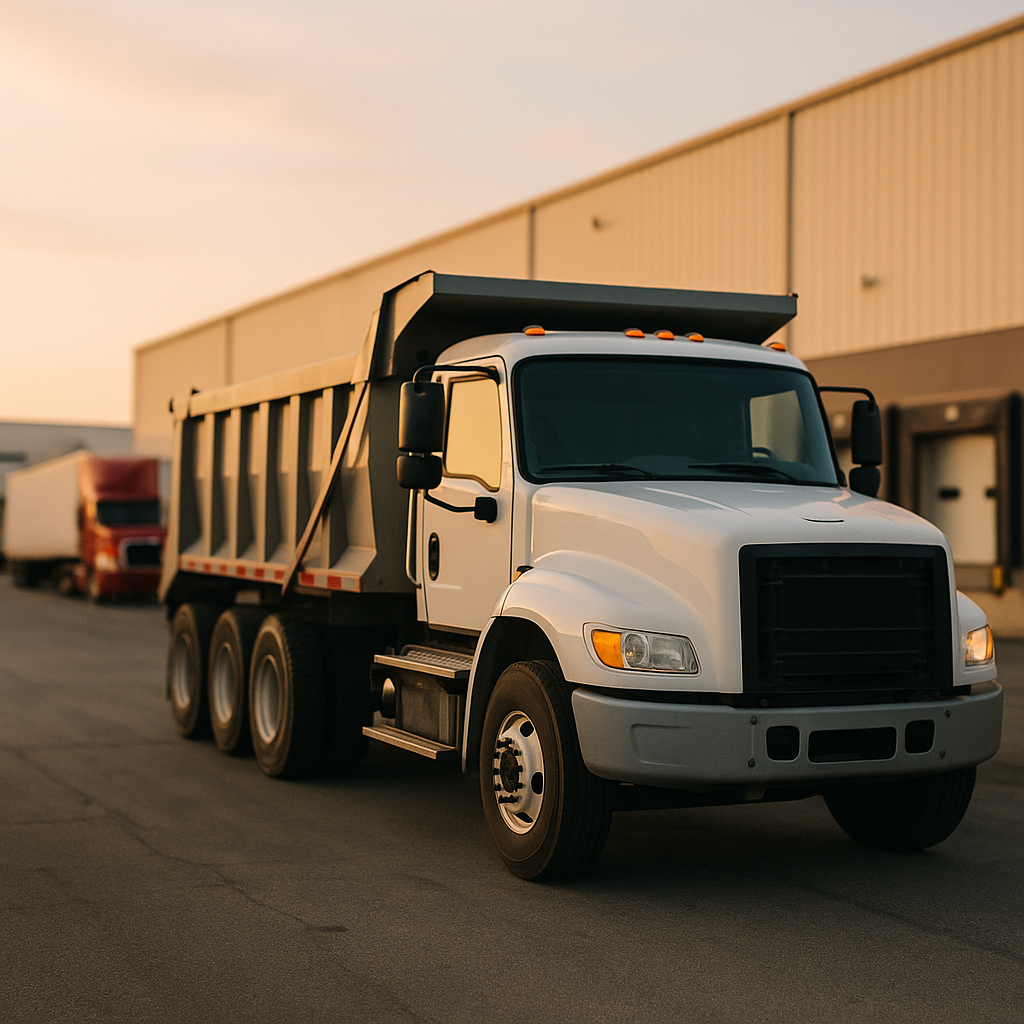
Find the best dump truck insurance in 2026 with real cost ranges, a coverage checklist, and a fast quote template. Protect cash flow—get a quote.
Best dump truck insurance isn’t the cheapest monthly payment—it’s the policy that actually pays when a claim hits and your truck is sitting. One denied claim because of a jobsite exclusion, missing endorsement, or wrong class code can wipe out weeks of profit and cost you a contract.
If you’re unsure what “best” should mean for your operation, start with these best dump truck insurance selection tips, then use the cost ranges and checklists below to shop smarter.
Featured snippet answer (2026): Dump truck insurance commonly lands around $400–$1,200+ per month per truck for many local/regional operations, but can run higher for new ventures, long radius, heavy jobsite exposure, poor MVRs, or quarry/mining work. The biggest price drivers are driver history, garaging ZIP, operating radius, truck value, and required limits/endorsements.
Key Takeaways: Essential Best Dump Truck Insurance (2026)
- “Best” = appetite fit + correct endorsements + predictable claims handling, not just a low monthly payment.
- Job type (construction vs aggregate vs quarry), radius, and driver MVRs move price more than almost anything.
- A “cheap” policy can be non-compliant for contracts (missing AI/WOS/Primary & Non-Contrib language) or missing jobsite GL, which is where dump trucks get sued.
- Get bindable quotes faster by sending a clean submission (VINs, drivers, loss runs/no-loss letter, radius, job types, required limits).
Table of Contents
Reading time: 10 minutes
- Dump Truck Insurance Cost (2026): Real Ranges by Job Type
- Coverage Checklist: What Dump Truck Insurance Should Include
- How to Choose the Best Dump Truck Insurance (and Get Fast Quotes)
- Frequently Asked Questions
- Why Owner-Operators Use Logrock for Commercial Truck Insurance
- Conclusion: Choose Coverage That Protects Cash Flow
Dump Truck Insurance Cost (2026): Real Ranges by Job Type
In 2026, many dump truck operators budget roughly $400–$1,200+ per month per truck for local/regional work, with higher pricing common for new ventures, long radius, and quarry/mining exposures.
Insurance is a fixed cost that hits whether you run five days this week or sit waiting on a slow-paying contractor. If you want to understand what underwriters are actually rating (and what you can control), review these dump truck insurance quote factors that move price before chasing the lowest number.
Typical Monthly & Annual Cost Ranges (Per Truck)
These are realistic planning ranges (not promises) that work well for budgeting renewals and new ventures.
- Lower-end local ops (clean MVRs, short radius, stable history): ~$400–$800/month
- Typical mixed jobsite/local hauling: ~$750–$1,500/month
- Higher-risk profiles (new venture, long radius, rough loss history, difficult class): ~$1,500–$3,000+/month
What changes the bill the most:
- Driver quality: violations, accidents, and years of CDL experience
- Garaging ZIP: theft frequency and litigation environment
- Radius + mileage: local vs regional vs interstate exposure
- Truck value + physical damage deductible: replacement cost and your out-of-pocket tolerance
- Job type: quarry/mining and certain off-road exposures are tougher
Cost Ranges by Operation Type (Quick Table)
| Operation type | Why it can cost more | Typical cost direction |
|---|---|---|
| Local construction hauling (dirt/asphalt/demo) | Jobsite losses, backing claims, and contract endorsements | Low → Mid |
| Aggregate/gravel (lots of stops, mixed terrain) | Frequency of minor losses and heavier loads | Mid |
| Quarry/mining/off-road heavy | Severity risk and specialized underwriting appetite | Mid → High |
| Small fleet (2–10 units) | More drivers = more exposure, but possible program credits | Variable |
Pro tip (cash flow): If you raise your physical damage deductible to save premium, keep a separate deductible reserve account. A $5,000 deductible is fine—until it isn’t.
Coverage Checklist: What Dump Truck Insurance Should Include
Most contractor and municipal accounts commonly require $1,000,000 commercial auto liability and contract wording like Additional Insured and Waiver of Subrogation on the COI before they’ll onboard you.
If you want a clean baseline before you customize for your operation, use dump truck insurance requirements & minimum coverages as your starting point, then match it to the real-world risks below.
1. Commercial Auto Liability (The Non-Negotiable)
What it is (plain English): Pays for injuries and property damage you cause in an at-fault crash.
Why it’s essential: One serious wreck can bankrupt a one-truck operation without adequate limits, and many job accounts won’t load you without proof.
- Who needs it: Everyone running a dump truck on public roads (owner-operators and fleets).
- Contract reality: Many contractors require $1,000,000 liability (sometimes higher). Don’t bid work you can’t insure.
2. Physical Damage (Comp/Collision) for the Truck
What it is: Covers your truck if it’s stolen, vandalized, hit, or you hit something.
Why it’s essential: If you’re financed/leased, it’s usually required. Even if you own it outright, one total loss can end your business.
Pro tip: Don’t buy physical damage based on what you owe—buy it based on actual truck value and your downtime tolerance.
3. General Liability (GL) for Jobsite Risk (Common Gap)
What it is: Covers third-party claims tied to your operations that aren’t caused by an auto accident (jobsite property damage, some completed-ops allegations, and similar claims depending on policy wording).
Why it’s essential: Dump trucks live on jobsites, and auto liability alone doesn’t fill every jobsite lawsuit gap.
4. Workers’ Comp / Injury Coverage (If You Have Drivers)
What it is: Covers employee injuries in the course and scope of work.
Why it’s essential: One injury claim can hit payroll, experience mod, and your ability to staff trucks.
Who needs it: Fleets with W-2 drivers (rules vary by state). If you’re a one-truck owner-operator, don’t guess—misclassification gets expensive fast.
5. The “Contract Endorsements” You’ll Get Asked For
These aren’t nice-to-haves; they often decide whether you get onboarded.
- Additional Insured (AI)
- Waiver of Subrogation (WOS)
- Primary & Non-Contributory
- 30-day Notice of Cancellation (wording varies)
Reality check: If your agent can’t deliver the endorsements your contract requires, it’s not the best dump truck insurance—even if it’s cheap.
How to Choose the Best Dump Truck Insurance (and Get Fast Quotes)
A bindable dump truck insurance quote typically requires VINs, driver DOBs, operating radius, job type split, and 3–5 years of loss runs (or a no-loss letter) to survive underwriting and bind without surprises.
You don’t need a “Top 5 carriers” list that ignores your operation; you need a repeatable way to judge a policy like a business owner: risk in vs dollars out.
1. “Best” Depends on Appetite Match (Not Marketing)
The best program for a clean local construction hauler may not want quarry/mining exposure, off-road heavy ops, marginal MVRs, prior losses, or a lapse. Your goal is simple: find a carrier/program that wants your risk and can issue the endorsements your customers demand.
2. Use a Simple Scorecard Before You Pick
Rate each quote 1–5, then pick the best total—not the cheapest line item.
- Coverage match: roadway + jobsite exposures for your job type
- Endorsements available: AI/WOS/Primary & Non-Contrib
- Claims reputation: downtime matters more than you think
- Deductibles: amounts you can fund without borrowing
- Audit risk: quote based on accurate info (no wishful thinking)
3. Bindable Quote Checklist (Copy/Paste Submission Template)
Underwriters move faster when your submission is clean and complete—send it in one email.
Dump Truck Insurance Submission Template
- Named insured: entity (LLC/S-Corp/sole prop) + DBA
- Garaging address: plus operating states
- Job type split: % construction, % aggregate, % quarry/mining, % municipal
- Radius: local/regional/interstate + estimated annual mileage
- Vehicle schedule: Year/Make/Model/VIN + stated value
- Driver list: name, DOB, CDL state, years experience + MVR authorization
- Loss runs: 3–5 years or a no-loss letter
- Requested limits: plus deductibles
- COI/contract requirements: AI/WOS/Primary-NC wording (if provided)
When you have multiple offers, use this process to compare dump truck insurance quotes apples-to-apples so you don’t “save” money by deleting the parts your contract (or claim) needs.
4. Mini “Cost Model” (Directional, Not a Promise)
There are ways to reduce premium without gutting coverage, but every lever has a tradeoff.
| Lever | What usually happens to premium | What it costs you later |
|---|---|---|
| Raise physical damage deductible | ↓ | More cash out-of-pocket on claims |
| Tighten radius (if operationally possible) | ↓ | Fewer job options |
| Clean up drivers / remove high-risk drivers | ↓↓↓ | Recruiting friction |
| Add dash cams / telematics | ↓ (sometimes) | Upfront equipment + coaching time |
Owner-operator mindset: Saving $250/month isn’t a win if it creates a $25,000 uncovered loss.
Frequently Asked Questions
These dump truck insurance FAQs answer common 2026 questions using practical ranges like $400–$1,200+ per month per truck and common contract expectations like $1,000,000 auto liability.
Most dump truck owner-operators and small fleets in 2026 see roughly $400–$1,200+ per month per truck for many local/regional operations, with pricing often higher for new ventures, long radius, poor MVRs, prior losses, and quarry/mining or heavy off-road exposure. The fastest levers that commonly reduce cost are improving driver quality (cleaner MVRs), tightening radius where it’s operationally realistic, and choosing deductibles you can actually fund. Garaging ZIP and required limits/endorsements can also move price dramatically at renewal.
Dump truck insurance usually includes commercial auto liability and often physical damage (comprehensive/collision) when the truck is financed or when replacement would crush cash flow. Many operations also need general liability for jobsite risk, plus injury coverage (often workers’ comp for W-2 drivers, depending on state rules). If you haul under contracts, endorsements like Additional Insured, Waiver of Subrogation, and Primary & Non-Contributory can be just as important as the limits because they determine whether you get onboarded and whether a COI is accepted.
There isn’t one universal “best” provider for dump truck insurance because underwriting appetite varies by job type, radius, driver quality, and loss history. The best provider is the one that actively wants your operation (construction vs aggregate vs off-road/quarry), can issue your required endorsements (AI/WOS/Primary & Non-Contrib), and has claims handling that minimizes downtime. If you want a practical decision framework, start here: how to choose dump truck insurance (operation fit).
You get dump truck insurance quotes quickly by sending a complete, underwriter-ready submission upfront: VINs, driver list with DOBs, garaging address, operating radius, job type split, requested limits/deductibles, 3–5 years loss runs (or a no-loss letter), and contract/COI requirements (AI/WOS/Primary-NC wording). Incomplete info often produces “indications” that change at bind time—when you lose time, leverage, and sometimes the job.
Why Owner-Operators Use Logrock for Commercial Truck Insurance
Commercial truck insurance for dump trucks breaks down most often when the policy can’t meet $1,000,000 contract requirements, can’t produce endorsements on time, or leaves a jobsite GL gap that shows up after a loss.
You’re not running a paperwork hobby—you’re running a high-risk business where downtime kills margins. The goal isn’t to “buy a policy.” It’s to buy contract-ready coverage that survives audits and pays claims.
Logrock’s approach is straightforward: match coverage to your real operation, then reduce premium without creating ugly surprises after a claim—starting with dump truck insurance discounts to lower premiums that don’t gut protection.
Conclusion: Choose Coverage That Protects Cash Flow
The best dump truck insurance is the policy that keeps you working: correct limits (often $1,000,000 liability for many contracts), correct endorsements, jobsite gaps closed, and a quote that’s actually bindable.
Treat insurance like a cost-per-mile decision: reduce waste, not protection.
Key Takeaways:
- “Best” means fit + endorsements + claims reliability, not the lowest price.
- Your premium is driven by drivers, radius, garaging, truck value, and job type.
- Faster quotes come from clean submissions and apples-to-apples comparisons.
If you want to tighten compliance and cost at the same time, build coverage around the work you’re actually doing this quarter—not the work you might do next year.
Related reading: dump truck insurance requirements by state and dump truck insurance cost-saving strategies.



