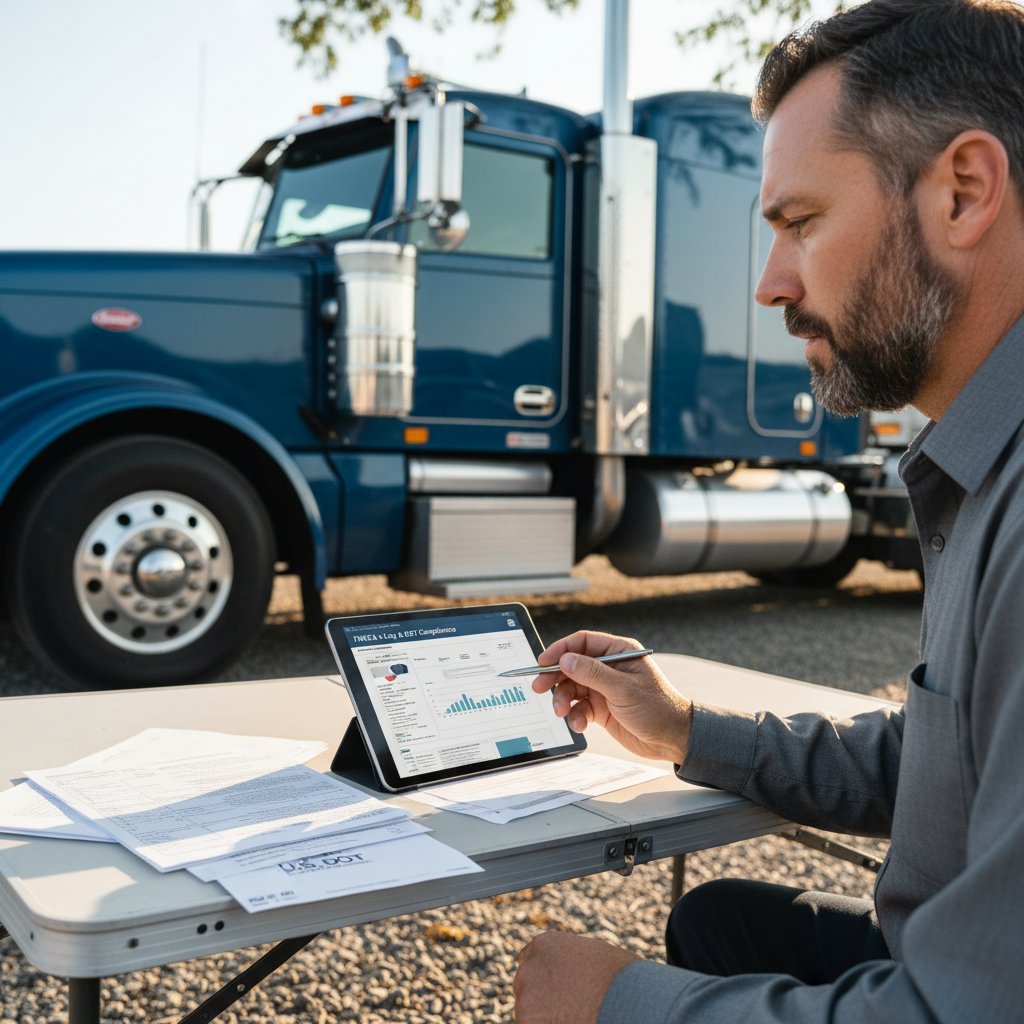
Find the best insurance for one-truck owner-operators in 2025 by building the right coverage stack, understanding real monthly costs, and comparing providers by policy wording—not logos.
If you’re searching for the best insurance for owner-operators with one truck 2025, the answer isn’t a single “best company”—it’s the right coverage stack written correctly for your authority status, lanes, and cargo, with certificates issued fast enough to keep you moving.
Featured snippet (citation-ready): A one-truck owner-operator typically needs primary liability (often $1,000,000), motor truck cargo (commonly $100,000+ if hauling freight), and physical damage (comprehensive + collision) to protect the truck. Many also need general liability, trailer interchange (when pulling non-owned trailers under an interchange agreement), and either non-trucking liability or bobtail depending on leased-on vs own authority and dispatch status.
Key Takeaways: Essential One-Truck Owner-Operator Insurance (2025)
- Build the coverage stack first (liability, cargo, physical damage, plus add-ons your contracts require), then shop carriers that actually want your operation.
- Leased-on vs own authority changes everything—who provides liability, what filings are needed, and where gaps happen (especially deadhead, bobtail, and off-dispatch use).
- Monthly costs vary by risk profile more than by “company name”: new authority, state, radius, cargo type, truck value, and MVR can move the price fast.
- Cheapest upfront can cost more later if the policy has the wrong dispatch language, exclusions, deductibles, or endorsements.
Table of Contents
Reading time: 10 minutes
- The one-truck insurance stack (what you actually need)
- Leased-on vs own authority (the decision that changes your insurance)
- How much does one-truck insurance cost in 2025?
- State-by-state premium differences
- Best insurance for owner-operators with one truck 2025: comparing providers
- How to shop without overpaying (checklist + template)
- Real claim scenarios (where one-truck owner-ops get burned)
- Telematics, dashcams, and safety tech (do they lower premiums?)
- Frequently Asked Questions
- Conclusion
The One-Truck Owner-Operator Insurance Stack (What You Actually Need)
FMCSA sets a federal minimum of $750,000 in public liability for many for-hire interstate carriers under 49 CFR §387.9, but brokers and shippers often require $1,000,000 and additional coverages to tender loads.
Most “single truck commercial auto insurance” problems come from confusing minimum legal requirements with what your contracts demand and what your cash flow can survive after a loss.
Minimum vs practical coverage (why one-truck operators get squeezed)
- Minimum legal: Gets you “technically insured.”
- Practical coverage: Keeps you working after a claim, keeps brokers happy with your COI, and protects your bank account.
With one truck, there’s no backup unit. When the truck is down, revenue is usually $0 while payments, insurance, and living costs keep hitting.
Coverage stack table (recommended starting point)
| Coverage | Who needs it | Typical limits (common market asks) | What it protects | Common “gotchas” |
|---|---|---|---|---|
| Primary Liability | Own authority; some leased-on setups require you to carry | $750k–$1M+ | Damage/injury you cause to others | Wrong entity/driver listed, wrong use class, exclusions, late payments causing cancellation |
| Motor Truck Cargo | Anyone hauling freight for others (most loads) | $100k–$250k+ | Customer freight | Theft exclusions, unattended vehicle rules, reefer breakdown/temperature wording, high-value sublimits |
| Physical Damage (Comp + Collision) | Anyone who can’t afford to total the truck | Truck value-based | Your truck (and sometimes attached equipment) | ACV vs agreed value, high deductibles, gaps on custom parts, storage/impound costs |
| General Liability | Often required by brokers/warehouses | $1M per occurrence (common) | Non-auto claims (dock incidents, slip/fall) | Doesn’t replace auto liability; many assume it does |
| Trailer Interchange | If you sign interchange agreements / pull non-owned trailers | $20k–$50k+ | Physical damage to non-owned trailer in your care | Only applies with interchange agreement; not for every borrowed trailer setup |
| Non-Trucking Liability (NTL) | Mostly leased-on | Varies | Liability when not under dispatch for the carrier | Dispatch language is everything—deadhead and personal use can be disputed |
| Bobtail | Often leased-on (sometimes own authority needs it too) | Varies | Liability while operating tractor without trailer | “Bobtail” isn’t the same as “off-dispatch” in every policy |
| Occupational Accident | Many leased-on ICs | Plan-based | Injury benefits for you | Not the same as workers’ comp; limits matter |
| Downtime / Rental Reimbursement | One-truck ops who can’t cash-float repairs | Plan-based | Keeps cash flow alive while truck’s down | Waiting periods, daily caps, specific triggers |
Pro tip (money): Don’t buy “affordable trucking insurance” by deleting coverages—buy it by tightening your operation (radius, cargo classes, garaging, safety tech) and choosing deductibles you can actually fund.
How Much Does One-Truck Owner-Operator Insurance Cost in 2025? (Monthly + Annual Ranges)
One-truck owner-operator insurance commonly ranges from about $700 to $3,500+ per month, with new authority and higher-risk lanes/cargo often pricing higher than experienced, stable operations.
Insurance pricing isn’t about “fair.” It’s underwriting, and underwriting reacts to risk signals like authority age, state, lanes, cargo, truck value, and your record.
Typical monthly cost ranges (by profile)
| Profile | Typical monthly range (rough) | Why it lands there |
|---|---|---|
| Leased-on, experienced driver, stable lanes | ~$700–$1,500 | Carrier may cover some liability; you’re buying a smaller stack |
| Own authority, experienced, dry van/reefer, clean history | ~$1,000–$2,500+ | You’re buying the full stack (liability + cargo + PD + endorsements) |
| New authority (first 12 months), OTR | ~$1,500–$3,500+ | New venture surcharge + limited loss history |
| Higher-risk lanes/cargo (metros, high-value, specialized) | ~$2,000–$5,000+ | Theft/litigation risk, cargo severity, claims volatility |
The biggest cost drivers (what moves the premium fast)
- Authority age: new venture vs established
- MVR: violations and at-fault accidents
- Operating radius: local vs regional vs OTR
- Cargo type/value: general freight vs high-value vs hazmat
- Truck value: replacement and repair costs
- Deductibles: higher can lower premium but increases cash risk
- Garaging ZIP/state: theft, weather, litigation climate
- Prior insurance & lapses: lapses are expensive
- Claims history: one claim can affect pricing for years
New authority reality check
If you’re a new authority in 2025, expect fewer carrier options, stricter underwriting questions, higher down payments, and tighter payment terms.
What helps: bring proof of CDL experience and prior insurance, keep lanes tight (don’t say “all 48” if you don’t mean it), use dashcam/telematics, and avoid cargo you can’t secure or document consistently.
State-by-State Premium Differences (Quick Grid + What It Means for Your One Truck)
Garaging state and metro exposure can change one-truck trucking insurance pricing because claim severity, theft frequency, weather losses, and litigation patterns vary widely by location.
You can’t “out-hustle” your state’s loss trends, but you can tell underwriters the truth about where you run and keep your radius clean.
Directional grid (not a quote)
| State | Premium direction | Why it trends that way (common reasons) | One-truck note |
|---|---|---|---|
| California | High | Traffic density, claim severity, repair/medical costs | Keep lanes and parking strategy tight; theft controls matter |
| Florida | High | Weather + fraud + traffic | Strong comp + cargo theft controls help |
| New Jersey / New York | High | Litigation + dense metros | Avoid broad radius if you don’t run metro daily |
| Illinois | Med–High | Chicago exposure, theft | Cargo wording + security requirements matter |
| Texas | Medium | Big freight market, varied risk | Metro vs rural lanes can price very differently |
| Georgia | Medium | Atlanta exposure | Underwriters care about metro frequency |
| Pennsylvania | Medium | Mixed metro/rural risk | Clear radius can help |
| Ohio | Medium | Freight volume | Stable routes can help |
How to use this if you run multi-state: Underwriters rate the garaging location and the real exposure—if you garage “low risk” but run high-risk metros weekly, pricing usually follows the exposure.
Best Insurance for Owner-Operators With One Truck 2025: How to Compare Providers Without Getting Played
The “best” one-truck insurance provider is the carrier/market that will write your exact risk and issue COIs quickly with correct endorsements and clear dispatch definitions.
A lot of “best owner operator insurance companies 2025” content is just logos; that doesn’t prevent claim denials from exclusions or bad wording.
What “best provider” means for one truck
- Fast COIs: same day matters when you’re trying to book loads
- Clear dispatch language: on NTL/bobtail (no gray areas)
- Cargo wording: that matches your freight (limits + endorsements)
- Claims handling: responsive and consistent
- Payment options: that don’t choke cash flow
- Market appetite: for your lanes/cargo/authority age
Direct vs agency (plain English)
- Direct: can be simpler, but options may be limited.
- Agent/broker: can shop multiple markets—useful for new authority or niche operations.
Comparison table (category-based, not a “#1 ranking”)
| Best for… | What to look for | Watch-outs |
|---|---|---|
| New authority | Markets that write new ventures + clear onboarding | Strict payment terms, higher down payments |
| Leased-on | NTL/bobtail + PD + occ/acc packaged cleanly | Dispatch confusion = claim fights |
| Budget-focused | Higher deductibles + tight radius/cargo class | “Cheap” policies with painful exclusions |
| High-value cargo | Higher cargo limits + theft endorsements | Sublimits, unattended theft exclusions |
| Reefer | Reefer breakdown/temperature wording | Mechanical breakdown exclusions, alarm/monitor requirements |
| OTR / wide radius | Carriers comfortable with multi-state lanes | Premium volatility at renewal after claims |
Questions to ask before you buy (prevents bad surprises)
- Cargo: What’s excluded (unattended theft, mysterious disappearance, temperature spoilage, high-value sublimits)?
- Physical damage: Is it ACV or agreed value? What’s the deductible? Are towing/storage covered?
- NTL/Bobtail: How does the policy define dispatch and deadhead?
- COIs: How fast can you issue COIs and add additional insureds?
How to Shop for One-Truck Insurance Without Overpaying (Checklist + Template)
Accurate quotes require a clean submission with clear lanes, cargo, garaging ZIP, authority status, and prior insurance history, because uncertainty is commonly priced as higher risk.
This is where one-truck owner-operators lose money: sloppy submissions. Underwriters hate uncertainty, and uncertainty gets priced.
Quote checklist (bring this to any agent/carrier)
Business/operation
- Leased-on or own authority (and authority start date)
- Garaging ZIP
- Lanes (top states/metros) + radius (local/regional/OTR)
- Cargo types + max cargo value
- Annual mileage estimate
- Prior insurance (declarations pages) + loss runs if available
Driver
- CDL years
- MVR (violations/accidents)
- Any prior claims
Truck
- VIN
- Year/make/model
- Stated value
- Safety features (collision mitigation, lane departure)
- Dashcam/telematics willingness
Coverage stack template (copy/paste)
| Coverage | Limit | Deductible | Key endorsements | Certificate holders to add | Renewal date |
|---|---|---|---|---|---|
| Primary Liability | |||||
| Cargo | |||||
| Physical Damage | |||||
| General Liability | |||||
| Trailer Interchange | |||||
| NTL / Bobtail | |||||
| Occ/Acc |
10 ways to lower premium without getting underinsured
- Tighten your radius (don’t say “OTR” if you’re regional)
- Avoid high-theft/high-litigation metros when possible
- Choose deductibles you can actually fund (don’t create a cash-flow time bomb)
- Install/use a dashcam
- Join a telematics program if the underwriting benefit is real
- Pay-in-full if the savings are meaningful and you have the cash
- Keep prior insurance continuous (avoid lapses)
- Keep cargo classes clean (don’t mix high-value with general freight unless you truly haul it)
- Park smart (secure yards; reduce theft exposure)
- Keep maintenance tight—breakdowns create loss events and claim friction
Real Claim Scenarios: Where One-Truck Owner-Ops Get Burned (and How the Right Policy Helps)
Common one-truck claim problems come from dispatch-status disputes, cargo security conditions, and physical damage deductibles that create a cash-flow gap during long repairs.
Claims don’t just cost money. They cost time, and time is how you eat.
Non-trucking liability vs bobtail (two scenarios)
Scenario A: Off-dispatch, driving home
You delivered, you’re not under dispatch, you’re heading home for the weekend and you hit a passenger vehicle. That’s the classic situation where non-trucking liability might apply—if the insurer agrees you were truly off-dispatch and not doing something “in furtherance of business.”
Scenario B: Bobtailing between loads
You drop a trailer and bobtail to pick up the next one. Some policies treat this as business-use, and some get picky about dispatch status. If your wording doesn’t match how you actually reposition, you can end up in a coverage fight at the worst time.
Business lesson: Don’t argue definitions at claim time. Get the definitions in writing when you bind.
Cargo claim scenario (common exclusion trap)
You stop overnight, cargo gets stolen, and you can’t prove the truck was secured per policy requirements (location, locked yard, tracking, etc.). Cargo policies often include unattended theft or other security conditions, so the form matters as much as the limit.
Physical damage scenario (deductibles + downtime)
A minor accident turns into a month-long repair because parts are backordered. A $5,000 deductible plus no downtime coverage can turn a repair into a financial crisis for a one-truck business.
Telematics, Dashcams, and Safety Tech: Do They Lower One-Truck Premiums in 2025?
Telematics and dashcams can reduce premiums in some programs and can materially reduce claim costs by providing evidence that supports a not-at-fault position.
Sometimes discounts are small, but the claim-defense value can be huge—especially if video clears you in a crash and protects your loss history at renewal.
What insurers measure (typical)
- Harsh braking/acceleration
- Speeding
- Miles driven and time-of-day exposure
- Distraction indicators (varies by program)
- Location risk patterns
Practical ROI for one truck
- If dashcam video clears you in a not-at-fault crash, it can protect renewal pricing.
- Telematics can help you qualify for markets that won’t touch certain new authorities.
Before you install anything, ask: (1) Is there an up-front discount? (2) Can it help underwriting acceptance? (3) Does it stabilize renewals?
Why Logrock’s Approach Works for One-Truck Businesses
One-truck operations need a coverage stack that protects cash flow and meets broker COI requirements, because a single uncovered loss can stop revenue immediately.
Our approach is simple:
- Identify your authority status and how you actually run (radius, lanes, cargo).
- Build the correct trucking insurance stack.
- Shop carriers that want your risk profile, so COIs and endorsements don’t become a second job.
Frequently Asked Questions
Most one-truck owner-operators need primary liability (often $1,000,000), motor truck cargo (commonly $100,000+ if hauling freight), and physical damage (comp + collision) for the truck. If you’re leased-on, the motor carrier may provide primary liability while you’re dispatched, but you may still need non-trucking liability and/or bobtail, plus physical damage and occupational accident depending on your lease agreement. The correct answer depends on whether you run under your own DOT/MC, your radius (local vs OTR), and what your brokers require on a COI.
One-truck owner-operator insurance in 2025 commonly runs about $700 to $3,500+ per month, with some higher-risk profiles pricing above that range. Leased-on drivers can land closer to the lower end if the carrier provides primary liability while dispatched, while own-authority operators usually pay more because they’re buying the full stack (liability + cargo + physical damage + endorsements). Your price is most affected by authority age (new venture), garaging ZIP/state, operating radius, cargo type/value, truck value, payment plan terms, and MVR/claims history.
Owner-operators who haul freight for others typically need motor truck cargo insurance, and brokers/shippers commonly require limits like $100,000 (or more) to tender loads. Cargo coverage protects your business when customer freight is damaged, stolen, or lost, but the wording matters as much as the limit because exclusions (like unattended theft or high-value sublimits) can restrict coverage. If you’re leased-on, confirm in writing whether the carrier’s cargo policy applies to you and what deductible or chargeback you owe if there’s a claim.
Bobtail generally means operating the tractor without a trailer, while non-trucking liability (NTL) generally means operating the truck off-dispatch for non-business use. The reason this matters is that insurers and policies don’t always define “dispatch,” “deadhead,” and “in furtherance of business” the same way, and those definitions can decide whether a liability claim is covered. If you’re leased-on, ask for the exact wording and confirm whether repositioning between loads or heading to maintenance is considered dispatched or not.
The best provider for a one-truck owner-operator is the insurer/market that has an appetite for your exact operation (authority status, lanes, radius, and cargo) and can deliver fast COIs, correct endorsements, and reliable claims handling at a sustainable price. A “#1 company” list can’t tell you whether a specific cargo form has an unattended theft condition that doesn’t match your parking reality or whether an NTL policy’s dispatch wording fits your deadhead habits. Compare quotes by coverage stack, exclusions, limits, and dispatch definitions—not just premium.
Leased-on can be cheaper than own authority when the motor carrier provides primary liability while you’re dispatched, because you may be buying a smaller personal stack. However, leased-on owner-operators often still pay for physical damage, non-trucking liability and/or bobtail, and sometimes occupational accident, and you may also be responsible for cargo or liability deductibles via the lease. The right comparison is total risk and out-of-pocket exposure (deductibles, gaps, chargebacks, downtime), not just the monthly premium.
To get accurate one-truck quotes quickly, have your garaging ZIP, operating radius and top lanes (states/metros), cargo types and maximum cargo value, annual mileage estimate, authority status and start date, driver CDL experience and MVR details, and your truck VIN and stated value ready. If you have prior insurance, provide declarations pages and loss runs when available, because prior coverage and lapses can materially change pricing. Also keep a list of broker certificate holder names and COI requirements so endorsements don’t delay load booking.
Conclusion: Get the Right Coverage Stack (Then Shop the Right Markets)
The best insurance for a one-truck owner-operator is correct coverage written correctly for how you run, because one gap can shut down revenue immediately. Leased-on vs own authority decides where your liability starts and stops, and then your state, radius, cargo, and record decide the price.
Key Takeaways:
- Build the coverage stack first (liability, cargo, physical damage, plus required add-ons), then compare markets.
- Confirm dispatch language (NTL/bobtail, deadhead, “in furtherance of business”) before you bind.
- Lower premium by tightening operations (radius, lanes, cargo class, security), not by deleting protection.
If you want quotes that match your real lanes and cargo (and COIs that don’t lose you the load), get a quote package built around your one-truck operation.