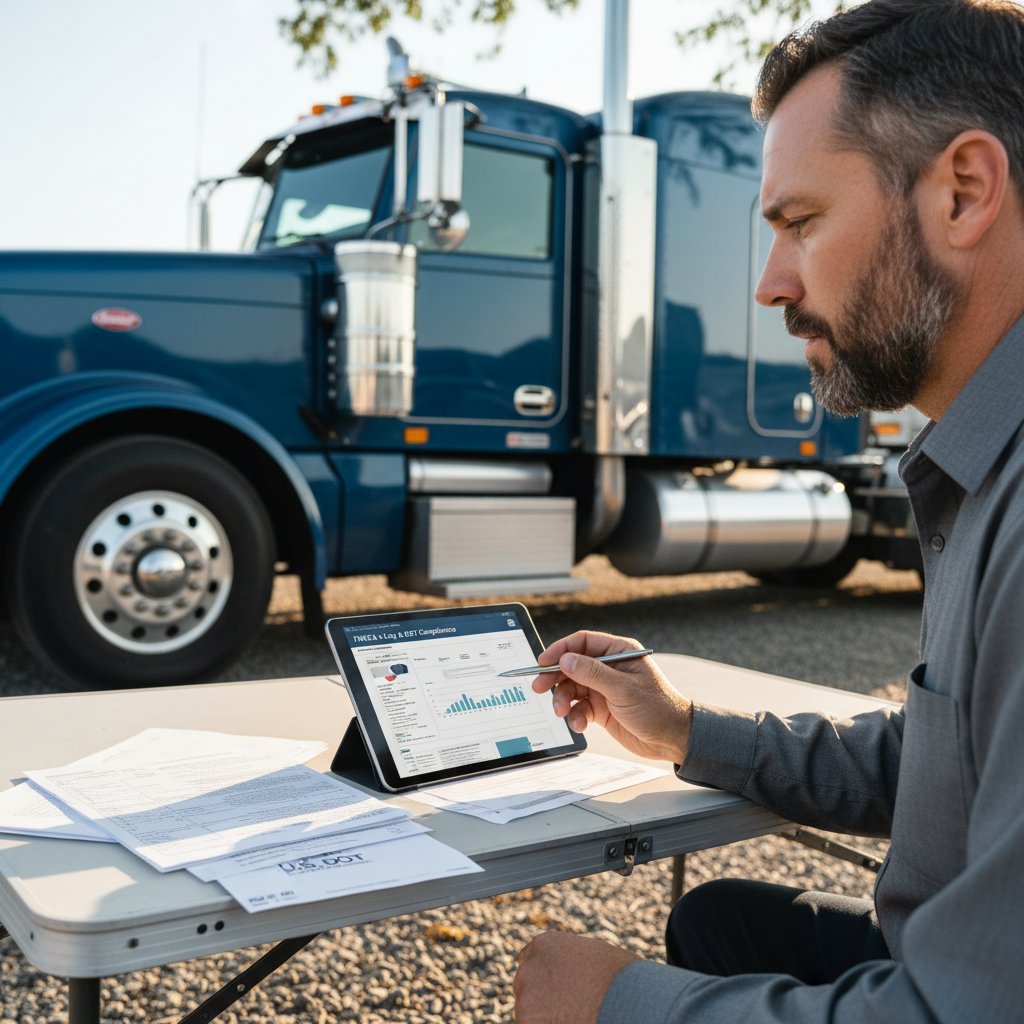
See 2026 bobtail and physical damage insurance cost ranges per month, key pricing drivers, sample scenarios, and proven ways to lower premiums—without creating a coverage gap that can lead to a denied claim.
Bobtail and physical damage insurance cost in 2026 usually falls into a simple pattern: bobtail/NTL is often $20–$60 per month, while physical damage commonly prices at 0.8%–3.0% of your truck’s stated value per year (which can look like $80–$450+ per month depending on the unit and ZIP). Most owner-operators who need both land around $100–$500+ per month combined.
You can run clean for months, then lose a weekend—and your cash cushion—because you assumed “bobtail” meant “my truck is covered.” This guide sticks to real ranges and decision points so you can budget correctly and avoid the small wording issues that cause big claim headaches.
Quick answer: 2026 cost ranges (snippet-ready)
| Coverage | Typical 2026 cost range | What it covers (plain English) |
|---|---|---|
| Bobtail / Non-trucking liability (NTL) | $20–$60/month (often $240–$720/year) | Liability when you’re in the tractor not under load/dispatch (definitions vary by policy) |
| Physical damage (Comp + Collision) | Commonly 0.8%–3.0% of stated value per year (often $80–$450/month depending on truck value) | Repairs/total loss to your truck from collision, theft, fire, hail, animal strike, etc. |
| Combined estimate (bobtail + physical damage) | Often $100–$500+/month | The most common “what will this cost me?” combo for leased-on owner-operators |
50–80 word summary: In 2026, bobtail/NTL is usually a low monthly line item (often $20–$60/month) because it’s narrow liability coverage. Physical damage costs far more because it’s tied to your truck’s value, deductible, and garaging ZIP—commonly 0.8%–3.0% of stated value per year. If you need both, many owner-operators land around $100–$500+/month combined, depending on equipment and risk.
Key Takeaways: Essential Bobtail + Physical Damage Cost Facts
- Bobtail/NTL is liability-only. It generally does not pay to fix your truck.
- Physical damage is basically “truck value + deductible + ZIP.” Higher values and higher-risk garaging areas usually mean higher premiums.
- Cheap can get expensive fast. Gaps from dispatch definitions, missing endorsements, or unrealistic deductibles are common claim denial triggers.
- The best savings are structural: deductible strategy, secure parking/anti-theft, bundling (when it truly fits), and avoiding lapses/claim frequency.
Table of Contents
Reading time: 9 minutes
- 2026 Cost Benchmarks (Bobtail vs Physical Damage vs Combined)
- Coverage Differences That Change the Price (and Prevent Bad Assumptions)
- Physical Damage Pricing Explained (Percent of Truck Value + Deductible Examples)
- What Drives Cost the Most in 2026 (Rating Factors Checklist)
- Regional Cost Differences (Why Your ZIP Matters)
- How to Save Without Cutting the Wrong Coverage
- Sample Quote Scenarios (2026 Examples You Can Compare Yourself To)
- Frequently Asked Questions
- Why Logrock’s Approach Is Different (Business-First Insurance)
- Conclusion & Next Step
2026 Cost Benchmarks for Bobtail and Physical Damage Insurance Cost
In 2026, bobtail/NTL commonly prices at $20–$60 per month, while physical damage commonly prices at 0.8%–3.0% of stated truck value per year, making combined budgets often $100–$500+ per month.
Before you try to “save,” lock in the baseline: bobtail/NTL is often inexpensive because it’s limited liability coverage, and physical damage is where your budget swings because you’re insuring a high-dollar asset with expensive repairs and theft risk.
1) Typical bobtail insurance cost per month (and per year)
Bobtail insurance (often paired with non-trucking liability) is liability coverage for the tractor when you’re bobtailing and/or not under dispatch, depending on the policy’s definitions.
- Typical 2026 cost range: $20–$60/month is common for many profiles; higher with claims, violations, high-risk ZIPs, or higher limits.
- Why it matters: One at-fault crash can trigger bodily injury/property damage claims that dwarf what you saved by skipping it.
- Who usually needs it: Leased-on owner-operators whose motor carrier’s liability doesn’t apply when they’re off dispatch (or where the lease requires it).
Pro tip: Ask your agent to show the exact “under dispatch” (or “business use”) definition in writing—this is where many denied claims start.
2) Typical physical damage truck insurance cost (comp + collision)
Physical damage insurance pays to repair or total your truck after a covered loss, typically split into collision and comprehensive.
- Collision: You hit something / something hits you.
- Comprehensive: Theft, fire, hail, vandalism, animal strike, glass, and similar non-collision losses.
Physical damage is often required by lenders, and it’s the line item that can end a business fast if you “self-insure” by accident.
3) Combined bobtail + physical damage cost (the real-world budget number)
The combined bobtail/NTL + physical damage budget for many owner-operators often lands around $100–$500+ per month, driven mostly by truck value, deductible choices, and garaging ZIP.
Also, this combo is not your full truck insurance program. It doesn’t replace primary liability, cargo (if required), general liability, trailer interchange, or other lines your operation may need.
Coverage Differences That Change Bobtail and Physical Damage Insurance Cost
Bobtail/NTL is typically liability-only coverage for specific off-dispatch scenarios, while physical damage covers your truck for theft, collision, and weather losses, so confusing the two can create a claim-denial gap.
If you’re trying to build an affordable setup, you can’t afford the wrong definition. The cheapest policy is the one that pays when the claim happens.
Does bobtail insurance cover physical damage?
No—bobtail/NTL is liability coverage and typically does not pay to repair your tractor.
- Bobtail/NTL claim example: You’re bobtailing to a shop and rear-end a passenger vehicle; liability may respond if the scenario fits the policy wording.
- Physical damage claim example: Your tractor is stolen from a hotel lot; comprehensive may respond, subject to deductible and conditions.
If you’ve ever said “I’ve got bobtail, so I’m good,” you’re only good on liability in the situations your policy defines.
Bobtail vs non-trucking liability: what’s the difference (and do they cost the same)?
Bobtail insurance often emphasizes driving without a trailer, while non-trucking liability (NTL) emphasizes not being in business use or not under dispatch, and insurers do not all define dispatch status the same way.
Pricing is often similar because they’re both limited liability coverages, but the wording is what decides whether you’re covered on a deadhead home, a quick grocery run, or a trip to a shop at 2 a.m.
Practical takeaway: Your lease agreement may require specific wording or proof of coverage—verify that before you bind, not after a claim.
Physical Damage Pricing Explained: Percent of Truck Value + Deductible Examples
Physical damage premiums in 2026 commonly fall in the 0.8%–3.0% of stated value per year range, with deductible level and garaging ZIP acting as the biggest “swing factors.”
Physical damage is where owners either overpay (poor structure) or underinsure (bad day). Here’s the simplest way to think about it without getting buried in insurance jargon.
Rule of thumb: physical damage premium as a % of stated value
A workable estimating method is “truck value × 0.8%–3.0% per year,” then adjust for ZIP, deductibles, and loss history.
- Lower end (closer to 0.8%): experienced operator, favorable ZIP, strong loss history, higher deductibles.
- Higher end (closer to 3.0%): higher-theft ZIP, frequent comp losses, expensive repair environment, new venture profile, lower deductibles.
Stated value vs ACV (what changes your payout)
Many physical damage claims settle on ACV (actual cash value) at loss time, while some policies use stated or agreed value terms, so you should confirm how totals are valued before you rely on the number.
If you don’t know whether depreciation applies (and how), you don’t fully know what you bought—especially on newer or higher-value units.
Deductibles: how $500 vs $2,500 changes the premium (and your cash flow)
A deductible is retained risk, and choosing a deductible you can’t fund turns a “lower premium” into a cash-flow emergency during a repair.
| Truck stated value | Deductible | Illustrative annual physical damage range | Illustrative monthly |
|---|---|---|---|
| $40,000 | $1,000 | $600–$1,600 | $50–$133 |
| $90,000 | $2,500 | $1,200–$2,700 | $100–$225 |
| $160,000 | $2,500–$5,000 | $2,000–$4,800 | $167–$400 |
When a higher deductible backfires: you’re already tight on cash flow, you can’t float repairs while the shop works supplements, or you run areas with heavy comp exposure (theft, hail, deer).
What Drives Bobtail and Physical Damage Insurance Cost the Most in 2026
The biggest 2026 pricing drivers for bobtail/NTL and physical damage are garaging ZIP, truck stated value, deductible level, and your MVR/claims history.
If you’re shopping add-ons or comparing carriers, show up with clean info and you’ll get cleaner quotes (and fewer mid-process surprises).
Driver + business profile factors
Underwriters price people and operations as much as equipment, so MVR and claims frequency often matter as much as truck value.
- MVR: speeding, reckless, DUI, or patterns of violations.
- Experience: time in similar equipment and similar operation type.
- Claims frequency: even smaller claims can affect pricing in some markets.
- New venture profile: less history often means higher uncertainty and higher rates.
Equipment + usage factors
Physical damage pricing rises with higher truck values, higher repair costs, and higher exposure to theft/weather based on where and how you park.
- Truck value, age, and repair cost profile
- Safety tech (dash cam, GPS tracking, anti-theft, collision systems)
- Garaging ZIP (theft, vandalism, hail, litigation patterns)
- Parking habits (secured yard vs street/hotel lots)
Policy structure choices
Coverage forms, endorsements, exclusions, and deductible splits (comp vs collision) can change both premium and whether a real-world scenario is covered.
- Deductibles (comp and collision can be different)
- Coverage form and endorsements
- Bundling vs monoline placement (sometimes cheaper; sometimes worse coverage)
Quick “top drivers” ranking:
- Garaging ZIP/state
- Truck stated value
- Deductible level
- MVR/claims history
- Lease requirements / dispatch definition
Regional Cost Differences: Why Your ZIP Matters
State and ZIP can shift trucking premiums by $100+ per month because they proxy claim frequency and severity, including theft rates, repair costs, weather losses, and litigation environment.
Two owner-operators with the same truck can be far apart on price because the risk environment changes fast across metros and corridors.
Example 2026 monthly ranges (illustrative)
These ranges are illustrative and ZIP-specific quotes can land outside them, especially with higher-value equipment or recent losses.
| State | Bobtail/NTL (monthly) | Physical damage (monthly) | Notes |
|---|---|---|---|
| California | $30–$80 | $200–$500+ | Higher repair/litigation costs; some high-theft corridors |
| Texas | $20–$60 | $120–$350 | Big spread by metro vs rural garaging |
| Florida | $25–$70 | $150–$450 | Weather + severity can push comp |
| Georgia | $20–$60 | $120–$380 | Theft exposure varies a lot by metro ZIP |
| Missouri/Kansas | $20–$50 | $80–$250 | Often lower severity than coastal metros |
Bottom line: Garaging can easily move your price more than a small deductible tweak, especially on comprehensive-heavy risk (theft/hail).
How to Save on Bobtail and Physical Damage Insurance Cost (Without Cutting the Wrong Coverage)
The safest ways to reduce bobtail/NTL and physical damage premiums are deductible strategy, theft prevention, secure parking, clean MVR, and avoiding coverage lapses.
“Affordable” isn’t about starving coverage. It’s about removing waste and reducing risk signals that underwriters price hard.
Bundling discounts (what’s realistic in 2026)
Bundling can produce about 5%–15% savings when a carrier wants the risk and the coverage form fits your operation.
- Why it can help: package discounts, fewer policy fees, simpler billing.
- When bundling isn’t worth it: restrictive wording, weak claims service, or a carrier that’s overpriced on one line.
High-impact tactics that usually reduce premium
- Pick deductibles you can actually fund (maintenance account, not wishful thinking).
- Use secure parking (gated yard, cameras, well-lit areas) and document it.
- Install anti-theft + GPS tracking and make sure your agent discloses it to the carrier.
- Avoid lapses (a lapse signals cash-flow issues to the market).
- Control claims frequency (small comp claims can add up in underwriting).
- Ask about pay plan options (monthly plans can include fees; pay-in-full may reduce cost).
Sample Quote Scenarios for Bobtail and Physical Damage Insurance Cost (2026)
Realistic 2026 combined budgets often range from $90–$560 per month across common owner-operator profiles, largely based on garaging ZIP, experience, truck value, and deductibles.
These are illustrative ranges, not an offer. Use them as a “sanity check” so you don’t waste time on quotes that are obviously misaligned with your risk profile.
| Scenario | Profile | Truck value | Deductibles | Bobtail/NTL (monthly) | Physical damage (monthly) | Combined (monthly) |
|---|---|---|---|---|---|---|
| A: Low-risk Midwest | 10+ yrs exp, clean MVR, rural garaging | $55,000 | $2,500 coll / $1,000 comp | $20–$40 | $70–$160 | $90–$200 |
| B: Metro Texas | 5 yrs exp, 1 minor violation, metro garaging | $90,000 | $2,500 / $2,500 | $25–$55 | $120–$260 | $145–$315 |
| C: Higher-cost coastal | Clean record, but high-cost ZIP | $140,000 | $5,000 / $2,500 | $35–$80 | $220–$480 | $255–$560 |
| D: Newer operator | 1–2 yrs exp, new venture profile | $75,000 | $1,000 / $1,000 | $35–$70 | $140–$350 | $175–$420 |
How to use these scenarios
- Higher truck value → higher physical damage premium
- Lower deductible → higher physical damage premium
- Worse ZIP / MVR / claims → higher premiums across the board
Why Logrock’s Approach Is Different (Business-First Insurance)
Owner-operator insurance works best when it prioritizes correct dispatch wording, fundable deductibles, and claims handling that reduces downtime.
Insurance isn’t a trophy—it’s a tool to stay compliant and protect the asset that produces revenue.
A smart setup does three things:
- Avoids gaps (dispatch status, endorsements, correct forms)
- Matches cash flow reality (deductibles you can actually pay)
- Keeps you moving (claims handled cleanly so downtime doesn’t eat the year)
That’s how you keep control whether you’re leased-on, running your own authority, or running tight margins in specialized operations.
Frequently Asked Questions
In 2026, bobtail/non-trucking liability (NTL) commonly costs $20–$60 per month for many owner-operators, and higher prices are usually tied to MVR issues, recent claims, high-risk garaging ZIPs, or higher limits.
Bobtail/NTL is often cheaper than other trucking lines because it’s typically limited liability coverage meant for specific off-dispatch scenarios, not full-time primary liability. The key is to confirm the policy’s dispatch/business-use definition so your “cheap” bobtail doesn’t turn into a denied claim when you’re deadheading, going to a shop, or driving the tractor for personal use.
No—bobtail/NTL is generally liability-only coverage and typically does not pay to repair your tractor after theft, collision, fire, or hail.
To protect your truck itself, you need physical damage coverage (comprehensive + collision), which is usually priced based on your truck’s value, deductibles, and garaging ZIP. A common budgeting mistake is buying bobtail/NTL and assuming the truck is “covered” overall; in most cases, that only addresses liability in narrow situations and leaves you exposed on the asset.
The difference is mostly about how the policy defines covered use: bobtail often emphasizes driving the tractor without a trailer, while non-trucking liability (NTL) emphasizes being not under dispatch or not in business use.
In practice, pricing can be similar, but coverage can be very different depending on the dispatch definition and lease requirements. Before you bind, ask for the exact definition in writing and compare it to how you actually run (deadhead, trips to a shop, personal errands, parking habits). That’s where the real “difference” shows up—on claim day.
In 2026, physical damage insurance commonly estimates at about 0.8%–3.0% of your truck’s stated value per year, with garaging ZIP, deductibles, and loss history doing most of the heavy lifting on price.
As a simple example, a $100,000 tractor could land roughly anywhere from about $800/year to $3,000/year depending on risk and structure, which can look like $67–$250/month before fees. Because claim settlement can depend on ACV vs stated/agreed value terms, confirm how totals are valued and what deductibles you’re actually retaining.
You can usually lower premiums without creating a coverage gap by using fundable deductibles, improving theft prevention (GPS tracking/anti-theft), using secure parking, keeping a clean MVR, and avoiding policy lapses.
Bundling can help, but only when the coverage form fits your lease/dispatch reality and the carrier truly wants the risk. Also watch claims frequency—multiple smaller comprehensive claims can weigh on pricing in many markets. If cash flow allows, ask about pay-in-full options to reduce installment fees.
Bundling bobtail/NTL and physical damage is often cheaper, and when a carrier is competitive it can produce roughly 5%–15% savings compared to buying each line separately.
However, bundling can be a bad deal if one line is overpriced, the wording is restrictive, or claims handling is slow (downtime can cost more than premium). The practical approach is to compare bundled vs best monoline options side by side and pick the option that is both cost-effective and correctly aligned with your dispatch definition and lease requirements.
Conclusion: Budget the Cost, Then Validate the Wording
In 2026, bobtail/NTL is often $20–$60 per month and physical damage is often 0.8%–3.0% of stated value per year, so combined budgets commonly land around $100–$500+ per month.
Bobtail/NTL is usually a small monthly number, but it’s a big liability lever when you’re off dispatch. Physical damage is where your cost swings because it’s tied to truck value, deductible, and ZIP.
Key Takeaways:
- Bobtail/NTL is liability-only (not repair money for your truck).
- Physical damage is value + deductible + garaging ZIP (and it’s usually the bigger line item).
- Real savings come from structure and risk control—not just chasing the cheapest number.
If you want predictable costs, compare bundled vs separate options and make sure the dispatch definitions match how you actually operate.