
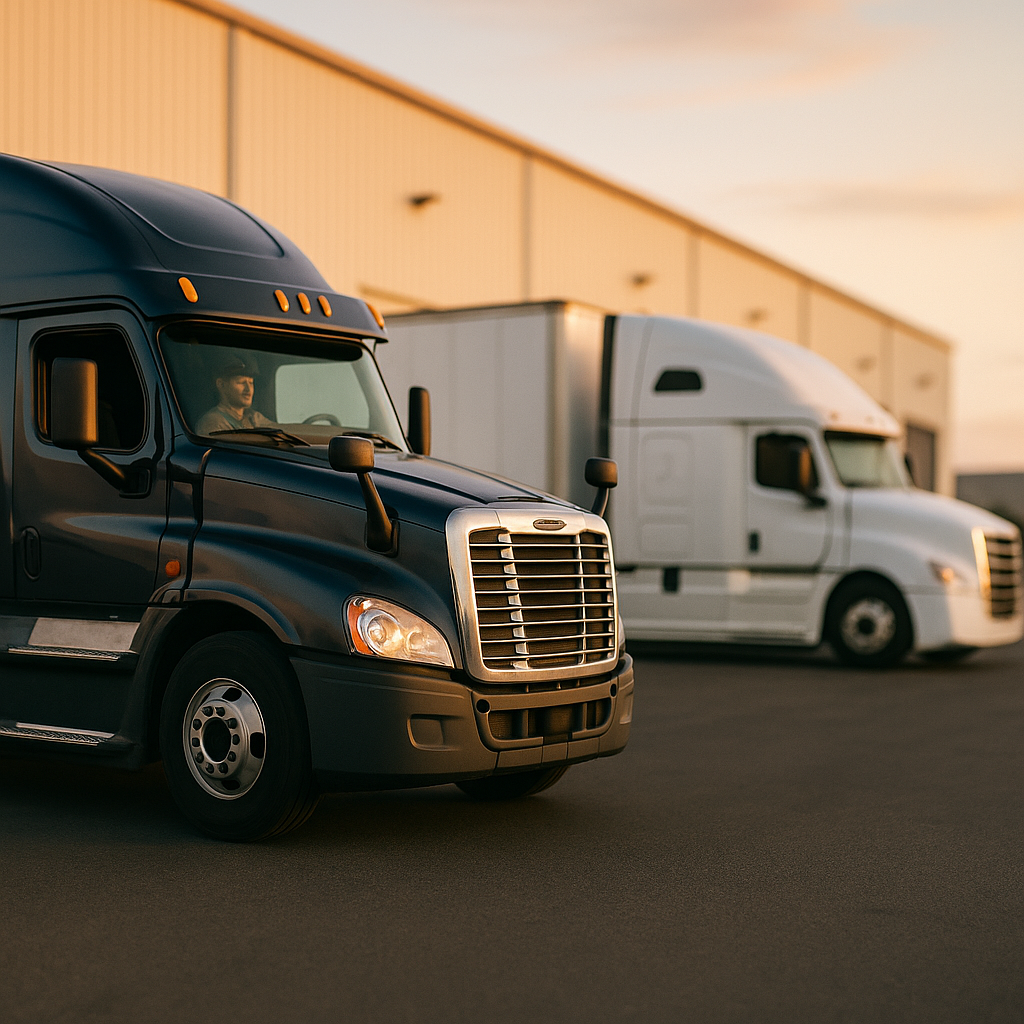
Confused about bobtail insurance vs non‑trucking liability (NTL)? Learn the differences, when each applies, 2026 cost ranges, and claim pitfalls—get a quote.
Bobtail insurance vs non trucking liability comes down to one simple idea: both are gap coverages meant to protect you when a motor carrier’s primary liability doesn’t apply—typically when you’re not under dispatch. Bobtail is about driving a tractor with no trailer; non‑trucking liability (NTL) is about personal/off‑duty use. Neither one replaces primary liability when you’re working.
If you get the trigger wrong, it’s not a “small paperwork issue.” It can turn into a six‑figure problem when a claim gets denied or a lease requirement gets violated. This guide gives you practical definitions, a scenario matrix, 2026 cost ranges, and the denial traps that catch owner‑operators.
Key Takeaways: Essential Bobtail Insurance vs Non‑Trucking Liability
- Bobtail = no trailer. NTL = not in business/personal use. Don’t confuse “truck status” with “work status.”
- Under dispatch usually means primary liability applies (carrier’s policy if leased-on, your policy if you run your own authority). Bobtail/NTL typically won’t.
- Deadheading is usually business use—and that’s where many NTL/bobtail claims get denied.
- The right move is matching coverage to your lease wording + your real weekly routine (home time, shop runs, terminal drops, bobtailing).
Table of Contents
Reading time: 8 minutes
- Bobtail Insurance vs Non‑Trucking Liability: Quick Definitions
- Bobtail Insurance vs Non‑Trucking Liability: Side‑by‑Side Comparison
- Scenario Matrix: Which Policy Pays?
- 2026 Cost Comparison: Is Bobtail or NTL Cheaper?
- Lease Agreements & Requirements: What Carriers Ask For
- Claim Pitfalls: Why Bobtail/NTL Claims Get Denied
- How to Choose the Right Coverage (and Save Money)
- Frequently Asked Questions
- Why Logrock’s Approach Is Different
- Conclusion: Pick Coverage Based on Dispatch Status
Bobtail Insurance vs Non‑Trucking Liability: Quick Definitions
Bobtail liability and non‑trucking liability (NTL) are optional “gap” liability coverages that do not satisfy the FMCSA’s public liability requirement for for‑hire interstate carriers (minimum $750,000 under 49 CFR §387.9).
These coverages exist because leased‑on owner‑operators often need protection in the “between loads” window—when the carrier may say you’re off dispatch, but you’re still driving a commercial tractor that can create big liability.
1) What is bobtail insurance?
Bobtail means operating a tractor without a trailer attached, and bobtail liability is designed to cover certain off‑dispatch liability situations while you’re tractor‑only.
The tricky part is that “bobtail” is a physical condition (no trailer), not a guarantee that you’re off duty. If you’re bobtailing to pick up a load, many policies treat that as in business, which can push the claim back to primary liability (or leave you exposed if coverage doesn’t line up).
- Who usually needs it: Leased‑on owner‑operators whose lease requires bobtail and/or who want protection off dispatch.
- Pro tip: The policy definition of “in the business of” matters more than trucking slang.
2) What is non‑trucking liability (NTL) insurance?
Non‑trucking liability (NTL) typically covers liability when the tractor is being used for personal/off‑duty reasons and you are not under dispatch for the motor carrier.
NTL is the common “real life” gap coverage for things like going to dinner, a hotel, or home—when you’re not working and the carrier’s liability may not apply. It’s still liability coverage (damage/injury to others), not cargo coverage and not physical damage.
- Who usually needs it: Leased‑on drivers whose carrier provides primary liability while working but expects the owner‑operator to insure off duty.
- Pro tip: “Empty” doesn’t automatically mean “non‑trucking.” Purpose of the trip matters.
3) Key terms people mix up (this is where claim denials start)
- Under dispatch: You’re assigned/available for work or moving as part of the job under carrier direction.
- Deadhead: Driving empty to reposition for business (often to the next pickup). Empty ≠ personal use.
- Unladen: You may have an empty trailer; it can still be commercial operation.
- Bobtail: Tractor only—no trailer attached.
Bobtail Insurance vs Non‑Trucking Liability: Side‑by‑Side Comparison (What Each Covers)
Bobtail insurance vs non‑trucking liability (NTL) differs by trigger: bobtail is based on tractor‑only operation, while NTL is based on personal/not‑in‑business use, and both typically exclude trips considered “in the business of” the motor carrier.
Here’s the clean way to keep it straight: one describes equipment configuration (no trailer), the other describes use (personal/off duty).
| Category | Bobtail Liability (typical intent) | Non‑Trucking Liability (NTL) (typical intent) |
|---|---|---|
| Trigger | You’re operating without a trailer | You’re operating not in business / personal use |
| What it’s trying to cover | Liability gap when tractor-only and not covered elsewhere | Liability gap when off-duty/not under dispatch |
| What it usually does not replace | Primary liability under dispatch | Primary liability under dispatch |
| Common exclusions to watch | Anything defined as “in business,” dispatch-related movement | Business use, dispatch-related movement, many deadhead situations |
| Who buys it most | Leased-on owner-operators (sometimes required by lease) | Leased-on owner-operators |
| Biggest confusion | “I was bobtail so I’m covered” (not always) | “I was empty so it’s personal use” (often false) |
Reality check: A trip can be bobtail and still be business use (example: bobtailing to pick up a load). And a trip can be personal use with a trailer attached (depending on lease/policy wording).
Scenario Matrix: Which Policy Pays (Bobtail vs NTL vs Primary Liability)
Claims decisions are usually driven by dispatch/ELD documentation showing (1) whether you were under dispatch/in business and (2) whether a trailer was attached at the time of the loss.
This matrix is a practical way to sanity-check your situation. The final answer still depends on your policy language and lease, but this reflects how coverage disputes typically get analyzed.
Legend
- Primary liability: Motor carrier’s liability when leased-on while under dispatch, or your own primary liability if you operate under your own authority.
- Bobtail/NTL: Gap coverages that may apply only if you’re not under dispatch / not in business (based on policy wording).
| Real-world situation | Trailer? | Business/dispatch status (typical) | Coverage that usually applies |
|---|---|---|---|
| Hauling a load on a rate confirmation | Yes | Under dispatch | Primary liability |
| Bobtailing to pick up your next load | No | Often under dispatch / in business | Primary liability (not NTL) |
| Deadheading to reposition to a shipper | Maybe / no | Business use | Primary liability (NTL often excluded) |
| After delivery, driving to a truck stop for a shower | Maybe / no | Could be off-dispatch or still “in business” (depends) | Depends (common gray area) |
| Driving the tractor to dinner on home time | No | Personal use | NTL (sometimes bobtail, depending on wording) |
| Driving home for the weekend (carrier allows it) | No | Personal use/off-dispatch | NTL (typical intent) |
| Taking the truck to a repair shop | No | Often considered maintenance for business | Often primary liability (verify) |
| Yard move / moving parking spots | Maybe / no | Depends on dispatch/in-business definition | Depends |
| Unauthorized personal use (violating lease) | Any | Policy/lease violation | High denial risk |
What to do with gray areas: Ask your agent and your carrier one exact question: “How does the policy define ‘in the business of’ and ‘under dispatch’—and how does that apply to my routine (deadhead, shop runs, home time)?”
Apples-to-apples quote comparison • Lease requirement check • Exclusions explained in plain English
2026 Cost Comparison: Is Bobtail or NTL Cheaper?
In 2026, many leased‑on owner‑operators see non‑trucking liability (NTL) priced around $25–$90 per month and bobtail liability priced around $25–$90 per month, depending on state, garaging ZIP, MVR, and loss history.
These are ballpark ranges for gap coverages, not a promise. Pricing can land outside the range based on underwriting appetite and how your risk profile is classified.
Which one is usually cheaper?
Neither is “always cheaper,” because insurers often price these as similar “gap liability” exposures. The best move isn’t chasing the lowest monthly number—it’s making sure the coverage trigger matches your real off‑dispatch situations.
What affects the price the most
- Garaging location: Metro areas and high-claim regions typically cost more.
- MVR violations: Speeding/following-too-close can raise rates fast.
- Claims/loss history: Past losses usually increase premium.
- Prior insurance lapse: Underwriters treat lapses as a major red flag.
- How the truck is titled/leased: Named insured and lease structure can affect eligibility.
Installment fees note: Monthly billing can add finance/processing fees, so compare total annual cost—not just “$X/month.”
Lease Agreements & Requirements: What Carriers Usually Ask For
Federal Truth‑in‑Leasing rules (49 CFR §376.12) require written lease terms that specify responsibilities, including who provides insurance and when it applies.
If you’re leased-on, your week is usually split into two lanes: (1) working under dispatch and (2) off dispatch. Carriers commonly require you to carry certain coverages in the off-dispatch lane because your tractor can still create liability even when you aren’t pulling their freight.
What to check in your lease (fast checklist)
- Who provides primary liability while under dispatch?
- How does the lease define “under dispatch” (or “in the service of”)?
- Does the carrier allow personal use? Under what conditions?
- Does the lease require NTL, bobtail, or specific limits?
- Does it address deadhead explicitly?
- Does it require the carrier to be additional insured or require specific COI wording?
What’s “required” vs what’s “contractually required”
- FMCSA/state minimums apply to operating authority and required filings (primary liability).
- Lease requirements are contractual, and carriers can demand coverages that go beyond legal minimums.
Smart move: Get the carrier’s insurance requirements in writing and give them to your agent before you bind coverage.
Claim Pitfalls: Why Bobtail/NTL Claims Get Denied
Carriers must retain ELD records and supporting documents for 6 months under 49 CFR §395.8(k), and those timestamps are routinely used to verify whether a driver was “in business” or truly off duty during a claim.
Most denials aren’t personal. They happen when the facts (dispatch messages, ELD duty status, trip purpose) don’t match the policy trigger for NTL or bobtail.
The denial checklist (most common)
- You were actually under dispatch (even if you were empty).
- The trip was considered business use (deadhead/reposition).
- You were doing something the lease calls unauthorized personal use.
- Your logs/ELD show you were on duty while claiming “personal use.”
- The policy has a tight definition of “in the business of” the motor carrier.
- Policy info is wrong: excluded driver, wrong garaging, wrong radius, etc.
Three realistic “how it goes wrong” examples
- Deadhead crash: You deliver, then deadhead 90 miles to a shipper for the next morning. You think “no trailer = bobtail = covered.” Insurer treats it as business repositioning → NTL/bobtail may not apply.
- Dispatch gray zone: You drop a load, dispatcher says “stand by,” and you roll to a truck stop. You assume off-dispatch; carrier/policy may still treat you as in business → denial risk.
- ELD mismatch: You select personal conveyance, but you’re moving toward the next pickup. In a claim investigation, that can be argued as business use even if you didn’t mean it that way.
Driver tip: Keep dispatch communications (texts, load info, ELD notes). In a claim, proving your status can matter as much as proving fault.
How to Choose the Right Coverage (and Save Money)
If you operate under your own authority in interstate for‑hire trucking, FMCSA minimum public liability is $750,000 (49 CFR §387.9), while leased‑on drivers typically rely on the carrier’s primary liability and use NTL/bobtail to address off‑dispatch gaps.
Choosing the right gap coverage is about being honest about how you work and how your lease defines dispatch status.
Step 1: Decide based on your authority setup
- Leased-on to a motor carrier: You usually need NTL and/or bobtail to cover off-dispatch gaps (based on lease requirements).
- Own authority: You’re typically buying primary liability as part of a full commercial truck policy; NTL/bobtail may be irrelevant or handled differently.
Step 2: Decide based on how you actually live
- Do I go home in the tractor?
- Do I bobtail a lot between loads?
- Do I run personal errands in the truck?
- Do I deadhead frequently (and is it clearly business use)?
Step 3: Save money the smart way (without buying junk coverage)
- Quote apples-to-apples: Same limits, same drivers, same garaging address.
- Avoid lapses: Continuous coverage is one of the biggest premium protectors.
- Be honest about use: Saving $40/month isn’t worth a denied claim.
- Bundle where it fits: Some carriers price better when packaged (depends on operation).
Frequently Asked Questions
Bobtail insurance (bobtail liability) is liability coverage intended to apply when a tractor is being driven without a trailer and the motor carrier’s primary liability isn’t responsible for that trip.
Bobtail does not automatically mean “covered,” because many forms exclude trips considered in business or under dispatch (for example, bobtailing to a pickup). In practice, adjusters look at dispatch messages, ELD duty status, and trip purpose to decide if the trip was business-related. If you’re leased on, confirm your lease’s definition of dispatch and whether bobtail is required—and at what limit (many programs use a $1,000,000 CSL, but limits vary).
Non‑trucking liability (NTL) is liability coverage designed to apply when you use the truck for personal/off‑duty reasons and you are not under dispatch or “in the business of” the motor carrier.
NTL is built for real off‑duty use (dinner, hotel, home time) when the carrier’s liability doesn’t apply, but it usually excludes business use, including many deadhead and reposition trips. That’s why “I was empty” isn’t a reliable test for coverage. If you want NTL to protect you, make sure your policy’s definitions match your weekly routine and your lease’s rules for personal use.
The difference is the trigger: bobtail is based on equipment configuration (tractor with no trailer), while non‑trucking liability (NTL) is based on trip purpose (personal/not‑in‑business use).
A trip can be bobtail and still be business use (for example, bobtailing to a pickup), and that’s a common denial scenario. Neither bobtail nor NTL replaces primary liability when you’re under dispatch; primary liability is the coverage designed to respond while you’re working (carrier’s policy if leased-on, your policy if you have your own authority). The safest approach is to verify how your policy defines “in business” and “under dispatch” before you bind.
Either one can be cheaper, but many owner‑operators see both NTL and bobtail priced in a similar range—often about $25–$90 per month each—because both are “gap liability” endorsements.
Your state, garaging ZIP, driving record, claims history, and insurer appetite tend to drive pricing more than the label. The right comparison is quoting both with the same limit and drivers, then confirming the big exclusions (business use, dispatch definition, deadhead/reposition). Cheap coverage that doesn’t trigger during your real off‑dispatch scenarios isn’t a savings—it’s a gap you don’t discover until a claim.
Why Logrock’s Approach Is Different (Business‑First Trucking Insurance)
A useful gap‑coverage review verifies your named insured, required COI wording (like additional insured), and the liability limit you’re expected to carry (commonly $1,000,000 CSL for many programs) before you bind a bobtail/NTL policy.
Owner‑operators don’t need a lecture—they need a policy that matches reality: dispatch messages, deadhead, home time, shop runs, and the stuff that happens between loads.
- Identify coverage gaps between carrier-provided liability and off-dispatch risk
- Match policy wording to your lease (dispatch status, personal use rules, and exclusions)
- Build an insurance stack that protects cash flow and keeps you rolling
Conclusion: Pick Coverage Based on Dispatch Status (Not the Name)
Bobtail insurance vs non trucking liability isn’t about which one sounds better—it’s about whether you were under dispatch/in business or truly off duty, because most forms exclude business-related trips like deadhead and load-related repositioning.
If your answer is fuzzy, the claim outcome can be fuzzy too. Take 10 minutes to match your lease wording and your weekly routine to the coverage trigger you’re buying.
Key Takeaways:
- Bobtail = no trailer. NTL = personal use/off-dispatch.
- Deadhead is usually business use, so don’t assume NTL covers it.
- Lease wording + policy definitions decide what’s covered—not trucking slang.
If you want to stop guessing, get a quick review of your routine and your lease requirements before you bind.



