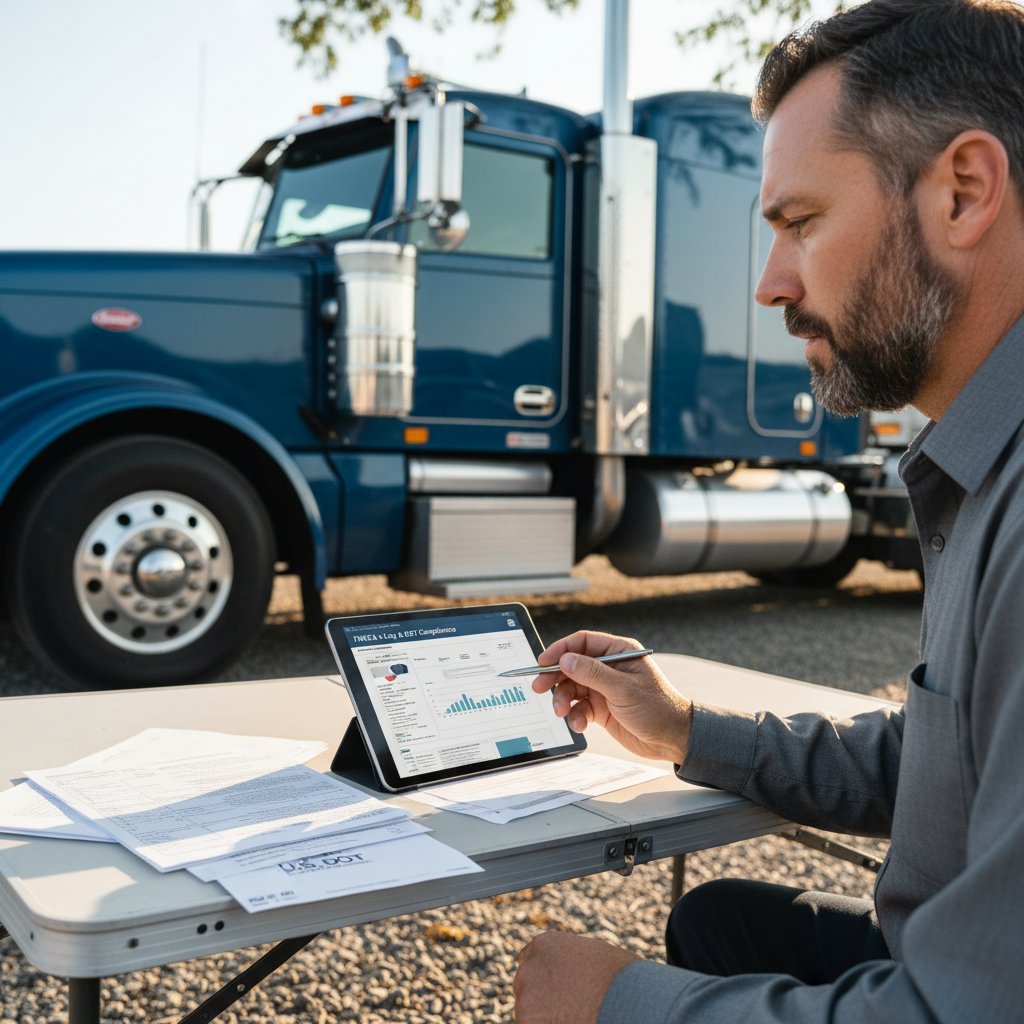
Learn what bobtail truck insurance covers, how it differs from non-trucking liability, when it’s required, and 2026 cost ranges. Get a quote.
Bobtail truck insurance (often sold as non-trucking liability) typically pays third-party liability when you’re driving the tractor with no trailer and you’re not under dispatch / not operating in the motor carrier’s business (exact trigger depends on the policy form). It usually doesn’t pay for damage to your tractor, your medical bills, or cargo.
If you’re leased-on and you bobtail out of the yard for food, a shop run, or to head home between loads, one accident can turn into a denied claim if the insurer decides the trip was “in business.” The difference is almost always dispatch status plus your policy wording—not what drivers casually call the trip.
Table of Contents
This guide is organized into 12 sections for an estimated 10-minute read.
- What does bobtail truck insurance cover? (Fast answer)
- What Is Bobtail Truck Insurance?
- What Bobtail Insurance Covers (and What It Doesn’t)
- Bobtail vs. Non-Trucking Liability vs. Deadhead/Unladen (Decision Matrix)
- When Do You Need Bobtail Truck Insurance (and When Is It Required)?
- Bobtail Insurance Cost in 2026: Ranges + Pricing Factors
- How to Save on Bobtail Truck Insurance (Without Coverage Gaps)
- Temporary Bobtail Insurance: Can You Get Short-Term Coverage?
- Risks of Bobtailing: Real-World Claim Scenarios
- How to Choose the Right Bobtail Coverage: 7-Point Checklist
- Frequently Asked Questions
- Why Owner-Operators Use Logrock for Trucking Insurance
- Conclusion & Get a Quote
What does bobtail truck insurance cover? (Fast answer)
Bobtail truck insurance typically provides liability coverage (injury and property damage you cause to others) when you’re driving the tractor without a trailer and you’re not under dispatch / not operating in the motor carrier’s business, as defined by your policy and lease agreement.
In most setups, it’s built to protect you from the “gap” between your carrier’s primary liability (which often applies when you’re working for the carrier) and your personal exposure when you’re off-duty in the tractor.
It also usually does not cover damage to your own tractor, your injuries, or cargo.
Key Takeaways: Essential Bobtail Truck Insurance
- Bobtail is about the tractor + the “gap”: It’s designed for liability when you’re in the tractor with no trailer and the carrier’s policy may not apply.
- Dispatch status is everything: Denied claims often come down to whether the trip was considered in business (deadheading to a pickup, repositioning, etc.).
- It’s usually cheaper than primary liability: Many leased-on owner-operators see bobtail/NTL priced in the hundreds per year, but the wrong wording can still cost you big.
- It doesn’t replace commercial truck insurance: If you have your own authority, you still need primary liability filings; bobtail is not a substitute.
What Is Bobtail Truck Insurance?
Bobtail truck insurance is a liability-only policy (or endorsement) meant to cover you when you’re driving a tractor with no trailer and your carrier’s primary liability may not apply due to dispatch or business-use wording.
1) Bobtail meaning (in trucking insurance terms)
Bobtailing means you’re driving the tractor only—no trailer attached.
Common real-life examples include leaving the terminal to get dinner, driving to a shop for repairs, heading home after dropping a trailer, or moving the tractor to a different parking spot.
2) What bobtail insurance is designed to do
Many leased-on owner-operators are covered under the motor carrier’s primary liability only when they’re operating in the carrier’s business (often described as “under dispatch,” but the lease and the policy form control the claim).
Bobtail coverage is meant to fill the gap when you’re in the tractor without a trailer and you’re not performing business operations for the carrier.
What Bobtail Insurance Covers (and What It Doesn’t)
Most bobtail/non-trucking liability policies cover third-party bodily injury and property damage, but they commonly exclude your tractor’s physical damage, your medical bills, and business-use trips.
Usually covered: third-party liability
Most bobtail/NTL policies focus on liability to others, such as:
- Bodily injury: Injuries to other people (drivers, passengers, pedestrians).
- Property damage: Damage to other vehicles, buildings, light poles, guardrails, and similar property.
- Legal defense: Often included, but confirm whether defense costs are inside or outside the limit.
Usually NOT covered: common exclusions owner-operators trip over
- Physical damage to your tractor: Sliding into a ditch or getting backed into at a truck stop is a comprehensive/collision issue, not bobtail liability.
- Your injuries: Many independent contractors use occupational accident (or another medical/income option) instead of workers’ comp.
- Cargo: Cargo coverage is separate and tied to freight exposure.
- Accidents while you’re “in business”: Many forms exclude business use, including deadheading to a pickup or repositioning under dispatch.
Limits and deductibles: what to look for
Leases often require a specific bobtail/NTL liability limit, and $1,000,000 CSL is a common requirement (but your carrier may require something different).
Deductibles typically apply to physical damage coverages, not liability, so don’t expect “a lower deductible” to make a bobtail policy better.
Bobtail vs. Non-Trucking Liability vs. Deadhead/Unladen (Decision Matrix)
“Bobtail” describes having no trailer, while “non-trucking liability” describes non-business use, and “deadhead” usually describes business movement while empty—so the coverage trigger is dispatch/business status, not the driver’s label.
Plain-English definitions
- Bobtail: Tractor only, no trailer attached (equipment setup).
- Non-trucking liability (NTL): Liability coverage when you’re using the tractor for non-business purposes and you’re not under dispatch (usage).
- Deadhead: Driving empty to reposition or to a pickup; it’s often business movement.
- Unladen: A vague term that can mean bobtailing or deadheading depending on the insurer or carrier.
Decision matrix: common scenarios
Use this table as a starting point, then verify your lease and policy wording before you assume anything is covered.
| Scenario | Trailer Attached? | Under Dispatch? | Business Purpose? | Likely Coverage That Responds* |
|---|---|---|---|---|
| Drive to restaurant after parking for the night | No | No | No | Bobtail/NTL (if defined as non-business) |
| Drive home after dropping trailer | No | No | No | Bobtail/NTL |
| Drive to shop for repair while “off-duty” | No | No | Mixed | Often Bobtail/NTL, but confirm business-use wording |
| Deadhead to pick up your next load | No | Yes / sometimes | Yes | Carrier/primary liability (NTL often excluded) |
| Return to terminal after delivery per dispatch instructions | No | Yes | Yes | Carrier/primary liability |
| Move tractor around yard to park | No | Depends | Depends | Carrier coverage or bobtail/NTL (often disputed) |
| Fuel stop between loads while dispatched | Maybe/No | Yes | Yes | Carrier/primary liability |
| Weekend personal errand (no dispatch) | No | No | No | Bobtail/NTL |
*General guidance only; claims are decided by the policy form, endorsements, and lease agreement.
How to reduce claim disputes
When an adjuster is deciding whether you were “in business,” documentation matters: dispatch messages, timestamps, trip notes, and ELD status are often the difference between a clean claim and a long fight.
When Do You Need Bobtail Truck Insurance (and When Is It Required)?
Bobtail/NTL is most commonly required by a motor carrier lease agreement for owner-operators, and it’s usually not a state “mandate” so much as a contract requirement to prevent a liability gap.
Leased-on owner-operators (most common requirement)
If you’re leased to a motor carrier, bobtail/NTL is often required because the carrier doesn’t want a liability gap when you’re off dispatch.
- Minimum limits: Often $1,000,000 CSL, but your lease controls.
- Approved insurers: Some carriers require specific markets.
- Proof on file: Many carriers won’t dispatch without a COI.
Owner-operators with their own authority
If you have your own authority, bobtail is not a replacement for the commercial auto liability you need to operate legally.
FMCSA financial responsibility rules for for-hire interstate motor carriers commonly require $750,000 minimum public liability for general freight (49 CFR §387.9), and many shippers/brokers require $1,000,000; bobtail/NTL doesn’t satisfy those filings.
State requirements vs. contract requirements
In practice, the “requirement” you’ll feel is your carrier’s lease language: no bobtail/NTL on file, no load.
Bobtail Insurance Cost in 2026: Ranges + Pricing Factors
In 2026, many leased-on owner-operators see bobtail/NTL priced around $25–$75 per month ($300–$900 per year), with higher-risk profiles closer to $75–$150+ per month ($900–$1,800+ per year).
2026 cost benchmarks (realistic ranges)
- Typical range: $25–$75/month (about $300–$900/year)
- Higher-risk profiles: $75–$150+/month (about $900–$1,800+/year)
What moves the price
- MVR and loss history: Speeding, following-too-close, and at-fault accidents usually increase premium.
- Garaging ZIP: Metro areas tend to price higher than rural locations.
- Coverage trigger wording: “True non-business use” vs. broader forms can price differently.
- Required limit: Higher limits typically cost more.
- Continuous coverage: Lapses can increase cost and reduce carrier options.
If someone promises a single “guaranteed price,” they’re usually quoting a best-case driver in a best-case state—or skipping important underwriting details.
How to Save on Bobtail Truck Insurance (Without Coverage Gaps)
The safest way to lower bobtail/NTL cost is to match your lease-required limit, avoid coverage lapses, and keep a clean MVR, because most denied or delayed claims come from misaligned wording—not from paying $10 more per month.
1) Match limits to your lease (don’t guess)
If your lease requires $1,000,000, buy $1,000,000. Buying the wrong limit doesn’t make you “kind of covered”—it makes you non-compliant.
2) Compare standalone vs. bundled (total premium matters)
Ask for both options when you shop:
- Standalone bobtail/NTL
- Bundled with your other coverages (if applicable)
3) Avoid lapses
A lapse can raise rates and narrow your market options. If you’re switching carriers, plan the effective dates so you don’t accidentally create a gap.
4) Keep your record clean (the cheapest “discount”)
One “minor” ticket can affect pricing for years. Better routing, better parking planning, and fewer last-minute moves often translate into fewer violations.
Temporary Bobtail Insurance: Can You Get Short-Term Coverage?
True day-by-day “temporary bobtail insurance” is uncommon in the U.S. market, but many insurers can start a standard policy quickly with monthly payments and same-day proof of insurance when available.
What “temporary” usually means in real life:
- A policy that can be started quickly with monthly billing
- Coverage aligned to a lease change (switching carriers)
- Fast proof of insurance (COI) so you can get dispatched
Before you pay, verify the effective date/time (same-day isn’t always “right now”), the exact dispatch/business-use wording, and the cancellation terms (including any short-rate penalty).
Need bobtail/NTL proof fast?
If your carrier won’t dispatch you without bobtail or non-trucking liability on file, speed matters—but so does getting the trigger wording right so you don’t end up in a denied-claim situation.
- Same-day paperwork: when available
- Lease-friendly limits: built around what your carrier requires
- No-guesswork guidance: so you understand what’s excluded
Risks of Bobtailing: Real-World Claim Scenarios
Bobtail claims often turn into coverage disputes when the insurer believes the trip was business-related (deadhead, repositioning, or dispatch-related), because many NTL forms exclude “in business” use.
1) Off-duty crash (true personal use)
You run to grab food, someone cuts in, and you tag them at a light. If you’re clearly off-dispatch and personal use is allowed by your policy, bobtail/NTL often responds.
2) Deadhead to pickup (business movement)
You’re empty and heading to pick up the next load. Many NTL forms consider that business use and exclude it—so you want the carrier’s primary liability to apply and you want documentation that shows you were dispatched.
3) Yard move or shop road test
Yard moves and road tests after repairs can be surprisingly messy. Coverage can depend on the lease responsibilities, whether you’re considered “in business,” and whether the shop carries its own garage policy.
Practical tip: Keep texts, dispatch notes, and ELD status. If the claim becomes “were you under dispatch,” those records can protect you.
How to Choose the Right Bobtail Coverage: 7-Point Checklist
A solid bobtail/NTL policy is chosen by verifying trigger wording, lease-required limits, and key exclusions before binding, because those three items determine whether a claim gets paid.
- Trigger wording: What turns coverage on/off (under dispatch, in business, personal use)?
- Lease-required limits: Don’t underbuy and don’t assume $1M without checking.
- Named insured accuracy: Must match the lease and what the carrier wants on file.
- Territory/radius: Match where you actually run and park.
- Exclusions: Watch anything tied to business use, maintenance trips, or yard moves.
- COI process: How fast can proof be issued, and who sends it to the motor carrier?
- Claims reputation: Cheap is irrelevant if claims are slow or denied.
Frequently Asked Questions
These FAQs cover the most common bobtail truck insurance questions in 2026, including dispatch triggers, typical cost ranges ($25–$75/month), and common exclusions like business-use deadhead.
Bobtail insurance is typically liability coverage that applies when you’re driving a tractor with no trailer and you’re not under dispatch / not operating in the motor carrier’s business, based on the policy form and your lease agreement.
It’s most common for leased-on owner-operators because the carrier’s primary liability often applies only when you’re doing carrier business. Bobtail/NTL is meant to cover the “gap” during true personal use, like driving to eat or heading home after you’ve completed dispatch. It usually doesn’t cover your tractor’s damage (comp/collision), your injuries (occ/med options), or cargo.
Bobtail describes the equipment setup (tractor only), while non-trucking liability (NTL) describes the use (non-business, not under dispatch), so the claim usually hinges on the policy’s business-use/dispatch trigger.
That’s why two drivers can both be “bobtailing,” but only one has coverage: driving to dinner after parking is commonly non-business, while deadheading to a pickup is commonly business movement and may be excluded by NTL. Always read the wording for “in business,” “under dispatch,” and “personal use,” and align it with your lease.
In 2026, a common market benchmark for bobtail/NTL is $25–$75 per month ($300–$900 per year), with many higher-risk situations landing around $75–$150+ per month ($900–$1,800+ per year).
Your price depends on MVR (tickets/accidents), garaging location, required liability limits (many leases ask for $1,000,000 CSL), continuous coverage (lapses hurt), and how strict the insurer is on business-use exclusions. If a quote seems unusually cheap, confirm the trigger wording so you’re not buying a policy that won’t respond when you need it.
You typically need bobtail truck insurance when you’re leased to a motor carrier, you drive the tractor off-dispatch (home, personal errands, some shop trips), and your lease requires bobtail/NTL on file before dispatching you.
Even if you believe you “never drive off dispatch,” many carriers still require it to prevent a liability gap, and claims can be disputed if the trip purpose isn’t documented. If you have your own authority, bobtail/NTL isn’t a substitute for primary liability filings; FMCSA public liability minimums for many for-hire interstate carriers are commonly $750,000 (49 CFR §387.9), and many contracts require $1,000,000.
No—bobtail/NTL is generally liability-only, meaning it pays for injury or property damage you cause to other people, not repairs to your own tractor.
If you hit a pole, slide into a ditch, or get sideswiped at a truck stop while you’re bobtailing, damage to your hood, bumper, or frame is typically handled by physical damage coverage (comprehensive and collision), which is separate and usually includes a deductible. If you’re financing the tractor, the lienholder often requires physical damage, so it’s worth reviewing your entire coverage stack—not just bobtail/NTL.
Why Owner-Operators Use Logrock for Trucking Insurance
Owner-operators use Logrock to match bobtail/non-trucking liability wording to real dispatch situations and lease requirements, so coverage stays compliant and reduces the odds of a denied claim.
Most drivers don’t need “more quotes.” You need coverage that matches how you actually operate and paperwork that keeps you dispatched.
- Dispatch vs. non-dispatch clarity: so you don’t buy a policy that excludes your real risk.
- Lease-compliant limits: built around what your motor carrier requires.
- Simple process: because you’ve already got IFTA, IRP, maintenance, and detention headaches.
Conclusion & Get a Quote
Bobtail truck insurance is a simple product with a high-stakes trigger: whether the trip is considered “in business” or “under dispatch,” which is why policy wording and your lease agreement decide coverage.
If you’re leased-on, bobtail/NTL is often required and usually affordable—but only if it’s written to match your actual driving patterns. The most common failure point is confusing deadhead-to-pickup (often business) with personal use (often non-business).
Key Takeaways:
- Bobtail/NTL typically covers third-party liability when you’re tractor-only and off-dispatch (policy wording decides).
- It usually doesn’t cover tractor damage or your injuries (separate coverages handle those).
- The biggest claim trap is deadhead vs. personal use and weak documentation.
If you want to lock this down without guessing, get a quote and confirm the trigger language before you bind.