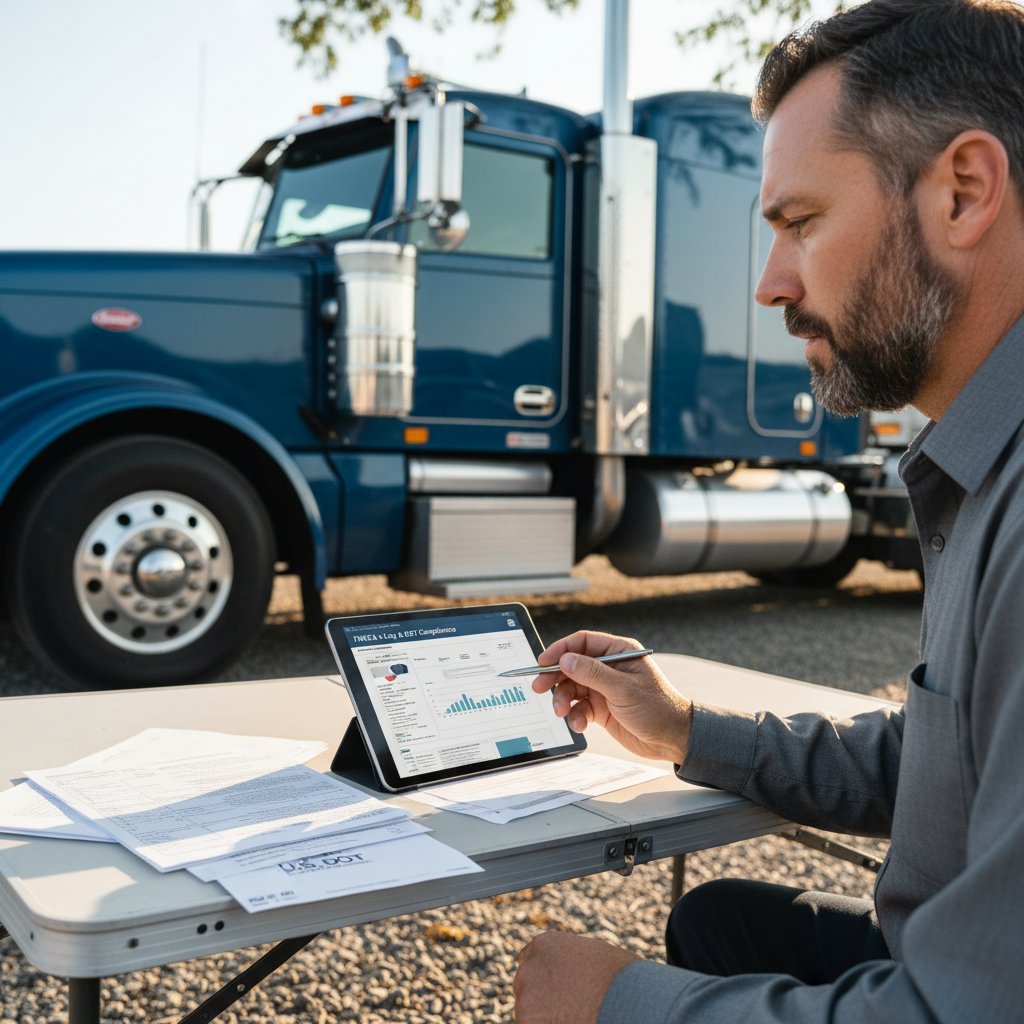
Learn box truck operator insurance costs in 2026, required coverages, FMCSA/state requirements, and how to lower premiums. Get a COI-ready quote.
Box truck operator insurance typically includes commercial auto liability, optional (but often required) cargo insurance, and physical damage—and in 2026 many owner-operators see pricing from about $250–$1,200+ per month depending on radius, cargo, and driving history. If you’re for-hire, the real goal isn’t just “getting a policy”; it’s getting limits, endorsements, and certificates that brokers accept and claims that pay.
Before you shop, it helps to anchor your expectations with Affordable trucking insurance (2026 cost snapshot), then use the box-truck-specific checklist below to avoid wasted premium and paperwork surprises.
Key Takeaways: Essential Box Truck Operator Insurance
- Most for-hire box truck operators need commercial auto liability (often $1,000,000 by contract), plus cargo if hauling freight for others, and physical damage if the truck is financed/leased.
- Typical 2026 pricing is wide (often $250–$1,200+/month) because underwriters price you on radius, cargo, new venture status, garaging, and loss history, not just “26-foot box truck.”
- FMCSA rules can apply for interstate/for-hire, and compliance often includes filings (not just an ID card) and sometimes an MCS-90 endorsement.
- The fastest safe way to lower premiums is quoting accurately, avoiding coverage lapses, and choosing deductibles you can pay right after a loss.
Table of Contents
Reading time: 11 minutes
- How Much Does Box Truck Operator Insurance Cost per Month in 2026?
- What Coverage Do Box Truck Operators Actually Need? (Required vs Optional)
- FMCSA Insurance Requirements for Box Trucks (Interstate) + MCS-90 Explained
- Box Truck Insurance Requirements by State (2026): What to Check
- How to Lower Box Truck Operator Insurance Premiums (Without Cutting Protection)
- Frequently Asked Questions
- Why Logrock: Straight Answers, COI-Ready Coverage, No Drama
- Conclusion: Get a Quote That Matches Your Route, Cargo, and Contracts
How Much Does Box Truck Operator Insurance Cost per Month in 2026?
In 2026, box truck operator insurance commonly ranges from about $250 to $1,200+ per month for established for-hire operators, while new ventures often price around $1,000 to $2,500+ per month based on radius, cargo, garaging, and loss history.
Those numbers are benchmarks, not promises, because a local courier with 40-mile radius and secure parking is a totally different underwriting file than a regional operator parking overnight at customer lots.
Informational cost bands (benchmarks, not a guarantee)
| Operator profile (for-hire) | Typical monthly range | Why it lands there |
|---|---|---|
| Lower-risk local (tight radius, general freight, clean history) | $250–$600 | Fewer miles + fewer states + simpler cargo |
| “Typical” small operator (local/regional, common limits, mixed lanes) | $600–$1,200 | More exposure + contract-driven limits |
| New venture / new authority (first year) | $1,000–$2,500+ | No track record = higher underwriting uncertainty |
| Higher-risk cargo or lanes (theft-prone, high value, dense metros) | $1,200–$3,000+ | Claim frequency/severity tends to be higher |
Cost ranges by box truck size & use case
| Truck type / use case | What changes the premium |
|---|---|
| 10–16 ft (local delivery) | Usually lower mileage; sometimes higher stop-and-go exposure |
| 20–26 ft (regional freight / moving) | Higher GVW and claim severity; more contract requirements |
| Reefer/temperature-controlled box | Often needs special endorsements; spoilage risk adds cost |
| Long radius / multi-state lanes | More miles + more time in higher-claim jurisdictions |
The 8 cost drivers underwriters care about (the “real” pricing levers)
- New venture vs. established: time in business and proof of prior coverage matter.
- Radius and annual miles: local vs. regional vs. long-haul is a major rating factor.
- Cargo type/value: electronics and theft-prone freight tend to price higher than general freight.
- Driver MVR and experience: tickets, at-fault accidents, and years driving move rates fast.
- Garaging/parking: secured lot vs. street parking is a real theft and vandalism variable.
- Limits and deductibles: liability, cargo, and physical damage structure changes premium.
- Claims history: frequency can hurt as much as severity.
- Vehicle value/condition: replacement cost and safety tech affect physical damage pricing.
Pro tip (don’t get fooled by a “cheap” quote): compare the same limits, the same deductibles, the same cargo description, and the same endorsements—then decide. This guide on Compare quotes apples-to-apples (cheapest commercial auto insurance) is built for that exact problem.
Tell us your truck size, radius, and cargo, and we’ll build the quote the way an underwriter sees it—so you don’t get re-rated later.
What Coverage Do Box Truck Operators Actually Need? (Required vs Optional)
A typical for-hire box truck insurance stack includes commercial auto liability (often $1,000,000 by contract), motor truck cargo (commonly $100,000+ by broker/shipper requirement), and physical damage (comprehensive + collision) when the truck is financed or you can’t comfortably self-insure repairs.
“Required” usually comes from three places: law (state/federal), lenders/lessors, and contracts (brokers, warehouses, shippers). The goal is to satisfy all three without buying coverage you’ll never trigger.
1) Primary Auto Liability (Commercial Auto Liability)
- What it pays: third-party bodily injury and property damage when you’re at fault.
- Why it’s essential: one severe claim can exceed your annual profit, and most facilities won’t load you without proof.
- Real-world limit: even when legal minimums are lower, $1,000,000 liability is a common contract requirement.
2) Motor Truck Cargo (Cargo Insurance)
- What it pays: covered damage to freight you haul for others, subject to exclusions and causes of loss.
- Why it’s essential: cargo claims often turn into chargebacks, withheld payment, or lost broker relationships.
- What brokers look for: limits, exclusions, and COI wording matter as much as price—see Cargo insurance limits + COI requirements for brokers/shippers.
3) Physical Damage (Comprehensive + Collision)
- What it pays: repairs/replacement for collision, theft, fire, vandalism, and weather (based on comp/collision terms).
- Who usually needs it: financed/leased trucks (often required), and owner-ops who can’t replace the truck with cash.
- Deductibles: pick a deductible you can pay fast; a low premium doesn’t help if the truck sits because you can’t fund the deductible.
4) General Liability (GL)
- What it covers: non-auto liability like slip-and-fall at a dock or certain customer property damage incidents (claim facts and policy wording control).
- When it’s required: many warehouses and contracts require GL even when the state doesn’t.
- Common misunderstanding: GL does not replace auto liability—these cover different loss types.
5) Non-Trucking Liability / Bobtail (When Leased-On)
- What it covers: liability when you’re operating off-dispatch (exact triggers depend on policy wording).
- Why gaps happen: carrier liability generally applies under dispatch; off-dispatch is where you can end up uninsured if you assume.
6) Add-ons that actually matter for box trucks
- Towing/roadside: confirm limits—one heavy tow can exceed low caps quickly.
- Rental reimbursement / downtime options: protects cash flow when the truck is down.
- Reefer breakdown / spoilage: only if you’re truly temperature-controlled.
FMCSA Insurance Requirements for Box Trucks (Interstate) + MCS-90 Explained
For interstate, for-hire property carriers, FMCSA financial responsibility rules generally require at least $750,000 in public liability coverage under 49 CFR §387.9, plus an active filing (commonly BMC-91/BMC-91X) to keep operating authority in good standing.
That’s the compliance baseline for many operations, but it’s normal for broker contracts to demand $1,000,000 liability and specific COI wording that goes beyond the legal minimum.
For the straight compliance picture (minimums + filings), start with FMCSA insurance requirements (filings + minimums).
Do box trucks fall under FMCSA rules?
FMCSA applicability is driven by interstate commerce and your operation type (private vs. for-hire), not whether the vehicle “looks like a semi.” Many box trucks move under DOT rules every day.
- Reminder: CDL rules and FMCSA insurance/authority rules aren’t the same thing.
- Reality: you can be non-CDL and still have DOT/authority and insurance filing obligations depending on the operation.
MCS-90 endorsement: what it is (and what it is NOT)
The MCS-90 is a federal endorsement tied to public protection, and it’s often misunderstood during audits and claims conversations.
- What it is: an endorsement that can require an insurer to pay certain third-party judgments up to the required limit in specific scenarios.
- What it’s not: it is not “full coverage,” and it doesn’t automatically make excluded losses covered for you.
If you’re unsure whether you need it or how it works with filings, read the MCS-90 filing guide before you assume you’re covered.
If you’re interstate or starting authority, filing mistakes and cancellations are a common reason operators get parked—get it reviewed before you roll.
Box Truck Insurance Requirements by State (2026): What to Check
Intrastate box truck insurance requirements are set by each state (often enforced by a state DOT/PUC) and can differ from the federal $750,000 interstate baseline in 49 CFR §387.9 and from common $1,000,000 broker contract limits.
If you run multi-state or you’re trying to keep authority and filings clean at renewal, use FMCSA insurance compliance tips (managing filings/endorsements) as a practical checklist for avoiding preventable cancellations and rejected paperwork.
State vs. federal: why it differs
- Interstate: generally follows FMCSA requirements (plus your contract requirements).
- Intrastate: follows state commercial minimums, which can be different than federal levels.
- Contracts: brokers/warehouses can still require higher limits than either one.
What to confirm before you bind a policy
- Intrastate liability minimum: confirm with your state DOT/PUC and your insurance agent.
- State filings (if any): some states require additional filings for certain carrier types.
- Workers’ comp: requirements typically change when you hire employees and can be state-specific.
- Facility rules: warehouses and ports can have their own COI language and access requirements.
Contract requirements checklist (brokers, shippers, warehouses)
Before you accept the load, confirm these items match the rate confirmation and the COI the broker expects:
- Auto liability limit: often $1,000,000
- Cargo limit: often $100,000+ (more for high-value freight)
- COI wording: additional insured wording and certificate holder details if required
- Speed: many facilities require same-day COIs to check in
How to Lower Box Truck Operator Insurance Premiums (Without Cutting Protection)
Most underwriters price box truck operator insurance using measurable variables—like radius, annual miles, driver MVR, garaging, cargo, limits, deductibles, and prior coverage—so the safest savings come from tightening those inputs rather than cutting liability limits.
If you want the same checklist most experienced operators use at renewal, start with Lower commercial truck insurance premiums (dash cams, deductibles, lapses).
1) Quote accurately (so you don’t get re-rated later)
Underwriters hate surprises, and surprises usually show up as re-rates, exclusions, or non-renewals.
- Radius and lanes: local vs regional vs multi-state
- Cargo type/value: describe what you really haul
- Drivers: list every driver and pull clean MVRs
- Garaging: where the truck sleeps matters
2) Avoid lapses in coverage (this one is expensive)
A coverage lapse can reduce carrier options and increase premiums at renewal, even if you had “a good reason.” If cash gets tight, call before a cancellation notice posts—reinstatements aren’t always guaranteed.
3) Use safety tech that actually pays back
- Dash cam: front-facing is a great start; driver-facing is common when you run employees
- Telematics: helpful if you’ll actually review scores and coach drivers
- Maintenance records: good records help in claims and underwriting conversations
4) Choose deductibles like a business owner
If moving from a $1,000 to $2,500 deductible saves you $120/month (about $1,440/year), that only works if you can produce $2,500 quickly after a loss. If you can’t, the truck can sit and the “savings” vanish.
We’ll help you compare forms, exclusions, deductibles, and COI requirements so you’re not buying a cheap denial.
Frequently Asked Questions
Box truck insurance FAQs below reflect common broker contract limits like $1,000,000 auto liability and $100,000 cargo, plus FMCSA’s $750,000 minimum for many for-hire interstate property carriers under 49 CFR §387.9.
You typically need commercial auto liability as the baseline, and most for-hire box truck operators also need cargo insurance (often $100,000+ by broker/shipper contract) plus physical damage if the truck is financed or you can’t self-insure repairs. The correct package is the one that satisfies law + lender + contract at the same time. If you haul freight for others, don’t guess on cargo wording and limits—many claims hinge on exclusions and COI details, not the premium.
In 2026, many established box truck owner-operators see monthly pricing around $250–$1,200+, while new ventures often land closer to $1,000–$2,500+ depending on radius, cargo, garaging, and driving/claims history. Your premium is usually driven more by where you run (radius and metro lanes), what you haul (value and theft exposure), and your record (MVR/claims) than by the truck length alone. Always compare quotes with the same limits and deductibles so you’re not comparing different products.
If you haul freight for others (for-hire), cargo insurance is commonly required by brokers and shippers even when a state doesn’t mandate it for your operation. A typical contract starting point is $100,000 in cargo coverage, but higher-value loads can require more, and the real “gotcha” is usually exclusions (theft conditions, unattended vehicle language, certain commodities). Before you bind a policy just to get a certificate, review Cargo insurance limits + COI requirements for brokers/shippers so your COI matches what the broker will actually accept.
If you operate interstate as a for-hire property carrier, FMCSA rules generally require at least $750,000 in public liability under 49 CFR §387.9 and an active filing (commonly BMC-91/BMC-91X) to keep your authority compliant. Many brokers still require $1,000,000 liability regardless of the federal minimum, so compliance and contracts both matter. Don’t confuse the MCS-90 endorsement with “full coverage”—it’s a financial responsibility tool tied to public protection, not a blanket promise to cover excluded losses.
Why Logrock: Straight Answers, COI-Ready Coverage, No Drama
A commercial truck insurance team should be able to deliver same-day COIs when possible and help prevent authority interruptions by keeping required filings (like BMC-91/BMC-91X) accurate and active.
Owner-operators don’t need a lecture—you need coverage that’s quotable, bindable, and usable at the dock.
- COI speed: brokers and facilities often won’t wait.
- Accurate underwriting: correct radius/cargo/garaging up front reduces re-rates later.
- Operator-first risk habits: the things that reduce claims also reduce premiums over time.
For renewal habits that keep rates steadier year-over-year, bookmark Insurance tips for truck owners (continuous coverage + safety).
Conclusion: Get a Quote That Matches Your Route, Cargo, and Contracts
Most for-hire box truck operators end up needing $1,000,000 liability by contract and often $100,000+ cargo, so the “best” quote is the one that matches your real lanes, freight, and paperwork requirements—not the one with the lowest monthly number.
Start with your actual operation (radius + cargo + garaging), build the right stack (liability + cargo + physical damage as needed), and keep COIs and filings clean so you can keep booking freight.
Key Takeaways:
- Expect wide pricing ranges: radius, cargo, and prior coverage drive the number more than truck length.
- Build for contracts: $1,000,000 liability and $100,000+ cargo are common broker starting points.
- Paperwork is part of coverage: COIs, endorsements, and (when applicable) FMCSA filings keep you running.
If you want to stop guessing and tighten up your coverage, get a quote built around how you actually run.
Related Reading: Affordable trucking insurance (2026 cost snapshot), Compare quotes apples-to-apples (cheapest commercial auto insurance), and Lower commercial truck insurance premiums (dash cams, deductibles, lapses).