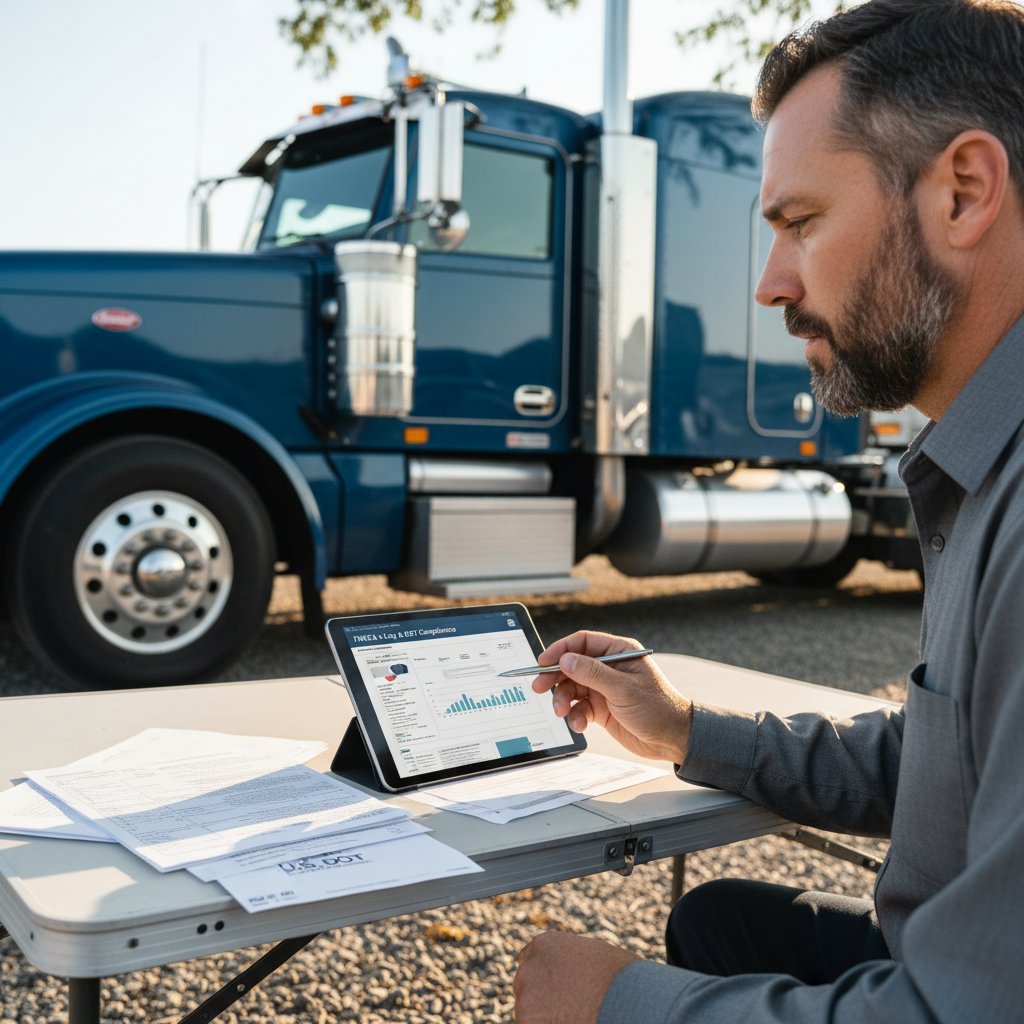
Compare business auto insurance vs personal auto insurance: exclusions, drivers, limits, HNOA, claim scenarios, and 2026 cost factors—so you pick the right policy and avoid a claim surprise.
Business auto insurance vs personal comes down to this: if a vehicle is being used to make money, a personal policy can run into business-use limits or exclusions when you file a claim. The fix isn’t “more paperwork”—it’s matching the policy type to the way the vehicle is actually used (job sites, deliveries, hauling tools, employees driving, or transport-for-fee).
Below is a plain-English breakdown of what changes between personal and commercial auto, when you should switch, where Hired & Non-Owned Auto (HNOA) fits, and the real claim scenarios that trigger coverage disputes—especially for contractors, hotshotters, and service businesses operating lean.
Table of Contents
Reading time: 8 minutes
- Side-by-Side Comparison: Business Auto vs Personal Auto (2026 Snapshot)
- What Personal Auto Insurance Usually Covers (and Where It Stops)
- What Business (Commercial) Auto Insurance Covers
- Does Personal Auto Insurance Cover Business Use? (The Exclusion Problem)
- Key Coverage Differences That Matter Most (Limits, Drivers, Vehicles)
- Alternative/Addon: Hired & Non-Owned Auto (HNOA) — When It’s the Right Fit
- Cost Comparison in 2026: Why Commercial Auto Usually Costs More
- Real-World Claim Scenarios: When a Personal Policy Can Deny or Limit a Business-Use Claim
- How to Choose the Right Policy (Decision Checklist + Ways to Save)
- Frequently Asked Questions
- Why Logrock (and Why This Matters When You Run Lean)
- Conclusion: Match the Policy to the Work
Side-by-Side Comparison: Business Auto vs Personal Auto (2026 Snapshot)
Personal auto is commonly written on the ISO Personal Auto Policy (PP 00 01) for household driving, while commercial auto is commonly written on the ISO Business Auto Coverage Form (CA 00 01) for vehicles used in business operations.
Here’s the at-a-glance version of what usually changes (exact rules still vary by carrier and state, so always confirm in writing).
| Category | Personal Auto Insurance | Business / Commercial Auto Insurance |
|---|---|---|
| Primary purpose | Household/personal driving (commute, errands, trips) | Business operations (job sites, deliveries, service calls, hauling for pay) |
| Who owns the vehicle | Individual/household | Business entity (LLC/corp) or vehicle used primarily for business |
| Who can drive | Named insured + household drivers (varies) | Employees, permitted drivers, sometimes broader “permissive use” (varies) |
| Liability limits | Often lower (many people carry state minimums) | Commonly higher to match contracts and larger losses |
| Vehicles | Private passenger cars, some light trucks | Cars, pickups, vans, service trucks, some heavier/specialty vehicles (carrier-dependent) |
| Business-use risk | May be limited/excluded depending on use and endorsements | Built to cover the business use described in underwriting |
| Add-ons | Personal endorsements (rideshare endorsement, etc.) | HNOA, hired auto, non-owned auto, “drive other car,” scheduled/any auto structures (varies) |
If you’re an owner-operator, hotshotter, or contractor: the “classification” problem is the same one that shows up when someone tries to insure a work pickup like a normal commuter vehicle—once revenue, loads, or job sites are involved, the insurer expects the policy to match the exposure.
Key takeaways: essential business auto insurance vs personal
- Personal auto insurance is priced for household driving. When your driving becomes part of operations (job sites, deliveries, hauling tools), you can move outside the risk the policy was built for.
- Commercial auto is built for business risk. That usually means higher liability limits, broader driver situations, and underwriting that matches how the vehicle is actually used.
- The biggest practical danger is a business-use mismatch. A mismatch can delay, complicate, or limit a claim—especially after a serious loss.
- HNOA can protect the business even if you own no company vehicles. It’s designed for employee-owned cars used on company time and short-term rentals used for business.
What Personal Auto Insurance Usually Covers (and Where It Stops)
Personal auto insurance is designed and priced for non-business household driving such as commuting to a single work location, errands, school runs, and personal trips.
What it is (in plain English)
Personal auto is built around the idea that the car is primarily for your life—not your operations. For many owners, that’s totally fine when the vehicle is only used to get to a meeting or commute to a consistent workplace.
Why it matters (the business risk)
Personal policies are typically underwritten assuming fewer “work exposures,” like multiple stops, job sites, deliveries under time pressure, and employee drivers. When those exposures show up after a crash, the claim review can get sharp—because the policy wasn’t rated for that use.
Typical coverages you’ll see
- Bodily injury/property damage liability: Pays for injuries and property damage you cause to others (up to your limit).
- Collision and comprehensive: Pays to repair/replace your vehicle for covered damage (subject to deductible).
- Uninsured/underinsured motorist: Helps when the at-fault driver has no insurance or not enough.
- Medical payments or PIP: Medical-related benefits (availability and rules vary by state).
Reality check: A personal policy can be appropriate for incidental business use in some cases. The issues usually start when the vehicle becomes a daily work tool (tools, materials, deliveries, job sites, or hauling for pay).
What Business (Commercial) Auto Insurance Covers
Commercial auto insurance is designed for vehicles used in the course of business where the business can be held liable, sued, or required by contract to carry specific limits like $1,000,000.
What it is (in plain English)
Commercial auto (often called business auto) is meant to align coverage with operations. That means the application, driver setup, garaging, radius, and vehicle use description are built around how the vehicle actually works for the business.
Why it’s essential (the business risk)
Business auto losses tend to be more expensive because the exposure is different: more miles, more stops, more backing, more time pressure, and more third-party relationships. When there’s a serious injury claim, lawsuits often target the business—not just the person holding the steering wheel.
Who commonly needs it
- Vehicles titled/owned by an LLC or corporation
- Multiple job sites per day (contractors, service techs, real estate teams)
- Deliveries, courier work, or transport-for-fee
- Employees driving the vehicle
- Contract requirements that push higher liability limits (often $1M)
If you’re in trucking or hotshot work, the “paperwork reality” is even harsher: if your coverage doesn’t match your operation, you can lose loads, lose contracts, and lose time—before you even get to the claim stage.
Does Personal Auto Insurance Cover Business Use? (The Exclusion Problem)
Many personal auto policies cover commuting and incidental business use but can exclude or restrict regular commercial activity such as deliveries, transporting people for a fee, or hauling loads for pay.
The short, honest answer
Sometimes for incidental use, and often not for routine business operations. The only safe answer is the written one: what your carrier says about your exact use, in your state, on your policy form, with your endorsements.
What counts as “business use” in the real world
If any of the items below describe your week, you should talk to your agent and get confirmation in writing (not “yeah you’re fine” on a phone call).
- Multiple job sites per day (contractors, service businesses, real estate)
- Regularly hauling tools/materials (ladders, toolboxes, compressors, inventory)
- Deliveries/courier work
- Transporting people for pay (rideshare) without the correct endorsement/policy
- Hotshot trucking or hauling loads for a broker/shipper
- Employee driving your vehicle (or you letting others drive it for work)
What the adjuster will ask after a crash
For a serious loss, claim investigations aren’t casual. Expect questions like:
- Where were you going—and why?
- Were you being paid (directly or indirectly) for that trip?
- Were you carrying tools, materials, cargo, or a customer?
- Is the vehicle wrapped/lettered for business?
- Who owns the vehicle on paper (title/registration)?
- Who was driving, and what’s their relationship to the business?
Plain-English risk: If the insurer believes the vehicle was used outside what the personal policy was rated for, you can end up with a delayed, disputed, or limited claim—right when the vehicle is how you get paid.
Key Coverage Differences That Matter Most (Limits, Drivers, Vehicles)
The most important differences between personal and commercial auto are liability limits, who the policy is structured to cover as drivers, and how the vehicle’s work use is underwritten and rated.
1) Liability limits (and contract reality)
What it is: Liability pays for injuries and property damage you cause to others, up to the limits shown on your declarations page.
Why it matters: State minimum limits can be wiped out in one bad accident, and business lawsuits often involve higher damages because the business is perceived to have assets or revenue.
Who needs higher limits: Any business driving to job sites, dealing with customers, or doing deliveries—plus anyone who signs contracts. In many industries (including trucking), brokers and shippers commonly require $1,000,000 in auto liability as a baseline.
- Practical tip: Don’t shop limits like a commodity. Shop limits like a shield for your business assets and future income.
2) Who’s driving (and permission structures)
What it is: This is how the policy handles employee drivers, permitted drivers, and real-world situations like rotating crews or helpers driving to a job site.
Why it matters: Personal auto is typically centered on household drivers. Commercial auto is built around business reality: employee drivers, MVR checks, driver eligibility, and business responsibility when someone is “on the clock.”
- Rotating drivers or shared vehicles
- Employees running errands
- Growth plans (going from 1 vehicle to 2–5)
3) Vehicle type, weight, and work use
What it is: A pickup used to commute is rated differently than a pickup used as a rolling toolbox or to haul materials daily.
Why it matters: Work trucks tend to see more stops, more backing, more job sites, and higher theft exposure for tools and equipment. Insurers price exposure, and business-use changes that exposure.
Rule of thumb: If the vehicle is part of how you deliver the service (not just how you get to work), commercial auto is usually the cleaner and safer fit.
Alternative/Addon: Hired & Non-Owned Auto (HNOA) — When It’s the Right Fit
Hired & Non-Owned Auto (HNOA) is business liability coverage for autos you don’t own, commonly triggered by rented vehicles (“hired”) or employee-owned vehicles used on company business (“non-owned”).
What HNOA is (simple definition)
- Hired auto: Your business rents, leases, or borrows a vehicle for business use.
- Non-owned auto: An employee (or sometimes a partner/volunteer) uses their personal car to run business errands or deliveries.
Why it’s essential (the business risk)
Even if you don’t own a company vehicle, your business can still be sued for an employee’s at-fault accident while they’re acting on behalf of the company. HNOA is built for that “we don’t own it, but we’re still getting named” reality.
When HNOA helps (and when it doesn’t)
HNOA is a strong fit when:
- You have no titled company vehicles
- Employees occasionally drive their own cars for work
- You rent vehicles for short periods (trips, temporary replacements, project work)
HNOA is not a full replacement for commercial auto when:
- The business owns or leases vehicles
- A vehicle is used regularly for core operations (daily job sites, daily deliveries, hauling for pay)
Cost Comparison in 2026: Why Commercial Auto Usually Costs More (and What Changes the Price)
Commercial auto typically costs more than personal auto because it’s rated for higher exposure (miles, stops, drivers, territory) and often higher liability limits like $500,000 to $1,000,000.
That’s the honest reason—no gimmicks. Work driving tends to create more frequent losses and bigger claim severity.
What drives the price (what actually moves premium)
- Industry/operations: contractor vs delivery vs sales vs hotshot/trucking
- Radius/territory: local vs regional vs multi-state
- Annual mileage: more miles = more exposure
- Drivers: experience, MVRs, prior losses
- Vehicle: type, value, safety tech, storage/garaging
- Limits/deductibles: higher limits cost more; higher deductibles can lower premium if cash reserves can handle it
- Claims history: one loss can affect pricing for multiple renewal cycles
Important: Don’t compare a low-limit personal quote to a higher-limit commercial quote and call it “unfair.” Compare apples-to-apples (same limits and deductibles), then decide based on how the vehicle really works for your business.
Real-World Claim Scenarios: When a Personal Policy Can Deny or Limit a Business-Use Claim
Personal auto claim investigations often focus on trip purpose, payment, vehicle ownership, and routine use because business-use facts can change which coverage applies and whether exclusions are triggered.
Scenario 1: Contractor driving between job sites with tools
You’re running from Site A to Site B with a truck full of tools and rear-end someone in stop-and-go traffic.
- Adjuster focus: “Was this trip for work? Are the tools part of your business? How often do you do this?”
- Risk: If your policy was written as personal/commute-only, you may get pushback on whether the business use was properly disclosed and rated.
Scenario 2: Employee runs a quick delivery in their own car
You ask an employee to drop something off to a customer, and they hit a car in a parking lot.
- Adjuster focus: “Were they acting on behalf of the business? Is the business being named in a lawsuit?”
- Risk: The employee’s personal auto may respond first, but the business can still be pulled in. HNOA is designed for this gap.
Scenario 3: Gig delivery / rideshare without the right endorsement
You deliver food or packages a few nights a week and then get in a crash during a run.
- Adjuster focus: “Were you delivering for a fee? Were you logged into the app? What coverage applies right now?”
- Risk: “For a fee” exclusions and layered platform coverage can get messy if you’re not endorsed correctly.
How to reduce denial risk (simple, practical steps)
- Disclose usage accurately at application/renewal (how it’s used, who drives, where it goes).
- Align ownership/titling with the named insured on the policy.
- Keep basic documentation (job schedules, dispatch records, invoices) so your story is consistent if there’s a serious loss.
- If your operation changes mid-year (new service, new territory, new driver), update the policy—don’t wait for renewal.
Make sure your policy matches how you actually work—before a claim forces the conversation.
How to Choose the Right Policy (Decision Checklist + Ways to Save)
A practical commercial-auto decision rule is that regular job-site driving, deliveries, employee drivers, business titling, or transport-for-fee usually requires commercial auto or a written endorsement that explicitly covers that use.
Decision checklist (yes/no)
If you answer YES to any of these, you should price commercial auto (or at least get a written coverage confirmation):
- Do you drive to multiple job sites in a day?
- Do you haul tools/materials most days?
- Do you do deliveries or transport people for pay?
- Do employees drive your vehicle—or use their own for business?
- Is the vehicle titled to your LLC/corporation?
- Do contracts require higher liability limits (often $1,000,000)?
Ways to save without “cheapening” protection
- Right-size limits to real risk and contract requirements (not just the cheapest number).
- Consider a higher deductible only if you can pay it without wrecking cash flow.
- Keep drivers clean: MVR screening + basic training beats paying for bad risk.
- Ask about telematics if it fits your operation and driver culture.
- Review annually—business changes faster than policies do.
The fastest way to stop guessing is to quote personal vs commercial with the same limits and deductibles, based on your real-world use.
Frequently Asked Questions
Business auto insurance is designed for vehicles used in business operations (job sites, deliveries, employee driving) and is commonly structured to support higher liability limits like $1,000,000 when contracts require it. Personal auto insurance is designed for household driving (commute, errands, personal trips) and may restrict or exclude certain business use depending on the carrier, endorsements, and trip purpose. The practical difference shows up at claim time: commercial auto is underwritten for work exposure, while personal auto can raise questions if the trip involved revenue, regular job-site travel, or transport-for-fee.
You should choose commercial auto insurance when the vehicle is titled to a business (LLC/corporation), used primarily for work, driven by employees, used for deliveries or transport-for-fee, or when a contract requires higher limits such as $1,000,000 in liability. Commercial auto is also the safer lane when the vehicle is a daily work tool—hauling tools/materials, visiting multiple job sites per day, or supporting revenue-generating operations. If you’re unsure, get the carrier’s answer in writing based on your exact use, drivers, and territory.
Personal auto insurance sometimes covers incidental business use, but it often does not cover regular commercial activity such as deliveries, hauling loads for pay, or transporting people for a fee unless the policy has the correct endorsement or is written as commercial. After a crash, insurers commonly investigate trip purpose, payment, vehicle ownership, and routine use to confirm the exposure matches what was rated. The safest move is to describe your use in detail and get written confirmation (or switch to commercial auto) before a claim happens.
Commercial auto insurance is usually more expensive than personal auto because it’s priced for higher exposure (more miles, more stops, business territory, more drivers) and often higher liability limits like $500,000 to $1,000,000. Your premium is heavily influenced by operations (contractor vs delivery vs trucking), radius, annual mileage, driver MVRs, vehicle type, garaging, limits, deductibles, and prior claims. The clean way to compare costs is to quote both policy types using equivalent limits and deductibles, then choose the structure that matches your real use.
Commercial auto insurance often allows some personal use, but whether it covers off-hours driving and non-employee drivers depends on the policy language, driver setup, and how the vehicle is classified and scheduled. Many owners keep personal policies for family vehicles and commercial policies for work vehicles to keep the exposure clean and claims straightforward. If a spouse, friend, or non-employee might drive the work vehicle, confirm permissive-use rules and driver listing requirements in writing so the policy matches real life.
Yes, many businesses need Hired & Non-Owned Auto (HNOA) when employees use their personal vehicles for company errands because the business can still be sued for an at-fault accident that occurs “on company time.” HNOA is designed to address liability for vehicles the business doesn’t own, including employee-owned cars (non-owned) and rented vehicles (hired). HNOA does not replace commercial auto when the business owns or leases vehicles used in operations; it’s typically a gap-filler that complements the rest of your insurance program.
Why Logrock (and Why This Matters When You Run Lean)
For small businesses and owner-operators, the most expensive insurance problem is a mismatch between stated use and real use because it tends to surface during a claim investigation, not during checkout.
When margins are tight, you don’t have room for “close enough” coverage. The right policy isn’t about checking a box—it’s about keeping the business alive when something goes sideways.
Logrock’s approach is simple: match coverage to operations, keep paperwork clean, and price insurance like a business decision—risk versus cash flow—not like a random monthly bill.
Conclusion: Match the Policy to the Work
Business auto insurance vs personal comes down to one thing: how the vehicle is actually used to generate revenue. If your vehicle is a work tool—job sites, deliveries, employees driving, hauling tools—commercial coverage (and sometimes HNOA) is usually the safer lane.
Key Takeaways:
- Personal auto is built for household driving; commercial auto is built for business operations.
- The biggest practical risk is a business-use mismatch that complicates a claim.
- HNOA helps when employees drive their own cars for business errands or deliveries.
- Compare quotes apples-to-apples on limits and deductibles—then choose based on real exposure.
If you’re unsure, don’t guess—quote it and get the answer in writing.