Car hauler trailer insurance in 2026: real monthly costs, when you need separate trailer coverage, required liability/cargo, and FMCSA filings—get covered right. Get a quote.
Car hauler trailer insurance usually means physical damage coverage for the trailer (comp/collision), but most claims and contract problems happen because the full stack (liability + cargo/on-hook + trailer PD + filings) isn’t set up correctly. In 2026, most owner-operators end up around $700–$1,500+ per month for an open setup and $1,000–$2,500+ per month for enclosed/high-value operations, depending on cargo limits, radius, authority age, and loss history.
You can have a clean week and still get hit with a five-figure loss if a strap fails, a unit rolls on a wet deck, or a broker rejects your COI because the limits or filings don’t match the rate confirmation. This guide explains what coverage you actually need to haul cars in 2026, what FMCSA filings matter, and how to lower premiums without creating a denial-shaped hole in your policy.
Table of Contents
Reading time: 10 minutes
- What Is Car Hauler Trailer Insurance (and What It Isn’t)
- Do You Need Separate Trailer Insurance for a Car Hauler?
- What Coverage Is Required to Haul Cars Commercially?
- FMCSA Filings for Car Haulers (BMC-91X, MCS-90, and What Gets Confused)
- Car Hauler Trailer Insurance Cost Per Month in 2026 (Open vs Enclosed)
- Interactive Cost Estimator (Calculator Block You Can Build)
- Liability vs Cargo Insurance for Car Haulers (One Table)
- State-by-State Differences (What Changes and What Doesn’t)
- Best Car Hauler Insurance Companies + Broker vs Direct
- How to Lower Premiums (Safety Tech + Process Wins)
- Real-World Examples: What Car Haulers Pay
- Frequently Asked Questions
- Why Logrock-Style Guidance Matters (E-E-A-T for Owner-Ops)
- Conclusion & CTA: Protect the Trailer, the Cars, and Your Authority
What Is Car Hauler Trailer Insurance (and What It Isn’t)
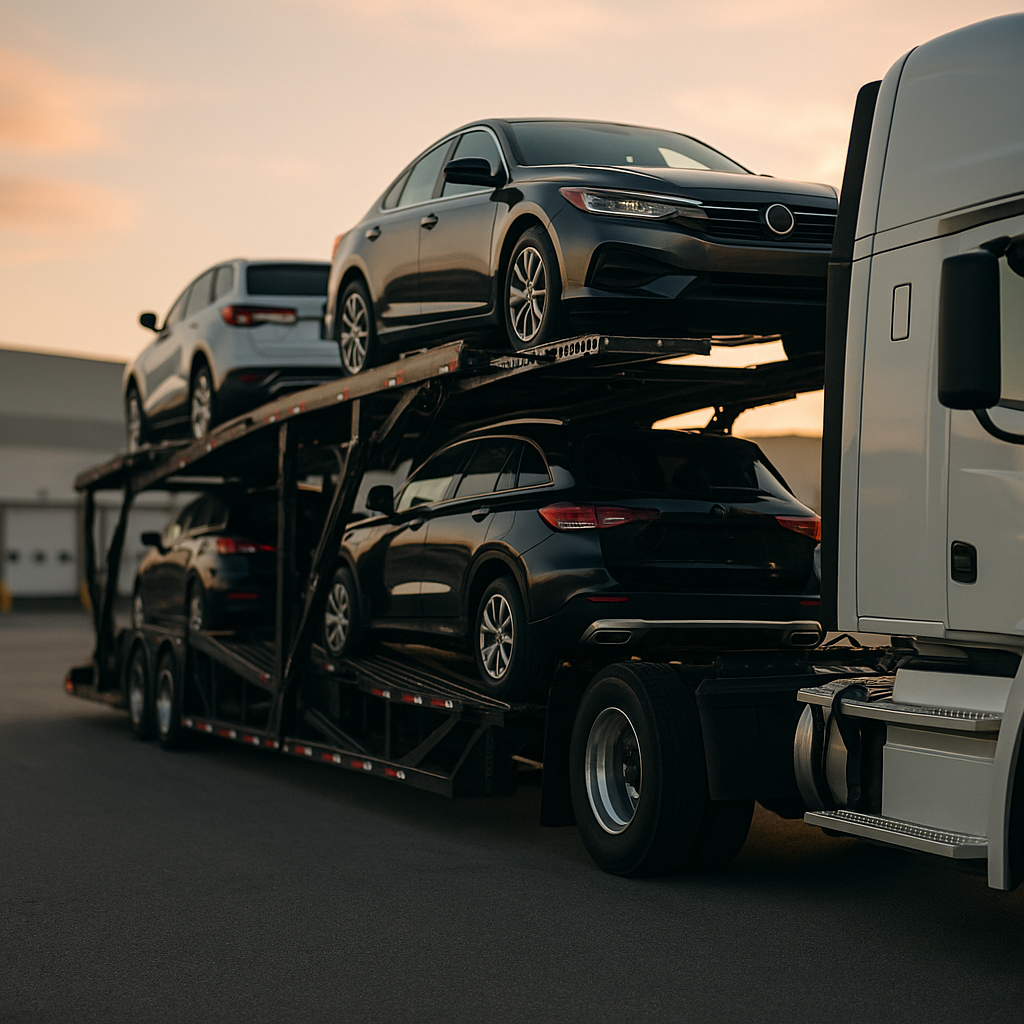
Car hauler trailer insurance is typically physical damage coverage for the trailer itself—covering collision and comprehensive losses like crash damage, hail, fire, vandalism, and theft, up to the trailer’s scheduled value. That’s helpful, but it’s not the coverage that pays for injuries to others or damage to the vehicles you’re transporting.
Here’s where people get burned: they buy “trailer insurance,” assume they’re protected, then find out the policy never addressed the two biggest exposures in auto hauling—liability (third-party injuries/property) and cargo/on-hook (the cars on your deck).
Trailer coverage vs. tractor coverage (simple mental model)
Think of an auto-hauler setup as three separate buckets that pay for different “oh no” moments.
| Bucket | What it protects | The claim it pays for |
|---|---|---|
| Liability (power unit) | Other people’s injuries + property damage | You rear-end traffic, clip a car in a yard, or damage a building |
| Cargo / On-hook | The vehicles you’re hauling | A unit is damaged during transit, loading, unloading, or securement |
| Trailer physical damage | The trailer itself | You jackknife and bend the deck/ramps, or hail totals panels |
Common car hauler trailer types—and why underwriters care
Underwriters price based on claim frequency and claim severity, and trailer type changes both.
- Open wedge/stack: More loading/unloading exposure; more frequent minor damage claims.
- Enclosed: Higher theft exposure and higher vehicle values; usually higher cargo limits by contract.
- Hotshot/gooseneck car rack: Often priced differently based on power unit class, radius, and experience hauling autos.
- Owned vs leased vs borrowed: Ownership and contracts determine whether you need scheduled trailer PD, non-owned trailer coverage, or trailer interchange.
Editor’s note (image idea): A simple diagram labeled “Liability (tractor) vs Cargo (cars) vs Trailer PD (trailer)” helps readers stop mixing coverages.
Do You Need Separate Trailer Insurance for a Car Hauler?
You only need separate trailer coverage when your commercial auto policy doesn’t already insure the trailer you’re responsible for—which usually depends on ownership (owned vs non-owned) and whether the trailer is scheduled with a stated value. Many owner-ops are fine with trailer physical damage added to the main policy, but not everyone is.
When the trailer may already be covered
You may not need a standalone trailer policy if the trailer is correctly listed and valued on your commercial auto policy.
- Scheduled trailer physical damage: The trailer is listed with a value and has comp/collision.
- Owned trailer with PD included: You own it outright and the policy covers owned trailers.
- Lender requirement met: Your financed/leased trailer has the required deductibles and loss payee listed.
When you typically need separate coverage (or an endorsement)
1. You pull non-owned trailers (swap, rent, borrow)
Trailer interchange coverage is designed for non-owned trailers in your care, custody, and control under an interchange agreement, and it’s commonly written with a stated limit (example: $20,000, $50,000, $100,000). Don’t assume “non-owned trailer” is automatically included—many policies require a specific endorsement.
- Who needs it: Anyone regularly swapping, renting, or interchanging equipment.
- What goes wrong without it: You damage a rented/interchanged trailer and pay out-of-pocket (and may breach contract).
2. Your trailer is high-value (common with enclosed)
High-value enclosed trailers often cost $30,000–$150,000+ to replace depending on build, so a total loss can wipe out your cash flow. If the trailer is financed, the lender will usually require comp/collision, specific deductibles, and a loss payee listed on the policy.
3. Your contract requires it (even if you think you don’t)
Broker and shipper contracts can require specific trailer physical damage limits or endorsements, and a non-compliant COI can mean “no load” even if you’re legally allowed to operate. Contract compliance is a business requirement, not a legal minimum.
Quick checklist before you shop
- Ownership: Do you own the trailer, or are you pulling non-owned equipment?
- Financing: Is it financed/leased (and does the lender require certain deductibles)?
- Replacement cost: What would it cost to replace the trailer tomorrow?
- Contract limits: Does the rate confirmation specify trailer PD or interchange limits?
What Coverage Is Required to Haul Cars Commercially?
FMCSA’s federal minimum public liability for for-hire interstate property carriers is $750,000 (49 CFR §387.9), but most auto-hauler brokers and shippers require $1,000,000 CSL and a cargo/on-hook limit that matches the total vehicle value on your trailer. In other words: legal minimums and “load-ready minimums” are often different numbers.
If you haul cars for-hire, you’re usually building a coverage stack that satisfies regulators (when applicable), contracts, lenders, and the reality of high-stacked cargo values.
Coverage stack (what it protects, who requires it, typical limits)
| Coverage | What it protects | Who typically requires it | Typical limits you’ll see |
|---|---|---|---|
| Primary auto liability | Injuries/property damage to others | FMCSA/state + brokers/shippers | Often $1,000,000 CSL by contract |
| Auto hauler cargo / on-hook | Damage to vehicles you transport | Brokers/shippers + risk management | Common $100,000–$250,000+ (enclosed often higher) |
| Physical damage (tractor) | Your truck (comp/collision) | Lender + you | Based on truck value; deductible matters |
| Trailer physical damage | Your trailer | Lender + you + some contracts | Based on trailer value |
| General liability | Non-auto business liability | Some shippers/yards | Often $1M / $2M |
| Non-trucking liability (bobtail) | Off-dispatch liability (lease-dependent) | Motor carrier lease terms | Varies |
| Workers’ comp / Occ-Acc | Injury protection | State rules + contract expectations | Depends on state & business setup |
1. Primary auto liability (what regulators and brokers expect)
Primary auto liability pays third-party bodily injury and property damage claims, and most brokers won’t tender freight to an auto hauler without proof of $1,000,000 CSL. Liability is the foundation because one serious accident can end your business.
2. Cargo / on-hook (protecting the cars you transport)
Auto hauler cargo/on-hook insurance pays for physical damage to the vehicles you’re transporting, and realistic loads can stack into $80,000–$200,000+ fast even when you’re not hauling exotics. The biggest gotcha isn’t the limit—it’s the wording.
- Ask about sublimits/exclusions: theft/unattended units, high-end vehicles, mysterious disappearance, improper securement, employee dishonesty.
- Match the limit to reality: set it to your maximum total value on the trailer, not “per car.”
3. Physical damage (tractor and trailer) + deductible strategy
Physical damage coverage is a cash-flow tool because it funds repair/replacement after a covered loss, but the deductible needs to be a number you can pay immediately. If your “savings” requires a $5,000 deductible you can’t float, it’s not a strategy—it’s a delayed breakdown.
FMCSA Filings for Car Haulers (BMC-91X, MCS-90, and What Gets Confused)
FMCSA requires proof of financial responsibility for for-hire interstate carriers through insurer filings like BMC-91/BMC-91X, and if the filing is missing or canceled your authority can show inactive even if you “have insurance.” Filings aren’t optional admin work—if they’re wrong, you don’t get to operate.
1. BMC-91 vs. BMC-91X (plain English)
BMC-91 is a liability filing used when one insurer provides the required coverage, while BMC-91X is used when multiple insurers combine to meet the requirement. Your agent should be able to tell you which is filed and confirm it’s active with FMCSA.
- What can go wrong: You pay a premium, but the filing never gets submitted—or it gets canceled after a lapse.
- Operational impact: Authority stuck pending/inactive means missed loads and contract failures.
2. MCS-90 endorsement (what it is—and what it isn’t)
MCS-90 is a federal liability endorsement meant to protect the public under 49 CFR §387.15, and it is not cargo insurance for the cars you’re hauling. If you’re relying on “MCS-90 covers my load,” you’re one claim away from writing a check you didn’t plan for.
3. Filings people confuse with insurance
- BOC-3: A process agent filing, not insurance coverage.
- Intrastate requirements: Some states have separate limits/forms if you run strictly in-state.
- Contract requirements: Not legal minimums, but still required if you want that freight.
New authority checklist (fast)
- Activate DOT/MC: Confirm status shows active before booking freight.
- Buy liability (and cargo if hauling cars): Most auto hauling needs cargo/on-hook day one.
- Confirm filings submitted: Make sure your insurer files liability correctly with FMCSA.
- Prevent lapses: A lapse can trigger filing cancellation and a pricing penalty at renewal.
Car Hauler Trailer Insurance Cost Per Month in 2026 (Open vs Enclosed)
In 2026, most owner-operator auto haulers pay roughly $700–$1,300+ per month for open and $1,000–$2,500+ per month for enclosed, because pricing is driven by liability + cargo/on-hook limits, radius, authority age, and loss history—not just the trailer physical damage portion. When people search “trailer insurance,” they usually mean the whole program.
Featured-snippet answer (45–65 words)
In 2026, car hauler trailer insurance cost per month is usually priced as part of a full auto hauler policy (liability + cargo + physical damage). Most owner-operators land around $700–$1,500+ per month, with open haulers typically lower and enclosed/high-value operations higher—especially with new authority, higher cargo limits, long radius, or prior claims.
Typical 2026 monthly ranges (open vs. enclosed)
| Operation type | Typical monthly range (ballpark) | Why it moves |
|---|---|---|
| Open auto hauler | $700–$1,300+ / month | Limits and radius drive it; frequency of minor damage claims matters |
| Enclosed auto hauler | $1,000–$2,500+ / month | Higher cargo values, theft exposure, stricter shipper requirements |
What drives costs up (high-impact variables)
- New venture/new authority: limited track record increases underwriting caution.
- MVR/PSP issues: violations and prior losses move pricing fast.
- Radius and lanes: dense urban lanes and high-traffic corridors usually cost more.
- Cargo limit: based on total value on the trailer, not “per car.”
- Trailer type/value: enclosed usually higher; replacement cost matters.
- Theft controls: garaging, GPS, secure yard, and procedures can influence appetite.
- Loading/unloading process: many cargo claims happen here.
Three quick benchmarks
- Open 7–9 car hauler, established authority, clean record: often lands mid-range when limits match contracts.
- Enclosed 2–3 car transporter with higher-value units: higher cargo + theft controls usually increase premium.
- Hotshot car hauler (gooseneck) on mixed lanes: can vary widely depending on how the market classifies the risk.
Interactive Cost Estimator (Calculator Block You Can Build)
A useful auto-hauler estimator needs inputs that underwriters actually price—like authority age, radius, cargo limit, and trailer value, because “open vs enclosed” alone is not enough to predict premium. If your calculator only asks for ZIP code and trailer type, the output will be fantasy.
Inputs (what the estimator should ask)
- Trailer type: Open / Enclosed
- Capacity: number of vehicles
- Authority age: 0–6 months / 6–24 months / 2+ years
- Experience hauling autos: years
- Radius: Local / Regional / OTR
- Primary states/lanes: where you actually run
- Trailer value: replacement cost
- Tractor value: if quoting physical damage
- Desired cargo/on-hook limit: $100k, $250k, $500k (example tiers)
- Deductibles: cargo and physical damage
- Garaging + security: fenced yard, cameras, GPS
Outputs (what it should return)
- Estimated monthly range: low / likely / high
- Recommended limits: based on open vs enclosed and max total cargo value
- Cost levers: what operational changes could reduce premium
Disclaimer to include: This is an estimate only. Final premium depends on underwriting, loss runs, MVR/PSP, company appetite, endorsements, and filings.

Liability vs Cargo Insurance for Car Haulers (One Table)
Auto liability covers third-party injuries/property damage while cargo/on-hook covers damage to the vehicles you’re transporting, and neither coverage replaces the other. If a policy only addresses one side of that split, you still have a major uncovered exposure.
| Coverage | What it pays for | Example claim | Common limit | Common gotchas |
|---|---|---|---|---|
| Auto liability | Damage/injury to others | You hit a parked car in a shipper yard | $1,000,000 CSL (common by contract) | Doesn’t pay for the cars you’re hauling |
| Cargo / on-hook | Damage to vehicles you transport | A customer’s unit is damaged loading/unloading or in transit | $100k–$250k+ (often higher for enclosed) | Exclusions/sublimits (theft, unattended, exotics, improper securement) |
Business reality: many auto-hauler losses are either (1) third-party accidents (liability) or (2) loading/unloading and securement issues (cargo/on-hook). You need both buckets to stay in business.
State-by-State Differences (What Changes and What Doesn’t)
Interstate for-hire operations follow FMCSA financial responsibility rules, while intrastate operations can trigger separate state-specific limits and filings, and workers’ comp rules vary sharply by state. The tricky part is that your “home state” isn’t the only factor—garaging location and actual lanes matter too.
What’s federal vs. state-specific
- Interstate for-hire: FMCSA rules/filings are the baseline.
- Intrastate only: some states require different limits or forms.
- Workers’ comp: requirements vary based on state and whether you have employees or lease on.
Practical advice for owner-ops
Don’t guess—confirm requirements based on your home state, where the truck is garaged, your real lanes, and your contract requirements (auctions, dealers, brokers). If you’re trying to keep it affordable, the win is usually removing waste (wrong limits, wrong classifications, unnecessary add-ons), not cutting cargo or filing support.
Best Car Hauler Insurance Companies + Broker vs Direct
There is no single “best” car hauler insurer because appetite changes by trailer type, cargo limits, authority age, and loss history, so the best option is usually the best fit for your exact operation. Auto hauling is specialized, and not every standard market wants it—especially enclosed/high-value or new authority.
Provider comparison framework
| Market type | Best for | Pros | Cons |
|---|---|---|---|
| Specialty trucking carriers/programs | Auto haulers (open/enclosed), higher limits | Better trucking appetite; claims familiarity | Stricter underwriting; more documentation |
| Standard commercial markets | Clean risks, established authority | Can be cheaper if you fit well | May cap cargo limits or avoid auto hauling |
| Assigned/high-risk options | Tough histories or limited options | Access when others decline | Expensive; limited flexibility |
Broker vs. direct: what matters for auto haulers
- Broker advantages: access to multiple specialty markets, faster remarketing at renewal, help with endorsements/COIs, and filing follow-through.
- Direct advantages: simpler relationship and fewer layers.
- When a broker is strongly recommended: new authority, enclosed/high-value, higher cargo limits, prior claims, multi-state lanes.
Real-World Examples: What Car Haulers Pay
Quote comparisons only work when the limits, deductibles, trailer values, and cargo wording are identical, because changing any of those can swing premium by hundreds per month. Use the template below to compare apples-to-apples.
Template to compare quotes
| Setup | Authority age | Trailer type/value | Cargo limit | Radius | Monthly premium range |
|---|---|---|---|---|---|
| Example A | 2+ years | Open / $X | $100k | Regional | $X–$X |
| Example B | New authority | Enclosed / $X | $250k+ | OTR | $X–$X |
| Example C | 1 year | Hotshot rack / $X | $100k | Mixed | $X–$X |
Testimonials block (editorial placeholder)
- “We raised our cargo limit to match the auction contract and stopped losing loads over COI issues.”
- “Dashcam footage saved us on a not-at-fault claim. Renewal went smoother.”
- “We scheduled the enclosed trailer correctly—lender approved, no gaps.”
Honest note: No one can ethically guarantee a rate. Use examples as benchmarks, not promises.
Frequently Asked Questions
These FAQs cover the most common car hauler insurance questions, including typical $700–$2,500+ monthly pricing, required liability limits, cargo/on-hook needs, and FMCSA filing basics. Use them as a checklist when you’re reviewing quotes and COIs.
Most owner-operator auto haulers pay about $700–$1,500+ per month in 2026, with many open setups in the lower part of that range and enclosed/high-value operations commonly reaching $1,000–$2,500+ per month. Price moves most with authority age (new venture pricing), radius (local vs OTR), MVR/PSP and loss history, the cargo/on-hook limit you need (often $100k–$250k+), and the trailer/tractor values you’re insuring. The fastest way to get a “real” number is to quote the full stack (liability + cargo + physical damage) using the same limits and deductibles across markets.
Commercial auto hauling typically requires primary auto liability that meets legal requirements and the limits your brokers/shippers demand—most commonly $1,000,000 CSL by contract even though FMCSA’s federal minimum for for-hire interstate property carriers is $750,000 (49 CFR §387.9). In real-world vehicle transport, you also usually need cargo/on-hook sized to the maximum total value you might carry (often $100,000–$250,000+), plus physical damage for the tractor and trailer if you can’t self-insure repairs or a total loss. Lenders may also require specific deductibles and loss payee wording.
Liability insurance pays for third-party bodily injury and property damage you cause, while cargo/on-hook insurance pays for physical damage to the vehicles you’re transporting, and they respond to different claims with different exclusions. A $1,000,000 liability policy can pay when you hit a four-wheeler, but it typically won’t pay for a customer’s unit that was damaged by improper securement, loading/unloading, or transit vibration. Cargo/on-hook often includes sublimits or exclusions for theft/unattended vehicles, high-end vehicles, mysterious disappearance, or improper securement, so the wording matters as much as the limit. For auto haulers, carrying both coverages is usually non-negotiable if you want consistent freight.
You don’t always need a separate trailer policy if the trailer is properly scheduled on your commercial auto policy with physical damage (comp/collision) and an accurate value. Separate coverage or endorsements are commonly needed when you pull non-owned/interchanged trailers (often requiring trailer interchange with a stated limit), when your enclosed trailer value is high (often $30,000–$150,000+ to replace), or when your broker/shipper contract demands specific trailer PD limits or endorsements on the COI. The correct answer depends on ownership, contracts, and how the trailer is listed—not what the coverage is called.
For a for-hire interstate carrier with operating authority, your insurer typically files proof of liability financial responsibility with FMCSA using BMC-91 (single insurer) or BMC-91X (multiple insurers combined). Your liability policy may also include the MCS-90 endorsement (49 CFR §387.15), which is designed to protect the public for liability—not to cover cargo damage to the cars you haul. Separately, BOC-3 is not insurance; it’s a process agent filing. The operational takeaway is simple: a cheap policy that isn’t filed correctly can leave your authority inactive and stall your business.
Enclosed auto hauling often requires higher cargo/on-hook limits because enclosed loads frequently involve higher-value vehicles and stricter shipper requirements, with many operations carrying $250,000+ cargo limits depending on lanes and customers. The best way to set the limit is to calculate the maximum total value you might carry at one time, then compare it to the contract requirement on the rate confirmation. Also ask about theft-related exclusions and sublimits (unattended vehicles, secure parking rules, GPS requirements), because enclosed operations are commonly underwritten with tighter theft controls than open hauling.
No—trailer physical damage generally insures trailers you own that are scheduled on your policy, while trailer interchange is designed for non-owned trailers you’re responsible for under an interchange agreement and is written with a stated limit (for example, $20,000, $50,000, or $100,000). If you rent, swap, or borrow trailers, interchange coverage is a common way to avoid a major gap when a non-owned trailer is damaged in your care, custody, and control. The right coverage depends on ownership, contracts, and how often you handle non-owned equipment.
Why Logrock-Style Guidance Matters (E-E-A-T for Owner-Ops)
Owner-operators need insurance structured to match contracts and claims reality, not vague “full coverage” language, because one COI mismatch or one excluded cargo loss can cost more than a full year of premium. Good guidance is practical: it protects cash flow and keeps you load-ready.
A solid agent or broker should be able to translate your operation into underwriting language (open vs enclosed, lanes, values, procedures), build limits that match contracts, keep COIs and filings clean, and explain trade-offs honestly (deductibles, exclusions, and what isn’t covered).
- Contract-ready COIs: so you don’t lose loads over paperwork.
- Coverage that matches exposure: especially cargo/on-hook wording for auto hauling.
- Compliance-first support: filing accuracy and lapse prevention.
Conclusion & CTA: Protect the Trailer, the Cars, and Your Authority
Car hauler trailer insurance is only one piece of a complete auto-hauler program that typically includes $1,000,000 CSL liability by contract and cargo/on-hook limits commonly starting around $100,000–$250,000+. If you protect the trailer but ignore cargo wording or filing status, you’re still exposed where losses actually happen.
Liability protects your authority and your ability to keep booking freight. Cargo/on-hook protects the cars and your customer relationships. Trailer physical damage protects the equipment that produces your revenue.
Key Takeaways:
- Trailer coverage usually means physical damage (and sometimes interchange), not liability or cargo.
- Open vs enclosed changes pricing, theft controls, and the cargo limits contracts require.
- Filings and COIs must be correct and active, or you’ll lose time, loads, or authority status.
If you want pricing that matches your lanes and a COI that brokers accept, quote the full stack as one package and make sure the filings are handled correctly.