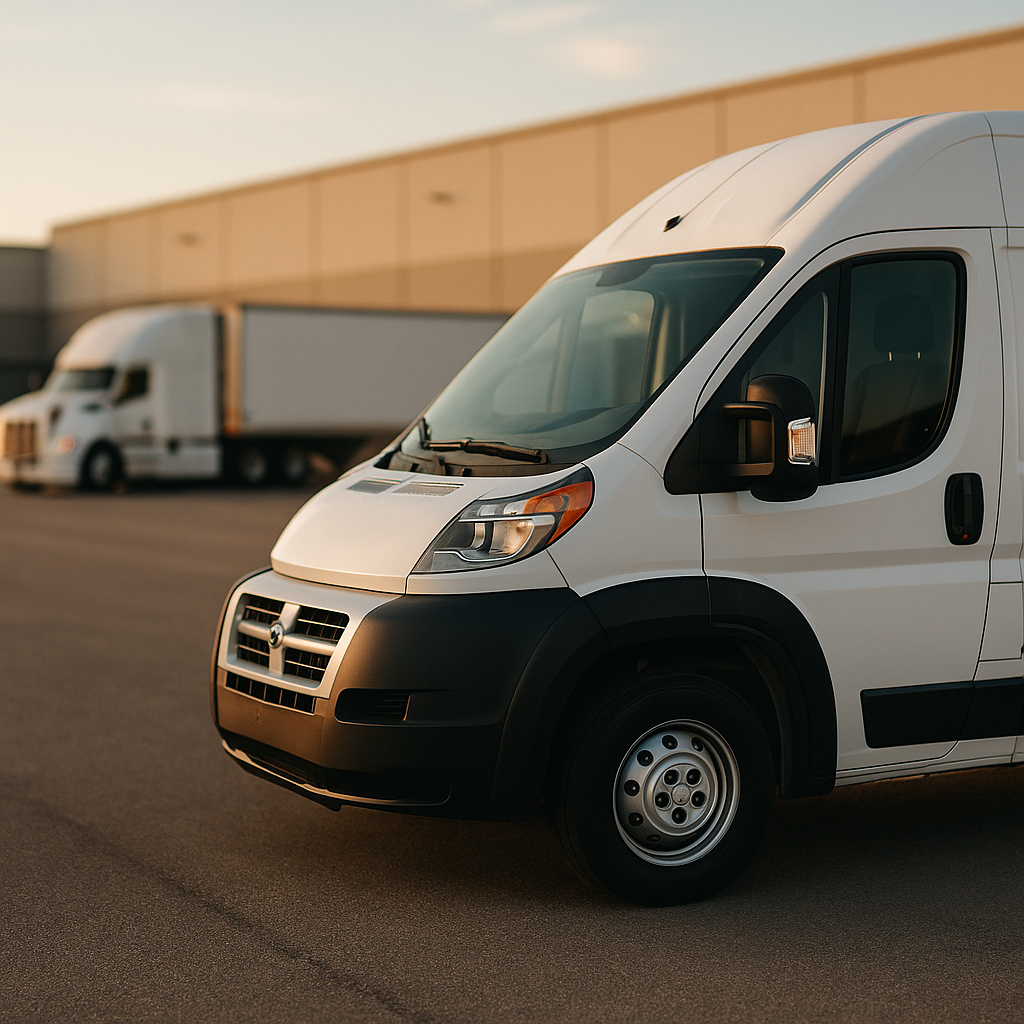
Cargo van insurance for personal use in 2026: when personal auto works vs commercial, mixed-use gray areas, typical costs, and a step-by-step checklist. Get covered right.
Cargo van insurance for personal use is usually possible in 2026, but only if the insurer agrees your van isn’t being used to make money (deliveries, hauling for pay, job-site work). The simplest rule is this: if the van touches revenue, you need the carrier to rate it as mixed-use or commercial—because misclassifying use is one of the fastest ways to trigger a claim dispute or denial.
If you want a quick benchmark for pricing and common coverage setups before you shop, start here: cargo van insurance quote. Then use the checklist below to get the classification right the first time.
Key Takeaways: Essential Cargo Van Insurance for Personal Use
- Yes, a cargo van can often be insured on a personal auto policy if it’s privately owned, primarily personal use, and not used to haul/deliver for pay.
- The biggest risk is misclassification (saying “personal” while using it for work), which can lead to coverage disputes, non-renewal, or claim denial based on policy terms and application facts.
- Tools and “stuff in the van” usually aren’t covered the way people assume; you may need separate tools/equipment or property coverage.
- If your use is mixed (personal + paid work), commercial auto can be the cleaner solution—and sometimes the cheaper solution long-term.
Table of Contents
Reading time: 8 minutes
- Personal vs. Commercial Cargo Van Insurance: What Actually Changes
- Can You Insure a Cargo Van as Personal? Underwriting Green Flags vs Red Flags
- Mixed-Use Cargo Van Insurance: How to Cover Personal + Side Work
- Best Coverages for Personal-Use Cargo Vans (and What’s Usually Not Covered)
- How Much Does Cargo Van Insurance Cost for Personal Use in 2026?
- How to Insure a Cargo Van for Personal Use (Step-by-Step)
- Frequently Asked Questions
- Why Logrock’s Approach Is Different
- Conclusion: Get the Classification Right (Then Shop Price)
Personal vs. Commercial Cargo Van Insurance: What Actually Changes
Personal auto insurance is filed and priced for non-business driving, and many policies restrict or exclude “for-hire” delivery or other paid use, which is why a cargo van can be accepted for personal use but rejected (or disputed) the moment it’s used to earn income.
Most drivers get tripped up because “commercial vehicle” and “commercial use” aren’t the same thing. A cargo van body style can trigger commercial underwriting rules even if you only use it for errands and weekend trips.
1) Why personal auto policies often exclude business use
A personal auto policy is typically intended for commuting, errands, and personal miles—not driving that’s part of earning money (deliveries, paid hauling, recurring job-site trips, or “I get paid cash sometimes”).
That matters because if an accident happens during a paid job, you can end up in a coverage dispute over whether the vehicle was being used within the policy’s permitted use. Best case: delays and documentation requests. Worst case: denial or non-renewal based on the policy language and what was represented on the application.
- Real-world example: A weekend “help a friend move” job turns into a paid hauling gig. If you’re hit on the way to the pickup, the insurer may treat it as business use if compensation is involved.
- Practical move: Ask the agent for the carrier’s definition of business use and get it in writing (email is fine).
2) What insurers mean by “commercial vehicle” vs “commercial use”
“Commercial vehicle” is often an underwriting category based on vehicle type, weight class, and registration, while “commercial use” is how you actually operate the van day-to-day.
Some carriers don’t write certain cargo vans on a personal policy, period—especially if the van is registered as commercial, has a higher GVWR, or looks like a work vehicle (racks, permanent shelving, signage). You can do everything right and still be told: “We can only insure that on a commercial auto policy.”
Can You Insure a Cargo Van as Personal? Underwriting Green Flags vs Red Flags
Underwriters usually approve personal-use cargo van insurance when ownership is personal and the use is clearly non-revenue, with normal mileage and no delivery-for-fee exposure.
This is the checklist most people never see—so they find out after they’ve already paid, or worse, after a claim.
1) Personal-use “green flags” (what helps you qualify)
Green flags are signals that your cargo van behaves like a personal-vehicle risk rather than a business vehicle with higher frequency and severity.
- Ownership: Titled/owned by you personally (not in an LLC or business name).
- Use: Errands, hobbies, road trips, moving your own stuff.
- No revenue use: No deliveries, no hauling for pay, no “for a fee” work.
- Predictable exposure: Parked at home, stable annual mileage, limited stop-and-go routes.
- Up-front disclosure: You disclose modifications (shelving, racks, camper build) before binding.
2) Red flags that push you into commercial (or mixed-use)
Red flags are indicators the van is used to generate income, which commonly triggers commercial rating rules or ineligibility on personal auto.
- Delivery exposure: Packages, food delivery, courier work, gig delivery, “for-hire” work.
- Job-site pattern: Hauling materials to job sites for paid work (even part-time).
- Tools every day: Daily tools and trade equipment as part of a route (HVAC, electrical, cleaning, handyman).
- High-frequency driving: Many stops, dense metro routes, higher annual mileage.
- Registration/vehicle class: Commercial registration or a vehicle class the carrier won’t write on personal.
3) Why disclosure matters (even if your use is “mostly personal”)
Insurance applications are relied on to underwrite and price risk, and inaccurate use descriptions can create grounds for disputes at claim time.
If your “personal” policy is priced for personal exposure but you’re running paid work, you’re effectively betting that no one asks the wrong question during a claim investigation. That’s a bad bet.
Copy/paste use statement:
“This van is for personal errands and weekend trips. No deliveries or hauling for pay.”
If you can’t say that truthfully, shop mixed-use or commercial instead of forcing a personal policy.
Mixed-Use Cargo Van Insurance: How to Cover Personal + Side Work
Mixed-use cargo van insurance is coverage written to allow both personal driving and revenue-related driving (job sites, paid hauling, delivery), which is the cleanest way to avoid “business use” gaps.
If you’re using the van personally and making money with it, treat this like a business decision: protect the asset and prevent a liability gap that can follow you for years.
Option A: Commercial auto with personal use allowed
A commercial auto policy is designed for business exposure, and many carriers allow incidental personal use when it’s disclosed and rated correctly.
This removes the gray area. If you’re driving to job sites or hauling tools/materials, you want the policy written for that. It’s also common for business contracts to require higher liability limits (often $1,000,000), which personal auto may not match.
Option B: Personal auto + limited business-use endorsement (when available)
Some insurers offer limited business-use endorsements, but availability and eligibility vary by state, carrier, and the kind of work you do.
This can be a middle ground if the business use is truly light and fits the carrier’s rules. Many still exclude delivery-for-fee, courier work, or hauling for compensation, so you need the endorsement wording—not just a verbal “you should be fine.”
The 5 questions that kill the gray area
Before you bind any policy, you should get clear yes/no answers to five coverage questions and keep the answers in writing.
- “Is driving to job sites covered?”
- “Is carrying tools/materials covered?”
- “Is occasional paid hauling covered?”
- “Is delivery for a fee covered or excluded?”
- “If I have an accident during a paid job, what part of the policy applies?”
If the answers are vague, you’re not buying peace of mind—you’re buying a future argument.
Best Coverages for Personal-Use Cargo Vans (and What’s Usually Not Covered)
Most cargo van owners need liability plus physical damage (comprehensive and collision), and common deductibles typically range from about $500 to $2,000 depending on carrier and preference.
Even if you say “personal use,” the financial reality is the same: one crash can wipe out the van, your savings, and your schedule.
1) Core coverages most drivers need (personal or commercial)
Core coverages are the baseline protections that prevent one accident, theft, or lawsuit from becoming a major financial loss.
| Coverage | What it protects | When it’s worth it |
|---|---|---|
| Liability | Injuries and property damage you cause | Always (required by law in nearly all states) |
| Collision | Your van if you hit something | If you can’t replace the van with cash tomorrow |
| Comprehensive | Theft, vandalism, hail, animal hits, glass | If you’d feel the financial hit |
| UM/UIM | You when the other driver has no/low insurance | High value in many states |
| MedPay / PIP | Medical bills regardless of fault (state-dependent) | If you want less out-of-pocket exposure |
2) Carrying tools, personal gear, or equipment in a cargo van
Auto policies are primarily written to insure the vehicle and liability, not thousands of dollars of tools or equipment stored inside the van.
A smash-and-grab can easily run $2,000–$10,000+ in tools, batteries, and specialty gear. Even “personal stuff” adds up fast (cameras, bikes, camping gear). Don’t assume your auto comprehensive coverage automatically pays for what’s inside.
- If it’s work tools: Ask about a separate tools/equipment policy (often handled outside auto).
- If it’s personal property: Ask whether renters/homeowners covers off-premises theft, and confirm limits and deductibles.
- Practical step: Keep a photo inventory and receipts for higher-value items.
3) Add-ons that matter for vans
Add-ons like towing, rental reimbursement, gap coverage, and custom equipment coverage can prevent downtime and surprise out-of-pocket costs after a claim.
- Towing/roadside: Cargo vans can be expensive to tow and recover.
- Rental reimbursement: If it’s your daily driver, downtime is a real cost.
- Gap insurance: Helps if the van is financed and the loan balance exceeds actual cash value.
- Custom parts/modifications: Shelving, racks, and camper build-outs should be documented and insured correctly.
How Much Does Cargo Van Insurance Cost for Personal Use in 2026?
Many personal-use cargo van policies in 2026 land around $600–$1,300 per year (about $50–$110 per month), but pricing varies sharply by ZIP code, driver history, van value, and coverage limits.
You’re paying for risk. The goal is to pay for the risk you actually have—not the risk the carrier assumes because the vehicle “looks commercial.”
Typical personal-use cost range (benchmarks)
$600–$1,300/year is a broad benchmark for many personal-use cargo vans, assuming standard limits, a typical driving record, and no commercial exposure.
Your real number depends heavily on:
- Location: Theft rates, claim severity, medical costs, litigation patterns
- Driver profile: Record, age, years licensed
- Vehicle: Van value, theft attractiveness, and whether you carry comp/collision
- Limits: Low limits look cheap until they aren’t
- Usage: Annual mileage, where it’s parked, and how often it’s in dense traffic
When costs jump toward commercial pricing
Premiums typically rise when there is any paid use (delivery, hauling for pay, or recurring job-site exposure) or when higher liability limits like $1,000,000 are required for contracts.
Costs also climb if the carrier classifies the van as commercial due to registration or vehicle type, if you’re in a high-claim metro area, or if the van is financed and physical damage is required.
Ways to lower cost without creating coverage gaps
The safest way to lower premium is to reduce risk and keep coverage continuous, not to underbuy liability or hide how you use the van.
- Raise deductibles only if you can comfortably pay the out-of-pocket amount (many choose $500–$2,000).
- Avoid lapses in coverage; lapses often trigger higher rates.
- Park securely (garage, secured lot, cameras).
- Be honest about use; misclassification is a “cheap now, expensive later” move.
For more price context and quoting variables, see this guide: cargo van insurance quote.
How to Insure a Cargo Van for Personal Use (Step-by-Step)
A clean insurance setup requires a written use statement, correct title/registration details, full disclosure of modifications, and written confirmation from the carrier before you bind coverage.
This process is repeatable—and it prevents the “I have insurance… I think” problem.
1) Write your “use statement” (one sentence, honest)
A use statement is the simplest way to keep your application consistent and prevent accidental misrepresentation.
- “Personal errands and weekend trips. No deliveries or hauling for pay.”
- “Personal use primarily, plus occasional trips to my own property for maintenance.”
If you can’t keep it clean, don’t force a personal policy.
2) Verify title + registration (this matters more than people think)
Ownership name (personal vs business) and registration type (passenger vs commercial) can affect whether a carrier will write the van on a personal policy.
Have ready:
- Who owns it (your name vs business/LLC)
- How it’s registered (passenger vs commercial)
- Any state-specific requirements that apply to your registration class
3) Gather van specs (underwriting will ask)
Underwriters commonly require VIN details, annual mileage, garaging address, and modification information to determine eligibility and pricing.
- VIN, year/make/model
- Current miles + estimated annual miles
- Where it’s parked overnight
- Modifications: shelving, racks, camper build, lift kits, security devices
4) Choose limits and deductibles on purpose (not vibes)
Coverage limits should protect your assets and income, and deductibles should match cash you can actually access after a loss.
- Liability: Choose limits that protect what you own and what you earn.
- Comp/collision: Pick a deductible you could pay tomorrow (commonly $500–$2,000).
- UM/UIM: Strongly consider if uninsured drivers are common in your area.
5) Ask the “coverage gap” questions before you bind
You should confirm in writing what the carrier considers business use and whether tools/contents are covered, because those are the two most common surprise gaps.
- What exactly counts as business use?
- Are tools/contents covered? If not, what policy handles it?
- Is commuting to a job site covered? What about side jobs?
- Are household members covered if they drive it?
6) Get confirmation in writing and keep it
Keeping your application answers, declarations page, and endorsements creates a paper trail that’s useful if a claim is questioned later.
Save the application, dec page, endorsements, and any email where your use was described and approved.
Frequently Asked Questions
Many personal auto policies do not cover delivery-for-fee, paid hauling, or other business use of a cargo van unless the carrier specifically allows it by endorsement or underwriting approval. If you’re using the van to earn income (even part-time), insurers may treat it as a different risk class than personal commuting and errands. The safest approach is to ask the carrier’s exact definition of “business use” and get the answer in writing before you bind coverage. If your use includes courier work, gig delivery, or hauling for compensation, a commercial or mixed-use policy is often the correct fit.
Yes, you can sometimes use personal auto insurance for a cargo van when it’s privately owned, titled to you (not a business), and used strictly for personal errands and trips with no deliveries or hauling for pay. Approval also depends on the carrier’s underwriting rules for cargo van body styles and how the vehicle is registered (passenger vs commercial). If the insurer won’t write that vehicle type on a personal policy, you may be pushed into a commercial policy even with personal use. Always disclose any shelving, racks, or camper build-outs.
Many commercial auto policies allow incidental personal use, but it’s not automatic and it must be consistent with how the policy is written and rated. Commercial policies are designed for business exposure, so you should confirm personal use is permitted for the listed drivers and clarify whether household members must be listed to drive the van. If you’re using the vehicle for contracts, it’s also common to carry higher liability limits such as $1,000,000, which can influence both coverage structure and pricing. Get confirmation in writing to avoid gray-area disputes.
A common 2026 benchmark for personal-use cargo van insurance is about $600–$1,300 per year (roughly $50–$110 per month), but your actual premium depends on location, driving record, van value, mileage, and the liability limits you choose. Adding comprehensive and collision usually increases cost, and financing often requires physical damage coverage. If the carrier rates the van as mixed-use or commercial (due to paid use or underwriting rules), expect pricing to move toward commercial-auto levels. For a quoting breakdown, see: cargo van insurance quote.
Sometimes you can insure a cargo van on a personal policy even if it’s “commercial” in a registration sense, but many insurers will require commercial auto based on vehicle type, registration class, or underwriting appetite. “Commercial” can mean state registration, weight class, or simply that the carrier treats cargo vans as business vehicles because of claim patterns. If the van is used in commerce and has a higher weight class, carriers may be stricter about underwriting and documentation. The only reliable answer is the carrier’s written eligibility decision for your exact VIN, registration, and use.
Why Logrock’s Approach Is Different
Insurance outcomes are heavily driven by classification details (use, radius, vehicle type, and documentation), and the wrong classification is a common root cause of claim headaches.
Owner-operators live and die by classifications: filings, COIs, radius, and “what the policy actually says.” Cargo vans are the same game at a smaller scale.
We focus on two things that save money long-term:
- Correct classification (personal vs mixed-use vs commercial), documented clearly
- Clean quoting (no mismatched assumptions that blow up later)
That’s how you avoid paying twice—once for the policy, and again for the mistake.
Conclusion: Get the Classification Right (Then Shop Price)
Many cargo vans can be insured for personal use in 2026, but the insurer has to agree your use is truly non-business and your van meets their eligibility rules. If you do side jobs, haul tools to paid work, or deliver for a fee, don’t gamble with the application—get coverage written for your real use.
Once classification is right, shopping price is straightforward. If classification is wrong, the “cheap” policy can become the most expensive decision you make.
Key Takeaways:
- Use matters more than looks: A van that “looks commercial” can still be personal-use—if your driving is truly personal and disclosed.
- Mixed-use is the danger zone: Ask the five coverage questions and get answers in writing before you bind.
- Contents are separate: Tools and gear often require separate coverage beyond auto.
If you want to compare pricing and coverage setups, here’s the related guide again: cargo van insurance quote.