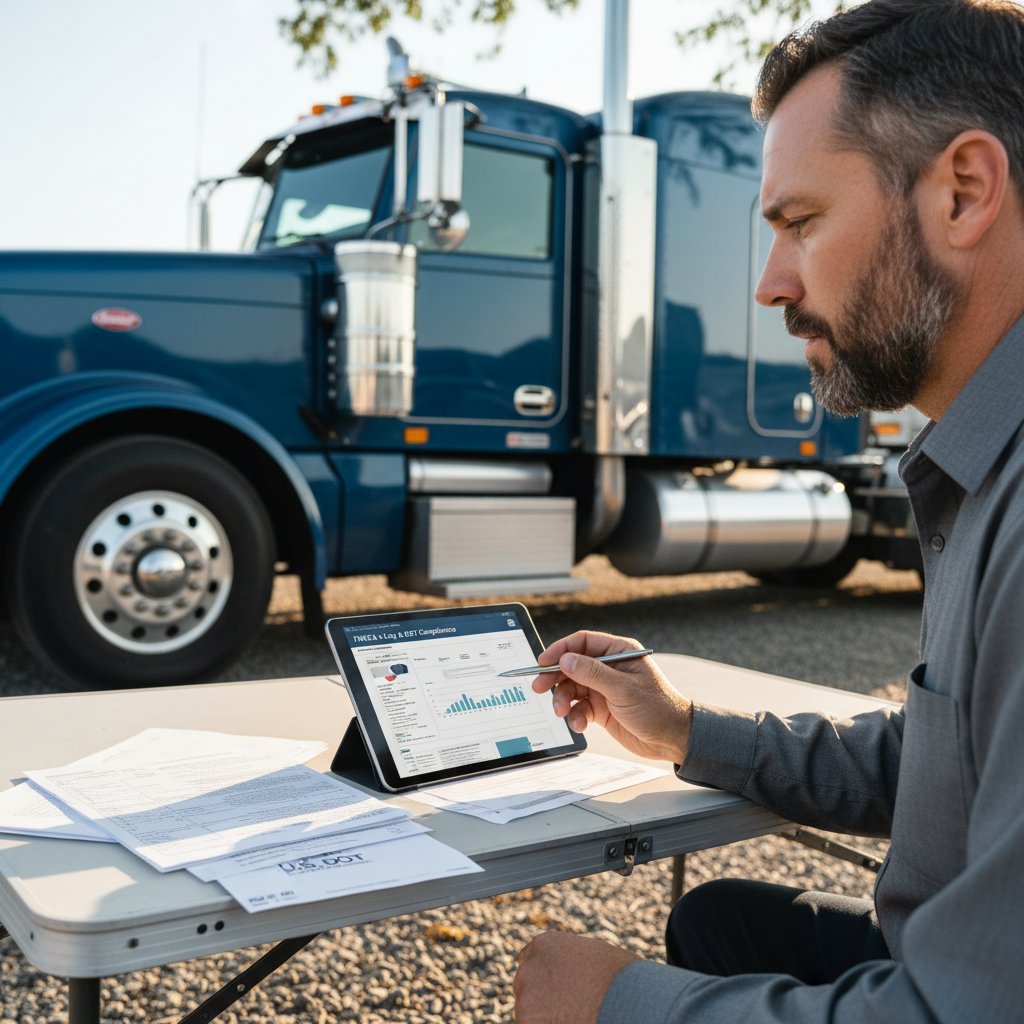
Looking for the cheapest commercial truck insurance in Florida? Compare 2026 cost ranges by truck type, understand intrastate vs interstate minimums, and use proven tactics to lower premiums.
Cheapest commercial truck insurance in Florida means the lowest total premium for coverage that still meets FMCSA rules (when applicable) and the COI limits brokers actually require. The fastest way to find it is to quote multiple trucking markets using the same limits, deductibles, and endorsements—then pick the policy that’s priced correctly for your radius, cargo, drivers, and authority status.
You’re not just shopping a price tag. You’re protecting cash flow, staying “bookable” with brokers, and avoiding gaps that turn a cheap policy into an expensive claim denial.
Table of Contents
Reading time: 11 minutes
- Who actually gets the cheapest rates in Florida?
- 2026 Florida rate benchmarks by truck type
- Florida minimum liability: intrastate vs interstate (quick reference)
- Why Florida is expensive (and what you can control)
- How to reduce your premium in Florida (tactics that move the number)
- Direct vs captive vs independent agent: who finds cheaper?
- 7-step process to get the cheapest quote (without killing coverage)
- Frequently Asked Questions
- Why Logrock (what we actually do differently)
- Conclusion & get a quote
Who actually gets the cheapest commercial truck insurance in Florida?
Florida trucking premiums typically price lowest when underwriters see 2+ years of verifiable CDL experience, a defined radius band (0–50, 51–200, 201–500, 500+ miles), and a clear cargo description with a realistic max load value.
Florida “cheap” insurance usually goes to operations that look predictable on paper. If your submission looks vague—“anywhere in the Southeast,” “misc freight,” “parked wherever”—the insurer has to assume worst-case exposure and your quote jumps.
1) “Cheapest” profiles (what insurers price aggressively)
The lowest premiums go to the lowest-uncertainty risks, because insurers are pricing the probability of frequency (more claims) and severity (bigger payouts). If you look “unknown” (new venture, inconsistent lanes, high-theft cargo), the price includes an uncertainty charge.
- Clean MVR + stable experience: Not just “no tickets,” but consistent commercial driving history and fewer surprises.
- Clear radius and lanes: Local/regional is easier to price than “500+ miles anywhere.”
- Lower-risk cargo mix: General freight is often easier to place than high-value, theft-attractive freight.
- Secure garaging/parking: A documented yard address beats “street parking” every time.
2) Define your operation before you shop (60-second checklist)
If you can’t describe your operation in one minute, you’ll usually overpay—because the quote will be based on assumptions instead of facts.
- Truck type: semi tractor, box truck, hotshot (pickup + trailer), tow, sprinter/cargo van, dump
- Authority setup: leased-on vs own authority; new venture vs established
- Intrastate vs interstate: Florida-only or crossing state lines
- Radius band: 0–50 / 51–200 / 201–500 / 500+ miles
- Cargo types: plus your maximum cargo value (what you might actually haul)
- Driver list: every driver who could touch the wheel
2026 Florida rate benchmarks by truck type
For 2026 budgeting, Florida liability-only premiums commonly range from $2,000–$18,000 per year depending on vehicle class, while packages that include cargo and physical damage often land between $3,000 and $30,000+ per year per truck.
These are planning numbers, not promises. Authority age, radius, cargo, drivers, and losses can move a quote fast—especially if you’re a new venture or you’re hauling high-theft freight.
Quick table: Florida cost ranges (annual + monthly equivalents)
Use this table as a reality check to spot “too good to be true” quotes and to keep your monthly budget honest.
| Truck Type | Liability-Only (Annual) | Liability + Cargo (Annual) | Full Coverage* (Annual) | Monthly (Rough) | Notes |
|---|---|---|---|---|---|
| Semi tractor (for-hire) | $8,000–$18,000 | $10,000–$24,000 | $12,000–$30,000+ | $700–$2,500+ | New venture + long-haul can exceed this |
| Box truck | $4,000–$10,000 | $5,000–$12,000 | $6,000–$15,000+ | $350–$1,250 | Final-mile vs regional changes pricing |
| Hotshot (pickup + trailer) | $4,500–$12,000 | $5,500–$14,000 | $7,000–$18,000+ | $400–$1,500 | GVWR, trailer type, and radius matter |
| Tow truck | $6,000–$16,000 | Varies | $8,000–$20,000+ | $500–$1,700 | On-hook/tow exposures add cost |
| Sprinter/cargo van | $2,000–$6,000 | $2,500–$7,500 | $3,000–$10,000 | $175–$850 | Often cheaper than heavy trucks |
| Dump truck (local) | $5,000–$14,000 | Varies | $7,000–$18,000 | $400–$1,500 | Jobsite risk + driver roster impacts |
*“Full coverage” typically means liability + physical damage, and sometimes cargo depending on how the policy is packaged.
What you usually need to actually book loads (not just “legal minimum”)
Many Florida brokers and shippers commonly require $1,000,000 auto liability and often $100,000 cargo on the Certificate of Insurance (COI), even if your operation could technically be legal at lower limits in some scenarios.
- Auto liability: $1M is a common market expectation for for-hire trucking.
- Cargo: Often required by contract; limits vary by commodity and shipper agreement.
- Physical damage: Required by lenders on financed units and protects your main business asset.
Florida minimum liability: intrastate vs interstate (quick reference)
Interstate for-hire carriers must meet FMCSA financial responsibility minimums of $750,000 to $5,000,000 depending on what you haul (49 CFR §387.9), while many brokers still require $1,000,000 liability on the COI to tender loads.
You’ll see a lot of misinformation online about Florida minimums. The clean way to think about it is: (1) what the regulator requires for your operation, and (2) what your contracts require to get paid.
Intrastate Florida (Florida-only operations)
Intrastate-only trucking stays under Florida rules, but in real life your contracts can set higher “working minimums” than the state minimum.
If you assume “intrastate = cheap minimum,” you can still get rejected by a shipper contract or end up underinsured on a major loss.
- Who this applies to: local dump, local box truck, local hotshot, some port work (verify lanes carefully).
- Reality check: Brokers/shippers often require higher limits than the legal floor.
Interstate (FMCSA-regulated)
Any operation crossing state lines is typically FMCSA-regulated and must meet federal minimum financial responsibility limits before you can keep authority active and run compliant.
- Typical FMCSA minimums (49 CFR §387.9): $750,000 for non-hazardous for-hire; $1,000,000 for certain oil; $5,000,000 for certain hazardous materials.
- Operational reality: You also need a COI you can send same-day, plus Additional Insured wording when required by contract.
Why Florida is expensive (and what you can control)
Florida trucking insurance rates often run higher because insurers price for catastrophe exposure (hurricanes/flooding), dense metro traffic on corridors like I‑95 and I‑4, and higher claim severity when serious injuries are involved.
This isn’t just “insurance companies being greedy.” It’s math. If the loss probability or the potential payout goes up, the premium follows.
Florida-specific risk factors insurers price into your premium
- Storm and flood exposure: More physical damage losses and more total-loss events during major weather.
- Traffic density: More interaction with passenger vehicles in metro zones and port areas.
- Claim severity: Bigger injury payouts increase liability costs across the market.
- Cargo theft and parking reality: Unsecured overnight parking is a common underwriting red flag.
What you can control vs what you can’t
You can’t control statewide claim trends, but you can control how your operation is presented to underwriting and how much exposure you report.
- Control: radius, lanes, garaging address, driver quality, safety tech, deductibles.
- Can’t control: weather patterns, regional litigation trends, medical cost inflation.
Direct vs captive vs independent agent: who finds cheaper?
A captive agent can quote 1 carrier while a strong independent agent can often quote 3–10+ trucking markets, which increases the odds of finding the lowest price for the same limits and endorsements.
Cheapest isn’t about the slickest website. It’s about market access and a clean underwriting submission that doesn’t trigger worst-case assumptions.
Direct carriers (online/phone)
Pros: Fast quotes; can be competitive for light commercial and some standard risks.
Cons: Heavy trucking, specialized hauling, and new ventures often require trucking-specific programs and underwriting help.
Captive vs independent (one company vs many)
Captive pros: Simple relationship, one set of underwriting rules.
Independent pros: More markets and more program options, which is often better for non-standard profiles, new ventures, and Florida-specific risk factors.
Best practice benchmark
- Path #1: One strong independent submission across multiple trucking markets.
- Path #2: One direct/standard-market quote (when it fits your vehicle class and use).
7-step process to get the cheapest quote (without killing coverage)
A repeatable 7-step shopping process prevents “cheap today, expensive later” outcomes by forcing every quote to match the same limits, deductibles, and endorsements before you compare price.
The Florida shopping process (do this every renewal)
- Define your operation (truck, radius, cargo, states)
- Choose target limits based on contracts (not vibes)
- Build a clean underwriting packet (drivers, vehicles, experience, garaging)
- Quote multiple markets (not just 2)
- Compare apples-to-apples (same limits/deductibles/endorsements)
- Check claims handling and financial stability (cheap is useless if claims service is terrible)
- Re-shop at renewal with updated loss runs and tighter lanes
Apples-to-apples checklist (copy/paste)
- Auto liability: limit, any deductibles, who is an insured
- Cargo: limit, key exclusions (unattended theft, theft-from-vehicle, spoilage, temperature control)
- Physical damage: valuation (ACV vs stated amount), comp/collision deductibles
- Trailer interchange: only if you actually pull someone else’s trailer under interchange agreement
- Bobtail / NTL: correct setup for your dispatch situation (especially leased-on)
- Fees and payment plan: filings, installments vs pay-in-full, down payment
Frequently Asked Questions
No single insurer is always the cheapest for Florida trucking, because rates change by truck type, radius band, cargo, authority age, driver MVR, and prior losses. The only reliable method is to quote at least 3–5 trucking markets using the same limits and deductibles (for example, $1,000,000 liability and $100,000 cargo if that’s what your broker requires). If one quote is cheaper because it has lower limits or tighter cargo exclusions, it isn’t truly “cheapest” for a working carrier.
Commercial truck insurance in Florida commonly ranges from about $2,000–$6,000 per year for some cargo vans up to $12,000–$30,000+ per year for for-hire semi tractors with cargo and physical damage, depending on the risk profile. A practical owner-operator budget often lands in the hundreds to a few thousand dollars per month per truck once you add cargo, physical damage, and any required endorsements. New ventures, long-haul radius, and theft-attractive freight usually price at the top end.
Minimum liability depends on whether you operate interstate or strictly intrastate, and what you haul. For interstate for-hire carriers, FMCSA financial responsibility minimums are $750,000 to $5,000,000 depending on commodity (49 CFR §387.9). Even when you meet the legal minimum, many brokers and shippers commonly require $1,000,000 auto liability on the COI to tender loads. Always confirm your “working minimums” from contracts in addition to regulatory rules.
You reduce Florida trucking premium by changing rating factors like radius band, garaging/parking, driver quality, and deductibles—not by chasing tiny discounts. Start by tightening your declared radius (only what you truly run), documenting a secure parking location, and submitting clean driver/vehicle information so underwriting doesn’t assume worst-case exposure. Consider dash cams and telematics with a coaching policy to reduce claim disputes and risky behavior. If you raise physical damage deductibles (often $1,000–$5,000), keep a deductible reserve so one loss doesn’t disrupt cash flow.
Yes—crossing state lines generally triggers FMCSA regulation and federal financial responsibility minimums of $750,000 to $5,000,000 depending on the commodity (49 CFR §387.9). Intrastate-only operations are governed by Florida requirements, but the bigger practical issue is that contracts often exceed legal minimums. Many brokers and shippers require $1,000,000 auto liability and may require cargo limits (often $100,000+) on the COI. Set limits based on the lanes and contracts you plan to run, not just what’s “legal.”
New authorities often pay more because insurers price “new venture” as higher uncertainty during the first 0–24 months without established loss history, and Florida adds extra catastrophe and traffic exposure into the rating. You can still improve pricing by running a tighter radius, hauling lower-risk cargo, listing experienced drivers with clean MVRs, documenting secure garaging, and presenting a clean underwriting packet. Adding dash cams and a safety policy can also help underwriters get comfortable that you’re not a “worst-case” risk.
Cargo insurance is usually required by contracts (brokers, shippers, and motor carrier leases) even when it isn’t required by law for your operation. At the federal level, FMCSA requires cargo insurance specifically for household goods movers at $5,000 per vehicle and $10,000 per occurrence minimums (49 CFR §387.303). For most other freight, the “real” requirement is what your broker/shipper demands on the COI, and the real risk is exclusions—cheap cargo coverage can be worthless if it excludes the losses you’re most likely to face.
Why Logrock (what we actually do differently)
Most “cheap quote” attempts fail because the submission is vague, and underwriters price vague submissions like worst-case exposure—especially in Florida.
We help owner-operators and small fleets tighten the details that move the number: radius and lanes, cargo description and max value, garaging plan, driver experience, and the endorsements that keep you bookable. Then we compare quotes apples-to-apples across trucking-appropriate markets so you can see whether you’re saving money or just buying less coverage.
Conclusion: Cheapest in Florida means “lowest cost that still keeps you running”
The cheapest commercial truck insurance in Florida isn’t a brand name. It’s a policy priced correctly for your operation that still meets FMCSA rules (when applicable) and the COI limits required to book loads.
Key Takeaways:
- Cheapest depends on your profile: truck type, radius, cargo, drivers, authority age, and losses.
- Florida pricing is sensitive: storms, dense traffic, and claim severity increase base pressure—so win on underwriting details.
- Compare apples-to-apples: same limits, deductibles, and endorsements before you compare price.
If you want, we can run a clean multi-market quote and show you exactly where the dollars are coming from—and where you can realistically reduce them without creating a coverage gap.