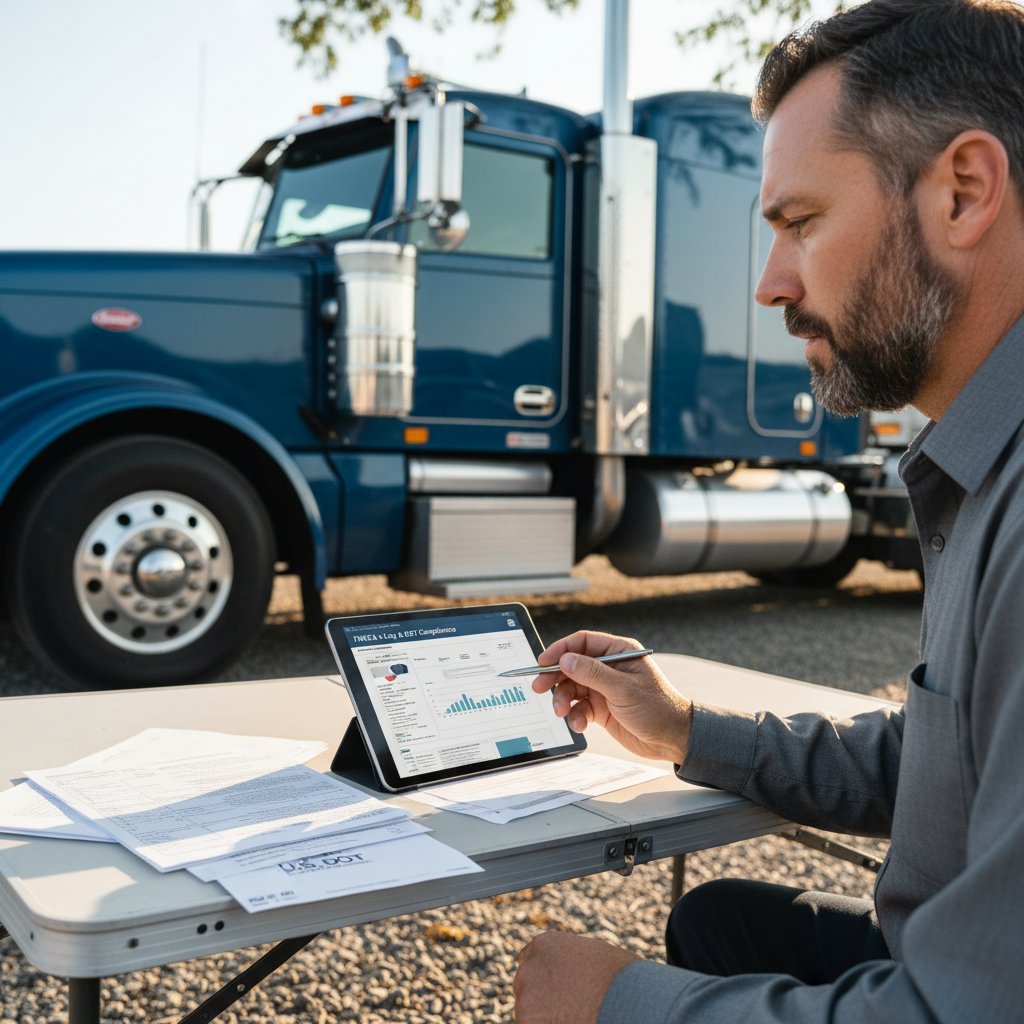
See what the cheapest commercial truck insurance in Maine can cost in 2026, how Maine minimum liability rules (including the 2025 update) and USDOT/FMCSA filings affect pricing, and proven ways to lower premiums without losing access to loads.
If you’re shopping for the cheapest commercial truck insurance in Maine, “cheap” only matters if the policy is compliant and your COI gets accepted when you’re trying to book loads.
Featured snippet answer: The cheapest commercial truck insurance in Maine can start around $8,000–$10,000 per year for a clean-record owner-operator running low-risk freight with minimum required liability and basic coverage. Many Maine operators land closer to $9,200–$9,600/year (or higher) depending on limits, cargo, radius, claims history, and whether they need USDOT/FMCSA filings.
Below is a practical way to shop for cheapest compliant coverage—so you stay legal, stay bookable, and don’t find out after the fact that your limits (or paperwork) don’t match your operation.
Key takeaways:
- Cheap only counts if it’s compliant: Maine minimums plus broker/shipper requirements define what “cheap” really means.
- Filings change the game: If you need USDOT/FMCSA filings, you’re usually buying higher limits and broader exposure.
- Compare apples-to-apples: Same liability limits, cargo limits, deductibles, and endorsements—or the comparison is misleading.
- You can lower premiums without going bare-minimum: Tighten your radius/cargo, raise deductibles strategically, and document safety.
Table of Contents
Reading time: 9 minutes
- Maine Minimum Liability Requirements (Including the 2025 Update)
- USDOT vs Non-USDOT in Maine: How Filing Status Changes Price
- Cheapest Commercial Truck Insurance in Maine: Example Price Ranges (What “Cheap” Looks Like)
- What Affects Commercial Truck Insurance Premiums in Maine
- How to Lower Commercial Truck Insurance Cost in Maine (Without Going Bare-Minimum)
- Frequently Asked Questions
- Why Logrock: Straight Answers, Clean Filings, No Wasted Coverage
- Conclusion & Get a Maine Truck Insurance Quote
Maine Minimum Liability Requirements (Including the 2025 Update)
Maine commercial truck liability minimums can vary by intrastate vs. interstate operations, vehicle/weight class, and whether you’re for-hire, while federal FMCSA financial responsibility rules for many for-hire interstate carriers commonly start at $750,000 public liability under 49 CFR Part 387.
The first step to “cheap” is locking down the limit you actually have to buy, because there are three different “bosses” that can set your floor: Maine intrastate rules, FMCSA rules (if you’re interstate/for-hire with authority), and your customer’s contract (broker/shipper requirements).
What Maine requires vs. what brokers require
Maine minimum liability is the legal floor for certain intrastate operations, but brokers and shippers often set a higher business floor for the loads you want.
If your limit is “legal” but not “bookable,” the truck sits—and fixed costs don’t stop just because you’re parked.
- Legal minimum: The minimum coverage required by Maine for your specific intrastate operation (varies by use/class).
- Contract minimum: The minimum coverage a broker/shipper requires to tender freight (often $1,000,000 auto liability).
- Reality check: If you run brokered freight, plan around what the market accepts, not the lowest number you can find.
LD 1276 / 2025 update: why it matters when you shop “cheap”
Industry summaries and competitive research have referenced a 2025 update tied to LD 1276 that increased a minimum liability floor to $750,000 for certain Maine commercial vehicle operations.
Because requirements can change and depend on how you operate, confirm the current minimum with Maine regulators and a licensed agent before binding, especially if you’re switching between intrastate-only and interstate/for-hire work.
Bottom line: When minimum limits rise, the “cheap baseline” rises too—and at that point it’s smart to price both $750,000 and $1,000,000 if you’re chasing brokered loads.
USDOT vs Non-USDOT in Maine: How Filing Status Changes Price
FMCSA insurance compliance for many interstate for-hire carriers requires your insurer to file proof of coverage (commonly via BMC-91/BMC-91X electronic filings) and attach federally required endorsements (such as MCS-90), which usually increases premium compared to a no-filing intrastate policy.
When you need USDOT/FMCSA filings
If you run interstate, operate for-hire under your own authority, or haul certain regulated commodities, you’ll typically need coverage that meets federal minimums and is filed properly.
- Interstate operations: Crossing state lines often triggers federal requirements.
- For-hire authority: Proof of insurance needs to match what FMCSA expects for your authority to stay active.
- Lease arrangements: Some leased-on setups shift responsibility, but your contract controls what you must carry.
Why “with filings” often costs more
Policies with filings are often priced higher because they usually involve higher required limits, broader exposure, and tighter compliance requirements.
The cheapest policy for a Maine-only, no-filing local unit isn’t comparable to a for-hire interstate policy—those are two different risk profiles and two different compliance burdens.
A simple way to avoid quote “guessing”
Underwriters price uncertainty, so your goal is to remove it with a clean one-page operation profile.
- Radius: local, regional, or long haul
- States: the 3–5 states you actually run (not “anywhere in the U.S.”)
- Cargo: general freight vs. higher-risk commodities
- Authority status: leased on vs. running your own authority
Cheapest Commercial Truck Insurance in Maine: Example Price Ranges (What “Cheap” Looks Like)
Competitive benchmarks commonly show Maine owner-operator premium ranges around $8,000–$14,000 per year, with some clean-record minimum-limit examples as low as ~$8,200/year and many operators clustering around ~$9,200–$9,600/year depending on filings, radius, cargo, limits, and losses.
Use the numbers as a starting point, not a promise—your exact class of business and compliance needs decide where you land.
Example comparison framework (use this when requesting quotes)
| Quote Spec (You Control) | “Cheapest” Version | “Still Gets You Loads” Version | What Changes the Price Most |
|---|---|---|---|
| Auto liability limit | Minimum required | Often $1,000,000 | Limit + operation type |
| Cargo (if required) | Minimum requested | Matches your freight | Cargo class/value + claims |
| Physical damage | Sometimes skipped | Often needed if financed | Truck value + deductible |
| Deductibles | High deductible | Balanced deductible | Your cash reserves |
| Filings | None (if eligible) | FMCSA filings (if needed) | Compliance requirements + limits |
How to compare “cheap” quotes correctly (apples-to-apples)
An apples-to-apples comparison means every quote uses the same limits, deductibles, and endorsements, so you’re pricing the carrier—not accidental differences in coverage.
If you skip this step, you can “win” a low premium and lose later when your cargo limit is too low, your physical damage deductible is unaffordable, or your COI gets rejected.
Before you bind: a quick checklist
- Liability limit: matches the loads you want (not just the legal minimum)
- Cargo limit: matches your freight (if you haul brokered/shipper freight)
- Physical damage: included if you can’t afford to total the truck
- Trailer coverage: clearly stated (owned, non-owned, interchange)
- Payment plan fees: confirm the total annual cost (fees can add up)
What Affects Commercial Truck Insurance Premiums in Maine
Commercial truck insurance premiums are primarily driven by underwriting inputs like new venture status, MVR/claims, operating radius, cargo class, equipment value, and the liability and cargo limits you choose.
If you want the cheapest compliant policy, focus on what actually moves the number—not the small stuff.
Maine-specific underwriting drivers (what insurers notice)
Underwriters price risk based on where and how you operate, and Maine has a few realities that can matter on paper.
- Operating radius: local vs. regional vs. long haul
- Garaging ZIP: theft/vandalism risk and claim frequency trends
- Seasonality: winter weather exposure, reduced daylight, road conditions
- Route type: rural two-lane vs. interstate, grades and mountain exposure
- Cargo: forest products, construction materials, reefer food, and other classes
The biggest pricing levers (most impact)
If you’re trying to lower premium, these tend to swing the price the most.
- New authority/new venture: typically higher until you build history
- MVR/PSP/claims: tickets and preventable accidents drive rates
- Truck value + physical damage: newer equipment costs more to insure
- Deductibles: higher deductibles can lower premium if you can fund them
- Radius/mileage: more miles generally means more exposure
- Cargo class: higher theft/damage categories cost more
How to Lower Commercial Truck Insurance Cost in Maine (Without Going Bare-Minimum)
Most owner-operators lower premiums by tightening underwriting variables—like radius, cargo, deductibles, and safety documentation—without dropping below required limits or losing broker acceptance.
Tighten your operation profile (radius + lanes)
If you mostly run Maine/NH/MA, say that and rate it that way, because “anywhere in the U.S.” often prices like you actually run everywhere.
- Be specific: list lanes and states you routinely run
- Don’t buy unused exposure: long-haul pricing for a regional operation is wasted premium
Right-size coverage (don’t pay twice)
Leased-on owner-operators sometimes overbuy coverage when the motor carrier’s policy may be primary under dispatch, but the lease agreement controls what you must carry.
Have your agent walk through how coverage applies under dispatch, bobtail/deadhead, and personal use—definitions and endorsements matter.
Raise deductibles strategically (only if you have reserves)
Higher deductibles can reduce premium, but only if you can actually pay the deductible quickly after a claim.
Practical rule of thumb: don’t pick a deductible you can’t cover within 7–14 days without missing truck notes or payroll.
Prove you’re safer than the next guy (dash cams + ELD discipline)
Dash cams can reduce fraud and speed up claims decisions, and good ELD and maintenance discipline help your “safety story” at underwriting.
- Dash cam program: how footage is stored, reviewed, and used for coaching
- Maintenance records: show you’re preventing breakdowns and tire-related losses
- Clean application details: accuracy prevents misrating and surprises later
Frequently Asked Questions
Commercial truck insurance pricing and minimum limits in Maine depend on whether you’re intrastate or interstate, whether you need FMCSA filings, and the liability/cargo limits required by your freight contracts.
Commercial truck insurance in Maine commonly starts around $8,000–$10,000 per year for a clean-record owner-operator with low-risk freight and minimum required liability, while many operators fall closer to $9,200–$9,600/year (and can go higher) once you factor in filings, radius, equipment value, and losses. A new venture, long-haul radius, higher-risk cargo, or required broker limits (often $1,000,000 auto liability) can push pricing into the mid five figures. The only reliable way to pin your number down is to quote the same limits/deductibles across multiple carriers and compare apples-to-apples.
No single insurer is always the cheapest in Maine because rates change based on your cargo class, operating radius, USDOT/FMCSA filing needs, truck value, driving record, and whether you’re a new venture. The fastest path to the cheapest real price is to request quotes from multiple markets using the same liability limit, cargo limit, physical damage terms, and deductibles. If one “cheap” quote is missing cargo, has a different deductible, or excludes what you do, it isn’t actually cheaper—it’s just less coverage.
Commercial truck insurance premiums in Maine are most influenced by new authority/new venture status, MVR/PSP and claims, operating radius and mileage, cargo type, garaging ZIP, equipment value, and your chosen liability/cargo limits. Maine-specific realities like winter driving exposure, rural routes, and seasonal operations can also affect underwriting. If you want lower rates, the biggest “levers” are tightening your radius/lane description, choosing deductibles you can actually fund, and documenting safety tools like dash cams and maintenance practices to support a lower-risk profile.
Maine minimum liability requirements depend on whether you operate intrastate vs. interstate and whether you’re for-hire, and federal FMCSA rules for many for-hire interstate carriers commonly start at $750,000 public liability under 49 CFR Part 387 (higher for certain hazardous materials). Competitive research also referenced a 2025 update tied to LD 1276 that increased a minimum floor to $750,000 for certain Maine operations, but you should confirm the current intrastate rule with Maine regulators and a licensed agent before binding. Separately, many brokers still require $1,000,000 regardless of state minimums.
You need USDOT/FMCSA insurance filings when your operation requires federal compliance—most commonly for interstate for-hire trucking under your own authority—because your insurer must file proof of coverage (often BMC-91/BMC-91X) and your policy may include federal endorsements like MCS-90. If you operate strictly intrastate and don’t need federal authority, you may not need those filings, but you still must meet Maine requirements and any broker/shipper contract limits. The key cost driver is matching the policy to your actual operation so you’re not paying for filings you don’t need—or missing filings that can shut your authority down.
Why Logrock: Straight Answers, Clean Filings, No Wasted Coverage
Most “cheap trucking insurance” problems come from either a policy built for the wrong operation or filings/COI paperwork that doesn’t match what brokers and regulators require.
Logrock’s approach is straightforward: quote it correctly, file it correctly (when filings are needed), and match coverage to the freight you actually run—so you’re not overpaying for exposure you’ll never use or missing coverage that gets your COI rejected.
If you tell us what you haul, where you run, and whether you’re leased-on or running your own authority, we can structure options that are affordable and functional—not just “cheap on day one.”
Conclusion & Get a Maine Truck Insurance Quote
The cheapest commercial truck insurance in Maine is the lowest premium that still meets the correct minimums (Maine and/or FMCSA), satisfies broker/shipper contract limits, and holds up when you need a COI or have a claim.
If you want real savings, request quotes built on the same specs and choose the option that keeps you legal and bookable.
Key Takeaways:
- “Cheap” without compliance is just downtime waiting to happen.
- Filings and radius are major price drivers—define your operation clearly.
- Apples-to-apples quoting is the fastest way to find true savings.
When you’re ready, we’ll quote multiple options and show you what’s truly cheapest for your exact operation.