
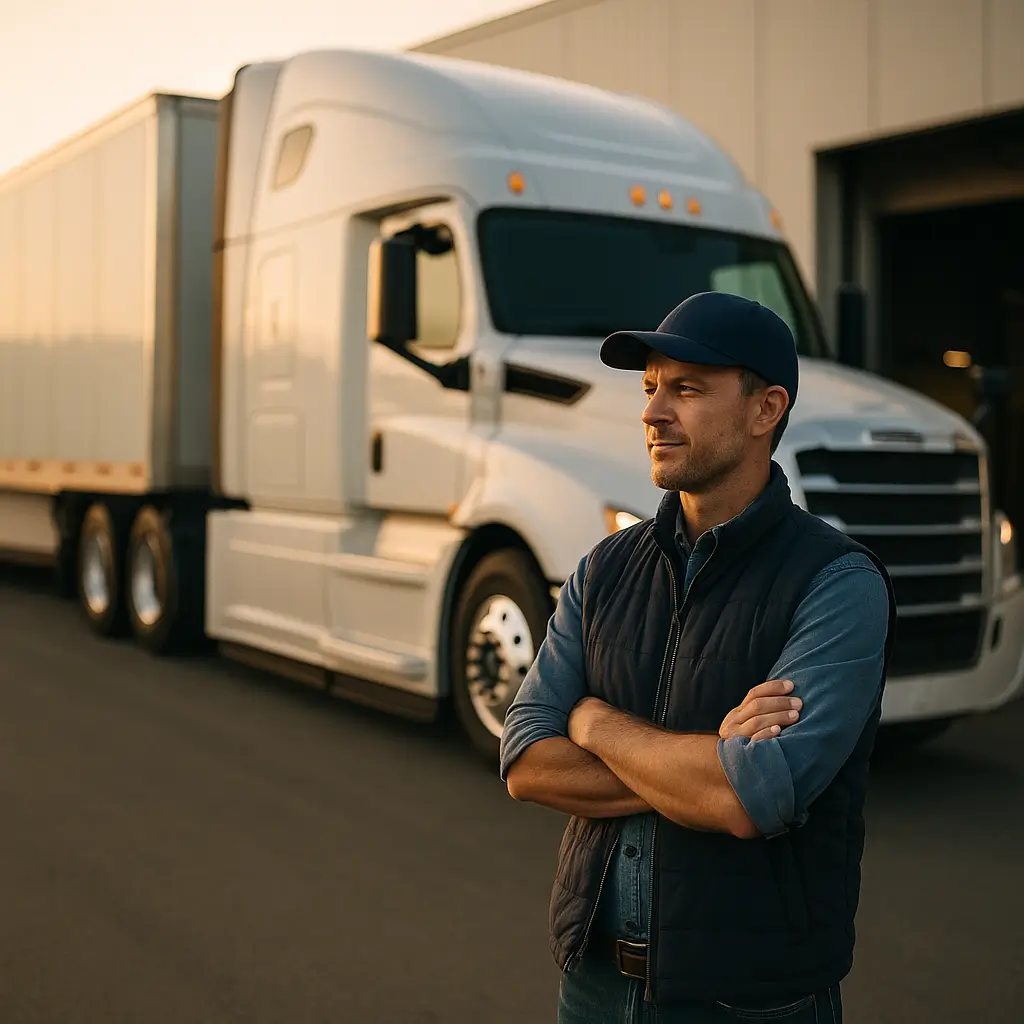
Find cheap commercial truck insurance in Oregon. Compare 2026 cost ranges, compliance basics, and ways to lower premiums.

If you’re shopping for the cheapest commercial truck insurance in Oregon, the goal isn’t just the lowest monthly payment—it’s the lowest total cost policy that stays compliant, gets your COI accepted, and doesn’t leave you exposed. For most one-truck operations, “cheap” usually means a liability-first package (often with $1,000,000 liability for broker acceptance) that matches your radius, cargo, drivers, and garaging ZIP without guessing.
The fastest way to save is to force apples-to-apples quotes (same limits, same deductible, same radius, same cargo), then tighten what you actually do so you’re not paying long-haul rates for a regional operation.
- “Cheapest” means cheapest that still works: legal requirements plus common broker/shipper requirements (often higher than minimums).
- Biggest price levers: operation fit (radius/cargo/ZIP), deductibles, and continuous coverage (no lapses).
- Best comparison rule: if the inputs aren’t identical, the “cheapest” quote may just be missing coverage.
Table of Contents
Reading time: 10 minutes
- Quick Answer: Cheapest Commercial Truck Insurance in Oregon Price Ranges
- How Much Does Commercial Truck Insurance Cost in Oregon?
- Which Companies Offer the Cheapest Commercial Truck Insurance in Oregon?
- Cost Breakdown by Coverage Type (What You Can Change)
- Oregon Truck Insurance Requirements (FMCSA + Oregon)
- What Factors Affect Oregon Truck Insurance Rates Most?
- How to Lower Commercial Truck Insurance Costs in Oregon (Checklist)
- Real-World Sample Quote Scenarios (Oregon)
- Frequently Asked Questions
- Why Logrock’s Approach Gets You Cheaper Rates Without Gaps
- Conclusion & Get a Quote
Quick Answer: Cheapest Commercial Truck Insurance in Oregon Price Ranges
The cheapest commercial truck insurance in Oregon is typically a liability-focused policy priced to your exact operation (truck type, radius, cargo, drivers, and garaging ZIP) while still meeting common broker limits like $1,000,000 auto liability.
Rates swing because trucking insurance is underwritten more like a business risk profile than a “state average.” If you want the lowest rate that still works in the real world, you shop multiple carriers using identical quote inputs and only reduce coverage where it won’t create a gap.
2026 Oregon price ranges (high-level)
Many one-truck operations commonly land in the high four figures to low five figures per year, and can climb well above that when you add new authority, longer radius, higher-risk cargo, metro exposure, claims, or insurance lapses.
- A new venture or new authority operation is often priced higher due to limited loss history and no track record.
- Longer radius / higher miles: more exposure generally means higher premium.
- Portland/Salem/Eugene traffic exposure: congested driving correlates with more frequent claims.
- Higher-risk commodities: theft and severity patterns affect cargo and liability pricing.
- Lapses and violations: underwriters heavily penalize “breaks” in continuous coverage.
What “cheap” usually includes (and doesn’t)
Most “cheap” quotes reduce price by offering liability-only, raising physical damage deductibles, narrowing cargo, or tightening underwriting terms (driver eligibility, radius enforcement, garaging rules).
If you run under your own authority, “liability-only” can be too thin to keep loads moving if a broker requires cargo, general liability, or specific endorsements.
How Much Does Commercial Truck Insurance Cost in Oregon?
Oregon commercial truck insurance cost is driven primarily by your underwriting profile—especially authority age, driver MVR, cargo, radius, miles, and garaging ZIP—not by a simple statewide average.
Online “averages” are often built on assumptions (one truck type, one radius, one driver profile, one coverage package). Your real quote needs to match how you actually operate: lanes, commodities, drivers, and required limits.
Cost ranges by truck type (Oregon examples)
Pricing behavior changes by operation because frequency and severity of claims differ by equipment, routing, and stop patterns.
| Operation | Why it can be cheaper | Why it can get expensive fast |
|---|---|---|
| Semi / tractor-trailer (dry van) | Stable freight profile; common underwriting appetite | New authority, long-haul miles, higher limits, loss history |
| Reefer | Strong safety programs and disciplined processes can help | Cargo exposure and claim severity tends to run higher |
| Box truck | Often shorter radius and lower highway exposure | High stop frequency, backing risk, metro exposure, theft |
| Hotshot | Sometimes lower equipment value and regional routing | Underwriting varies by trailer/GVW, lanes, and cargo |
| Dump / construction | Local radius and recurring routes can reduce exposure | Jobsite exposure, rollover/theft patterns, driver turnover |
Which Companies Offer the Cheapest Commercial Truck Insurance in Oregon?
No single insurer is always the cheapest in Oregon because trucking insurance pricing is based on carrier “appetite,” meaning which risks they want right now (radius, cargo, drivers, authority age, and loss history).
Instead of chasing a brand name, shop by fit and make sure quotes are comparable on limits, deductibles, and fees.
Provider comparison table (use this to shop smarter)
| Carrier/Program Type | Best for | Where it’s often cheapest | What to watch |
|---|---|---|---|
| National truck markets | Standard risks; established operations | Clean MVR + stable operations | Can be strict on new ventures |
| Regional/specialty programs | Niche lanes/cargo; consistent operations | Tight radius + predictable commodities | Limited availability; tighter rules |
| New venture programs | New authority/new venture | Honest profile + tight operation + clean MVR | Higher base rates; strict terms and exclusions |
| High-risk markets | Rough MVR/loss history; tough commodities | When standard markets decline | Expensive; restricted coverage; heavier down payments |
| Fleet programs | 5–20+ power units with process | Documented safety + maintenance + hiring controls | Data heavy (loss runs, driver files, maintenance records) |
What to request so quotes are apples-to-apples
An apples-to-apples trucking quote comparison requires the same limits, cargo, radius, miles, drivers, deductibles, and payment plan on every quote so the price difference is real.
- Liability limit: match your broker/shipper requirement (often $1,000,000).
- Cargo limit: same amount and same commodity description.
- Physical damage: same stated value/valuation method and the same deductible.
- Radius and annual miles: local/regional/long-haul must match reality.
- Drivers and garaging ZIP: same list, same location, same use.
- Fees and financing: ask for total cost including policy fees and installment fees.
Pro tip: A “cheap” monthly payment can hide hundreds in financing charges and filing fees, so compare total annual cost—not just the installment amount.
Cost Breakdown by Coverage Type (What You Can Change)
Your premium is built from multiple coverages, and the cheapest commercial truck insurance in Oregon usually comes from adjusting deductibles, limiting add-ons you don’t need, and matching coverage to your actual contracts.
1) Primary liability (the “must-have”)
Primary liability pays for other people’s bodily injury and property damage when you’re at fault, and it’s the coverage brokers look at first on a COI.
- Who needs it: every commercial operator.
- Where cost moves: radius, miles, lanes, driver history, and loss history.
- Reality check: don’t pay “48-state” rates if you truly run regional, but don’t understate radius—claims investigations can review ELD data, fuel receipts, and dispatch records.
2) Motor truck cargo (often contract-required)
Motor truck cargo covers the freight you’re legally responsible for if it’s damaged or stolen, subject to exclusions and conditions.
- Who needs it: most for-hire carriers under their own authority.
- How to keep it cheaper: right-size cargo for what you actually haul, and avoid paying for high-theft/high-value commodities you never touch.
3) Physical damage (collision + comprehensive for your truck)
Physical damage repairs or replaces your truck after a covered loss, and the deductible you pick directly affects the premium.
- Who needs it: most financed equipment requires it, and many cash owners carry it for survival.
- Deductible rule: raising deductibles can cut premium, but only if you can actually cash-flow that deductible after a claim.
4) Other coverages that can quietly be “required”
Many “cheap” quotes fall apart because a contract requires additional coverages beyond auto liability.
- General liability: commonly required for shipper/broker contracts (non-auto premises/operations exposure).
- Trailer interchange: often needed if you pull someone else’s trailer under an interchange agreement.
- Non-trucking liability / bobtail: commonly required when leased-on, depending on the motor carrier’s program.
- Uninsured/underinsured motorist: can matter in severe injury claims, especially when the at-fault party has low limits.
Oregon Truck Insurance Requirements (FMCSA + Oregon)
For most interstate for-hire carriers hauling non-hazardous property, the FMCSA requires at least $750,000 in public liability financial responsibility under 49 CFR Part 387, and many brokers still require $1,000,000 regardless of the legal minimum.
This is where “cheap” policies go sideways: they meet someone’s minimum, but not your authority filing needs or your customer’s COI requirements.
1) Federal (FMCSA) requirements (interstate)
If you operate interstate under your own authority, you generally need compliant liability limits and an electronic insurance filing (commonly via BMC-91/BMC-91X filing processes handled by your insurer).
- Why it matters: no compliant filing can delay activation or cause authority issues.
- Broker reality: many shippers/3PLs require $1,000,000 auto liability even when the FMCSA minimum is lower.
- Hazmat note: hazardous materials can require higher federal limits (often $1,000,000 to $5,000,000 depending on material/class).
2) Oregon intrastate considerations
Oregon intrastate insurance requirements can vary based on vehicle class, weight, and what you haul, and you should verify current intrastate minimums with Oregon’s motor carrier compliance resources before binding.
Action step before you buy “cheap”: confirm whether you are interstate vs. intrastate, the vehicle weight/class, passenger vs. property hauling, and whether any special commodity rules apply.
Compliance note: Regulations and enforcement practices change, so confirm requirements with current federal/state guidance and a licensed agent.
What Factors Affect Oregon Truck Insurance Rates Most?
Commercial truck insurance rates in Oregon are most affected by driver MVR/experience, claims history, authority age, continuous coverage history, operating radius/miles, cargo type, and the garaging ZIP where the truck is kept.
Driver + business factors underwriters price heavily
- MVR: speeding, following too close, reckless driving, DUI, and serious violations drive pricing fast.
- Experience: time in CDL class and time in the same type of operation matters.
- Loss runs: prior claims (even “small” ones) change how carriers view frequency risk.
- Continuous insurance: lapses are expensive because they signal instability and increase assumed risk.
- New authority: typically higher due to limited track record.
Oregon operation factors carriers “see”
- Garaging ZIP: theft, vandalism, and claim frequency patterns matter.
- Metro exposure: more time in congested areas increases frequency (backing, sideswipe, minor collisions).
- Your lanes: corridor choices and parking habits affect theft and collision exposure.
- Cargo mix: what you haul and where you park it changes severity risk.
- Miles and radius: higher exposure generally equals higher premium.
How to Lower Commercial Truck Insurance Costs in Oregon (Checklist)
Lowering commercial truck insurance costs in Oregon usually requires three moves: shop early (30–45 days), run multiple markets (5+), and lock quote inputs so you’re comparing the same limits and deductibles.
- Shop 30–45 days before renewal: last-week shopping kills options and increases “rush” pricing.
- Run 5+ markets: one carrier’s decline can be another carrier’s best tier.
- Lock your quote inputs: same limits, same radius, same drivers, same deductibles.
- Tighten radius/miles to reality: don’t pay for miles you don’t run (and don’t understate).
- Raise deductibles strategically: only if you can fund the deductible without wrecking cash flow.
- Add basic loss control: dash cams, maintenance logs, and driver coaching are underwriter-friendly.
- Avoid lapses: a lapse often costs more than it “saved” you.
- Clean up your driver file: remove non-drivers, verify license info, confirm experience.
Real-World Sample Quote Scenarios (Oregon)
Sample trucking insurance scenarios are useful because changing just one variable—like authority age, radius, or garaging—can move the premium by thousands per year on a one-truck policy.
These examples are illustrative only; exact pricing requires your full underwriting profile and current market appetite.

Scenario A: New authority, 1 semi, dry van, regional
Assumptions (example): new venture/new authority, regional Pacific Northwest lanes, and broker-style limits (often $1,000,000 liability plus cargo).
- What pushes cost up fast: new venture factor, higher miles, longer radius, no prior continuous coverage.
- What can reduce cost without breaking the policy: accurately tightening radius, higher physical damage deductible (if you have reserves), and a documented safety story (dash cam + maintenance discipline).
Scenario B: Box truck, local delivery (metro exposure)
Assumptions (example): local delivery in/around a metro area with frequent stops, tight turns, backing, and parking exposure.
- What pushes cost up fast: stop-and-go exposure, backing incidents, theft/vandalism patterns tied to garaging.
- What helps: secured parking, experienced drivers with clean MVRs, and realistic miles/radius reporting.
Frequently Asked Questions
Commercial truck insurance in Oregon commonly ranges from the high-$8,000s per year to $20,000+ per year for a one-truck operation, depending on authority age, driver MVR, cargo, radius, miles, and required limits.
A new venture, long-haul miles, metro exposure, higher cargo limits, or an insurance lapse can push pricing far above that. The only reliable way to nail your number is to run apples-to-apples quotes (same limits, same deductible, same radius, same drivers) across multiple carriers and compare the total annual cost, including policy and installment fees.
The cheapest company in Oregon is usually the carrier whose underwriting appetite best matches your current profile (radius, cargo, drivers, garaging ZIP, authority age, and loss history), not a single brand that’s always lowest.
To find it, get at least 5 quotes with identical limits and deductibles, then review fees, exclusions, and required endorsements (cargo, general liability, trailer interchange). A “cheap” quote can be cheap because it’s missing something your broker requires, or because financing fees are hiding in the monthly payment.
The biggest Oregon trucking insurance price drivers are driver MVR/experience, claims history (loss runs), authority age (new venture vs. established), continuous coverage (no lapses), operating radius/miles, garaging ZIP, and cargo type.
Coverage choices matter too: higher liability limits, broader cargo, and lower physical damage deductibles generally cost more. Underwriters also price “how you run,” so factors like metro delivery stop frequency, overnight parking habits, and lane choices can change both eligibility and premium.
You can lower Oregon commercial truck insurance costs by shopping 30–45 days before renewal, quoting 5+ markets, and forcing apples-to-apples inputs (same limits, radius, drivers, and deductibles) so you aren’t “saving” money by losing coverage.
Then reduce risk in ways carriers recognize: avoid lapses, tighten radius/miles to reality, raise deductibles only if you can fund them, add dash cams, document maintenance, and coach drivers to cut preventable claims (especially backing and minor collisions). Small claim frequency is a major premium driver.
The minimum liability requirement depends on whether you operate interstate under FMCSA authority or intrastate within Oregon, and what you haul; for many interstate for-hire carriers hauling non-hazardous property, the FMCSA minimum is $750,000 in public liability under 49 CFR Part 387.
In practice, many brokers and shippers require $1,000,000 auto liability even when the legal minimum is lower, and hazmat can require higher limits (often up to $5,000,000 depending on commodity and class under 49 CFR §387.9). For intrastate-only operations, verify current Oregon-specific minimums with state motor carrier compliance resources and a licensed agent before binding.
Liability-only is often the lowest-premium option, but it usually isn’t “enough” if you need cargo coverage for brokers, physical damage for financed equipment, or extra coverages like general liability or trailer interchange for specific contracts.
Liability-only also doesn’t pay to repair your truck after a collision or theft, which can shut down revenue instantly. The cheapest sustainable plan is the lowest-cost policy that meets (1) your legal/filing requirements and (2) your customer requirements, while keeping deductibles and exclusions at a level you can actually live with after a claim.
A Certificate of Insurance (COI) for Oregon brokers typically needs to show your insurer’s name, your auto liability limit (usually $1,000,000), cargo coverage limit, the broker or shipper listed as an additional insured or certificate holder, and effective and expiration dates. Some loads also require general liability, trailer interchange, or endorsements listed by name.
Your insurer or agent can issue a COI within hours, but confirming what a specific broker requires before you book the load prevents COI rejection delays.
Your garaging ZIP—where the truck is primarily kept overnight—is a pricing input that affects your premium based on local claim frequency, theft patterns, and vandalism risk. Portland, Salem, and Eugene metro ZIPs can carry higher rates than rural Oregon ZIPs because of congestion-related claim frequency and theft exposure.
Underwriters use the garaging ZIP to assess overnight risk, so it is important to report it accurately. Misreporting where the truck parks is a material misrepresentation that can affect a claim.
A BMC-91 (or BMC-91X) is the electronic insurance filing your insurer submits to the FMCSA to show the required financial responsibility is on file. If you operate interstate under your own FMCSA authority, your insurer must submit it on your behalf; you cannot legally operate without the required filing.
The filing is typically part of setting up insurance for a new authority, and your agent should handle it. Failure to maintain a current filing can lead to FMCSA authority suspension. Oregon-only intrastate operators may have different filing requirements, so verify them with ODOT’s motor carrier division.
Bobtail insurance covers a tractor when operating without a trailer, whether or not it is under dispatch. Non-trucking liability (NTL) is narrower: it generally covers personal, non-business use when the driver is not under dispatch.
The distinction matters because some motor carrier lease agreements only cover you when you are under dispatch, leaving a gap at other times. Oregon owner-operators leased to a carrier should review their lease carefully to understand what the carrier’s policy covers and what gap coverage they personally need.
Yes, but a coverage lapse typically pushes you into higher-rate markets and can disqualify you from preferred carriers. Underwriters view lapses as a signal of financial instability or uninsured operating periods, both of which increase assumed risk.
Be upfront about the dates and reason for a lapse; some carriers will still quote a recent, short lapse. The most important step now is maintaining continuous coverage from this point forward.
Why Logrock’s Approach Gets You Cheaper Rates Without Gaps
Logrock’s quoting approach is built around 6 locked inputs—limits, deductibles, radius, miles, cargo, and drivers—so “cheaper” means a truly lower total cost, not missing coverage.
Most insurance shopping goes wrong in two ways: (1) changing coverages to “win” a quote, and (2) guessing on radius/cargo to chase a lower number. That’s how you end up with a policy that looks cheap until a broker rejects your COI—or a claim exposes a gap.
- Underwriter-real quote profiles: built the way carriers actually rate the risk.
- True market comparison: multiple carriers with the same inputs.
- Waste removed safely: cut cost where it won’t break compliance or contracts.
Conclusion: Get the Cheapest Commercial Truck Insurance in Oregon (Without Gambling Your Business)
The cheapest commercial truck insurance in Oregon isn’t a magic carrier—it’s a disciplined process. Quote your real operation, compare markets apples-to-apples, and adjust limits/deductibles only where it won’t create a coverage gap.
If your premium is crushing cash flow, you still have levers. The key is pulling the ones underwriters actually price: radius, miles, drivers, cargo, deductibles, and continuous coverage.
Key Takeaways:
- Chase total cost, not the lowest monthly: compare annual premium plus fees and financing charges.
- Expect $750,000 FMCSA minimum in many cases, but plan for $1,000,000: brokers commonly require higher limits than the legal minimum.
- Lock quote inputs: same limits, same radius, same drivers, same deductibles—then shop 5+ markets.
If you’re trying to find the cheapest commercial truck insurance in Oregon that still meets your broker’s COI requirements and keeps your authority compliant, LogRock can help you compare real options across multiple carriers — using the same limits, radius, and driver profile on every quote. Talk to our team to ask questions, identify coverage gaps, and get a quote built around how you actually operate.
Get a Quote (Oregon)




