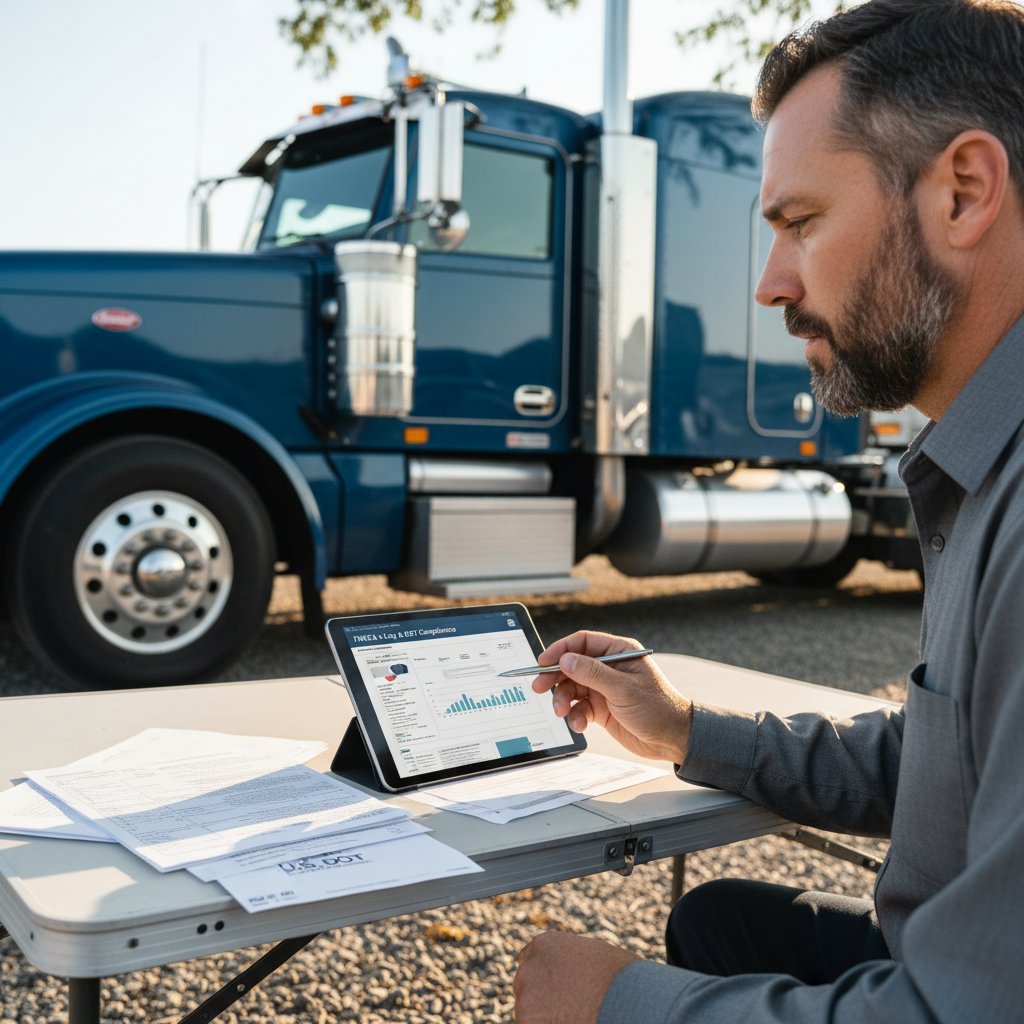
Commercial hotshot insurance explained: required coverages, FMCSA filings, CDL vs non-CDL realities, 2026 cost ranges, and proven ways to lower premiums. Get a quote.
Commercial hotshot insurance is the set of trucking coverages (plus, if you have authority, the right FMCSA filings) that keeps your pickup-and-trailer operation legal, bookable, and protected when something goes wrong. If you miss a filing, misclass your cargo, or show the wrong limits on a COI, you can lose loads, get rejected by broker compliance, or even stall your authority.
Quick answer (featured snippet): Commercial hotshot trucking typically needs primary auto liability (often $750,000–$1,000,000+), motor truck cargo (commonly $100,000+, depending on freight), and physical damage if the truck is financed. If you run under your own authority, you also need FMCSA insurance filings (like BMC-91/91X) and a BOC-3 on file to keep your authority active.
For a deeper compliance walkthrough, start with this FMCSA insurance filings checklist.
Key Takeaways: Essential Commercial Hotshot Insurance
- If you have your own authority, filings matter as much as the policy: if the filing isn’t posted correctly, you’re not “ready to roll.”
- Brokers set the real-world minimums: even if your state minimum is lower, many rate cons demand $1M liability and $100k cargo.
- Cheap trucking insurance gets expensive after the first claim: focus on correct limits, correct cargo class, and clean paperwork.
- Your fastest savings come from risk controls: dash cams/telematics, clean MVRs, smart deductibles, and stable operations lower premiums.
Table of Contents
Reading time: 11 minutes
- What Is Commercial Hotshot Insurance (and how it differs)?
- Hotshot Insurance Requirements: Legal vs Broker/Lender “Required”
- Coverage Checklist: Build the Right Hotshot Insurance Package
- FMCSA Filings for Hotshot Authority: BMC-91/91X, MCS-90, BOC-3
- Hot Shot Trucking Insurance Cost (2026): Ranges, Examples, and Rate Drivers
- Optional Add-Ons That Protect Cash Flow (NTL, Bobtail, Downtime, Occ/Acc)
- Frequently Asked Questions
- Why Logrock + Next Step
- Conclusion: Get Your Commercial Hotshot Insurance Quote
What Is Commercial Hotshot Insurance (and how it differs)?
Commercial hotshot insurance is commercial truck insurance designed for pickup-based freight hauling (often a ¾-ton or 1-ton truck pulling a flatbed or gooseneck) where pricing is driven by equipment class, trailer setup, cargo type, and operating radius.
Hotshot work is simple on paper—hook up, grab the load, run hard, get paid—but underwriters don’t rate it like a typical tractor setup because your freight can change week to week, you may work multiple brokers, and hotshot ops often have tighter turnaround and more “urgent” runs.
How it differs from standard semi truck insurance
Most insurers rate hotshot operations based on practical risk details that show up in claims:
- Power unit class: pickup/medium duty vs tractor, plus GVWR/GCVWR considerations.
- Trailer type and value: flatbed/gooseneck, sometimes multiple trailers on the schedule.
- Cargo variability: one week steel, next week equipment, next week “misc.” freight.
- Radius and frequency: local vs multi-state, plus how often you’re loaded.
- Driver experience: commercial driving history, MVR, prior commercial insurance, and claims.
If your pickup or trailer is financed, physical damage is usually non-negotiable—here’s the plain-English breakdown of comprehensive vs collision physical damage coverage.
Hotshot Insurance Requirements: Legal vs Broker/Lender “Required”
For interstate for-hire carriers hauling property, FMCSA financial responsibility rules commonly start at $750,000 minimum liability (and many brokers require $1,000,000 regardless of the legal minimum).
There are two types of “required” in hotshot:
- Legally required: federal/state requirements tied to your authority and operation.
- Contract-required: broker/shipper/lease-on carrier/lender requirements you must meet to book loads or finance equipment.
If you mix these up, you’ll buy the wrong limits—and you’ll find out at the worst time: when you’re trying to book a load and your COI gets rejected.
Authority vs leased-on (who buys what)
- Hotshot with your own authority (for-hire): you buy primary auto liability (and usually cargo), and your insurer must file proof with FMCSA if you’re interstate.
- Leased-on to a motor carrier: the carrier’s policy may provide primary liability while you’re under dispatch, but you may still need your own coverage for off-dispatch exposure.
CDL vs non-CDL (what changes—and what doesn’t)
Insurance isn’t “CDL-only,” and CDL status doesn’t replace proper limits, filings, or accurate cargo/radius details on the application.
- CDL rules: many states follow the common threshold of 26,001 lbs GVWR/GCVWR for CDL requirements (plus other endorsements depending on use).
- Insurance reality: underwriters still price based on operation, experience, radius, cargo class, and loss history.
Off-dispatch gaps you can’t ignore
If you’re leased-on, you’ll hear “get bobtail/NTL.” That can be correct—but only if you understand when it applies. Start with this clear definition of non-trucking liability insurance (NTL).
Coverage Checklist: Build the Right Hotshot Insurance Package
A complete commercial hotshot insurance package usually includes primary auto liability, motor truck cargo, and (when financed or value matters) physical damage, with optional add-ons based on contracts and how you operate.
Think of your insurance as a stack. Your goal isn’t “the cheapest.” Your goal is: no rejected COIs, no coverage gaps, and no claim surprises.
Practical hotshot insurance matrix
| Coverage | What it protects | Who usually requires it | Typical limit you’ll see | Common gotcha |
|---|---|---|---|---|
| Primary Auto Liability | Injuries/property damage to others | FMCSA/state + brokers | $750k–$1M+ | Wrong entity/authority setup; filing not posted |
| Motor Truck Cargo | Freight you’re hauling | Brokers/shippers | $100k is a common starting point | Exclusions (unattended theft, certain commodities) |
| Physical Damage (Comp/Collision) | Your truck/trailer | Lenders + smart owner-ops | Based on equipment value | ACV payout can sting on a total loss |
| General Liability | Non-auto business liability | Some broker/shipper contracts | Often $1M | Not a replacement for auto liability |
| Trailer Interchange | Non-owned trailer damage under an interchange agreement | Only if you sign interchange | Varies | Not needed for your own trailer |
Physical damage: the payout detail most guys miss
Two policies can cost about the same and pay out wildly different on a total loss, especially if your setup is customized (beds, toolboxes, winches) or equipment values move fast. Before you bind, read this breakdown of agreed value vs actual cash value (ACV) settlements.
FMCSA Filings for Hotshot Authority: BMC-91/91X, MCS-90, BOC-3
For interstate carriers with their own authority, FMCSA generally requires an active liability filing (commonly BMC-91 or BMC-91X) plus a BOC-3 on file, and your liability policy includes required endorsements like MCS-90.
If you have interstate authority, your insurance isn’t “done” when you pay the down payment. It’s done when the filings post correctly and FMCSA shows you as active.
Policy vs filing (the simple distinction)
- The policy is what you buy (liability, cargo, physical damage, etc.).
- The filing is what your insurer submits electronically to FMCSA to prove financial responsibility.
The filings hotshot operators run into
- BMC-91 / BMC-91X: proof-of-liability filing FMCSA uses to keep authority active.
- MCS-90: an endorsement attached to the liability policy (commonly misunderstood).
- BOC-3: process agent designation for legal service of process.
If you want a focused, new-authority explanation of the paperwork chain, use this guide on BMC-91X and BOC-3 forms for new carriers.
A practical timeline (what to expect)
- Apply: DOT/MC + business entity details must match exactly.
- Bind coverage: liability/cargo with correct operations, radius, and cargo classes.
- Insurer files: BMC-91/91X submitted electronically.
- BOC-3 filed: process agent is posted.
- FMCSA shows active: then you run loads.
Pro tip: a cancellation doesn’t just end your policy—it can pull your filing and put your authority at risk. Don’t play games with lapses.
Hot Shot Trucking Insurance Cost (2026): Ranges, Examples, and Rate Drivers
In 2026, many hotshot operators see annual premiums around $7,000–$15,000 for a basic package, but new authority, higher limits, metro garaging, and high-risk freight can push costs well above that range.
Hot shot trucking insurance cost moves fast based on radius, cargo, experience, garaging ZIP, prior insurance, and authority status.
Typical 2026 ranges (reality check)
That $7k–$15k neighborhood is a common landing zone for many operators, but pricing often increases with:
- New venture / new authority: higher uncertainty and less insurance history.
- Higher limits: $1M liability plus higher cargo (e.g., $250k) can raise premium.
- High-theft / high-litigation areas: certain metro zones can materially change rates.
- High-risk commodities: or frequent broker changes with inconsistent freight.
Cost examples (ballpark, not promises)
| Operator profile | Setup | Typical package | Why it prices this way |
|---|---|---|---|
| Non-CDL hotshot, local/regional | Pickup + 40’ gooseneck, steady lanes | Liability + cargo | Lower radius helps; cargo class still matters |
| New authority, multi-state | Mixed brokers, longer runs | Liability + cargo + filings | New venture + filings + variable freight = higher |
| Financed equipment | Higher truck/trailer values | Add physical damage | Lender requires it; stated value drives premium |
| High-value freight | Equipment/industrial parts | Higher cargo limits | Broker contracts push limits upward |
What actually lowers premiums (without weakening coverage)
Discounts help, but underwriting is the real lever—make your risk easy to understand and easy to trust.
1) Risk controls you can prove
Dash cams and telematics are increasingly standard, and many carriers give better pricing or eligibility when you use them consistently. See how telematics and dash cams lower truck insurance.
2) Smart deductibles + fewer billing fees
If you’re chasing affordable trucking insurance, don’t ignore deductible strategy and payment structure. Here’s a straight guide to deductibles and pay-in-full savings.
Pro tip (apples-to-apples quoting): lock these the same across quotes: limits, deductibles, radius, garaging ZIP, cargo classes, trailer schedule, and driver list. Otherwise, you’re comparing fiction.
Optional Add-Ons That Protect Cash Flow (NTL, Bobtail, Downtime, Occ/Acc)
Optional coverages for hotshot operators commonly include non-trucking liability (NTL) or bobtail (when leased-on), plus downtime, occupational accident, and specific endorsements that match contracts and cargo exposure.
“Optional” is where most owner-ops either overspend or get blindsided. Buy add-ons that protect the two things that keep you alive: cash flow and authority.
1) Non-trucking liability vs bobtail (don’t mix these up)
If you’re leased-on, this is the classic gap-coverage conversation. Use this clean breakdown of bobtail vs non-trucking liability to match coverage to your real off-dispatch use.
2) Occupational accident (occ/acc)
If you’re an owner-op, occ/acc can cover medical and disability-style benefits. It’s not workers’ comp, but it can keep one injury from turning into a business shutdown.
3) Downtime / rental reimbursement / towing & labor
If your cash flow depends on turning miles, downtime coverage can be the difference between a bad week and missing your truck note.
4) Pollution / debris removal / earned freight (easy-to-miss endorsements)
These matter when your contracts or cargo create cleanup exposure, or when a covered loss interrupts revenue you already “earned” on a time-sensitive run. Ask for endorsements that match your freight—don’t guess.
Frequently Asked Questions
Primary auto liability is the core required coverage for hot shot trucking, and most broker setups also require cargo (often $100,000+) and sometimes general liability (often $1,000,000).
If you operate under your own interstate authority, you also need your insurer’s liability filing (commonly BMC-91/91X) posted with FMCSA and a BOC-3 on file; without posted filings, you can be “paid up” but still not active. Physical damage isn’t legally required, but lenders commonly require it when the truck or trailer is financed.
Hot shot insurance often costs about $7,000–$15,000 per year for many operators, but new authority, long radius, metro garaging, high-value freight, and higher limits can push premiums significantly higher.
To compare quotes correctly, match the same limits (e.g., $1M liability and $100k cargo), the same deductibles, the same radius, the same cargo classes, and the same driver list—otherwise a “cheaper” quote is usually just weaker coverage. Risk controls like dash cams/telematics and clean MVRs can also improve pricing and eligibility.
You do not always need a CDL to get hot shot insurance, because insurers can write both CDL and non-CDL hotshot operations depending on the equipment and risk profile.
CDL requirements are based on vehicle ratings and how the truck is used (commonly a 26,001-lb threshold for CDL in many states), but insurance pricing is typically driven more by experience, radius, cargo type, prior commercial insurance history, and claims/MVR than by the CDL checkbox alone. Even non-CDL operations still must meet broker limits and contract requirements to book loads.
Non-trucking liability (NTL) is liability coverage that can apply when a leased-on owner-operator is not under dispatch and is using the truck for non-business purposes, based on the policy’s wording.
NTL does not replace primary auto liability for hauling loads under your own authority, and it may not apply if you’re doing business-related driving (like heading to pick up a load). If you’re leased-on and hearing “get bobtail or NTL,” match the coverage to your real off-dispatch use and the motor carrier’s requirements, then confirm it in writing on the COI and policy forms.
For interstate hotshot carriers operating under their own authority, FMCSA typically requires a posted liability filing (commonly BMC-91 or BMC-91X) and a BOC-3 process agent filing, and the liability policy includes the MCS-90 endorsement.
Your authority can be delayed or interrupted if filings aren’t submitted correctly or if the policy cancels and the filing is pulled. For a plain-English breakdown of the paperwork chain and what to check when your status isn’t updating, use this FMCSA insurance filings checklist.
Why Logrock + Next Step
A hotshot policy is “usable” only if it meets broker COI requirements (often $1M liability and $100k cargo) and, when you have authority, if the FMCSA filings are posted and maintained without lapses.
Owner-operators don’t need a lecture—they need a policy that:
- passes broker compliance (COIs and contract limits)
- protects the truck note (physical damage set up correctly)
- keeps authority alive (filings posted and maintained)
- doesn’t blow up at claim time (correct cargo class + endorsements)
Logrock’s approach is simple: quote it correctly, file it correctly, and keep it clean so you can run. If you’re unsure about endorsements, read this explainer before you bind: MCS-90 endorsement explained (what it is—and what it isn’t).
Conclusion: Get Your Commercial Hotshot Insurance Quote
Commercial hotshot insurance is about staying bookable (COIs and contracts), compliant (FMCSA filings if you have authority), and profitable (coverages that keep one claim from wiping out your month).
Key Takeaways:
- Buy for your operation: radius, cargo, and authority status—not a generic “hotshot policy.”
- Treat filings like mission-critical paperwork: if you run your own authority, posted filings matter as much as the policy itself.
- Control premium with proven levers: risk controls, clean driving history, stable operations, and smarter deductibles—rather than gutting coverage.
Related Reading: