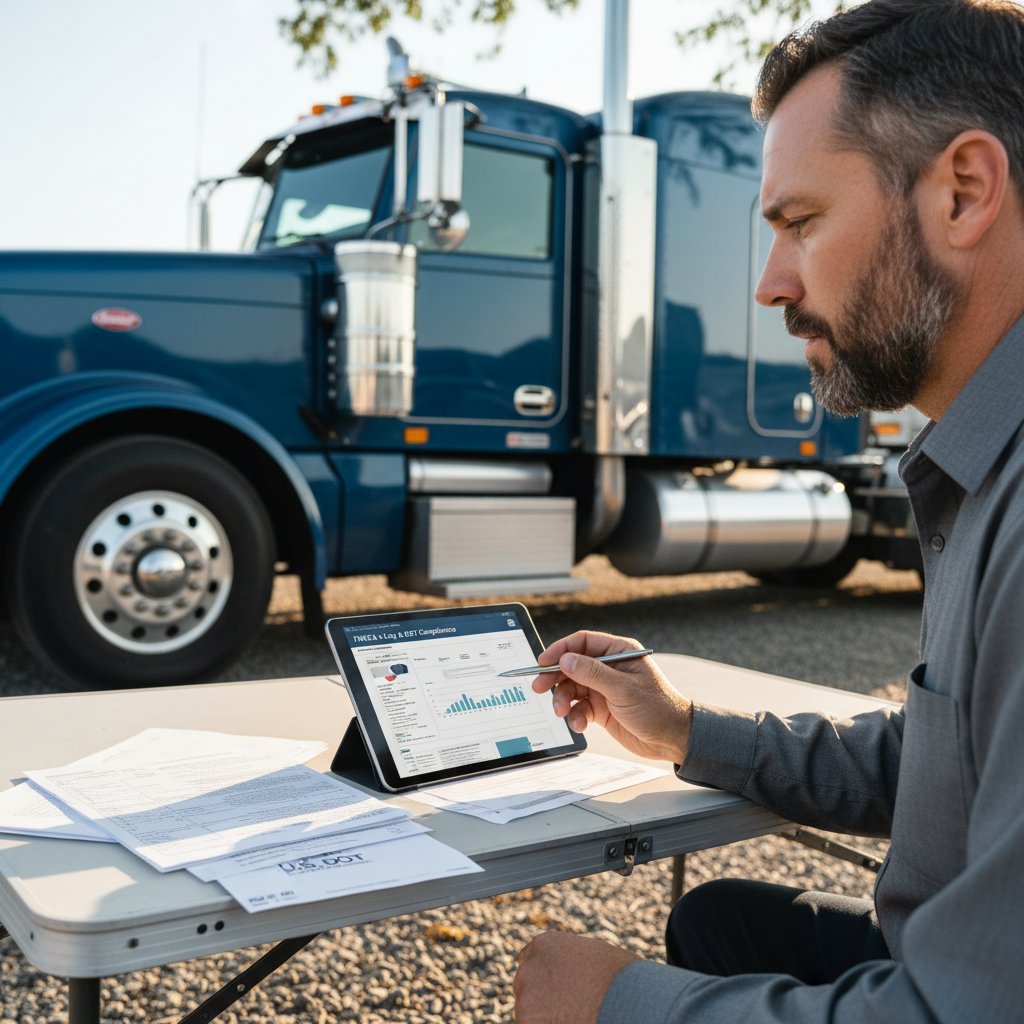
Commercial truck insurance PA explained: understand FMCSA vs PA intrastate rules, required coverages, real cost ranges, and a 2026 compliance checklist—so you stay legal, bookable, and protected.
Commercial truck insurance PA comes down to one thing: buy the right limits and filings for your operation (interstate vs intrastate, cargo, radius, and authority), or you risk out-of-service downtime, broker rejections, or claim disputes. The practical baseline most for-hire owner-operators plan around is $1,000,000 auto liability plus cargo, even when a lower legal minimum might apply.
This 2026 guide breaks down what’s typically required, what brokers and lenders usually demand, what it commonly costs in Pennsylvania, and how to lower premiums without underinsuring. Educational info only—always confirm your exact requirements with your agent and the correct regulator(s) for your operation.
Table of Contents
Reading time: 9 minutes
- 2026 Pennsylvania truck insurance: what changed (and what didn’t)
- Do you follow FMCSA rules, PA intrastate rules, or both?
- Pennsylvania minimum liability limits (practical table)
- Coverage types you need for commercial truck insurance in PA
- How much does commercial truck insurance cost in PA?
- Pennsylvania compliance: proof, filings, and what to keep in the truck
- Penalties for non-compliance in PA (plus a real-world scenario)
- How to lower your commercial truck insurance in Pennsylvania
- Frequently Asked Questions
- Conclusion & next steps
2026 Pennsylvania truck insurance: what changed (and what didn’t)
FMCSA minimum financial responsibility for many for-hire interstate property carriers remains a $750,000 liability baseline under 49 CFR Part 387 (often cited as 49 CFR 387.9), but 2026 underwriting and broker compliance checks are tighter than “what the minimum says.”
Insurance requirements don’t always change overnight, but enforcement, broker onboarding standards, and insurer appetite do. Treat your policy like a compliance item you verify at every renewal and any time your operation changes.
Quick update checklist (use this at renewal)
- Radius: Did you move from local to regional, or regional to OTR?
- Cargo: Did you switch from general freight to higher-risk or higher-value commodities?
- Authority status: Did you go from leased-on to your own authority (or the other way around)?
- Equipment: Did you add a trailer, start power-only, or do more drop-and-hook?
- COIs: Are your certificates matching broker wording and limits (including additional insured where required)?
Your operation determines your rules
Two Pennsylvania-based owner-operators can have completely different insurance obligations based on:
- Interstate vs intrastate
- For-hire vs private carrier
- Property vs passengers
- Hazmat vs non-hazmat (and the class/quantity)
- Vehicle class/GVWR (hotshot setups hit commercial rules quickly)
Do you follow FMCSA rules, PA intrastate rules, or both?
If you cross state lines, FMCSA financial responsibility rules under 49 CFR Part 387 typically apply and commonly start at $750,000 for for-hire interstate non-hazmat property carriers, while Pennsylvania intrastate requirements can apply when you operate only within PA depending on carrier type and what you haul.
Before you quote anything, get clear on which “rule set” you’re building for—because the wrong structure can leave you legally exposed or “unbookable” with brokers.
Decision flow (simple and practical)
- Step 1 — Are you crossing state lines? If yes, expect FMCSA filings/standards to matter for your operation and authority.
- Step 2 — What are you hauling? General freight, passengers, and hazmat can land you in very different limit tiers.
- Step 3 — Who’s requiring proof? Think in three layers: legal minimums, contract minimums (brokers/shippers), and lender/lease minimums.
Real-world bottom line: You can be “legal” on paper and still lose loads if your COI doesn’t match a broker’s risk requirements (limits, cargo, and wording).
Pennsylvania minimum liability limits for commercial trucks (practical table)
FMCSA interstate minimum liability limits are set in 49 CFR Part 387 and commonly include $750,000 for for-hire interstate non-hazmat property carriers and $1,000,000–$5,000,000 for many hazmat categories, but many brokers still require $1,000,000 regardless.
Here’s the practical way to think about the numbers: legal minimums keep you compliant with a regulator, while contract minimums keep you working.
Minimum liability: the business way to think about it
Auto liability (primary liability) pays for injuries and property damage you cause to others, and it’s the coverage that protects your business (and personal assets) from a serious lawsuit.
- FMCSA minimums: tied to interstate operations and what you haul.
- PA intrastate requirements: can apply if you operate only within Pennsylvania and fall under state oversight for your carrier type/commodity.
- Brokers/shippers: often treat $1M liability as the price of admission to stay booked.
Minimum limits table (starting point—verify your exact category)
| Operation type | Typical baseline liability limit you’ll hear | Who usually enforces it | Notes that matter in real life |
|---|---|---|---|
| For-hire interstate, non-hazmat property | $750,000 | FMCSA | Many brokers still want $1M |
| For-hire interstate, many hazmat categories | $1,000,000 to $5,000,000 | FMCSA | Hazmat class/quantity drives the tier |
| Passenger carriers (interstate) | Tiered (commonly $1.5M or $5M) | FMCSA | Different structure than property; verify seating/passenger count rules |
| Intrastate-only operations in PA | Varies by carrier type/commodity | Pennsylvania intrastate regulator(s) | Don’t guess—confirm your exact rule set |
| “Most common in practice” for for-hire freight | $1,000,000 | Brokers/shippers | Often the ticket to stay booked |
What “proof of insurance” usually means
- COI (Certificate of Insurance): what brokers and shippers request to onboard you.
- Filings (when required): if your authority/regulator requires a filing, a policy without the proper filing can still sideline you.
Coverage types you need for commercial truck insurance in PA
A workable commercial truck insurance PA package usually includes auto liability plus cargo and physical damage, and many operations add bobtail/non-trucking, general liability, and trailer interchange based on dispatch model and contracts.
Most owner-operators don’t get burned by the liability number. They get burned by missing a coverage, having the wrong deductible, or being classified for a different operation than what they actually run.
1) Auto liability (primary liability)
Auto liability pays for injuries and property damage you cause to others, and it’s the foundation of commercial trucking insurance.
- Why it matters: One severe crash can create claims far above annual revenue.
- Practical tip: Don’t buy liability in isolation—match broker COI requirements before you’re under a rate-confirmation deadline.
2) Motor truck cargo (cargo insurance)
Motor truck cargo covers freight you’re responsible for if it’s damaged, stolen, or lost, depending on policy terms and exclusions.
- Why it matters: Cargo is often required by brokers even when it’s not a “state required” item.
- Watch-outs: unattended theft rules, high-value limits, reefer spoilage language, and securement-related exclusions.
3) Physical damage (comprehensive + collision)
Physical damage pays to repair or replace your tractor (and sometimes trailer) after collision, theft, vandalism, weather, or animal strikes.
- Who typically requires it: lenders (loss payee) and many lease agreements.
- Deductible strategy: raise deductibles only if you can write the check immediately after a loss.
4) Bobtail / non-trucking liability (gap coverage)
Bobtail/non-trucking liability can cover certain periods when you’re not under dispatch, but the exact trigger depends on policy definitions.
- Who needs it: many leased-on owner-operators and anyone with “gray area” dispatch status.
- Plain-English warning: slang doesn’t matter—underwriters care about definitions like under dispatch, business use, and personal use.
5) General liability
General liability covers non-auto claims like slip-and-fall, some loading/unloading exposures, and certain contract-driven business risks.
6) Trailer interchange (common for power-only)
Trailer interchange is physical damage coverage for non-owned trailers in your care under an interchange agreement, which is common in power-only and drop-and-hook work.
7) Uninsured/underinsured motorist (risk control)
UM/UIM helps protect you if another driver hits you and doesn’t have enough coverage—especially relevant when medical bills and downtime stack up.
How much does commercial truck insurance cost in PA?
Commercial truck insurance in Pennsylvania commonly ranges from a few hundred to several thousand dollars per month per truck, with pricing driven by authority age, radius, cargo, driver history, truck value, limits, deductibles, and prior losses.
There’s no honest “one price,” but you can use real ranges to budget and to spot quotes that look cheap because they’re missing coverage or limits.
PA cost benchmarks (illustrative ranges—your quote may be higher or lower)
| Scenario (PA-based) | Coverages included (example) | Example monthly range (per truck) | Best way to control cost |
|---|---|---|---|
| New authority, 1 truck, for-hire general freight | Liability + cargo | $900–$2,500+ | Tight radius, clean filings, no lapses, careful commodities |
| Established authority, clean loss history | Liability + cargo | $750–$1,800 | Shop early; keep MVR/PSP clean; consistent operations |
| Hotshot (pickup + trailer), non-hazmat | Liability + cargo (varies) | $400–$1,500 | Accurate GVWR/use; avoid misclassification |
| Higher-risk freight / hazmat exposure | Higher liability tiers + cargo | $2,000–$6,000+ | Narrow hazmat classes; safety controls; smart deductibles |
What drives price in Pennsylvania (what underwriters care about)
- New venture/new authority: typically priced higher until you prove stability.
- Radius/lanes: congestion and winter weather increase frequency and severity.
- Cargo: theft targets and fragile freight cost more.
- Driver history: tickets, preventables, and coverage lapses get expensive fast.
- Truck value/model year: impacts physical damage pricing.
- Deductibles: especially comp/collision and sometimes cargo deductibles.
Apples-to-apples rule: Compare quotes only when liability limits, cargo limits, and deductibles match. Otherwise you’re not comparing price—you’re comparing different products.
Pennsylvania compliance: filings, proof, and what to keep in the truck
Roadside inspections and broker onboarding both depend on fast proof of coverage (ID cards/COIs) and, when required, correct filings tied to your authority, so disorganized paperwork can turn into immediate downtime.
You don’t want to be digging through email at a scale or during a shipper check-in. Build a simple “roadside-ready” system.
What to keep handy (digital + hard copy)
- Insurance ID cards / evidence of coverage
- Agent and carrier contacts (claims + certificates)
- COIs for active brokers/shippers (organized by broker name)
- Renewal reminders (30 / 15 / 7 days)
Prevent the expensive mistake: mismatched operation
Common mismatch problems that trigger headaches (or worse):
- Policy rated local but you’re running regional/OTR
- Listed cargo doesn’t match what you actually haul
- Vehicle details are wrong (VIN, garaging, trailer info)
- Coverage lapses during slow season
A mismatch or lapse can spike your renewal, create claim disputes, and get loads cancelled because a broker can’t verify coverage quickly.
Penalties for non-compliance in PA (plus a real-world scenario)
Operating uninsured, underinsured, or misclassified can lead to out-of-service downtime, citations, broker termination, and lawsuit exposure that can exceed policy limits, even if you “technically have a policy.”
What can happen if you’re underinsured, uninsured, or “insured wrong”
- Out-of-service risk: downtime equals lost revenue
- Citations/fines: depending on the enforcement situation
- Broker/shipper termination: you become “unbookable”
- Claim disputes: limited payout or denial if your policy doesn’t match the described operation
- Lawsuit exposure: can reach beyond business assets
Scenario: roadside stop + proof doesn’t match
You roll into an inspection and the officer (or broker) compares what you’re doing today to what your documents show. Your COI has the wrong DOT/business name, wrong garaging state, or a classification that doesn’t match the lane and freight you’re hauling.
Now you’re burning hours calling your agent, waiting on updated docs, and potentially missing an appointment. Even if you get it fixed, the broker sees you as a risk.
Prevention checklist
- Update insurance anytime your lane, cargo, or radius changes.
- Keep COIs organized by broker in a folder on your phone.
- Start renewal shopping early—don’t wait until the last week.
How to lower your commercial truck insurance in Pennsylvania (without cutting corners)
The safest way to lower commercial truck insurance premiums is to reduce loss frequency/severity and remove underwriting “unknowns,” not to buy skinny limits that fail a broker onboarding check.
Use these levers like a business owner, not like a shopper chasing a teaser price.
Five ways to reduce cost without underinsuring
- Raise deductibles strategically (physical damage). Lower premium, but only if your cash reserves can handle the deductible tomorrow.
- Be brutally honest about radius and use. Misrating saves money until it becomes a claim problem.
- Control drivers like a business. MVR checks, coaching, and clear policies—one preventable can haunt you for years.
- Use safety tech you’ll actually manage. Dash cams, telematics, and training documentation can help underwriting and defend claims.
- Avoid lapses. If you park the truck, talk to your agent about options—lapses are a major red flag.
Frequently Asked Questions
Pennsylvania commercial truck insurance requirements depend on whether you operate interstate under FMCSA rules or intrastate-only within Pennsylvania, plus what you haul (property, passengers, hazmat). For many for-hire interstate property carriers, FMCSA financial responsibility is commonly discussed as a $750,000 liability minimum (49 CFR Part 387), while many brokers still require $1,000,000 auto liability to onboard you. In practice, most for-hire operators also carry motor truck cargo, and lenders often require physical damage with a loss payee. Verify your exact category with your agent and the correct regulator for your operation.
Commercial truck insurance in PA often runs from hundreds to several thousand dollars per month per truck, with common ranges like $750–$1,800 for established authorities with clean losses and $900–$2,500+ for new authorities (liability + cargo), depending on underwriting. Your price is driven by authority age, radius, cargo, driver MVR/PSP, truck value, limits, deductibles, and loss history. To compare quotes fairly, keep them apples-to-apples: the same liability limit, same cargo limit, and same deductibles. If any of those change, the “cheaper” quote may simply be less coverage.
FMCSA rules typically apply if you cross state lines or operate under federal for-hire authority, including FMCSA financial responsibility standards under 49 CFR Part 387 (commonly a $750,000 baseline for many for-hire interstate non-hazmat property carriers). Pennsylvania intrastate rules may apply when you operate only within Pennsylvania, depending on your carrier classification and commodity. Some carriers effectively meet both standards because they run a mix of interstate and intrastate work or because broker contracts require higher limits than the legal minimum. The safe move is to confirm your classification before you bind coverage.
At a minimum, most commercial trucking operations need auto liability, and many for-hire operators add motor truck cargo to meet broker requirements and protect freight exposure. If your tractor is financed, lenders typically require physical damage (comprehensive + collision) with a loss payee, and leased-on setups often need bobtail/non-trucking liability to address off-dispatch gaps (based on policy definitions). Many shippers also require general liability, and power-only or drop-and-hook operations often need trailer interchange. The “right” package is the one that matches your radius, lanes, and contracts.
Commercial auto non-compliance can lead to citations, out-of-service downtime, broker/shipper termination, and severe financial exposure after a crash. The biggest hidden risk is being “insured wrong”: for example, your policy is rated for local, non-hazmat use while you’re running longer lanes or different commodities, which can trigger claim disputes or delayed handling. Even when you carry a policy, missing required proof (ID cards/COIs) or required filings tied to your authority can shut down a load day fast. Treat classification accuracy and renewal timing as part of your compliance program.
Conclusion: Get PA-ready coverage that keeps you legal and bookable
Commercial truck insurance in Pennsylvania isn’t about chasing the lowest premium. It’s about buying coverage that matches your operation so you stay compliant, keep loads, and protect your business when something goes wrong.
Key Takeaways:
- Confirm your rule set: FMCSA (interstate), PA intrastate, or both—based on how you actually run.
- Plan around real-world standards: many brokers expect $1,000,000 liability plus cargo even when legal minimums differ.
- Avoid mismatches and lapses: wrong radius/cargo/use can cause claim disputes and kill renewal pricing.
If you want coverage that’s built for the way you run—lanes, radius, cargo, dispatch model—get a quote and make sure your limits and paperwork won’t slow you down when it matters.