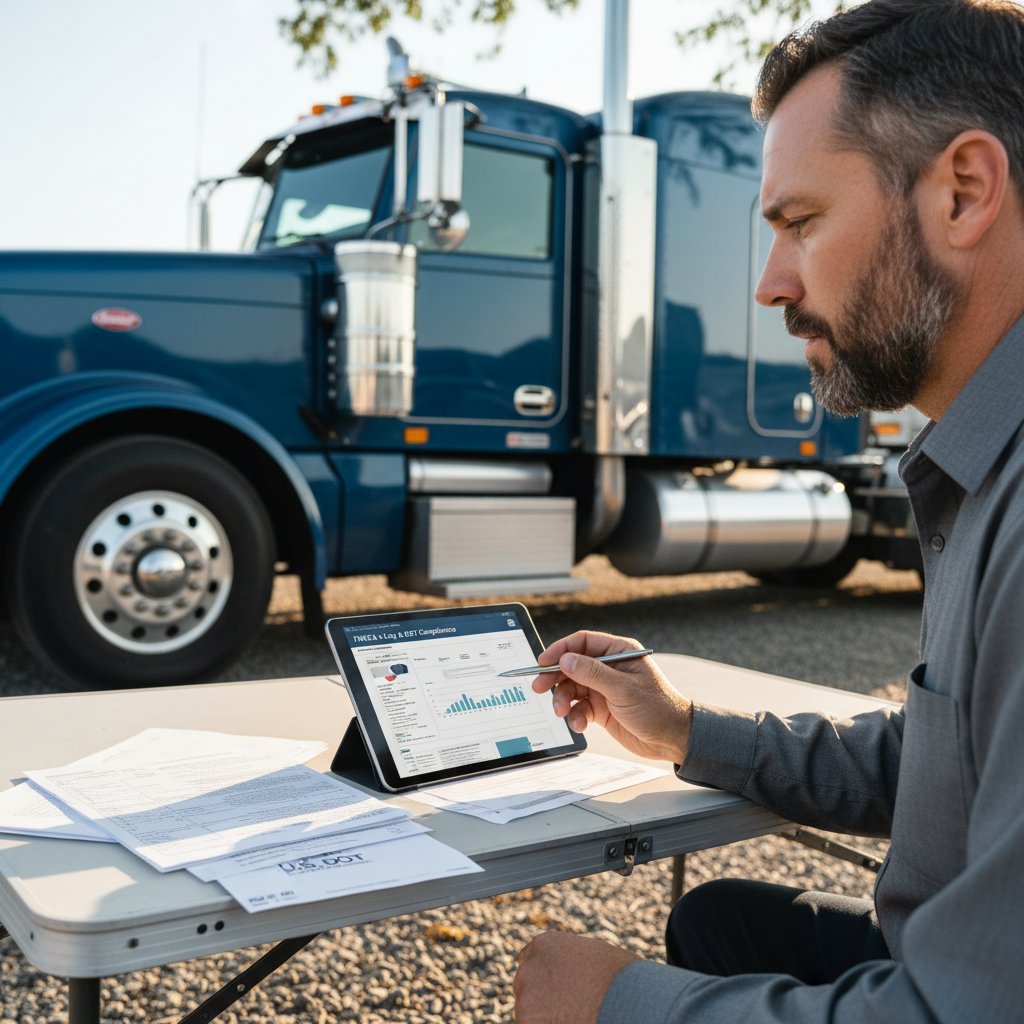
Learn when you need commercial auto vs personal auto insurance—and when you might need both. Includes 2026 cost reality and a decision flowchart.
Do I need both commercial and personal auto insurance? Usually no—not for the same vehicle. In most cases, you need one correctly written policy (personal or commercial) that matches the vehicle’s real-world use, ownership, and drivers. You typically carry both only when you have separate vehicles (a family car plus a work vehicle) or when your setup creates a real coverage gap (for-hire use, business-titled vehicles, employees driving).
If you’re using a vehicle to make money, the risk isn’t the “label” on the policy—it’s whether your policy permits the activity you’re doing at the moment of a claim. This guide breaks down the differences, the red flags that cause denials, the 2026 cost reality, and a simple flowchart you can use to choose the right structure.
Table of Contents
Reading time: 10 minutes
- Commercial vs. Personal Auto Insurance: The Practical Differences
- Do I Need Both Commercial and Personal Auto Insurance? Common Scenarios
- Can Personal Auto Insurance Cover Business Use?
- Does Commercial Auto Insurance Cover Personal Use?
- When Is Commercial Auto Insurance Required?
- 2026 Cost Reality: Is Commercial Auto Always More Expensive?
- State Rules: What Changes (and What Doesn’t)
- Coverage Gaps to Watch For (Where People Get Denied)
- Decision Flowchart: Do I Need Both Commercial and Personal Auto Insurance?
- Frequently Asked Questions
- Conclusion: Get Covered the Smart Way (Not the Cheap Way)
Commercial vs. Personal Auto Insurance: The Practical Differences
Personal auto is priced and written for household driving, while commercial auto is priced and written for business exposure like higher mileage, multiple drivers, business ownership, and contract-required limits (often $1,000,000 CSL).
The confusion usually lives in the middle: you’ve got one vehicle, you’re doing a mix of errands and work, and you’re not sure which policy “counts” when something happens.
What personal auto is designed to cover
Personal auto insurance is built for commuting, errands, school runs, and road trips, and many policies restrict “for-hire” or certain commercial activities through exclusions.
That matters because claims aren’t judged by what you call the trip (“just a quick delivery”). Claims get judged by what the policy permits and what you disclosed.
- Fits best: W-2 commuting, family vehicles, household drivers.
- Common friction point: deliveries, rideshare, and business-owned vehicles.
What commercial auto is designed to cover
Commercial auto insurance is designed for vehicles used in a business, including business-titled units, higher road time, and driver setups like employees or scheduled drivers.
Commercial auto also lines up better with how businesses operate: COIs (certificates of insurance), vendor requirements, and liability limits that match real lawsuits—not bare-minimum state requirements.
- Fits best: business-titled vehicles, delivery/transport exposure, work trucks/vans, and employee drivers.
- Common need: proof of insurance for a client, jobsite, or contract.
Quick comparison table (what actually changes)
| Category | Personal Auto | Commercial Auto |
|---|---|---|
| Named insured | Individual / household | Business (and/or individual) |
| Drivers | Household drivers (varies) | Scheduled drivers, employees, broader driver structures |
| Vehicle ownership | Personally titled | Often business-titled or business-use rated |
| Permitted use | Personal + limited business (varies) | Business use; may allow incidental personal use |
| Limits & contracts | Standard personal limits | Higher limits; many contracts require $1,000,000 CSL |
| Common “gotchas” | Delivery/rideshare exclusions | Driver scheduling and permissive-use restrictions |
Reality check: insurance disputes usually come from mismatched permitted use, incorrect named insured, or missing/incorrect driver listings—not from the word “commercial” or “personal” on the declarations page.
Do I Need Both Commercial and Personal Auto Insurance? Common Scenarios
Most people do not need both commercial and personal auto insurance on the same vehicle, and carrying both typically makes sense only when you insure different vehicles or have a documented coverage gap.
Usually NO: one policy is enough
You usually do not need both if one vehicle has a clear lane:
- Personal-only vehicle: commuting + errands; no deliveries; no passengers-for-pay.
- Business-only vehicle: commercial auto written correctly for the actual operation (and it may allow incidental personal use).
Copy/paste question to ask your agent (in writing):
“Does this policy cover me while I’m doing [specific activity] in this vehicle, and is that activity listed as permitted use on the policy?”
Sometimes YES: both policies make sense (and it’s normal)
You often carry both when you have two vehicles and two different jobs to do:
- A personal car on a personal policy plus a work truck/van on a commercial policy.
- A business carries commercial auto, and the owner maintains personal auto for household vehicles.
That isn’t “double paying.” It’s separating risk the way carriers underwrite it.
Red-flag situations (don’t guess—confirm in writing)
Delivery apps, rideshare, business-titled vehicles, and employee drivers are the most common triggers for commercial underwriting and the most common sources of claim disputes.
- Delivery/courier work: food, packages, parts, medical deliveries.
- Rideshare: passengers for pay.
- Transporting clients/employees: as part of the service you sell.
- Carrying tools/inventory: especially expensive or job-critical items.
- Vehicle titled/registered to an LLC/corporation.
- Hotshot operations: pickup + trailer hauling freight (this moves you into trucking insurance territory fast).
Can Personal Auto Insurance Cover Business Use?
Many personal auto policies allow some business-related driving (like commuting to a jobsite or meetings) but commonly exclude “for-hire” activities like deliveries or transporting people for a fee.
1) Business use that may be allowed (depends on the insurer)
Light business errands often mean driving to meetings, a bank, or a jobsite, and that can be covered if your carrier rates the vehicle for that use and doesn’t restrict it.
The risk is the definition: “business use” isn’t universal. One carrier may treat a real estate agent as acceptable on a personal policy, while another requires a different rating class.
- Often fits: sales reps, realtors, owners running administrative errands.
- Gray area: tradespeople bringing hand tools vs. using the vehicle as the job itself.
2) Business use commonly excluded
For-hire driving—deliveries, courier work, and rideshare—commonly triggers exclusions or special programs because frequency, mileage, and severity trends are different from household driving.
Denied-claim stories often involve a driver being logged into an app, actively on a trip, or regularly using the car as part of a paid service.
- Commonly excluded: deliveries (food/package), rideshare/livery, commercial hauling, business-owned vehicles.
3) Endorsements that may bridge the gap (but don’t “convert” the policy)
A business-use endorsement may expand permitted use for limited business errands, but it usually does not cover deliveries, rideshare periods, or a vehicle titled to an LLC.
If the vehicle is a tool of the business (not just transportation), commercial auto is usually the cleaner, safer solution.
Does Commercial Auto Insurance Cover Personal Use?
Commercial auto often allows incidental personal use, but coverage depends on permitted-use wording, driver rules (scheduled vs permissive), and how the named insured is set up.
1) Often yes—but verify permitted use and drivers
Incidental personal errands are commonly allowed on commercial auto for owner-operated setups, but it is not automatic and must match the policy language.
Here’s what to confirm before you assume anything:
- Personal use allowed: yes/no, and how it’s described.
- Drivers: do household members need to be scheduled?
- Restrictions: any limitations on non-business trips or non-business operators.
2) Gig-work isn’t “personal use”
Rideshare and delivery are typically treated as for-hire exposure, and rideshare is commonly broken into “periods” (app on, matched, passenger in car) that may require specific coverage.
If you do gig work consistently, treat it like a business decision: get a program/endorsement that explicitly covers what you do.
3) Owner-operator angle (why this matters for trucking)
Interstate for-hire motor carriers operating under FMCSA authority must meet federal minimum financial responsibility requirements such as $750,000 liability in many property-carrying scenarios under 49 CFR Part 387.
Once you’re in hotshot or semi territory, you’re usually not deciding “personal vs commercial auto.” You’re building the correct commercial truck insurance stack (liability, physical damage, and often cargo), and then deciding how personal use is handled based on dispatch status and driver rules.
When Is Commercial Auto Insurance Required?
Commercial auto is commonly required by underwriting rules or contracts when a vehicle is business-titled, used for deliveries/for-hire transport, driven by employees, or needs proof like a COI with $1,000,000 liability limits.
1) The vehicle is titled/registered to a business
When an LLC or corporation owns the vehicle, the named insured generally needs to match the legal owner to avoid claim friction and compliance problems.
This is one of the simplest triggers because it’s not about what you do—it’s about who owns it.
2) You transport goods or people for a fee
Deliveries, rideshare, and hauling for pay materially change claim frequency and severity, which is why carriers often require commercial forms or specific programs.
If money is changing hands for the trip, treat that as a major underwriting fact—because it is.
3) Employees drive (or multiple non-household drivers)
If employees drive a company vehicle (or if multiple non-household drivers operate the same unit), commercial auto is typically the correct structure to handle driver eligibility and business liability.
If your business doesn’t own vehicles but employees drive personal cars for work errands, ask about Hired and Non-Owned Auto (HNOA) to protect the business liability side.
4) A contract requires it
Many vendor and jobsite agreements require a COI with specific limits—commonly $1,000,000 combined single limit (CSL)—and may require additional insured wording.
If you can’t provide the right COI, you can lose the job even if you’re “legally allowed” to drive with less.
2026 Cost Reality: Is Commercial Auto Always More Expensive?
Commercial auto is often more expensive than personal auto because business use increases exposure (miles, stops, time-on-road) and liability needs (often $1,000,000 limits), but the price gap can be smaller than people assume for low-risk use.
Why commercial can cost more (and why sometimes it doesn’t)
Commercial tends to price higher because you’re buying a different risk profile:
- More time on the road: more chances for an accident.
- More stops: backing, loading zones, parking lots.
- Bigger liability: business lawsuits tend to be larger and more complex.
- Driver complexity: employees, helpers, permissive use rules.
But if your “business use” is light and your record is clean, the premium jump can be manageable—especially compared to the cost of a denied claim.
Estimated 2026 price ranges (planning numbers, not promises)
Trucking insurance for for-hire owner-operators commonly falls into the “hundreds to thousands per month per truck” range depending on authority status, radius, cargo, limits, and loss history.
- Personal auto: varies heavily by state, driver, and vehicle; not a reliable benchmark for business planning.
- Personal + business-use endorsement: often a modest increase if your carrier allows your class of use.
- Commercial auto (light-duty, single unit, low-risk class): often a meaningful step up due to liability exposure.
- Delivery/rideshare: commonly higher due to miles and for-hire exposure.
- Commercial truck insurance (hotshot/semi): typically the highest band because limits, filings, and exposure increase.
What to compare beyond price (this prevents false savings)
Comparing quotes correctly means matching permitted use, named insured, drivers, and limits—not just the monthly payment.
- Permitted use wording: deliveries, passengers-for-pay, tools/equipment use.
- Named insured: you vs. LLC/corp.
- Drivers: scheduled drivers and permissive use rules.
- Liability limits: $1,000,000 CSL vs lower limits.
- UM/UIM and medical coverage: options vary by state and form.
- Physical damage terms: ACV vs stated amount, deductibles.
- App-based exclusions: rideshare/delivery periods and endorsements.
State Rules: What Changes (and What Doesn’t)
Every state sets minimum auto liability limits, but business insurance decisions are more often driven by underwriting rules and contracts that commonly require $1,000,000 liability than by state minimums alone.
What’s generally consistent
- State minimums are rarely “enough” for business exposure if you can be sued for serious injury.
- Commercial requirements often come from carriers and contracts (COIs, jobsite rules, vendor agreements).
What commonly varies by state
- Minimum liability requirements (limits and structure differ by state).
- No-fault rules: PIP vs MedPay availability and requirements.
- UM/UIM rules: what’s required, offered, or stackable.
- Rideshare/delivery availability: how programs are offered and regulated.
Quick checklist to ask your agent
- “What liability limits do you recommend for my business exposure?”
- “Is UM/UIM included? At what limit?”
- “Do I have PIP or MedPay? Who does it cover?”
- “Are deliveries/rideshare covered? Under what endorsement or form?”
- “Do all household drivers need to be listed?”
Coverage Gaps to Watch For (Where People Get Denied)
The most common business-use claim disputes come from for-hire activity on a personal policy, incorrect driver handling on a commercial policy, and mismatched UM/UIM or medical coverage between forms.
1) Doing deliveries/rideshare on a personal policy
Risk: the carrier treats the activity as excluded “for-hire” use and denies or limits the claim.
2) Commercial policy written for the business—but drivers weren’t handled correctly
Risk: a household member or employee drives the vehicle, but the policy requires scheduled drivers or restricts permissive use.
3) Medical coverage assumptions
Risk: you assume you have PIP/MedPay/UM coverage like a personal policy, but the commercial form or state setup is different.
4) UM/UIM and limit mismatches
Risk: after a crash with an uninsured driver, you discover your UM/UIM limits are lower than you thought (or missing).
5) Physical damage misunderstandings
Risk: you expect “full coverage,” but deductibles, ACV settlement, and tool/equipment exclusions create a surprise bill.
- ACV: actual cash value may not match your loan balance.
- Tools/inventory: typically not covered under auto physical damage.
Questions to ask (save this)
- “Show me where permitted use is defined.”
- “List excluded activities in plain English.”
- “Confirm all drivers who may operate the vehicle.”
- “Confirm delivery/rideshare/app coverage by period.”
- “Confirm UM/UIM and medical coverage options.”
Decision Flowchart: Do I Need Both Commercial and Personal Auto Insurance?
You typically need one policy per vehicle (personal or commercial), and you carry both policies only when you operate separate personal and business vehicles or your ownership/use setup requires different insureds or coverages.
Simple flowchart (text version)
- Who owns the vehicle?
You personally → go to #2
LLC/corp/business → Commercial auto (usually) → go to #4 - What’s the primary use?
Mostly personal/commuting → Personal auto → go to #3
Mostly business use → Commercial auto → go to #4 - Any for-hire use (deliveries/rideshare/hauling for pay)?
Yes → Commercial auto or a specific endorsement/program (depends on activity)
No → Personal auto (confirm business-use allowance if you do client visits) - Who drives it?
Only you (sole proprietor) → commercial may be straightforward
Employees/household members/unknown drivers → confirm scheduling/permissive use - Do you also have a separate personal household vehicle?
Yes → it’s common to have both (personal for the family car + commercial for the work vehicle)
No → one correctly written policy is often enough
Two quick real-world examples
- Example A (usually personal-only): You commute to a W-2 job and occasionally go to the bank for a side business. No deliveries, no passengers-for-pay. Personal auto may work—confirm with your carrier.
- Example B (commercial needed): You deliver 4 nights a week or haul hotshot loads. That’s for-hire exposure. Set up the right commercial program (and for hotshot, think trucking insurance, not personal auto).
Frequently Asked Questions
You usually don’t need both commercial and personal auto insurance on the same vehicle; you typically need one policy that matches the vehicle’s ownership and permitted use. Most people carry both only when they have separate vehicles (a household car on personal insurance and a work vehicle on commercial insurance). The biggest “make it commercial” triggers are business-titled vehicles, for-hire driving (delivery/rideshare/hauling for pay), and employee drivers. If a contract requires a COI, many clients also require $1,000,000 CSL liability, which often pushes you into commercial auto.
Commercial auto insurance often covers incidental personal use, but only if the policy’s permitted-use wording and driver rules allow it. Many commercial policies will let an owner-operator run normal errands, but they may require household drivers to be scheduled or limit “permissive use.” Gig work is the common trap: rideshare and delivery are usually treated as for-hire exposure, and rideshare programs often follow “period” rules (app on vs matched vs passenger in car). The safe move is to confirm personal use in writing and confirm app-based coverage by period.
Personal auto insurance can sometimes cover limited business errands (like meetings or trips to the bank), but many policies restrict or exclude for-hire use such as deliveries and rideshare. Coverage depends on the carrier’s definition of business use, how the vehicle is rated, and whether you disclosed the activity. A business-use endorsement may help for light use, but it usually does not convert a personal policy into full commercial coverage and often won’t cover delivery/rideshare periods. If your vehicle is titled to an LLC or you’re using it as part of the service you sell, commercial auto is usually the cleaner option.
Commercial auto insurance is commonly required when a vehicle is business-titled, used primarily for business, used for deliveries/for-hire transport, or driven by employees or multiple non-household drivers. Many contracts also require a COI showing limits like $1,000,000 CSL, which often means commercial auto even if state minimums are lower. For trucking, federal rules can apply: interstate for-hire motor carriers often must meet minimum financial responsibility such as $750,000 in many property-carrying scenarios under 49 CFR Part 387. If employees use personal cars for errands, ask about Hired and Non-Owned Auto (HNOA).
Yes, you can have both personal and commercial auto policies at the same time, and it’s most common when you insure different vehicles for different purposes. For example, a family SUV can stay on a personal policy while a work truck or business-titled vehicle sits on a commercial policy. What you generally want to avoid is stacking two policies on the same vehicle without clearly understanding which is primary, whether both carriers accept the arrangement, and whether there are coordination issues at claim time. If you’re considering dual coverage on one vehicle, get written confirmation of primary/excess intent before paying for it.
A business-use endorsement can be enough only for limited, non-for-hire driving (like meetings or light errands) if your carrier explicitly allows that use. In many cases, endorsements do not cover deliveries, rideshare, or transporting people or property for a fee, and they usually don’t solve the named-insured problem when a vehicle is titled to an LLC/corporation. If you need a COI for a client, many agreements require $1,000,000 liability limits and clear business use, which often points to commercial auto. The right choice depends on the actual operation—not the cheapest option.
Conclusion: Get Covered the Smart Way (Not the Cheap Way)
Most drivers don’t need both commercial and personal auto insurance on the same vehicle, but they do need the correct policy for the real use—ownership, primary use, drivers, and any for-hire activity.
If your vehicle helps you earn revenue (or protects your business), guessing is expensive. A quick written confirmation on permitted use and driver rules can save you from the worst kind of surprise: finding out after a crash.
Key Takeaways:
- One correctly written policy is often enough; carrying both is common when you have separate personal and business vehicles.
- Deliveries, rideshare, business-titled vehicles, and employee drivers are the biggest triggers for commercial auto.
- Compare quotes by permitted use, drivers, named insured, and limits (often $1,000,000 CSL)—not just price.