
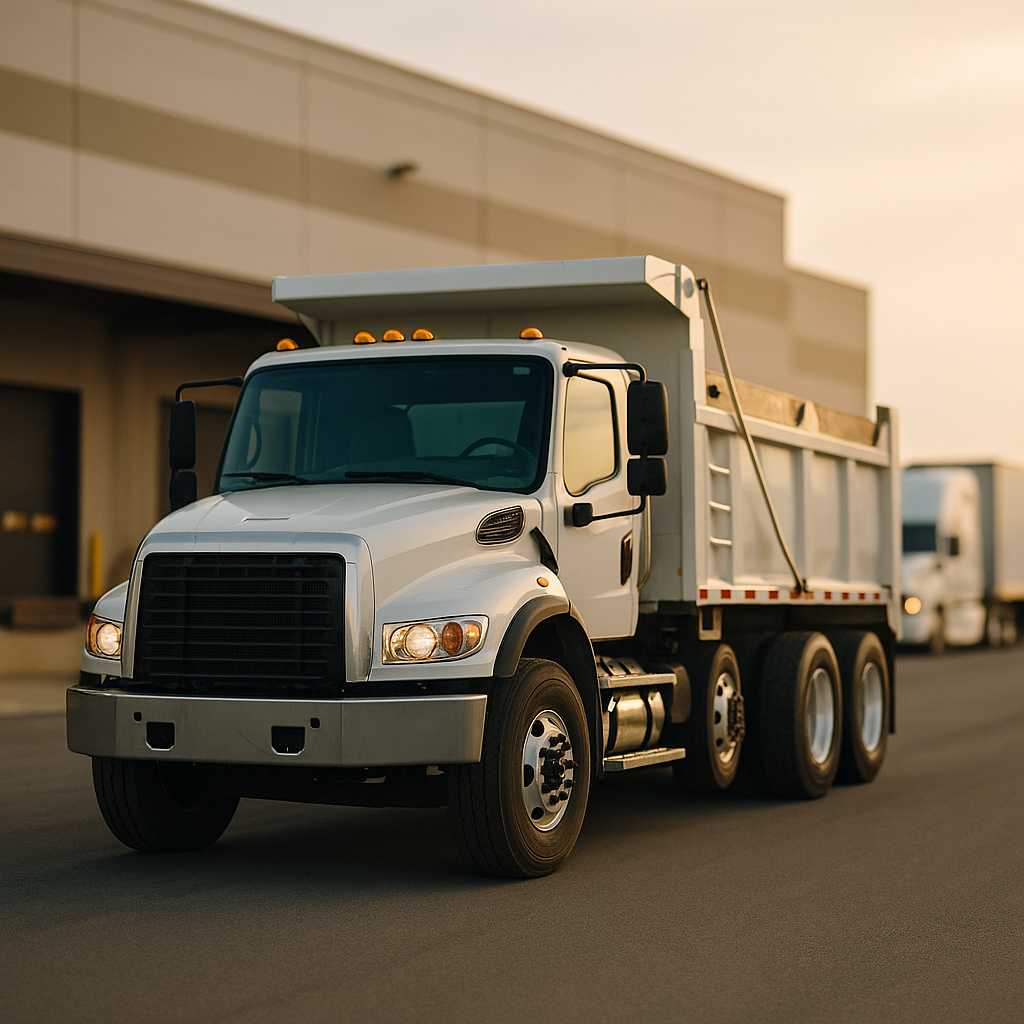
Get a dump truck insurance quote with confidence. See 2026 cost ranges, required coverages, filings, owner-operator vs fleet pricing, and a fast quote checklist. Get a quote.
A dump truck insurance quote is only “good” if it’s bindable, matches your work, and produces certificates (COIs) that meet job-site requirements. For many operations, dump truck insurance typically lands around $400–$1,200+ per month per truck, depending on liability limits, truck value, driver history, operating radius, state, and job type (aggregate, asphalt, dirt, demolition, snow).
If you’ve ever lost a job because a COI couldn’t be issued same day—or you bound a “cheap” policy that didn’t match your contract—this guide is for you. It’s written like a field checklist: what you need, what it costs, what filings matter, and how to get fast quotes without rework.
Key Takeaways: Essential Dump Truck Insurance Quote Moves
- Budget reality: Plan on $400–$1,200+/month per truck as a working range, then refine it by radius, state, truck value, and loss history.
- Know what’s “required”: “Required” can mean state law, FMCSA filings, or job-site contract language—those aren’t the same thing.
- Speed comes from prep: Quotes move fast when you provide VIN(s), garaging ZIP, radius, job type, driver list, and loss runs up front.
- Don’t buy blind: Compare quotes apples-to-apples (same limits, deductibles, endorsements), not just the monthly payment.
Table of Contents
Reading time: 11 minutes
- What “Dump Truck Insurance Quote” Actually Means
- How Much Does Dump Truck Insurance Cost in 2026?
- What Insurance Does a Dump Truck Need?
- Dump Truck Insurance Requirements & Filings (FMCSA, DOT, Contracts)
- Owner-Operator vs Fleet: What Changes Your Quote
- Dump Truck Insurance Rates by State
- Where to Get a Dump Truck Insurance Quote
- Step-by-Step: Get a Quote Fast (Bindable)
- How to Lower Your Dump Truck Insurance Quote
- Common Mistakes That Make Quotes Higher
- Frequently Asked Questions
- Why Logrock’s Approach Works for Dump Truck Operators
- Conclusion
What “Dump Truck Insurance Quote” Actually Means (and What It Should Include)
A dump truck insurance quote should itemize a multi-coverage package—typically commercial auto liability plus optional/add-on policies like physical damage, general liability, and workers’ comp—with clear limits, deductibles, and any required filings.
When you request a quote, you’re usually pricing a package, not one coverage. If the quote doesn’t show what’s included, what’s excluded, and what your certificates will look like, it’s not a usable quote.
At minimum, a quote should clearly show
- Commercial auto liability limit (often the biggest pricing driver)
- Physical damage (comprehensive + collision) if the truck is financed/leased or you can’t self-insure the equipment
- Job-site coverages you’ll be asked for (commonly general liability and workers’ comp if you have employees)
- Filings (only when they apply to your authority/operation)
Reality check: If an agent can’t explain what’s included and what your COI will show, you don’t have a quote—you have a guess.
How Much Does Dump Truck Insurance Cost in 2026?
In 2026, many dump truck operators budget around $400–$1,200+ per month per truck, with the final price driven by liability limits, truck value, garaging ZIP/state, operating radius, driver history, and loss runs.
Typical monthly and annual ranges (realistic budgeting)
Here’s a practical way to think about dump truck insurance cost by operation type.
| Operation Type | Liability-Only (Monthly) | “Full Coverage” (Liability + Physical Damage) (Monthly) | Notes |
|---|---|---|---|
| 1-truck owner-operator | $300–$900 | $400–$1,200+ | New venture + high-risk state pushes up fast |
| Small fleet (2–5 units) | $350–$1,000 per unit | $450–$1,400+ per unit | Fleet controls (drivers, safety, radius) matter more |
| Mid-size (6–20+ units) | Varies | Varies | Underwriting focuses on loss runs + safety program discipline |
Why the range is wide: Dump work happens in high-frequency claim environments—job sites, backing, tight spaces, uneven ground, and tip-over exposure—so underwriting can swing quickly based on how you operate.
Cost by policy type (so you know what you’re paying for)
- Commercial auto liability: The core on-road requirement for BI/PD to others.
- Physical damage (comp/collision): Often priced off stated value, deductible, garaging, and loss history.
- General liability (GL): Common job-site requirement even when you’re not hauling freight like a semi.
- Workers’ comp: State-driven and typically required when you have employees.
- Umbrella/excess: Used to reach higher limits required by larger projects.
2026–2027 trend notes (why quotes feel higher)
Commercial trucking premiums are pressured by repair inflation (parts + labor + downtime), litigation/social inflation (larger settlements and legal costs), and more restrictive underwriting for new ventures or incomplete loss history.
The operators who get the best outcomes right now are the ones who can document discipline: clean driver selection, consistent radius and job type, and real safety controls.
What Insurance Does a Dump Truck Need? (Required vs Recommended)
Most dump truck operations need at least commercial auto liability, and many job sites also require $1,000,000 general liability and workers’ comp when you have employees, even if state law doesn’t call it “required” in every scenario.
The tricky part is that “required” can mean three different things: state law, FMCSA rules (only in certain authority/interstate situations), and contract language from GCs, municipalities, or brokers.
1) Commercial Auto Liability (Primary Requirement)
What it is: Pays for injuries and property damage you cause to others in an at-fault crash.
Why it matters: One severe liability claim can wipe out years of profit, and most customers won’t let you work without proof.
Pro tip: Compare quotes at the same limit (many commercial settings commonly use $1M CSL) so you’re not comparing pricing apples-to-oranges.
2) Physical Damage (Comprehensive + Collision)
What it is: Covers your truck if it’s damaged by collision, theft, vandalism, fire, hail, and similar losses (subject to policy terms).
Who needs it: Financed/leased trucks usually require it, and many owner-ops choose it because a single loss can be a $25,000–$80,000 cash hit on today’s equipment.
Pro tip: Pick deductibles based on cash reserves. A low deductible can spike premium; a high deductible can crush cash flow during a claim.
3) General Liability (GL) for Job-Site Exposure
What it is: Covers third-party injury or property damage that isn’t strictly “auto use.”
Why it matters: Job-site incidents during unloading or debris-related damage can fall outside auto liability, and many GCs won’t let you on site without GL.
4) Workers’ Comp (or Owner-Only Alternatives Depending on State/Setup)
What it is: Workers’ comp covers employee medical and wage benefits for work injuries under state rules.
Why it matters: If you have employees, you typically need it; missing it can mean penalties, lost jobs, and ugly claims handling.
Pro tip: Don’t guess payroll or class codes—misclassification often triggers audits and surprise bills.
5) Cargo Insurance: Is It Required for Dump Trucks?
What it is: Covers loss or damage to cargo you’re hauling (subject to exclusions).
When it matters: It’s often not legally required for dump ops hauling their own aggregate or dirt, but it can be contract-required when hauling material owned by someone else.
Pro tip: Ask what’s excluded (contamination, wear/tear, improper securement) because dump-related claims can be messy.
6) Common Add-Ons for Dump Operations
- Hired & non-owned auto: Helps if you rent/borrow vehicles or employees use personal vehicles for business.
- Umbrella/excess: Used to meet higher-limit contracts without rebuilding the base program.
- Equipment coverage: Tools and permanently attached gear endorsements vary by carrier.
- Downtime/rental reimbursement: Sometimes available, often limited—read the fine print.
Dump Truck Insurance Requirements & Filings (FMCSA, DOT, and Contracts)
FMCSA financial responsibility minimums for interstate for-hire motor carriers start at $750,000 for non-hazardous property under 49 CFR Part 387, with higher minimums like $1,000,000 (certain oil) and $5,000,000 (certain hazardous materials) depending on what you haul.
When federal filings apply (and when they don’t)
Not every dump truck operation needs FMCSA filings. The trigger is usually whether you operate as a for-hire motor carrier under your own authority in interstate commerce. Many dump operators are intrastate, private carriers, or leased-on to another entity.
Requirements come from three places
- State law (intrastate rules)
- FMCSA rules (interstate/authority situations)
- Contracts (GCs, municipalities, brokers, shippers)
Common filings/forms you’ll hear (plain English)
- BMC-91 / BMC-91X: Proof-of-liability filing made by the insurer for motor carrier authority situations.
- MCS-90: A federally required endorsement tied to public liability compliance; it’s widely misunderstood and isn’t “extra coverage” you can freely claim against.
- BOC-3: Not insurance; it’s a process agent designation filing used for authority setup.
Contract-driven requirements (what actually stops you from working)
Most dump operators lose work because of certificate issues, not because they “technically had insurance.”
- COI with Additional Insured wording
- Waiver of subrogation (where applicable)
- Minimum GL limits, sometimes an umbrella
- Workers’ comp proof (if you have employees)
- Correct dates, certificate holder info, and project language
If COIs can’t be turned quickly (often same day), it shows up directly in your schedule and cash flow.
Owner-Operator vs Fleet Dump Truck Insurance: What Changes Your Quote
Owner-operator vs fleet pricing changes because underwriting weighs who carries primary liability, how drivers are managed, and whether you can provide 3–5 years of loss runs and documented safety controls across multiple units.
1) Owner-Operator Scenarios: Leased-On vs Own Authority
What it is: Your structure changes who carries primary liability and how the risk is presented to carriers.
Why it matters: Misstating “leased on” vs “own authority” is one of the fastest ways to get misquoted, re-rated, or delayed.
Pro tip: Be crystal clear: leased on, own authority, or private carrier. Don’t let anyone “assume” to move fast.
2) Fleet Underwriting (2+ trucks): Levers You Can Control
Fleets can earn better outcomes when they can prove controls and consistency—not just truck count.
- Driver standards: MVR/PSP review cadence and hiring rules
- Maintenance discipline: inspection documentation and repairs tracked
- Safety tech: dash cams/telematics plus coaching follow-through
- Operational control: consistent radius and job types
3) One Policy vs Multiple Policies
One policy can simplify billing, keep coverage consistent, and reduce COI friction.
Multiple policies can make sense for mixed operations (different states, different work types, different garaging) when one carrier can’t fit the whole book.
Dump Truck Insurance Rates by State: What to Expect (and Why It Varies)
Dump truck insurance rates vary by state because claim frequency, litigation climate, repair labor costs, theft and weather exposure, and metro job-site density can materially change expected losses—even when limits and trucks look identical.
State pricing is best used as directional. Your actual premium is still driven by your radius, drivers, limits, truck values, and loss history.
How to get a clean state-to-state comparison
- Limits (auto/GL/umbrella)
- Deductibles (comp/collision)
- Truck values (stated value/ACV method)
- Driver roster (same list across quotes)
- Radius and job type description (consistent wording)
That’s how you avoid the “cheap quote that explodes after underwriting” problem.
Where to Get a Dump Truck Insurance Quote (Providers, Brokers, and What to Compare)
The fastest way to get multiple dump truck insurance quotes is typically a broker/agency that can shop multiple markets, because you can compare limits, deductibles, and endorsements across carriers without starting over each time.
Carrier vs broker vs agent (fastest route to multiple quotes)
- Broker/agency that shops multiple markets: Often the quickest route to real options without spending a week calling around.
- Direct carrier: Can be competitive, but you’ll only see that one carrier’s appetite.
What to compare (not just monthly payment)
- Limits + deductibles (apples-to-apples)
- Physical damage valuation method (stated value vs ACV, etc.)
- Endorsements/exclusions that affect job-site work
- Claims handling and financial strength
- COI speed (same day when needed)
- Payment terms (down payment, monthly fees, cancellation terms)
A quote that can’t meet COI requirements isn’t cheaper—it’s unusable.
Step-by-Step: How to Get a Dump Truck Insurance Quote (Fast, Accurate, Bindable)
Accurate, bindable dump truck insurance quotes usually require VIN(s), garaging ZIP, radius, job type, driver details, and 3–5 years of loss runs (when you’ve had prior coverage), because underwriters price defensively when information is missing.
Step 1 — Gather business details
- Legal name + entity type (LLC, corp, sole prop)
- Garaging ZIP
- Years in business / years driving
- DOT/MC numbers (if applicable)
- Leased-on vs own authority vs private carrier
Step 2 — Document the truck(s) and usage
- VIN(s), year/make/model
- Stated value (what you need insured)
- Dump body type and any permanently attached equipment
- Operating radius (for example: local 50 miles vs regional)
- Job types: aggregate, asphalt, dirt, demolition, snow, municipal, etc.
- Seasonal patterns (if you park it part of the year, say so)
Step 3 — Drivers and loss history
- Driver list with DOB/license info
- Experience level (dump-specific experience matters)
- Violations/accidents
- Loss runs (3–5 years) if previously insured
Step 4 — Choose limits and deductibles intentionally
- Start with contract requirements (auto/GL/work comp/umbrella)
- Choose deductibles you can actually pay out of cash flow
Step 5 — Review, bind, and get certificates
- Simple renewals can bind fast.
- New ventures or complex risks can take days.
- Delays usually come from missing VINs, missing loss runs, unclear operations, or incomplete driver info.
Copy/paste quote intake checklist (send this to your agent)
- Garaging ZIP:
- Radius (miles):
- Work type(s):
- DOT/MC (if any):
- 1–2 sentence operation description:
- Truck VIN/year/make/model/value:
- Driver list + experience:
- Loss runs available? (Y/N):
- Required limits (auto/GL/umbrella/work comp):
- Deductibles requested (comp/collision):
How to Lower Your Dump Truck Insurance Quote (Without Gutting Coverage)
You can often lower a dump truck insurance quote without stripping coverage by controlling claim frequency and underwriting inputs like radius, deductibles, driver selection, and continuous coverage history.
- Compare identical limits/deductibles across carriers (no “mystery savings”).
- Raise deductibles strategically if you can absorb small claims.
- Control radius (local pricing often beats regional).
- Tighten driver standards and review MVR/PSP consistently.
- Use safety tech (dash cams/telematics) and document coaching.
- Avoid coverage lapses—continuous coverage matters.
- Get ahead of claims with fast reporting and documentation.
You’re not trying to buy “cheap.” You’re trying to buy coverage that’s affordable and keeps you working.
Common Mistakes That Make Dump Truck Insurance Quotes Higher
Dump truck insurance quotes often come in higher when underwriting sees unclear operations, missing driver/loss history, or inconsistencies like radius and job type changes, because carriers add margin when they can’t confidently price the risk.
- Not clarifying leased-on vs own authority (misquotes happen here constantly).
- Understating radius or job type to “get a number” (re-rating later or worse).
- Missing loss runs or incomplete driver info (underwriters price defensively).
- Buying on payment only and ignoring exclusions/endorsements.
- Forgetting contract requirements until the last second (then you re-quote and re-buy).
Frequently Asked Questions
Most dump truck operations need commercial auto liability at a limit commonly set at $1,000,000 CSL in many commercial contracts, plus physical damage if the truck is financed/leased or you can’t self-insure the equipment value.
Many job sites also require general liability (often $1M per occurrence) and workers’ comp when you have employees, even if the “legal requirement” differs by state. Some larger projects add an umbrella/excess to reach higher limits. The right mix depends on your authority structure, job-site contracts, and how/where you operate (radius and job type).
A realistic planning range for dump truck insurance is $400–$1,200+ per month per truck, but your exact cost can be lower or higher based on state, garaging ZIP, operating radius, driver MVR/experience, liability limit, deductibles, truck value, and loss history.
New ventures and high-claim states usually price higher, while experienced operators with clean loss runs often see better options. To avoid surprises, compare quotes with the same limits and deductibles, use consistent operation wording, and provide complete underwriting info (VINs, drivers, and 3–5 years of loss runs when available).
To get accurate, bindable dump truck insurance quotes, provide VIN(s), garaging ZIP, operating radius, job type(s), a driver list (DOB/license info), and 3–5 years of loss runs if you’ve been insured.
You should also send any contract requirements up front—like $1M CSL, $1M GL, additional insured wording, waiver of subrogation, or umbrella limits—so the quote matches your COI needs. Quotes slow down when underwriters have to rework missing details or rewrite the operation description after the fact.
Cargo insurance is not always required for dump trucks, because many dump operations haul their own aggregate, dirt, or material where a cargo filing isn’t a legal requirement.
However, cargo coverage can be contract-required when you haul third-party materials under a written agreement, especially for GCs, municipalities, or brokers that want proof of coverage and specific limits. Before you bind, confirm required limits and review exclusions that commonly affect dump work (contamination, wear and tear, improper securement, and moisture-related claims).
Yes, you can usually insure multiple dump trucks under one commercial auto policy, and many carriers offer multi-vehicle or fleet rating when you have 2+ units.
A single policy can simplify billing, keep limits consistent across the fleet, and make COI issuance easier when you’re juggling multiple job sites. The tradeoff is that mixed operations (different states, garaging, radius, or job types) sometimes price better or underwrite cleaner when separated into multiple policies. The best structure depends on how uniform your fleet operations are and how strict your contract requirements are.
Why Logrock’s Approach Works for Dump Truck Operators
Dump truck operations face higher job-site claim frequency—backing, tight turns, uneven ground, and tip-over exposure—so a “quick price” quote often fails unless it matches your actual radius, job type, drivers, and COI requirements.
Dump work isn’t long-haul freight. It’s constant certificate demands and real job-site exposure. The way you get a strong quote is the way you run the business: clean info, clean story, clean documentation, and coverage that matches the contract.
That’s what prevents re-quotes, delays, and coverage gaps that cost you work.
Conclusion: Next Step—Get a Dump Truck Insurance Quote That Actually Matches Your Work
A dump truck insurance quote only helps if it’s bindable, meets your job-site requirements, and reflects your real operation (radius, job type, drivers, and truck value). Use the intake checklist, compare quotes apples-to-apples, and pick deductibles that won’t wreck cash flow when something happens.
Key Takeaways:
- Budget: Plan on $400–$1,200+/month per truck, then refine with your specifics.
- Separate requirements: Legal requirements and contract requirements are different—and both matter.
- Prep once: VINs, drivers, radius, job type, and loss runs speed underwriting and reduce revisions.
If you’re ready, gather your VIN(s), radius, job type, and required limits so the quote you get is the one you can actually bind.
Related Reading
TBD (internal links pending vector-store access)



