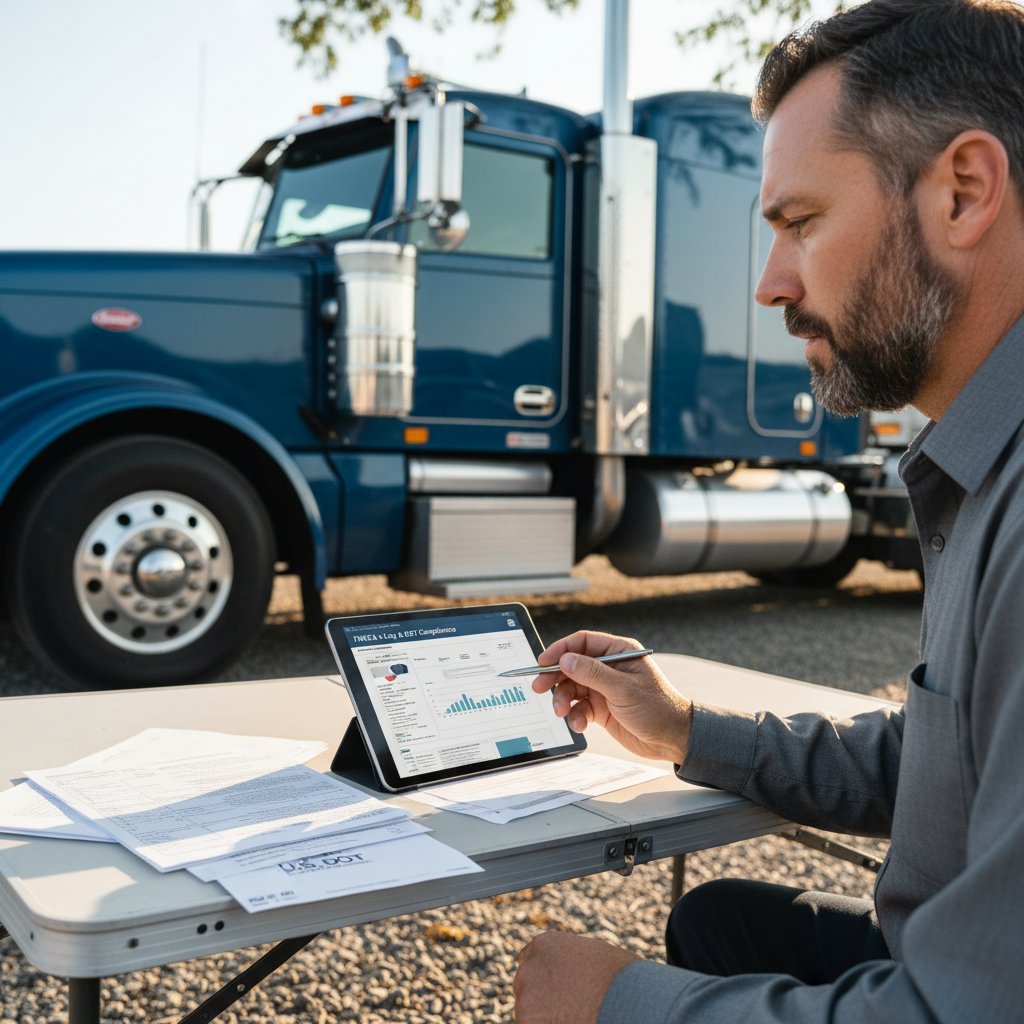
Learn filing insurance claims the right way for trucking insurance—documents, timelines, mistakes, and pro tips to protect cash flow. Get a Logrock quote.
Filing insurance claims for commercial truck insurance comes down to speed, proof, and submitting the right paperwork under the right coverage. To file a claim and get paid faster, secure the scene, document everything (photos/video/witnesses), notify your insurer ASAP, submit a clean claim packet (loss details + estimates + reports), and stay responsive during the adjuster’s investigation.
Owner-operators don’t just lose a bumper—they lose revenue. A claim that drags out can turn one incident into a week of missed loads, broker problems, and surprise costs like tow and storage. If you’re trying to stay organized, start with a one-page “insurance snapshot” and review insurance coverage basics for owner-operators.
Table of Contents
Reading time: 8 minutes
- What “Filing Insurance” Means in Commercial Truck Insurance
- Step-by-Step: How to File a Trucking Insurance Claim
- Documentation Checklist (Claim Packet)
- Should You File the Claim—or Self-Pay?
- Timelines: What Happens After You File
- Common Mistakes That Cause Delays or Denials
- Claim Types in Trucking Insurance (File Under the Right Coverage)
- The Logrock Difference
- Conclusion & Next Step
- Frequently Asked Questions
First Things First—What “Filing Insurance” Means in Commercial Truck Insurance
In trucking, “filing insurance” usually means filing an insurance claim—reporting a covered loss and requesting payment under your policy—rather than regulatory insurance filings like proof-of-insurance forms for operating authority.
This guide is about claims: the moment something happens on the road, at a shipper, or at a receiver and you need the policy to perform.
If you want fewer headaches when something goes wrong, keep an “insurance snapshot” in your phone and glove box: carrier name, policy numbers, VIN/unit numbers, claims phone number, and your agent’s direct line.
Key Takeaways: Essential Filing Insurance Moves for Trucking Insurance
- Speed matters: Report fast and keep a paper trail—late notice and missing documents are common denial triggers.
- Build a “claim packet,” not a story: Photos, estimates, report numbers, BOL/rate con, ELD proof, and a downtime plan keep it moving.
- Not every claim is worth it: Use a deductible vs premium-impact check before filing minor physical damage.
- Match the claim to the coverage: Physical Damage, Cargo, Liability, and NTL/bobtail handle different losses—misfiling costs time.
Step-by-Step—How to File a Trucking Insurance Claim Without Getting Stalled
A commercial truck insurance claim is typically opened by calling the carrier’s claims line and reporting the date, time, location, parties involved, and loss type within 24–72 hours (your policy’s “prompt notice” condition controls the exact requirement).
The goal is simple: protect people and property first, then deliver clean documentation so the adjuster can verify coverage, confirm damages, and authorize repairs or payment.
1) Secure the scene and prevent more damage
- What it is: Make sure nobody’s hurt, reduce additional loss, and keep the situation from getting worse.
- Why it matters: If more damage happens after the incident (freight sits uncovered in rain, improper towing, etc.), an insurer can argue part of the loss was preventable.
- Who needs it: Everyone—semi truck insurance, hotshot insurance, box trucks, fleets, leased-on.
Pro tip: If cargo is involved, stop the bleeding. Get quick photos first, then tarp/secure/transfer as instructed by the shipper/broker. Save who authorized what (email/text) and the timestamp.
2) Document like you’re building a case file (because you are)
Adjusters don’t pay for “I told you so.” They pay for proof you can verify.
- Wide and close photos of all vehicles, DOT numbers, plates, and damage points
- Road conditions, signage, skid marks, debris, and lighting
- Dashcam video (save the original file)
- Witness names/phones (even one helps)
- Location/time stamps (phone + ELD can support timeline)
Pro tip: Take a 20-second walkaround video of the unit. It’s faster than 30 photos and captures context photos miss.
3) Notify the right parties (insurer + broker/shipper + dispatch)
- Insurer: Call the claims number on your policy card/app and open the claim.
- Broker/Shipper: If cargo might be involved, notify immediately and follow their claim reporting instructions.
- Police (if needed): Get a report number or incident number and write it down.
Pro tip: Many load contracts require same-day notice for cargo issues. Missing the contract deadline can cost you even if the loss is real.
4) File the claim with a clean “claim packet”
Your best move is to submit one packet that answers the adjuster’s first questions without ten back-and-forth calls.
- Claimant/insured info, unit number, VIN, trailer number
- Date/time/location + short description (facts only)
- Photos/video + witness list
- Police report or incident number (if available)
- Repair estimate(s) and tow/storage invoices
- For cargo: BOL, rate con, seal numbers, temp logs (reefer), lumper receipts, load photos
Pro tip: For reefer claims, the set point and temp history are the first things everyone asks for. Download or screenshot it as early as possible.
5) Manage the inspection and repairs like a business owner
- Inspection: In-person, photo app, or shop estimate—depends on the carrier and severity.
- Repairs: You can often choose your shop, but confirm the carrier’s process first.
- Tow/storage: Don’t let storage fees pile up; runaway storage slows settlements.
Pro tip: Ask the shop for an estimate that separates parts, labor, paint, and supplements. Supplements are common; surprises aren’t.
6) Close the loop: settlement, releases, and subrogation
Once liability and damages are confirmed, you’ll typically see payment (minus deductible if applicable), repair authorization, or a total loss offer. If another party is at fault, your insurer may pursue subrogation to recover what they paid.
Pro tip: Keep every receipt (tow, hotel, Uber, storage). Even if your policy doesn’t pay downtime, documentation helps with third-party recovery and negotiation.
Documentation Checklist (Commercial Truck Insurance Claim Packet)
A complete commercial truck insurance claim packet usually includes incident facts, photos/video, unit identifiers (VIN/unit/trailer), repair estimates, and trucking documents like BOL and ELD screenshots so the adjuster can confirm coverage and causation.
Copy this into your Notes app and use it as your standard “claim folder” checklist.
Crash / Physical Damage
- Driver statement (facts only, 6–10 sentences)
- Photos/video (truck, trailer, other vehicle, scene)
- Police report number (if any)
- Witness names/phones
- Tow bill + storage invoice
- Repair estimates + shop contact
- ELD location/time screenshot (supports timeline)
Cargo Claim
- BOL + rate confirmation
- Load photos (before/after, securement, seals)
- Receiver notation (shortage/damage notes)
- Reefer temp logs (if applicable)
- Salvage instructions + who authorized (email/text)
- Invoice for cargo value (shipper/receiver)
Liability / Injury
- All the above + any legal letters received
- Do not admit fault in writing: stick to objective facts and let claims handle liability.
Should You File the Claim—or Self-Pay? (A Simple Cost-Per-Mile Reality Check)
A practical rule of thumb in trucking is to consider self-paying when the repair cost is under about 1.5–2.0× your deductible, unless there’s liability exposure, cargo involvement, or the damage could worsen.
Small claims can follow you at renewal. Too many “nuisance” losses can mean higher premiums, limited markets, or fewer affordable options.
| Situation | Usually File? | Why |
|---|---|---|
| Major damage (unsafe/out of service) | Yes | You need the truck rolling and documented. |
| Liability accident with another party | Yes | Protects you legally; claims get messy fast. |
| Cargo damage/shortage with written claim notice | Yes | Deadlines are tight; contracts often require notice. |
| Minor physical damage near/under deductible | Often no | You may pay more long-term than the check is worth. |
| Windshield chip/small glass claim | Depends | Some policies treat glass differently; ask first. |
Pro tip: Ask your agent, “Will this be recorded as a claim if I’m only asking questions?” Some carriers log inquiries as incidents, even without payment.
Timelines—What Happens After You File (and Why It Can Take Longer in Trucking)
A typical commercial truck insurance claim moves through five phases—open (same day–48 hours), adjuster assigned (1–5 business days), inspection/estimate (days to 2+ weeks), coverage decision, then payment/repair authorization, with delays usually caused by missing info.
Most claim slowdowns come from documentation gaps or coverage confusion (physical damage vs cargo vs liability).
Typical phases
- Claim opened (same day to 48 hours)
- Adjuster assigned (1–5 business days)
- Inspection + estimate (a few days to 2+ weeks depending on location/availability)
- Coverage decision (fast if clean; slower if disputed)
- Payment/repair authorization (after estimate approval)
Why trucking claims can drag
- Unit is on the road (harder to inspect)
- Multi-party losses (shipper, broker, receiver, warehouse)
- Cargo value disputes and salvage decisions
- Repairs delayed by parts availability
Pro tip: If you’re stuck waiting, send one email: “Claim #_____ — Missing items needed to move forward?” Make them tell you what’s missing.
Common Mistakes That Get Commercial Truck Insurance Claims Delayed or Denied
The most common reasons commercial truck insurance claims get delayed or denied are late notice, incomplete documentation, inconsistent statements, and avoidable extra costs like uncontrolled storage fees that complicate the carrier’s investigation.
1) Late notice (“I thought it was minor”)
Delays give insurers a reason to question facts and causation. Report early, even if you’re still gathering details.
2) No documentation of cargo condition at pickup
If you don’t have load photos, seal notes, and clean paperwork, it becomes your word vs everyone else’s.
3) Admitting fault in writing
Give facts. Let the claims team handle fault. A casual “I didn’t see him” can become a liability problem fast.
4) Letting tow/storage fees stack up
Storage can exceed repair costs. Move the unit to a reasonable location quickly and document every decision.
5) Filing under the wrong coverage
Cargo isn’t physical damage, and non-trucking liability (NTL)/bobtail isn’t the same as being under dispatch. Clean facts help your carrier place the claim correctly.
Claim Types in Trucking Insurance (So You File Under the Right Coverage)
FMCSA financial responsibility rules require at least $750,000 in public liability for many for-hire interstate carriers (49 CFR §387.9), while physical damage and cargo are optional coverages you buy to protect your equipment and freight exposure.
Here’s how common trucking losses usually map to coverages.
| Claim Type | Usually Covered By | Real-World Example |
|---|---|---|
| At-fault accident injuries/property | Primary Auto Liability | You hit a four-wheeler or damage property at a shipper. |
| Damage to your tractor/trailer | Physical Damage | Collision, vandalism, theft, weather, animal strike. |
| Freight loss/damage | Cargo Insurance | Shifted load, water damage, reefer temp issue. |
| Off-dispatch driving | NTL / Bobtail (varies by policy) | Driving to get food or heading home without a load. |
If you’re not sure which bucket you’re in, that’s normal. Your job is to provide clean facts; your agent and the claims team can place the loss under the right coverage.
Want a trucking insurance setup that doesn’t fall apart during a claim?
Filing insurance is easier when your coverages, deductibles, and exclusions match how you actually run (lanes, freight, radius, power unit/trailer, hotshot vs semi). We’ll review your commercial truck insurance and help tighten gaps before a loss happens.
- Fast certificates (COIs)
- Coverage review that matches your operation
- No-fluff guidance on deductibles & claims
The Logrock Difference: Commercial Truck Insurance That’s Built for Owner-Operators
Owner-operators typically rely on a mix of primary liability, physical damage, and cargo coverage, and the right setup depends on how you operate (radius, lanes, freight type, dispatch status, and contract requirements).
Most insurance content is written for personal auto, but trucking claims don’t work that way. Your truck is a revenue-producing asset, and downtime is often the real loss.
Logrock focuses on commercial truck insurance, trucking insurance, semi truck insurance, and hotshot insurance with a business-first mindset:
- Coverages matched to how you actually operate (radius, lanes, freight type)
- Clear deductible strategy (so “affordable” doesn’t mean “useless”)
- Practical guidance on claims documentation so you don’t get stuck in delay cycles
Frequently Asked Questions
You file a trucking insurance claim by reporting the loss immediately, documenting the scene (photos/video/witnesses), and submitting a claim packet with policy info, loss details, and repair estimates, plus cargo paperwork if freight is involved. For commercial truck insurance, include trucking-specific proof like ELD location/time, dispatch notes, tow/storage invoices, repair invoices, and any broker/shipper claim notice you received. Faster, cleaner documentation usually means faster inspection and authorization. If you want to prep ahead, keep a digital “claim folder” using the owner-operator insurance checklist so you’re not hunting for paperwork on the shoulder.
To file a commercial truck claim, you typically need date/time/location of loss, photos/video, involved party information, unit identifiers (VIN/unit/trailer), and repair estimates to support damages. Trucking claims often also require operations documents like ELD time/location screenshots and dispatch notes to verify timeline. If cargo is involved, add BOL, rate confirmation, seal numbers, receiver damage/shortage notation, cargo value documentation, salvage instructions, and reefer temperature logs when applicable. Missing cargo paperwork is one of the fastest ways to turn a simple claim into a slow dispute.
You should file a claim when there’s liability exposure, injuries, significant damage that puts the unit out of service, or a cargo claim notice, because those can create legal and contract risk that’s bigger than the repair bill. You should consider paying out of pocket when damage is minor and near the deductible—especially if the repair is under about 1.5–2.0× the deductible—to help protect your loss history at renewal. If the truck can’t roll safely or the damage could worsen, file the claim and document everything immediately.
After you file a semi truck insurance claim, the carrier usually assigns an adjuster (often within 1–5 business days), confirms coverage, inspects the damage, and then authorizes repairs or issues payment (minus the deductible if it applies). If liability is disputed or multiple parties are involved, the investigation can take longer because statements, reports, and documentation have to match. The fastest way to help is staying responsive, keeping communication in writing, and sending updates with the claim number in the subject line plus attachments (photos, estimates, tow/storage invoices).
Conclusion: Protect the Truck, Protect the Cash Flow
Filing insurance claims in trucking is about documenting verifiable facts quickly, filing under the correct coverage, and keeping the adjuster supplied with the exact items needed to authorize inspection and payment.
If you treat every claim like a business file—photos, paperwork, timelines, and receipts—you’ll avoid most delay cycles that kill cash flow.
Key Takeaways:
- Report early, document hard, and submit a clean claim packet (photos/video, estimates, reports, ELD proof).
- Use a deductible vs premium-impact check before filing minor physical damage (1.5–2.0× deductible rule).
- Cargo claims live and die by paperwork: BOL, rate con, receiver notes, seals, and reefer temp logs when applicable.
If you want a policy built for real trucking—and a straight answer on what you should carry—get a quote and we’ll review your setup.