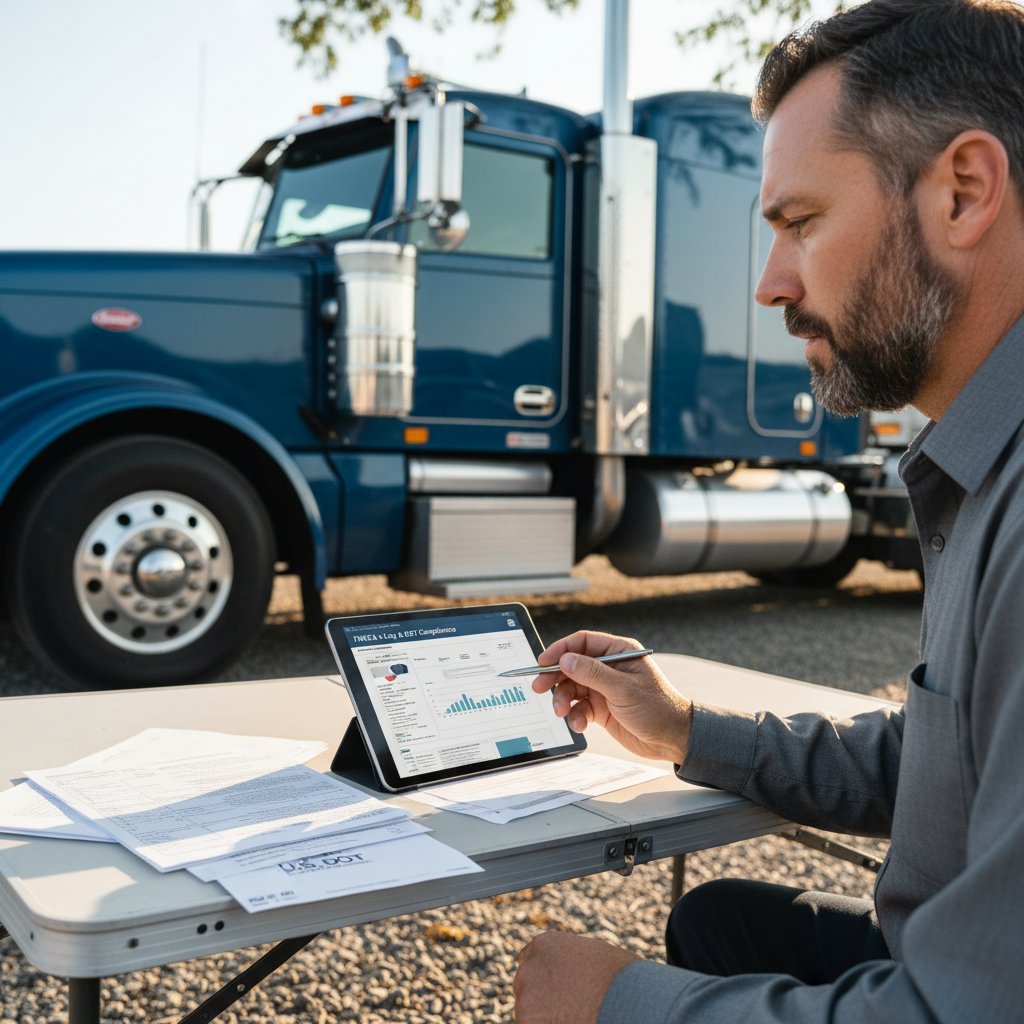
Haulage contractors insurance in 2026: what it covers, what’s required, typical costs, and how to choose limits without overpaying. Get a quote.
Haulage contractors insurance is usually a package of HGV motor insurance + goods in transit (cargo) + liability cover (and employers’ liability if you have staff), designed to protect your truck, your customer’s load, and your business when something goes wrong.
If you’re moving freight for money, insurance isn’t a “nice-to-have”—it’s a cash-flow survival tool. One stolen load, one loading-bay injury, or one rollover can wipe out a month of profit faster than a bad rate con.
This guide breaks haulage contractors insurance down in plain English: what cover actually does, what’s legally required vs contract-required, how to pick limits, and what typically drives cost—so you can buy the right protection without paying for fluff.
Key Takeaways: Essential Haulage Contractors Insurance
- Think “package,” not one policy: haulage contractors insurance typically combines motor/HGV cover + goods in transit (cargo) + liability (and employers’ liability if you employ staff).
- Legal vs contract requirements are different: motor cover is mandatory to run on the road; cargo/GIT and public liability are often required by shippers, brokers, and sites.
- Limits should match your worst day, not your average day: set cargo limits to your highest-value load, and liability limits to the sites you visit.
- Cheapest trucking insurance can be the most expensive: many “declined claims” come from conditions (security, parking, temperature logs, named drivers, territory), not bad luck.
Table of Contents
Reading time: 12 minutes
- Who Needs Haulage Contractors Insurance?
- Motor / HGV Cover: The Base Layer
- Cargo + Liability: What Protects the Load and Your Business
- UK Requirements: What’s Mandatory vs Contract-Required
- Optional Add-Ons: When They’re Worth It
- How Much Does Haulage Insurance Cost in 2026?
- Risk Controls That Reduce Claims (and Can Help Premiums)
- Real-World Claim Scenarios (Covered vs Declined)
- Quote Checklist (Copy/Paste)
- Glossary (Plain English)
- Frequently Asked Questions
- Why Logrock: Straight Answers, No Coverage Gaps
- Conclusion & Get a Quote
Who Needs Haulage Contractors Insurance?
Haulage contractors insurance is built for operators carrying goods for hire or reward, and many UK contracts also require stated limits like £1m–£10m public liability and a defined goods-in-transit limit per load/vehicle.
Whether you’re an owner-driver with one unit or running a small fleet with employed drivers, the risk is the same: one serious incident can turn a profitable week into a cash-flow crisis.
Owner-drivers vs fleets vs subcontractors
What changes: your business model changes who is “on the hook” when something goes wrong.
- Owner-driver: uptime is everything. A claim dispute can stop you working and crush cash flow.
- Fleet: more vehicles + more drivers = more incident exposure and more admin risk (driver eligibility, training records, paperwork).
- Subcontractors: the biggest issue is the liability gap: your contract says you’re responsible, but the subcontractor’s wording and limits don’t match.
Field tip: if you subcontract loads, don’t rely on “they said they’re insured.” Get the schedule, check dates, and make sure limits match your customer’s contract.
General haulage vs specialist haulage (reefer, ADR, high-value)
Cargo type changes what insurers will cover and what conditions they’ll enforce.
- Reefer: claims often hinge on temperature records, maintenance, and proof of set point.
- High-value: theft conditions tighten fast (secure parking, trackers, lock requirements).
- ADR/hazmat: insurer appetite can be limited, with stricter compliance expectations and higher liability exposure.
Motor / HGV Cover: The Base Layer
UK law requires at least third-party motor insurance to use an HGV on public roads under the Road Traffic Act 1988.
Motor cover is the foundation: without it, you’re not moving—full stop. In US search terms, this is the core of commercial truck insurance / semi truck insurance; in the UK, it’s your HGV motor policy.
Third party vs TPFT vs comprehensive (what changes in practice)
- Third party: covers damage/injury you cause to others; it does not cover your truck.
- Third party, fire & theft (TPFT): adds fire and theft for your vehicle, but accidental damage is still limited.
- Comprehensive: broadest protection for your vehicle, usually including accidental damage (subject to excess and conditions).
Practical reality: comprehensive isn’t automatically “better” if the excess is too high or the policy conditions don’t match your operations (parking/security rules, driver restrictions, use class).
Single vehicle vs fleet haulage insurance (when it makes sense)
Fleet policies can reduce admin when you have regular mid-term changes, but they don’t always work out cheaper for smaller operators.
As a rule of thumb, fleet structures often start making sense around 3–5+ vehicles (insurer-dependent).
Motor exclusions that surprise contractors
Many declined motor-related disputes are caused by technical non-compliance, not fraud.
- Unattended vehicle conditions: keys left, doors unlocked, or stopping in non-approved areas.
- Driver restrictions: age/experience rules, points/convictions, or named drivers only.
- Territory limits: UK-only vs EU work.
- Use class mismatch: what you told the insurer vs what you actually do day-to-day.
Cargo + Liability: What Protects the Load and Your Business
Motor insurance usually does not cover the customer’s goods, and for international road carriage the CMR Convention commonly limits carrier liability to 8.33 SDR per kilogram unless a higher value is declared and accepted.
A standard motor policy mostly handles road liability. It does not automatically protect the load, and it doesn’t cover the non-driving liabilities that happen at depots, yards, and loading bays.
Goods in Transit (GIT) / freight liability (what it covers and what it doesn’t)
Goods in transit (GIT) covers loss, damage, or theft of goods while they’re under your care during transit (wording varies: carriage, loading/unloading, storage-in-transit).
Why it matters: a single damaged load can be a five-figure hit, and contracts often won’t release work without a stated cargo limit.
Common exclusions/conditions to watch:
- Poor packaging / inherent vice: goods that fail due to their own nature or inadequate packing.
- Temperature deviation (reefer): claims can depend on logs and maintenance proof.
- Theft conditions: unattended vehicle rules, overnight parking requirements, tracker/lock requirements for theft-attractive loads.
Buying tip: set your GIT limit to your maximum load value, not your average. Underinsuring is how you stay “busy” but broke.
Public liability (why motor cover isn’t enough)
Public liability covers injury/property damage claims arising from your business activities off the road (depots, customer sites, yards).
- Damaging a customer’s loading bay with equipment
- A visitor injury at your yard
- Striking site property during manoeuvring where it’s treated as a business liability claim (wording-dependent)
Contract note: many depots, ports, and RDCs specify minimum limits before you’re allowed on site.
Wrongful delivery / financial loss / contract-driven exposures
Not every “loss” is a smashed pallet; a lot of real-world disputes are contractual and can be excluded unless specifically endorsed.
- Wrong delivery: delivered to the wrong location or released to the wrong party.
- Missed timed slot: rejected loads and chargebacks.
- Documentation errors: paperwork issues that trigger deductions.
UK Requirements: What’s Mandatory vs Contract-Required
In the UK, third-party motor insurance is legally required for road use (Road Traffic Act 1988), and most employers must carry at least £5 million employers’ liability cover under the Employers’ Liability (Compulsory Insurance) Act 1969.
This is where operators get tripped up: legal minimums keep you road-legal; contracts keep you working.
Legally required: motor insurance
You need valid motor cover to operate on public roads, and operating uninsured can create serious legal and financial exposure.
Employers’ liability: do haulage contractors need it?
Employers’ liability protects you if an employee is injured or becomes ill because of work, and the compulsory minimum is £5 million for most employers (check exemptions with a qualified adviser).
If you employ drivers, yard staff, or admin staff, assume you need employers’ liability and keep your evidence tight (induction, training, maintenance, PPE).
Contract-driven requirements: shippers, brokers, and sites
It’s normal for a contract or onboarding pack to specify cargo limit per load, public liability minimum, territory (UK-only vs EU), and specific conditions (security, temperature).
Practical risk: if your certificate doesn’t match the contract, you can lose the lane—or carry the liability anyway.
Need to match a contract requirement fast?
Bring your highest load value, territories (UK/EU), vehicle list, and driver details—then request a like-for-like quote so you don’t buy a policy that fails compliance.
- Contract-ready limits
- Clear conditions explained
- No “gotcha” exclusions
Optional Add-Ons: When They’re Worth It
Optional covers like trailer, breakdown/replacement vehicle, legal expenses, and contingent subcontractor cover can be worth the premium when one day of downtime or one contract dispute would cost more than the add-on.
Optional doesn’t mean useless. It means you buy it when downtime or contract exposure hurts more than the premium.
Trailer, plant, and equipment cover
Trailer theft and yard losses are common, and a trailer off the road can stop you working even if the unit is fine.
If you run curtainsiders, skeletals, fridge trailers, or hire kit in, ask how trailers are covered (owned vs hired-in, and where they’re stored).
Breakdown, replacement vehicle, downtime protection
Downtime isn’t just repair cost—it’s lost revenue, missed slots, and damaged customer relationships.
Owner-drivers and small fleets without spare capacity usually feel this pain first.
Legal expenses and contract disputes
Legal expenses can help with certain disputes, but triggers, exclusions, and limits vary a lot—so check what’s actually covered.
Subcontractor / contingent cover
If a subcontractor’s insurance doesn’t respond but you’re still liable under contract, contingent cover can stop you becoming the insurer of last resort.
How Much Does Haulage Insurance Cost in 2026?
Haulage insurance pricing is risk-rated using information like 3–5 years of claims history, driver records, territory (UK vs EU), overnight parking security, and cargo type/value.
There’s no single price list, because insurers price your risk profile. But you still need a benchmark to plan cash flow.
Cost ranges (use as planning numbers, not promises)
Your total spend is usually made up of motor/HGV, goods in transit (cargo/freight liability), public liability, employers’ liability (if applicable), and any add-ons (trailers, breakdown, legal).
Reality check: adding high-value loads, reefer work, ADR, EU work, or weak overnight security can push pricing up quickly.
The most reliable “cost tool” is getting two to three like-for-like quotes with the same limits and conditions—so you’re comparing coverage, not just price.
Top factors that change premiums (what underwriters care about)
- Drivers: age, experience, licence points/convictions, and eligibility controls.
- Claims: frequency and severity (patterns matter).
- Vehicles: value, security, and where they’re parked overnight.
- Territory: local vs UK-wide vs EU, and route risk.
- Cargo: value, theft attractiveness, and temperature sensitivity.
- Risk controls: telematics, dashcams, trackers, and written procedures that match reality.
How to lower premium without underinsuring
- Set the right cargo limit: match it to your true max load value.
- Upgrade overnight security: secure yards, trackers/immobilisers where needed.
- Tighten driver controls: approved driver list, induction, and ongoing checks.
- Use excess strategically: only raise it if you can actually fund it.
- Keep documentation clean: maintenance, defect reporting, and temperature logs for reefer work.
Bottom line: “affordable trucking insurance” isn’t the lowest premium—it’s the policy that pays when you need it.
Risk Controls That Reduce Claims (and Can Help Premiums)
Risk controls that prevent theft, temperature loss, and loading damage also make your risk easier to underwrite, especially when insurers review 3–5 years of claims and ask how you manage security and compliance.
Insurers reward operators who run tight processes—because tight processes reduce losses.
Cargo theft and security controls
- Secure parking policy: approved stops and clear “no-go” rules.
- Key control: no keys left in cab—ever.
- Tracking/immobilisers: especially for theft-attractive loads.
- Route planning: avoid predictable patterns when possible.
Load handling and (if reefer) temperature control
- Photo evidence: condition, seals, and obvious damage at pickup/drop.
- Load securement checks: straps, edges, and re-checks after the first miles.
- Reefer proof: maintenance history + temperature logs/telemetry + set point records.
Driver management and compliance
- Induction and refresher training: documented, not just verbal.
- Licence and eligibility checks: consistent and recorded.
- Maintenance and defect reporting: a process that’s actually used.
- Incident process: photos, witness details, and immediate reporting.
Real-World Claim Scenarios (Covered vs Declined)
Haulage insurance claims are often paid or declined based on policy conditions (security, unattended vehicle rules, temperature logs, territory) and the evidence you can produce after the event.
These examples are simplified, but the patterns are real.
Load theft from an unattended vehicle (declined scenario)
What happened: driver parked overnight in a non-secure area; theft occurred.
Typical outcome: the claim may be declined if the policy requires secure overnight parking or forbids overnight stops for certain loads.
Lesson: match your real operations to your policy conditions—or change the policy.
Damage during unloading (coverage confusion scenario)
What happened: goods were damaged during unloading at a customer site.
Typical outcome: it could fall under GIT, public liability, or be excluded depending on wording and who was handling the unloading.
Lesson: “cargo cover” isn’t one standard product. Wording decides.
Refrigerated spoilage (covered if you can prove compliance)
What happened: customer alleges temperature deviation; goods rejected.
Typical outcome: it can be paid if you have temperature logs, maintenance history, and evidence the set point was correct.
Lesson: for reefer work, documentation is part of your insurance.
Quote Checklist (Copy/Paste)
For like-for-like haulage quotes, insurers typically request 3–5 years of claims history plus full details on vehicles, drivers, territories, and maximum load values.
Cleaner inputs = faster underwriting and fewer nasty surprises later.
Business + operations
- Trading name, years trading, claims history (last 3–5 years)
- Operating territory: local / UK-wide / EU (countries if applicable)
- Annual mileage and typical routes
- Work type: general haulage / reefer / ADR / high-value / multi-drop
- Subcontracting: do you subcontract work out, and how often?
Vehicles + security
- Vehicle(s) make/model/year/value + modifications
- Overnight parking location and security (gated yard, CCTV, tracker)
- Trailer details (owned/hired) and storage arrangements
- Maintenance process (in-house vs external, inspection frequency)
Drivers
- Driver ages, experience, licence history/points/convictions
- How you control driver eligibility (named drivers, vetting, training)
Coverage limits you need
- Motor cover type (Third party / TPFT / Comprehensive)
- Cargo/GIT limit: max load value
- Public liability limit (check site/contracts)
- Employers’ liability (if applicable)
- Add-ons: breakdown, legal expenses, trailer, downtime options
Glossary (Plain English)
These definitions are the common meanings used in haulage insurance, but your policy wording still controls what’s covered and what isn’t.
- Goods in Transit (GIT): covers the customer’s goods while they’re in your care during transit (wording varies).
- Freight liability: your legal/contractual liability for loss/damage to the load.
- Public liability: covers third-party injury/property damage from your business activities (often not “road use”).
- Employers’ liability: covers claims from employees injured/ill due to work (often written at £5m+ in the UK).
- Excess: the amount you pay first on a claim.
- Territory limits: where your cover applies (UK-only vs EU).
- Contingent/subcontractor cover: protection if a subcontractor’s insurance doesn’t respond but you’re liable.
- Commercial truck insurance / trucking insurance / semi truck insurance: common US terms for commercial motor cover.
Frequently Asked Questions
Haulage contractors insurance typically covers HGV motor insurance, goods in transit (cargo/freight liability), and business liability (public liability and, if you employ staff, employers’ liability).
In the UK, motor cover is the legal base for road use, while cargo and liability limits are often set by contracts and site rules. Optional add-ons can include trailer cover, breakdown/replacement vehicle, legal expenses, and contingent cover for subcontracted work. The key is matching the wording to how you actually operate (territory, overnight parking, temperature controls, named drivers), because conditions are where claims get won or lost.
Yes—motor insurance is legally required to operate a vehicle on UK public roads under the Road Traffic Act 1988.
Other covers like goods in transit (cargo) and public liability are usually not legal requirements, but they’re commonly required by contracts, brokers, and large sites (RDCs, ports, construction sites) before you’re allowed to carry loads or enter the premises. If your certificate and wording don’t match the contract (limits, territory, security conditions, temperature requirements), you can lose work—or carry the liability yourself.
Goods in transit (GIT) cover protects against loss, theft, or damage to goods while they’re under your control during transit, with the exact scope set by the policy wording (including loading/unloading and storage-in-transit).
It’s especially important because motor insurance doesn’t automatically cover the customer’s load. For international carriage by road, carrier liability is often tied to the CMR Convention, which commonly limits liability to 8.33 SDR per kilogram unless higher value is declared and accepted. Security conditions (unattended vehicle rules, approved parking, trackers) and temperature evidence for reefer work are frequent deciding factors in claim outcomes.
Yes—if you employ staff, employers’ liability is typically required and the compulsory UK minimum is £5 million under the Employers’ Liability (Compulsory Insurance) Act 1969 (subject to limited exemptions).
Employers’ liability protects your business if an employee is injured or becomes ill because of work, which can include drivers, yard staff, and office staff. If you only use bona fide subcontractors, the requirement can change based on your contracts and the working arrangement, so you should confirm your status with a qualified broker. Either way, keep documentation tight (induction, training, PPE, maintenance, incident reporting) because evidence matters after a workplace injury.
Haulage insurance cost varies widely because insurers rate risk using factors like 3–5 years of claims, driver records, vehicle value, territory (UK vs EU), overnight parking security, and cargo type/value.
Adding high-value loads, reefer work, ADR, EU work, or weak security can change pricing quickly, even if your driving record is clean. The best way to estimate is to request like-for-like quotes (same limits, same excess, same territory, same security and temperature conditions) so you’re comparing real coverage—not just a headline price. If you only change one thing, make it this: match your cargo limit to your maximum load value, not an average week.
Why Logrock: Straight Answers, No Coverage Gaps
A contract-ready haulage insurance package should clearly state your key limits (for example, cargo limit per load/vehicle and public liability limits like £1m–£10m) and spell out any conditions that can affect claims (security, unattended vehicle rules, temperature records, territory).
Owner-operators and small fleets don’t need fancy brochures—you need coverage that matches how you actually work and won’t unravel at claim time.
- Match real operations: territory, parking, cargo, and subcontracting all reflected in the wording.
- Meet contract requirements: certificates that align with onboarding packs and rate cons.
- No surprises: conditions explained upfront so you can run compliantly.
Conclusion & Get a Quote
For UK haulage contractors, the minimum legal requirement is motor insurance for road use, while cargo/GIT, public liability, and employers’ liability are usually driven by contracts and staffing (with employers’ liability commonly written at £5 million+ where required).
The winning move is buying cover that matches your operations and customer requirements—then backing it up with security and documentation that keeps claims payable.
Key Takeaways:
- Buy for your worst-case load value and contract requirements, not your average week.
- Watch the conditions (security, unattended vehicle, territory, temperature logs)—that’s where claims get won or lost.
- Get like-for-like quotes so “affordable” doesn’t become uncovered loss.
If you want a policy that matches your contract and how you actually operate, get a quote and we’ll walk through the limits and conditions with you.