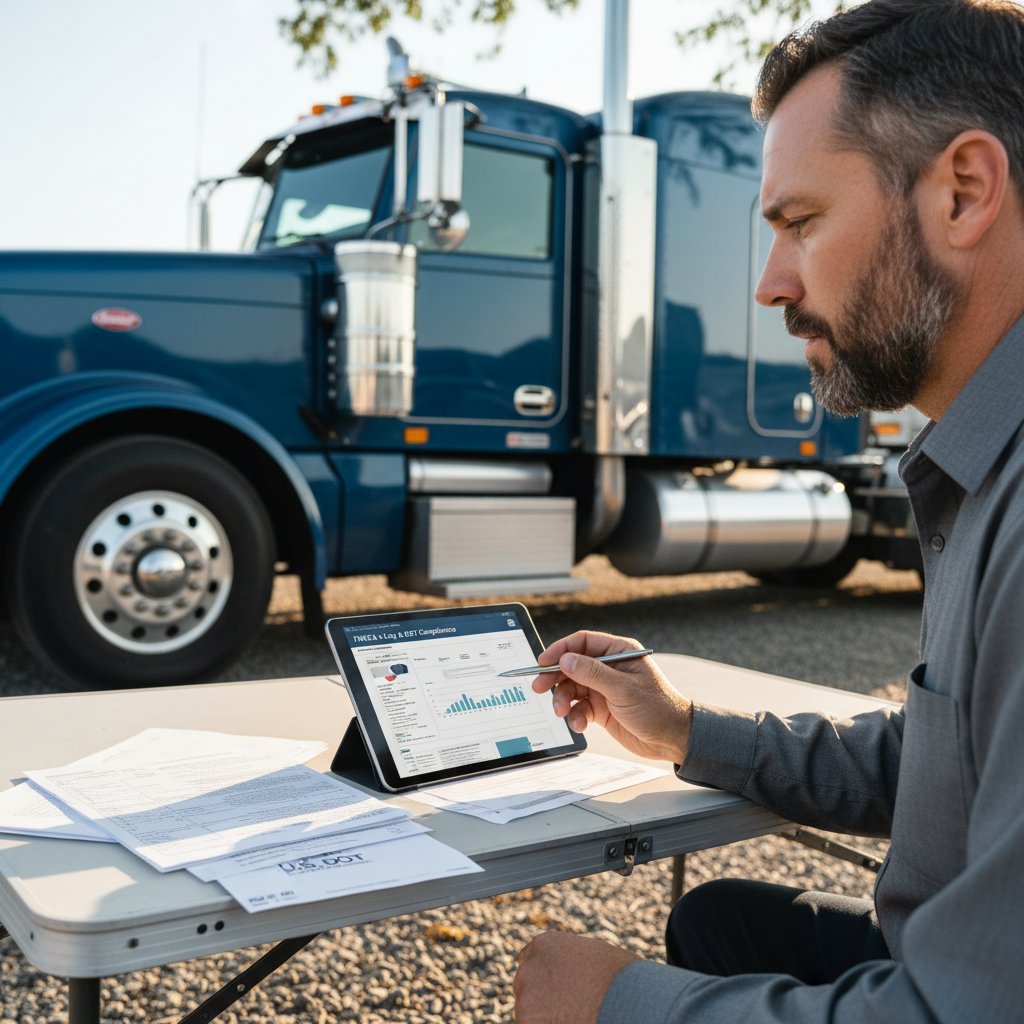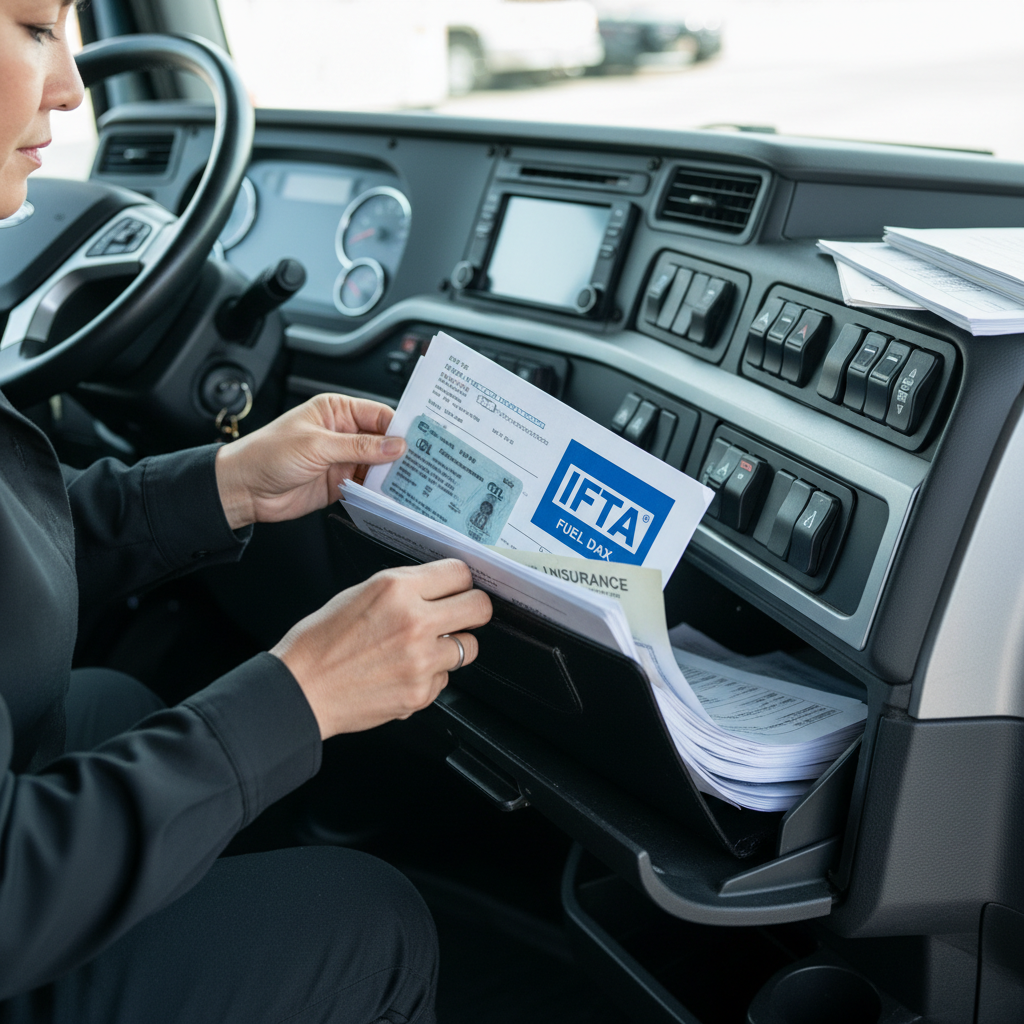
Need a transportation license for trucking? Learn CDL, USDOT/MC steps, permits, and trucking insurance filings to get legal fast. Get a Logrock quote.
How to get a transportation license in trucking comes down to a short checklist: get the right CDL (if required), get a USDOT number (most interstate CMVs), add MC authority if you’re for-hire interstate, file BOC-3 and UCR, set up IRP/IFTA (if applicable), and bind commercial truck insurance with the FMCSA filings that activate your authority.
As an owner-operator, doing these in the wrong order can park your truck for weeks—especially when your authority is waiting on insurance filings. If you want deeper back-office compliance later, save these: IFTA reporting basics and IRP registration basics.
Key Takeaways: Essential Steps to Get a Transportation License
- CDL is the driver license; DOT/MC is the business license: Mixing these up is the fastest way to lose weeks.
- Do it in the right order to avoid FMCSA rejections: Insurance filings and BOC-3 timing matters for authority activation.
- Your “affordable trucking insurance” depends on setup choices: Cargo type, radius, equipment value, and experience can swing premium hard.
- Hotshot isn’t a loophole: Many hotshot rigs still trigger Class A CDL + for-hire authority + hotshot insurance requirements.
Table of Contents
Reading time: 9 minutes
- What “Transportation License” Really Means in Trucking
- Step 1: Figure Out Which Licenses You Actually Need
- Step 2: How to Get a CDL (If You Need One)
- Step 3: Get Legal as a Carrier: USDOT, MC Authority, UCR, and BOC-3
- Step 4: The Permits & Compliance That Trip Up New Owner-Ops (IRP/IFTA/HVUT)
- Step 5: Commercial Truck Insurance (and Filings) That Make Your Authority Go Active
- Cost & Timeline: What to Expect (Realistic Ranges)
- The Logrock Difference: Insurance Built for Owner-Operators
- Frequently Asked Questions
- Conclusion: Get Legal, Get Insured, Get Paid
What “Transportation License” Really Means in Trucking
A “transportation license” in U.S. trucking usually means two separate legal requirements: a driver license (CDL) issued by your state and a carrier/business authority setup (USDOT/MC + permits) regulated through FMCSA and your base state.
In the real world, “transportation license” can mean two different things:
- Driver licensing (CDL): what allows you to legally operate a commercial vehicle.
- Carrier/business authority (USDOT/MC + permits): what allows your business to legally haul freight.
Most first-time owner-operators waste time because they chase the wrong “license” first. Before you touch forms, decide what you’re actually doing: hotshot vs semi, intrastate vs interstate, for-hire vs private, and what you’re hauling.
| Item | What it is | Who it applies to | Issued by |
|---|---|---|---|
| CDL (Class A/B) | Driver license | The driver | Your state DMV |
| Medical card (DOT physical) | Medical qualification | CDL and many non-CDL CMV drivers | Certified Medical Examiner |
| USDOT number | Carrier identifier | Most interstate CMVs + many intrastate | FMCSA |
| MC authority (Operating Authority) | Permission to haul for-hire interstate | For-hire interstate carriers | FMCSA |
| IRP/plates | Apportioned registration | Multi-state operations | Your base state |
| IFTA | Fuel tax reporting | 26,000+ lbs / 3+ axles interstate | Your base state |
| Insurance filings | Proof of insurance for authority | For-hire carriers (and many contracts) | Insurer files with FMCSA |
Step 1: Figure Out Which Licenses You Actually Need
To determine which trucking licenses and registrations you need, you must confirm five facts: intrastate vs interstate, for-hire vs private, GVWR/GCWR ratings, cargo type, and whether you’re leasing on or running under your own authority.
Before you pay for anything, answer these five questions.
1) Are you intrastate only, or interstate?
- Intrastate: You stay within one state and your loads are considered in-state commerce.
- Interstate: You cross state lines or you haul freight that’s part of interstate commerce (for example, a load that originated out of state).
Pro tip: Many “local” gigs still count as interstate commerce. If your shipper/broker says “interstate,” treat it as interstate.
2) Are you for-hire or private carrier?
- For-hire: You haul freight for others for money (most owner-ops).
- Private carrier: You haul your own goods (like your own construction materials).
For-hire interstate is where MC authority and insurance filings become non-negotiable.
3) What’s your truck + trailer weight rating (GVWR/GCWR)?
CDL triggers are based on ratings (GVWR/GCWR), not what you feel like hauling today.
- Class A CDL (common hotshot + semi): GCWR 26,001+ and trailer over 10,000 GVWR.
- Class B CDL: Single vehicle 26,001+ (straight truck, some dump trucks).
- No CDL (sometimes): Under thresholds—still may need DOT compliance depending on your state and operation.
4) What are you hauling (cargo type)?
Cargo impacts endorsements (like hazmat), broker/shipper requirements, cargo insurance requirements, and your premium for semi truck insurance or hotshot insurance.
5) Are you leasing onto a carrier or running under your own authority?
- Leasing on: Carrier’s authority + their primary liability; you may still need occupational accident, physical damage, NTL, etc.
- Own authority: You need the full stack—USDOT/MC, filings, compliance program, and full commercial truck insurance.
Step 2: How to Get a CDL (If You Need One)
A CDL (Commercial Driver’s License) is a state-issued license required when your vehicle combination meets federal/state thresholds such as GCWR 26,001+ lbs with a trailer over 10,000 GVWR for a typical Class A setup.
If you’re running a semi, or a typical hotshot (1-ton + big gooseneck) that crosses 26,001 GCWR, plan on needing a Class A.
1) Meet the basic CDL requirements
- What it is (plain English): The state-level driver license for operating bigger rigs.
- Why it’s essential (business risk): No CDL when required can mean tickets, out-of-service orders, canceled loads, and insurance problems after a crash.
- Who needs it: Drivers operating vehicles that meet CDL thresholds, especially interstate.
Typical requirements include:
- Age (commonly 18 intrastate, 21 interstate)
- Valid driver license
- Proof of residency/legal presence
- DOT medical card
2) Get your CLP (Commercial Learner’s Permit)
You’ll pass written knowledge tests at your DMV. Don’t wing it—study the manual and take practice tests.
3) Complete Entry-Level Driver Training (ELDT) if required
Since 2022, many new CDL applicants must complete ELDT through a registered provider. This is a common delay point, so schedule it early.
4) Pass the CDL skills test (pre-trip, backing, road test)
Pro tip: Treat the pre-trip like money. Fail it twice and you’re burning workweeks you could’ve been earning.
5) Add endorsements if your lanes/cargo demand it
Common endorsements include Tanker (N), Hazmat (H) (background check + TSA fingerprinting), and Doubles/Triples (T). Endorsements can open better freight, but they can also change your risk profile and your trucking insurance cost.
Step 3: Get Legal as a Carrier: USDOT, MC Authority, UCR, and BOC-3
FMCSA carrier compliance for for-hire interstate trucking typically requires a USDOT number, MC operating authority (when applicable), BOC-3 process agent filing, and UCR registration before you can legally operate and keep your authority active.
This is the “business license” side, and it’s where many new carriers stall.
1) Apply for a USDOT number (FMCSA)
- What it is: Your carrier ID number for safety/compliance tracking.
- Why it’s essential: Required for most interstate commercial operations (and many intrastate, depending on state rules).
- Who needs it: Most for-hire and private carriers operating CMVs in commerce.
2) Apply for MC authority (Operating Authority) if you’re for-hire interstate
- What it is: Permission to haul for-hire freight across state lines.
- Why it’s essential: Without it, you can’t legally operate as an interstate for-hire carrier under your own authority.
- Who needs it: New authorities hauling freight for others interstate.
3) File BOC-3 (Process Agent)
- What it is: A designated “legal service” contact in each state.
- Why it’s essential: Your authority typically won’t go active without it.
- Who needs it: Carriers applying for authority.
4) Register for UCR (Unified Carrier Registration)
- What it is: An annual registration tied to your fleet size.
- Why it’s essential: It’s a common compliance check and enforcement point.
5) Create a basic compliance stack (don’t skip this)
Even if you’re one truck, you’re still a carrier with responsibilities, including driver qualification files (even for yourself), drug & alcohol consortium (if CDL), ELD/HOS compliance (unless exempt), and maintenance/inspection records.
If you run modern tools—ELD apps, Trucker Path for parking, and a clean digital filing system—you’ll avoid “paperwork debt” that hits you later during an audit.
Step 4: The Permits & Compliance That Trip Up New Owner-Ops (IRP/IFTA/HVUT)
Interstate operations at common commercial weights often require IRP apportioned registration, IFTA fuel tax accounts, and HVUT (Form 2290) when taxable gross weight is 55,000+ lbs, even if you already have CDL, USDOT, and MC authority.
This is where people get blindsided: you can have a CDL, DOT, and MC—and still not be legal to roll.
1) IRP (apportioned plates)
- What it is: Registration that allocates fees across states you operate in.
- Why it’s essential: If you’re running interstate at qualifying weights, it’s usually required.
- Who needs it: Most interstate carriers over the threshold.
2) IFTA (fuel tax reporting)
- What it is: Quarterly fuel tax reporting across member jurisdictions.
- Why it’s essential: Skipping or messing up IFTA is how small carriers get hit with surprise bills and penalties.
- Who needs it: Typically if 26,000+ lbs or 3+ axles, operating in multiple jurisdictions.
3) HVUT (Form 2290)
- What it is: Heavy Vehicle Use Tax for taxable gross weight 55,000+ lbs.
- Why it’s essential: Often required to get or renew plates.
4) State weight-distance / highway use programs (select states)
Depending on your lanes, you may need additional accounts/permits, such as KYU (Kentucky), NM Weight Distance (New Mexico), NY HUT (New York), and OR Weight-Mile (Oregon).
Pro tip: Build your lane plan first. If you chase random boards with no plan, your permit stack gets messy fast—and so does your cost-per-mile.
Step 5: Commercial Truck Insurance (and Filings) That Make Your Authority Go Active
For most for-hire interstate carriers, authority activation depends on FMCSA-accepted electronic insurance filings such as BMC-91/91X for liability and, when required, BMC-34 for cargo, not just “having a policy.”
If you’re running your own authority, your commercial truck insurance isn’t optional, and it isn’t just a bill—it’s the protection that keeps one wreck from wiping out your truck, savings, and authority.
1) Primary Auto Liability (the big one)
- What it is: Covers injuries and property damage you cause in an at-fault crash.
- Why it’s essential: Many operations must meet FMCSA minimums, and brokers commonly demand $1,000,000 liability.
- Who needs it: Any carrier operating CMVs in commerce under their authority.
2) Cargo Insurance
- What it is: Covers the freight you’re responsible for.
- Why it’s essential: Most brokers won’t load you without it, and a cargo claim can crush cash flow.
- Who needs it: For-hire carriers hauling general freight, equipment, and similar cargo.
3) Physical Damage (comp/collision)
- What it is: Covers your truck/trailer if damaged or stolen.
- Why it’s essential: If you’ve got a note on the truck, the lender will require it.
- Who needs it: Most owner-ops who can’t self-insure the truck.
4) Insurance filings (what makes your authority “go active”)
FMCSA authority typically requires electronic filings done by your agent/carrier, commonly:
- BMC-91/91X for liability
- BMC-34 for cargo (when applicable)
Pro tip: Buying a policy isn’t the same as having filings accepted. This is a common bottleneck for new authorities.
5) Don’t forget the “gap” coverages
Depending on your operation, these coverages can save your business:
- Non-trucking liability (NTL) (if leased on and off-dispatch)
- Trailer interchange
- General liability
- Rental reimbursement / downtime options
If you’re pricing affordable trucking insurance, compare apples to apples: same limits, deductibles, radius, cargo, and the same filings. For a plain-English breakdown, see semi truck insurance coverages explained.
Get licensed without getting stuck on insurance filings: If your DOT/MC application is moving but your authority isn’t going active, insurance filings are often the bottleneck. We’ll quote it correctly, file it correctly, and help you avoid expensive re-work.
- Correct filings
- Coverage built for your lanes
- Fast COIs for brokers
Cost & Timeline: What to Expect (Realistic Ranges)
New owner-operators should plan for a realistic startup timeline of 2–8+ weeks depending on ELDT/CDL scheduling, state IRP/IFTA processing, and how quickly insurance filings are accepted by FMCSA.
If you plan for realistic timelines, you don’t starve your cash flow while waiting on paperwork.
Typical timeline (best-case vs realistic)
| Step | Best-case | Realistic |
|---|---|---|
| DOT physical + paperwork | 1–3 days | 1 week |
| CLP + written tests | 1 day | 1–2 weeks |
| ELDT + scheduling | 1–2 weeks | 3–8 weeks |
| CDL skills test + issuance | 1–2 weeks | 2–6 weeks |
| USDOT/MC application + processing | 2–7 days | 2–4 weeks |
| BOC-3 + UCR | 1–3 days | 1 week |
| IRP/IFTA setup | 1–2 weeks | 2–6 weeks |
| Insurance quoting + filings | 1–5 days | 1–2 weeks |
Common cost buckets (ranges vary by state and operation)
| Item | Typical range | What drives the number |
|---|---|---|
| CDL/CLP testing + fees | $100–$500 | State fees + retests |
| ELDT / schooling | $2,000–$8,000+ | Provider + program length |
| DOT physical | $90–$150 | Location/provider |
| DOT/MC filing fees | $0–$300+ | Authority type + filings |
| IRP/IFTA setup | $0–$2,000+ | Weight, state fees, plates |
| Trucking insurance | $800–$2,500+/mo (very broad) | New venture, driving history, cargo, radius, equipment value |
Straight talk: New venture authority + financed truck + long radius + certain cargo is where premiums jump. If you need “cheap” today, focus on “right-sized” (correct limits and lanes) so you don’t get crushed by exclusions later.
The Logrock Difference: Insurance Built for Owner-Operators
Owner-operators typically need insurance service that handles COIs quickly and gets FMCSA filings accepted, because a policy that can’t clear filings or a COI delay can stop revenue the same day.
A lot of insurance shops can sell a policy. The problem is that owner-operators don’t just need a policy—they need a setup that keeps loads moving.
- Fast turnaround on COIs when a broker is holding your rate confirmation
- Correct filings so your authority can go active without weeks of back-and-forth
- Coverage that matches your actual operation (hotshot vs semi, radius, cargo, trailer type)
- Practical guidance so you’re not guessing at compliance basics that trigger audits
Whether you’re shopping commercial truck insurance, hotshot insurance, or semi truck insurance, the goal is the same: protect your cash flow and keep the truck earning.
Frequently Asked Questions
You typically need a Class A CDL for hotshot hauling when your truck + trailer combination is 26,001+ GCWR and the trailer is over 10,000 GVWR. Many 1-ton dually + gooseneck setups cross that line faster than drivers expect, so check the door stickers and the trailer plate instead of guessing. If you’re building a for-hire hotshot business, line up your CDL timeline, USDOT/MC plan (if interstate), and hotshot insurance at the same time so you don’t end up legal to drive but unable to book freight.
A USDOT number is a carrier identifier used for safety and compliance tracking, while MC authority (operating authority) is permission to haul for-hire interstate. You can have a USDOT number without MC authority (common for private carriers hauling their own goods), but most for-hire interstate owner-operators need both. In practice, brokers check your authority status and insurance before tendering loads, so getting the right combination matters as much as having the number itself.
MC authority activation is commonly 2–4+ weeks for a new carrier, even though a best-case can be quicker when everything is filed perfectly. The most frequent delay points are BOC-3, UCR, and—most often—insurance filings being submitted and accepted by FMCSA (a policy in your inbox isn’t the same as filings accepted). If you want to control the timeline, treat your insurance agent like part of your compliance team and start quoting early.
Most brokers require $1,000,000 in auto liability and commonly $100,000 in cargo coverage to book standard freight, even when minimum legal limits may be lower for certain operations. “Minimum legal” isn’t the same as “minimum workable” if you want access to decent loads and fewer contract issues. Your exact needs also depend on cargo type, trailer type, radius, and whether you’ll need additional coverages like general liability or trailer interchange.
Yes—brand-new authorities can often get affordable trucking insurance, but “affordable” usually means properly structured coverage, not bare-minimum limits with surprise exclusions. New venture premiums are typically higher because insurers price limited operating history and higher claim frequency risk. The biggest levers you control are radius, cargo class, equipment value, deductibles (only if you have cash reserves), and keeping a clean MVR. For a practical shopping method, use how to compare trucking insurance quotes.
Conclusion: Get Legal, Get Insured, Get Paid
Getting a transportation license in trucking is really a system: CDL (driver), USDOT/MC (business), permits (tax/registration), and commercial truck insurance (risk + filings). Do it in the right order and you’ll spend less time stuck, less money fixing mistakes, and more time hauling loaded miles.
Key Takeaways:
- Separate driver licensing (CDL) from carrier licensing (USDOT/MC) so you don’t chase the wrong step.
- Expect permit/compliance work like IRP/IFTA/HVUT if you run multi-state and at weight.
- Your authority timeline often depends on insurance filings, so plan and quote early.
If you want a setup brokers will accept and that won’t fall apart at the first claim, handle your insurance and filings like a business move—not an afterthought.
Related Reading: IFTA Reporting Basics, IRP Registration Basics, and Semi Truck Insurance Coverages Explained.