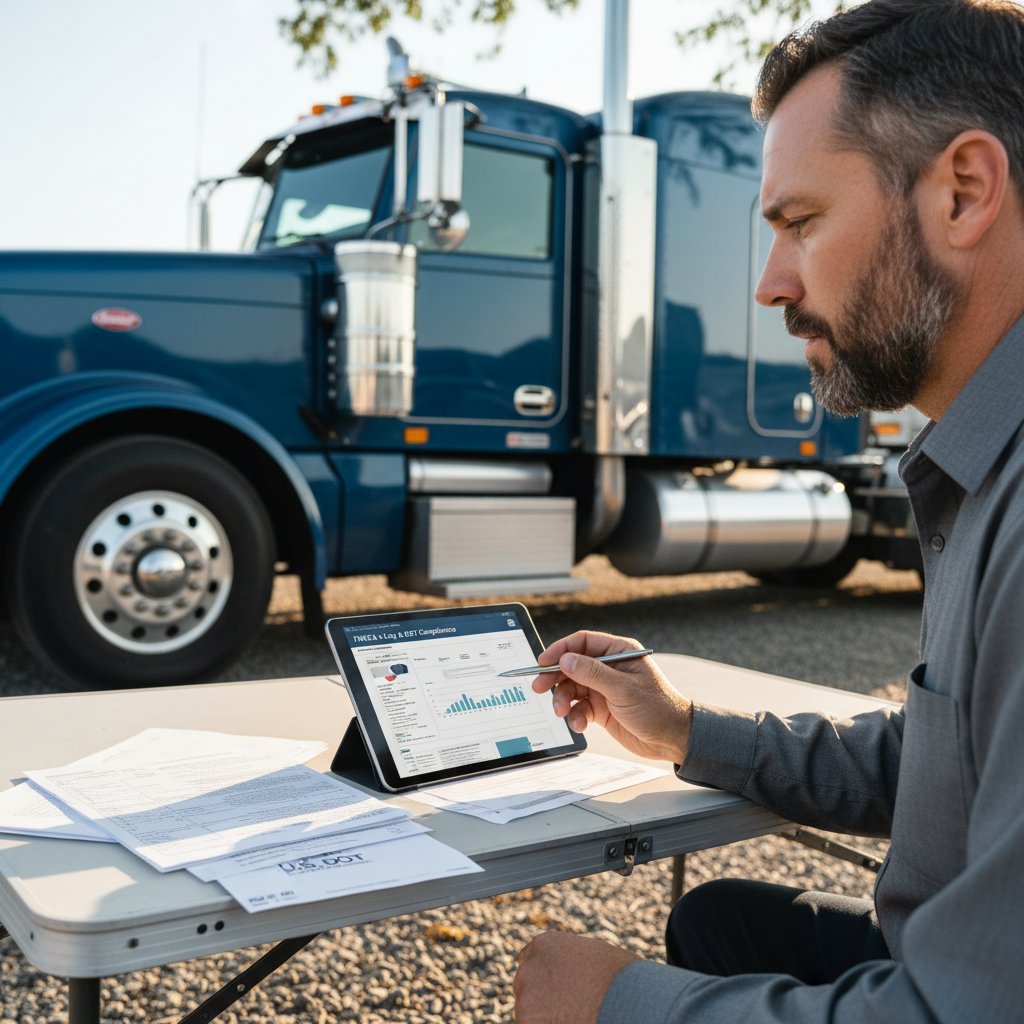
Is truck insurance more than car insurance? See what usually costs more in 2026, why, and when a pickup needs commercial truck insurance. Get a quote.
Is truck insurance more than car insurance? Sometimes—but not always. A pickup can cost more to insure than a car when it’s higher-value, more expensive to repair, or sits in a higher theft/claim ZIP code; but plenty of pickups rate close to sedans when you quote the same driver, same limits, and the exact VIN.
If you’re using a pickup for work, the bigger risk isn’t just price—it’s being on the wrong policy. The moment your usage looks commercial (deliveries, hauling for pay, employees driving, jobsite use), you’re no longer comparing “truck vs car” personal auto rates—you’re comparing against commercial auto insurance and, in true for-hire cases, commercial truck insurance.
Key Takeaways: Essential Truck vs. Car Insurance Truths
- “Truck” doesn’t automatically mean higher insurance. Trim level, repair costs, theft risk, and location matter more than body style.
- Liability-only vs full coverage can flip the result. Full coverage pricing is heavily driven by comp/collision losses and repair complexity.
- Business use is the pricing cliff. The moment your pickup is used for deliveries/hauling for pay, you may need commercial auto, not personal auto.
- The only fair comparison is same driver + same limits + exact VIN. Anything else is just internet averages.
Table of Contents
Reading time: 8 minutes
- Is it cheaper to insure a truck or a car?
- 2026 truck vs car insurance costs (liability vs full coverage)
- Why truck insurance can be more expensive than car insurance
- Do pickup trucks cost more to insure than sedans?
- When “truck insurance” means commercial insurance (and why it’s usually higher)
- How to lower truck insurance (without cutting the coverage you need)
- Frequently Asked Questions
- Why Logrock (and why classification matters more than “cheap”)
- Conclusion & Next Step
Is it cheaper to insure a truck or a car? The short (accurate) answer
For an apples-to-apples comparison, you must quote the same driver on the same limits and deductibles with the exact VIN, because insurers rate personal auto using at least 5 core inputs: driver record, garaging ZIP, vehicle (VIN/trim), annual mileage, and coverage limits/deductibles.
It depends what you mean by “truck.”
- Personal-use pickup (F-150 / Silverado / Ram 1500): Often insures close to a sedan—sometimes a bit higher, sometimes a bit lower.
- Work truck (commercial use): Usually costs more because you’re moving into commercial auto insurance territory.
- Semi / true for-hire: A different universe—semi truck insurance is priced for higher limits, higher severity claims, and contract requirements.
For a business owner, the goal isn’t “cheapest.” It’s correct coverage at the lowest cost-per-risk—so a claim doesn’t get denied when cash flow is already tight.
2026 truck vs car insurance costs (liability vs full coverage)
Most insurers quote “full coverage” as liability + comprehensive + collision (often with $500 or $1,000 deductibles), and that comp/collision layer is usually where trucks separate from cars on price.
Let’s keep this honest: national “averages” are all over the map because pricing is driven by driver + ZIP + VIN + usage + limits. Instead of fake precision, here are typical patterns you can actually use.
Table: Typical pattern you’ll see when quoting (same driver, same ZIP)
| Comparison | Liability-only (state minimum-ish) | Full coverage (comp + collision) |
|---|---|---|
| Sedan vs. pickup (base trim) | Often similar | Pickup can be similar or slightly higher |
| Sedan vs. luxury/high-trim pickup | Similar-ish | Pickup often higher (repair cost drives it) |
| Sedan vs. EV pickup | Similar-ish | EV pickup often higher (battery/specialty labor) |
Why the numbers flip between minimum coverage and full coverage
Liability-only is mostly about:
- Driving history: Tickets, accidents, years licensed
- ZIP code: Claim costs, lawsuits, theft, weather losses
- Annual mileage: More time on the road = more exposure
Full coverage adds the expensive part:
- Collision: body work, sensors, calibrations, labor time
- Comprehensive: theft, vandalism, hail, animal hits, glass, storm losses
Modern pickups aren’t “simple work trucks” anymore. Many trims are basically luxury vehicles with ADAS sensors that can turn a minor hit into a big repair bill.
Quick note: “Truck vs car” is meaningless until you quote the exact VIN with the same limits and deductibles.
Why truck insurance can be more expensive than car insurance
Truck insurance often prices higher for 4 main reasons—vehicle value/repair cost, crash severity, theft/claim frequency, and commercial use—and any one of those can outweigh the “it’s just a pickup” assumption.
Here are the real pricing levers—explained like a business decision, not a marketing brochure.
1) Vehicle price, repair costs, and parts (comp/collision drives this)
What it is (plain English): Expensive trucks cost more to fix, and insurers price that in.
Why it’s essential (business risk): If your pickup is down, you’re losing revenue. If it’s totaled, you’re eating the replacement cost gap if you’re underinsured.
Who needs it: Anyone buying a higher-trim pickup, lifted setup, or tech-heavy model.
Pro tip: Don’t compare “F-150 vs Camry.” Compare VIN vs VIN. A trim package can swing premiums because it changes repair costs.
2) Weight and crash severity (liability severity risk)
A half-ton pickup often weighs 1,000+ pounds more than a midsize sedan, and heavier vehicles can drive higher property-damage and injury severity in a crash.
Why it matters: Liability claims are where insurers get hurt—especially when medical bills and attorney involvement pile up.
Who needs it: Drivers in high-traffic metros, long commutes, or states with higher claim severity.
3) Theft and claim frequency (especially for popular pickups)
Comprehensive losses like catalytic converter theft can easily run $1,000–$3,000 in parts and labor on many vehicles, and high-theft ZIP codes push premiums up fast.
Why it matters: Comprehensive claims aren’t just “whole truck stolen.” It’s also tailgates, wheels/tires, catalytic converters, and break-ins.
Who needs it: Anyone parking outdoors, at apartments, or in high-theft ZIP codes.
Pro tip: Secure parking and basic anti-theft steps can be a bigger ROI than chasing a $10/month cheaper premium.
4) How you use it (this is where “personal auto” can break)
Insurers typically rate personal auto vs commercial auto differently, and misclassifying business use as personal use can create a real claim-denial risk when the loss doesn’t match the policy’s stated use.
Why it’s essential: If you describe business use as personal use to save money, you’re playing with a claim denial scenario. That’s not “saving”—that’s a liability bomb.
Who needs it: Anyone using a pickup to deliver goods, haul for pay, run jobsite errands daily, transport tools/materials as part of business operations, or put multiple drivers in the truck (employees).
Do pickup trucks cost more to insure than sedans? (Model + tech reality)
A base-model pickup can price close to a sedan, but full coverage often jumps when MSRP and repair complexity rise—especially on trims with expensive headlights, sensors, cameras, and calibration requirements.
A base-model work-trim pickup can price close to a sedan. Where pickups get expensive is usually:
- High MSRP trims (luxury interiors, bigger wheels, premium headlights)
- High-performance versions
- Lift kits / heavy modifications
- ADAS-heavy tech that’s costly to recalibrate after a minor collision
EV and hybrid trucks: why “fuel savings” doesn’t equal “insurance savings”
EV pickups can be more expensive to insure mainly because batteries are costly, specialized repairs require specific training/tools, and limited shop networks can increase repair time (which also increases rental costs).
That doesn’t mean “don’t buy one.” It means plan your total operating cost like a business owner: payment + insurance + downtime risk.
When “truck insurance” means commercial insurance (and why it’s usually higher)
Commercial auto insurance is typically priced for higher exposure and higher limits (often $1,000,000 liability for business contracts), and true for-hire trucking can trigger federal financial responsibility minimums like $750,000 for many interstate property carriers under FMCSA rules (49 CFR Part 387).
This is the part most consumer articles ignore.
If you’re an owner-operator, contractor, or small business, your pickup can quietly cross the line from personal auto into commercial auto insurance—and the premium jump surprises people.
What triggers commercial auto (common real-world examples)
You may need commercial auto insurance if:
- the vehicle is titled to a business (LLC/corp)
- you’re making deliveries or hauling for pay (even part-time)
- you regularly carry tools/materials that are integral to the work
- you have employees driving it
- you’re using it as part of a business operation (not just commuting)
Why commercial is higher (the business reality)
Commercial policies are priced for different usage patterns (more exposure), higher limits, and higher claim severity and legal exposure.
And if you’re truly for-hire—hotshotting or running interstate freight—the conversation moves from commercial auto to trucking insurance / commercial truck insurance. That’s where you’ll see monthly premiums that can be dramatically higher than personal auto because you’re now dealing with:
- Filings (in many setups)
- Broker/shipper requirements
- Higher liability limits
- Cargo exposure and operational risk
If you’re comparing a personal sedan policy to semi truck insurance or hotshot insurance, you’re not comparing apples-to-apples anymore.
Classification matters more than price. Get it wrong and your claim can turn into an out-of-pocket disaster.
Frequently Asked Questions
It can be either, because “truck vs car” pricing depends on the exact VIN, your garaging ZIP code, your driving record, and your limits and deductibles (for example, $500 vs $1,000 comp/collision deductibles). A personal-use base-trim pickup can price close to a sedan for liability-only, while full coverage can be higher if the truck has a higher MSRP, expensive sensors, or higher theft losses. The only clean comparison is to quote both vehicles with the same driver, the same limits, and the same deductibles, then compare.
Truck insurance is often more expensive because full coverage losses are driven by repair severity, and pickups can be costly to fix (large panels, pricier parts, and sensor calibration after collisions). Heavier vehicles can also increase liability severity, and theft-related comprehensive claims (like catalytic converter theft) can run into the thousands of dollars per incident. The biggest jump usually happens when the truck’s use becomes business-related and the correct policy shifts to commercial auto insurance, which is commonly written with higher liability limits (often $1,000,000) than personal auto.
There isn’t one universal number, because insurers price by driver + ZIP + VIN + usage + limits, not by “truck” as a category. For a standard pickup vs a standard sedan, the difference can be small when you match limits and deductibles. For luxury trims, performance trucks, and many EV pickups, full coverage can be meaningfully higher because collision repairs and parts/labor costs rise. If the truck is used commercially, premiums can also increase due to higher exposure and higher required limits.
Pickups often cost slightly more to insure on full coverage when they have a higher MSRP, more expensive tech (cameras/sensors), or higher theft exposure, but it isn’t guaranteed. A base-trim work pickup can rate close to a sedan, while a high-trim pickup with expensive headlights, large wheels, and ADAS calibration can push collision costs up. The fairest way to answer is to quote both vehicles using the same liability limits, the same comprehensive and collision deductibles (commonly $500 or $1,000), and the same driver profile.
Occasional personal towing usually doesn’t change much, but frequent hauling, jobsite use, or business delivery driving can increase your risk classification and premium. If you tow or haul for pay, you may need commercial coverage, and some operations move into trucking insurance requirements—especially when you’re operating for-hire or interstate. For many interstate for-hire property carriers, FMCSA financial responsibility minimums start at $750,000 (49 CFR Part 387), and broker/shipper contracts often demand higher limits than personal auto.
Why Logrock (and why classification matters more than “cheap”)
A single at-fault injury crash can create six-figure medical and legal exposure, which is why many businesses choose $1,000,000 liability limits and why correct commercial classification matters more than saving a few dollars per month.
If you’re using a truck to earn money, insurance isn’t a checkbox—it’s authority protection for your business. The cheap policy that doesn’t match your operation can cost you more than the premium you “saved” when a claim hits.
Logrock’s approach is straightforward:
- verify how the vehicle is actually used
- match coverage to real exposures (not wishful thinking)
- aim for affordable trucking insurance by cutting waste, not cutting protection
Conclusion: Quote it correctly, then optimize the cost
Truck insurance can be more than car insurance—especially on full coverage and on higher-trim pickups—but the biggest cost driver is often the jump from personal auto to commercial use, where liability limits commonly move toward $1,000,000 for business needs.
Compare the exact VIN with the same limits, or you’re guessing. Then make sure the policy matches how you actually use the truck—because classification mistakes are where “cheap” turns into expensive.
Key Takeaways:
- Compare the exact VIN with the same limits and deductibles (or the comparison isn’t real).
- Full coverage pricing is driven by repair cost, theft exposure, and claim trends—not just “truck vs car.”
- Business use can require commercial auto, and for-hire operations can trigger trucking insurance requirements (including FMCSA minimums like $750,000 for many interstate property carriers).
If you want a clean comparison for your ZIP code and your real usage, quote it correctly and then optimize.
Related Reading: